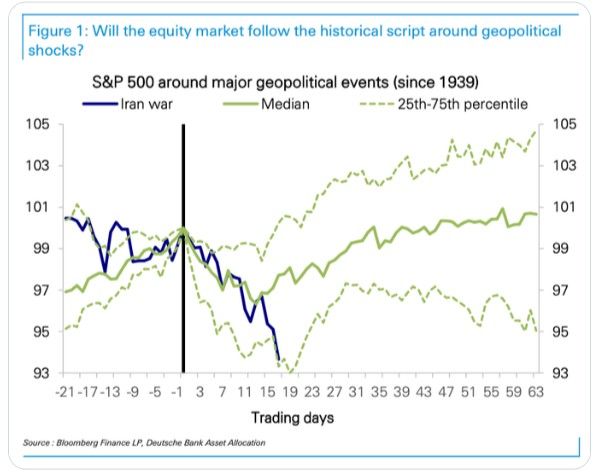

BREAKING: DESALINATION PLANT IN KUWAIT STRUCK BY IRAN INDIAN WORKER KILLED ‘SEVERE DAMAGE’ TO ‘SERVICE BUILDING’
Iran allegedly struck a water desalination facility in Kuwait, causing a death and damage. Because Gulf countries rely heavily on desalination (especially Kuwait, where it provides about 90% of drinking water), the attack is framed as targeting a critical and vulnerable resource. This shifts the conflict from oil/energy infrastructure to water infrastructure—something even more essential and harder to replace or buffer. Desalination is highly concentrated in a small number of plants, making it fragile. This represents a dangerous move into a “water war,” where disruptions could have severe humanitarian consequences.
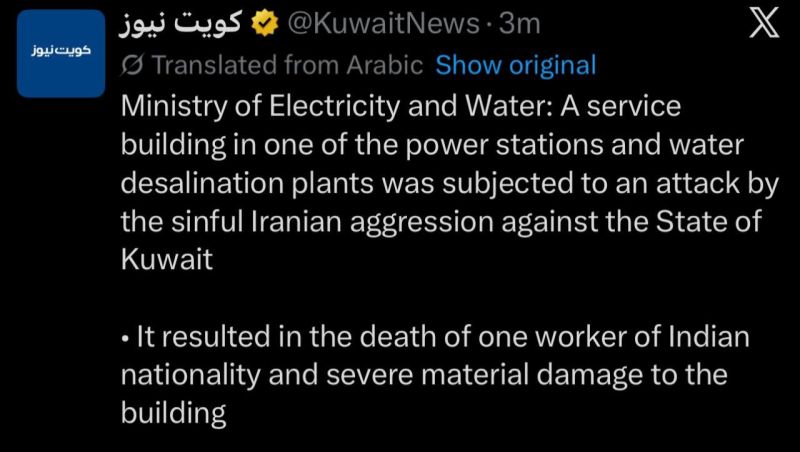
Iran has drafted legislation to create the "Hormuz Law" which is expected create a formal toll system for the Strait of Hormuz.
Preliminary details include: 1. Hormuz Law to introduce fees on navigation and pollution in the Strait of Hormuz 2. Draft legislation also includes creation of a "regional fund“ 3. The move is seen as an attempt to formalize long-term tolls on global shipping routes 4. The US has called these tolls on the Strait of Hormuz both "illegal" and "unacceptable" The Strait of Hormuz situation is becoming even more complicated. Source: The Kobeissi Letter
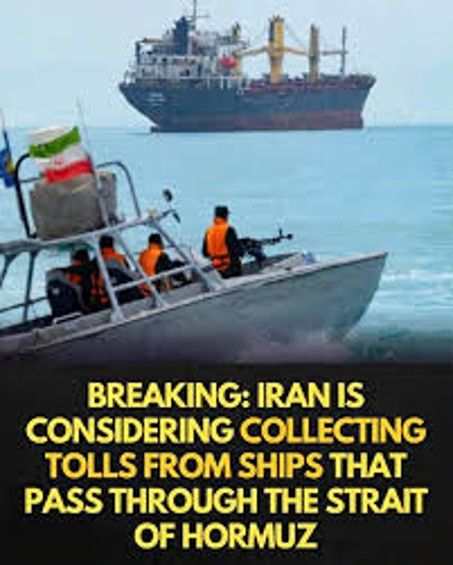
Russian President Vladimir Putin signed decrees Wednesday restricting cash and gold exports as part of a broader campaign to combat the shadow economy and curb capital flight.
Under one decree, carrying ruble cash across the border of Russia to the Eurasian Economic Union (EAEU) will be prohibited in the amount equivalent to more than $100,000 at the exchange rate of the Bank of Russia from April 1, with certain exceptions. The other decree bans the export of gold bars weighing more than 100 grams from Russia starting May 1. It includes some exceptions and does not apply to commercial banks. Both decrees were published on the government portal. Source: www.aa.com.tr, Macro Liquidity by Sunil Reddy
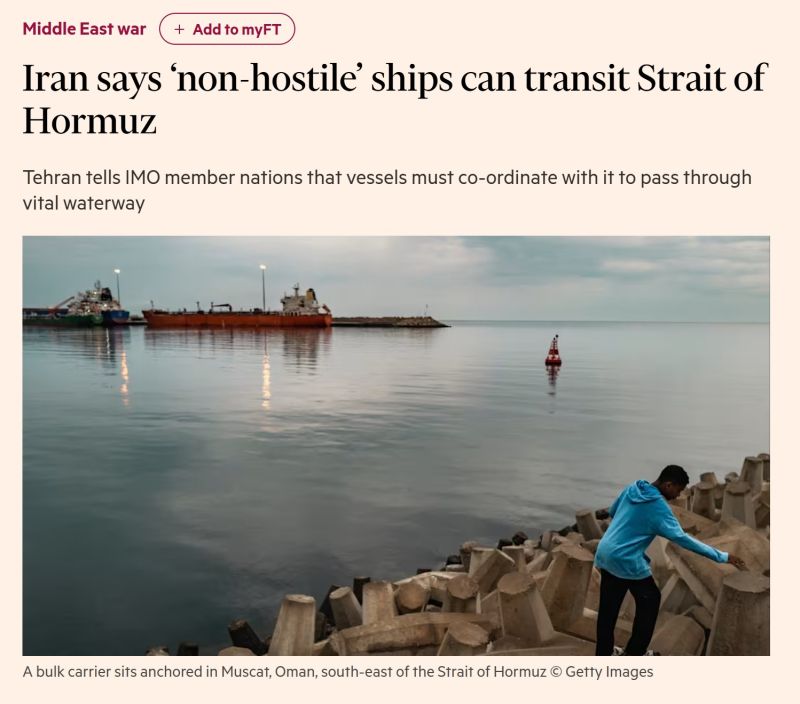
Iran Controls Passage Through the Strait of Hormuz
Iran has announced it will allow “non-hostile vessels” to transit the Strait of Hormuz, but only under Iranian control and coordination. This strait normally carries ~20% of global oil, yet thousands of ships are delayed, attacked, or paying high fees. Iran may block vessels linked to the US or Israel and is drafting laws to formalize control. Beyond shipping, this move signals a financial shift, including potential moves away from the US dollar, turning the Strait into a strategic leverage point in global energy and trade. Source: Financial Times
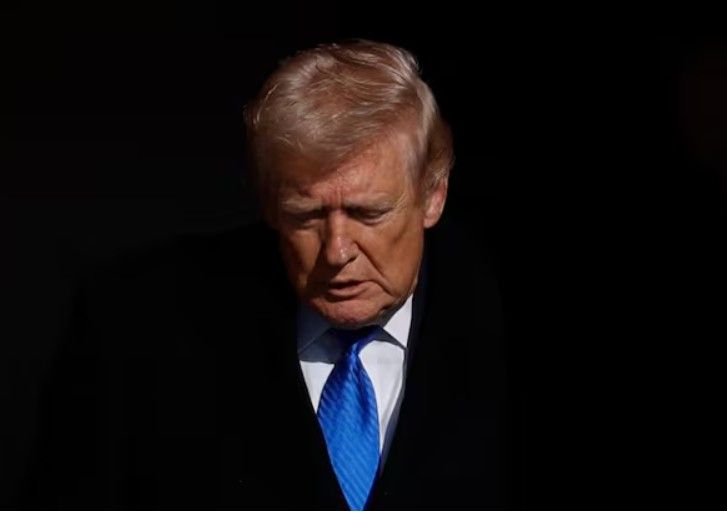
Trump Proposes 1-Month Ceasefire with Iran
Former President Donald Trump proposed a 15-point deal offering Iran major sanctions relief, civilian nuclear support, and reintegration into the global economy in exchange for dismantling its nuclear program, cutting ties with proxies, and reopening the Strait of Hormuz. The framework mirrors a pre-war offer, but Iran’s new leadership demands reparations. Key obstacles remain: Iran won’t fully halt enrichment, Trump rejects reparations, and ongoing regional military actions complicate the agreement’s implementation. Source: WSJ, Mario Nawfal, Jack Prandelli
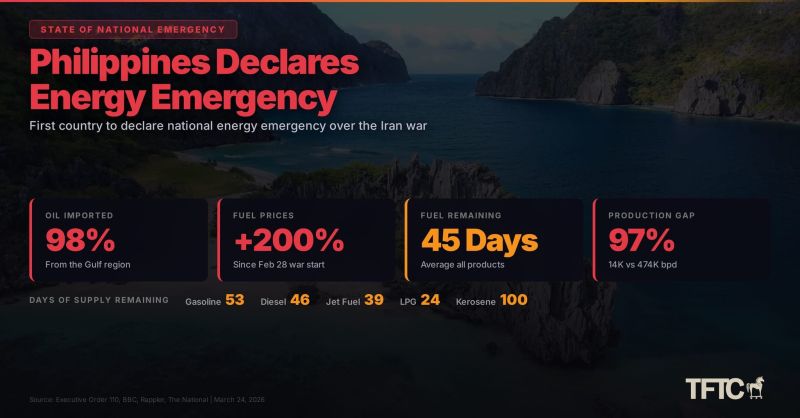
The Philippines has become the first country to declare a national energy emergency amid the Iran conflict
with just 45 days of fuel reserves remaining. President Ferdinand Marcos Jr. signed Executive Order 110, warning of an “imminent danger” to the country’s energy supply. The order, in effect for one year, allows the government to directly procure fuel, enforce rationing, and control distribution of essentials like food and medicine. The vulnerability is stark. The Philippines imports 98% of its oil from the Gulf. Its top suppliers—Saudi Arabia ($1.79B), the UAE ($1.22B), and Iraq ($474M)—are all directly affected by the conflict. With the Strait of Hormuz effectively shut, these supply routes are under severe strain, and Saudi exports to Asia have already been cut for a second straight month. Domestically, the country produces just 14,300 barrels per day but consumes around 474,000—a massive 97% shortfall. This is what a global energy shock looks like in real time. Source: TFTC
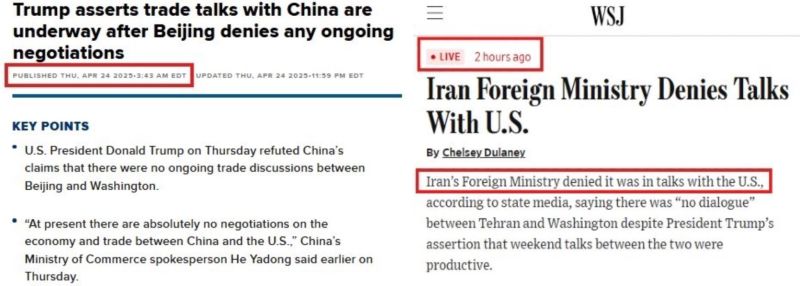
Recurring Deal-Making Pattern: Markets, Denials, and Strategic Timing
A familiar strategy emerges: in April 2025, yields rose and Donald Trump signaled a China deal, denied by China before confirmation weeks later. Now, similar dynamics appear with Iran—denials, market pressure, and rising yields suggest ongoing hidden negotiations. This “denial phase” implies continued volatility, conflicting headlines, and delayed market stabilization as leverage is maintained until agreements finalize. Source: The Kobeissi Letter, CNBC, WSJ
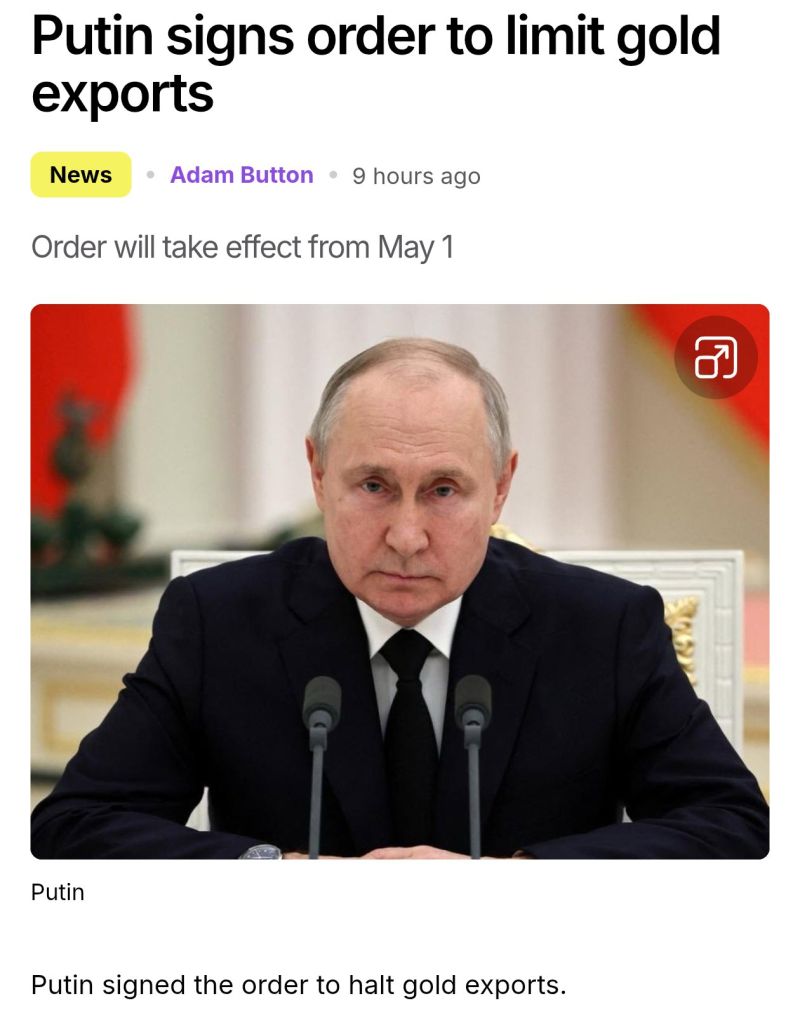
Will the equity market follow the historical script around geopolitical shocks
"The historical playbook is for a sharp selloff of about -6% to -8% but a bottom on average in 3 weeks, and a full recovery in another 3, usually long before the underlying escalation is resolved. The current selloff is in the vicinity of a typical bottom in size and timing." - Deutsche Bank Source: Sam Ro @SamRo DB