
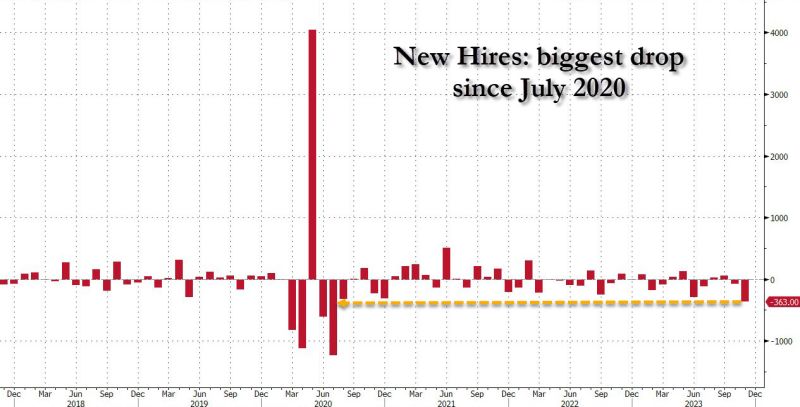
US Hiring plunged by 363K in November, the biggest monthly drop since July 2020
Vacancies fell in November to 8.79 million, lowest since 2021 Quits rate dropped to lowest level in more than three years Source: www.zerohedge.com, Bloomberg
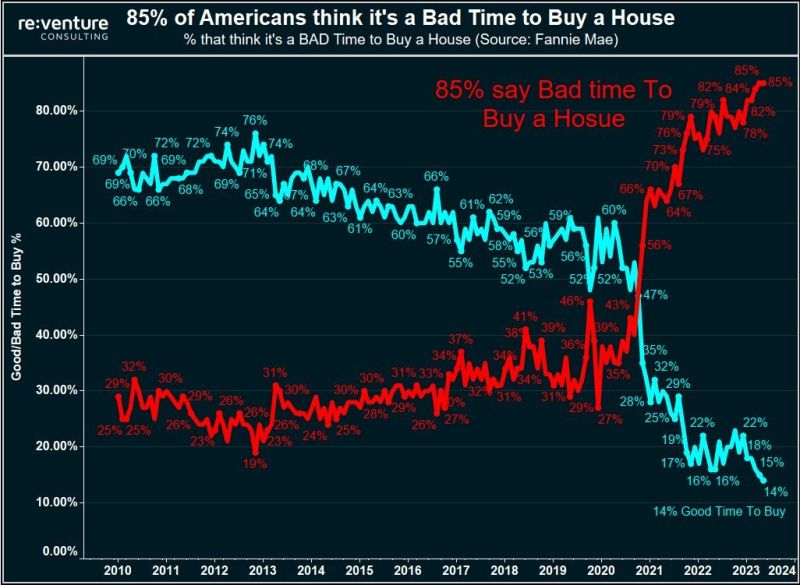
A record 85% of Americans now say it's a bad time to buy a house, according to Reventure
Two years ago, just ~30% of Americans thought it was a bad time to buy a home. Even in 2008, during the worst housing crisis of all time, this metric did not top 85%. In a market with high rates and supply levels 40% below the historical average, affordability is at all time lows. Source: The Kobeissi Letter
BREAKING: Total US debt hits $34 trillion for the first time in history, putting US debt up 100% since 2014
Since the debt ceiling "crisis" ended in June 2023, total US debt is up nearly $3 trillion. This debt balance is more than the value of the economies of China, Germany, Japan, India and the UK COMBINED. The US is now spending $2 billion PER DAY on interest expense alone. Debt per capita is at a record high of $101,000. Source: The Kobeissi Letter

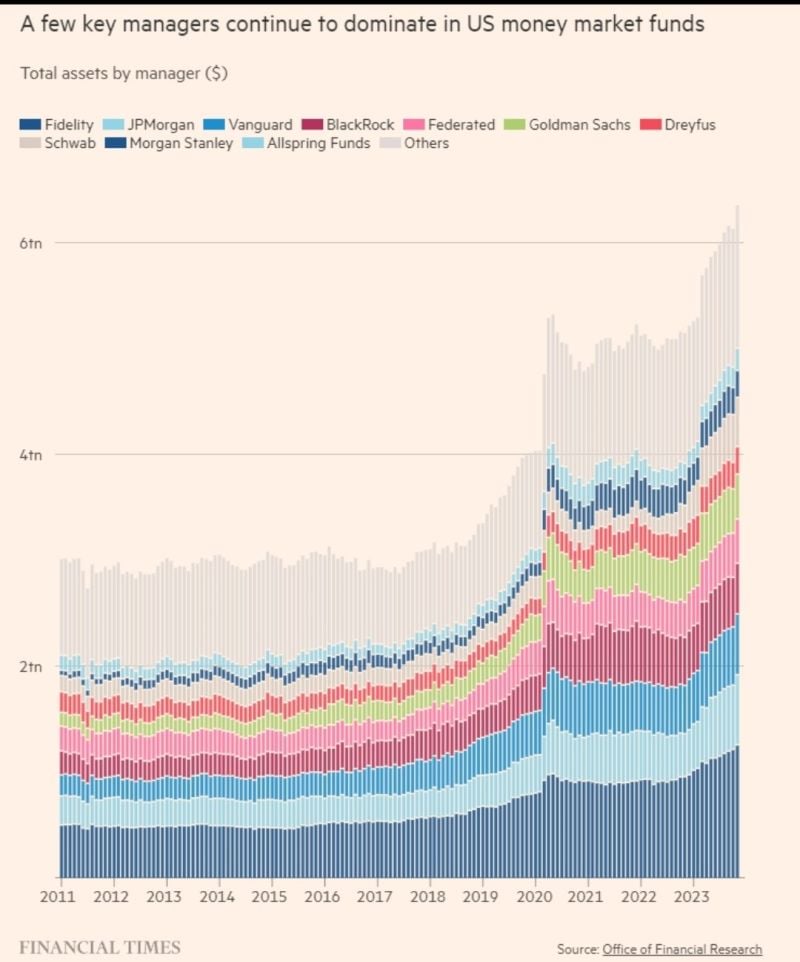
All-Time High $6.3 Trillion sitting in U.S. Money Market Funds
Source: Win Smart, CFA, FT
If you blinked you would have missed that one time that the US government was on track to pay down its debt...
Source: Markets & Mayhem

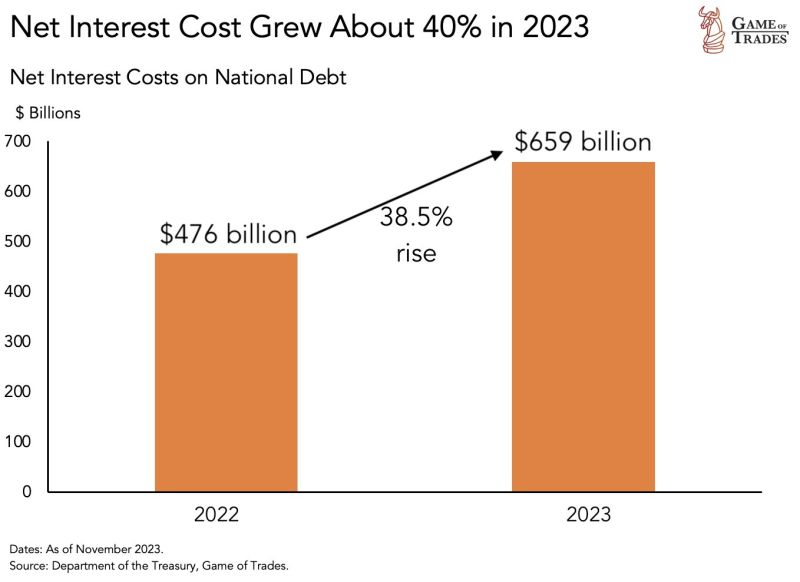
Net interest cost of US national debt grew by 38.5% just in 2023
Source: Game of Trades
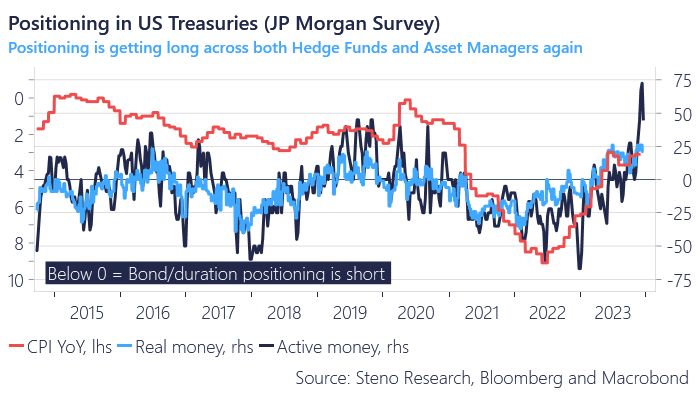
Everyone enters 2024 long bonds! Consensus is rarely right for a full year
Source: Steno Research, Bloomberg, Macrobond
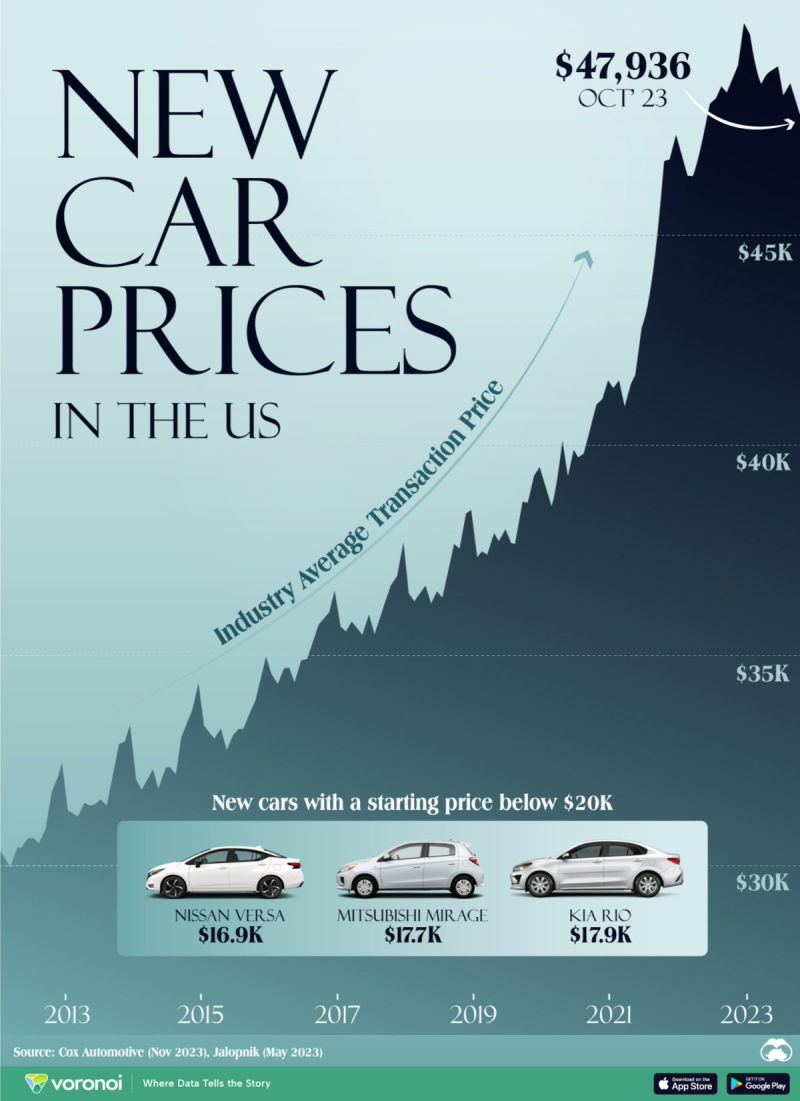
The Growth of New Car Prices in the U.S.
Source: Visual Capitalist