
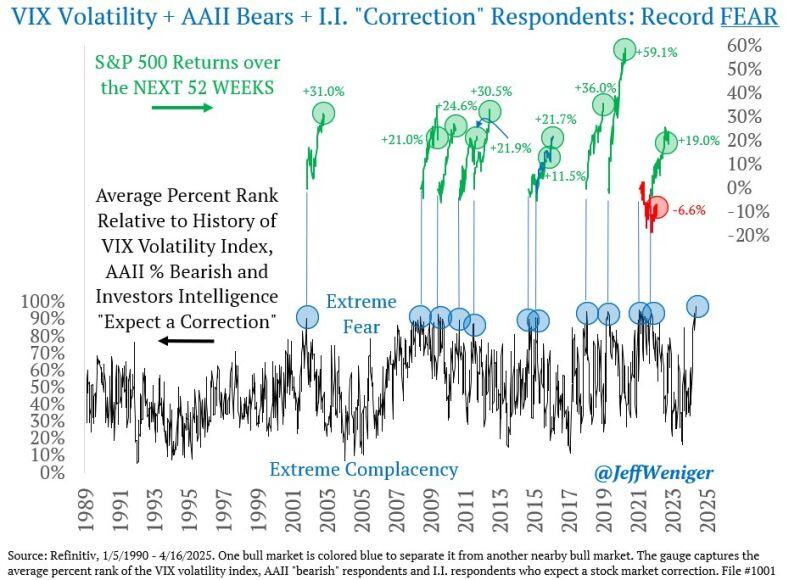
🔴 A very interesting chart by Jeff Weniger on X
You're looking at the highest reading on record in 1,841 weekly stock market sentiment observations from 1990 to 2025. ▶️ The inputs: the VIX volatility index + AAII survey bearish respondents + Investors Intelligence survey respondents who expect a correction. ▶️In 10 of the last 11 fear spikes, the S&P 500 went on to gains over the next 52 weeks. Returns were often large too (+31.0%, +21.0%, and so on)...
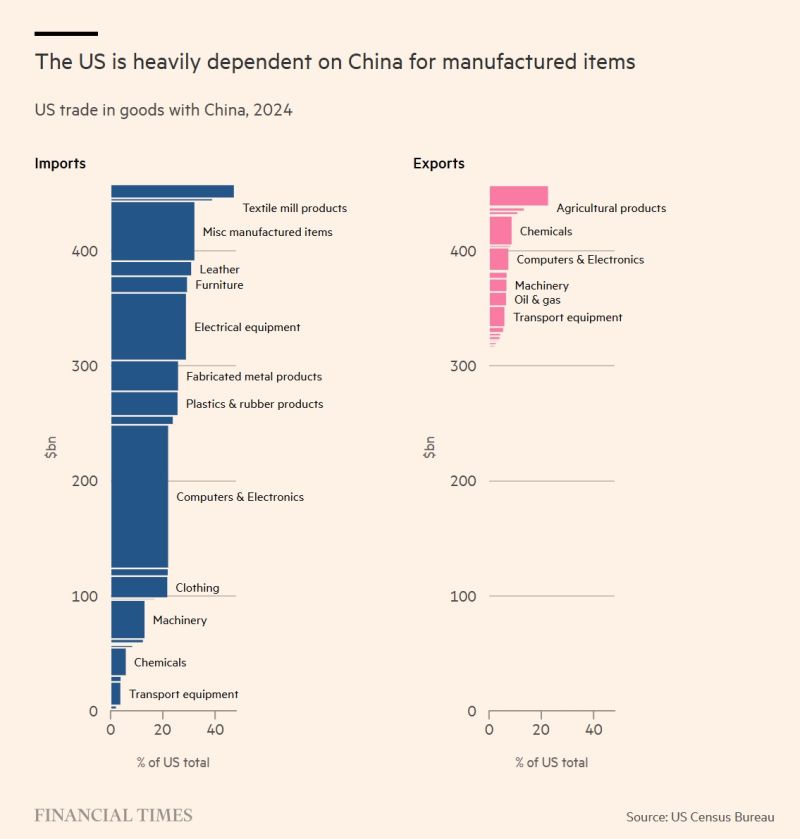
Trade, tech and Treasuries: China holds cards in US tariff stand-off - by FT
Marta Bengoa, professor of international economics at City University of New York, said that while the US and China remained heavily interdependent in trade, this meant the ultimate balance of risk was on the US side. “US dependence on China is higher, because China can source agricultural products from elsewhere more easily than the US can replace electronics and machinery,” she said. “Beijing is already buying up soyabeans from Brazil, for example, so in the end China has a bit more leverage.”
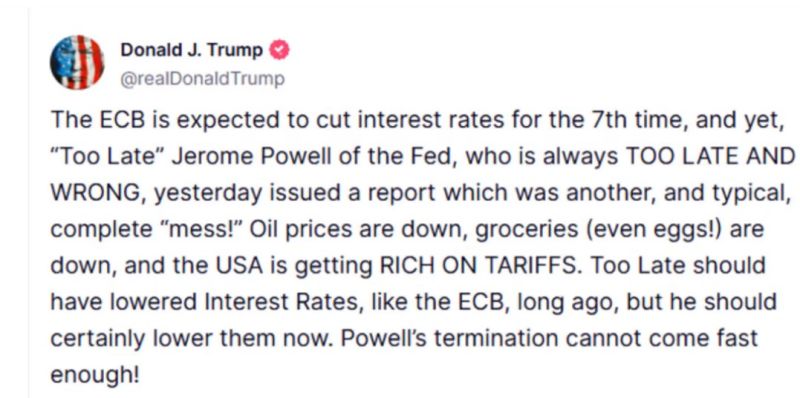
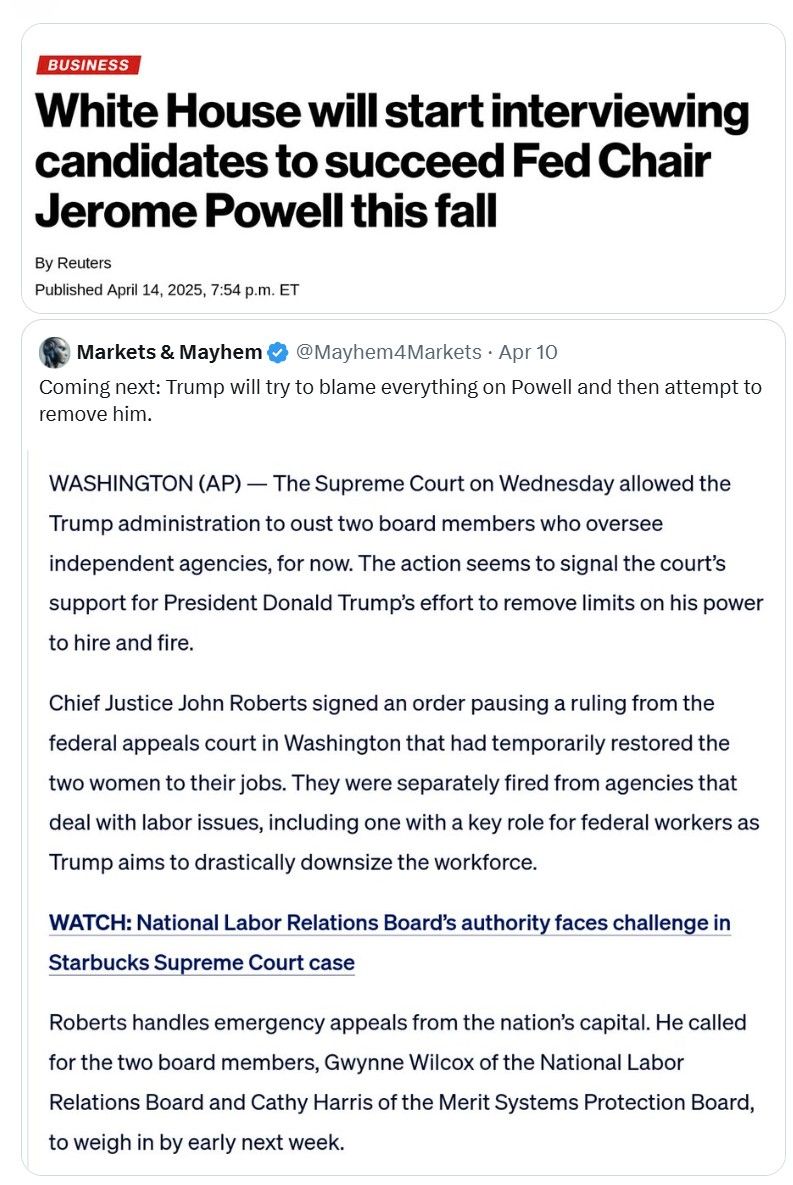
President Trump’s reaction to what Fed Chair Powell said yesterday.
"‘termination cannot come fast enough"
‼️ Will we get a "shadow Fed chair" as soon as this Fall ?
On Monday, Treasury Secretary Scott Bessent has indicated that the discussion for the next Federal Reserve Chair could take place sometime in the fall. ➡️It now looks very clear that Powell's term ends in May 2026. Trump will not reappoint him. ➡️Will Trump fire him? This is very messy (and unknown legally). The alternative, proposed last year by Scott Bessent, was to create a "shadow Fed Chairman." 🔴 How will the Trump administration use a "shadow Fed Chariman"? 1) They appoint Powell's replacement months earlier. 2) They send the nominee regularly go on financial TV, tweet, etc., giving his/her personal opinion and criticising Powell views and decisions, thereby undermining his authority. The shadow Fed Chair could be nominated as soon as this fall...
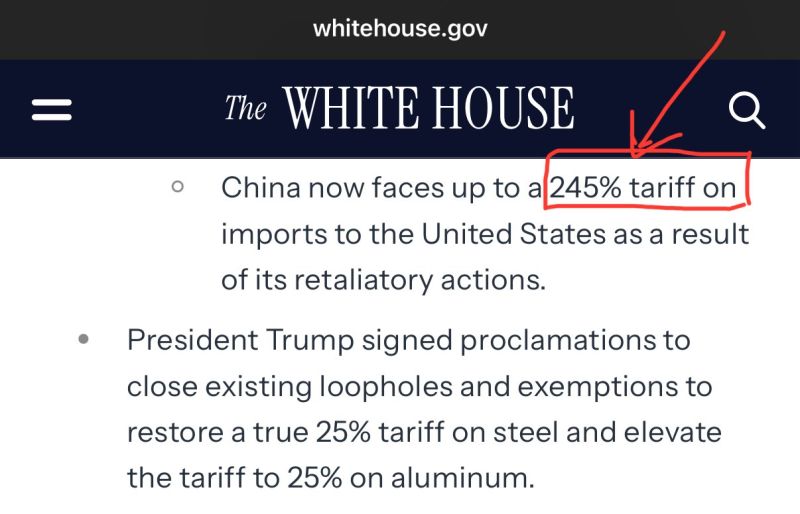
🚨BREAKING: TARIFF NEWS
State companies exporting from China face UP TO 245% Tariffs *Except if you are Apple $AAPL Source: @realDonaldTrump
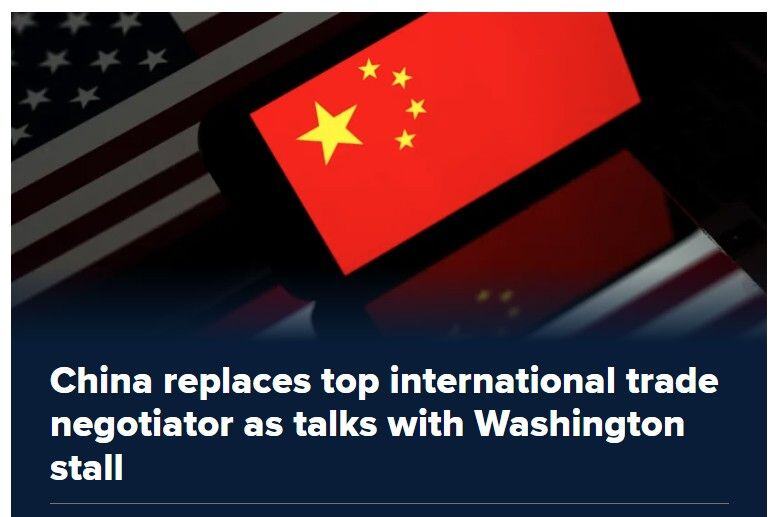
China on Wednesday appointed Li Chenggang as vice minister of commerce and a top representative for international trade negotiation, according to an official statement, replacing Wang Shouwen.
The appointment makes Li a key member of China’s trade negotiation team as Beijing deals with trade disputes with the U.S. So far, there have not been any sign of near-term trade talks as both sides have ratcheted up tariff tensions. Source: CNBC
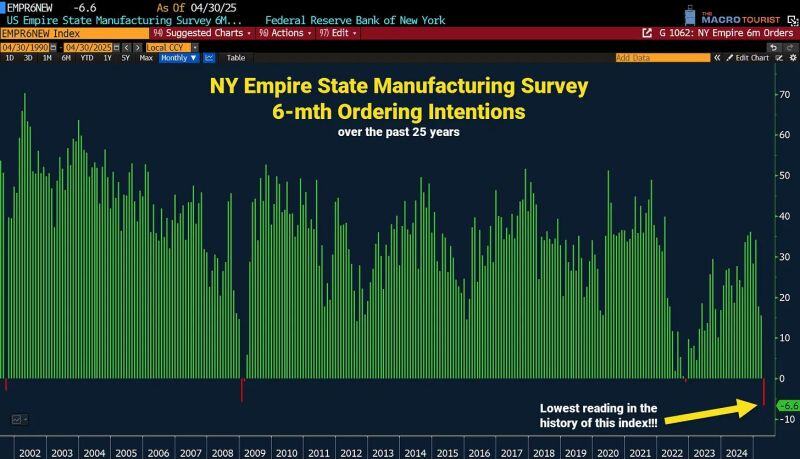
In case you missed it...
The NY Empire State Manufacturing Survey 6-month Ordering Intentions fell to the LOWEST READING IN THE HISTORY OF THE INDEX! Source: Ronnie Stoeferle @RonStoeferle @kevinmuir, Bloomberg
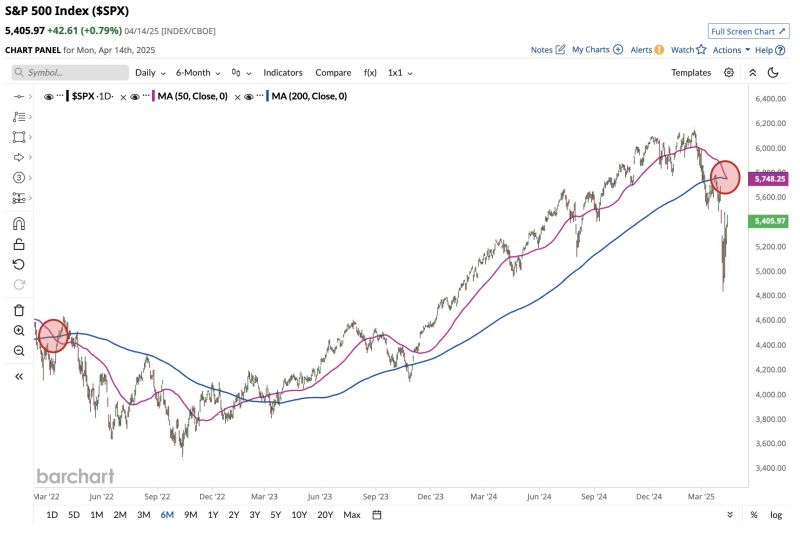
JUST IN 🚨: S&P 500 forms Death Cross ☠️ for the first time since March 2022
Source: Barchart