
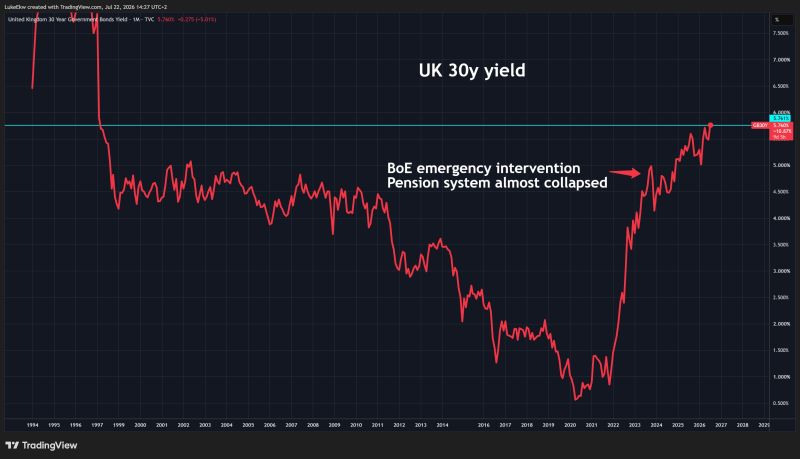
UK 30-year government bond yields have risen to the highest level in 3 decades.
From 2020-2026, they surged from 0.5% to 5.7%... UK pension funds are heavily exposed to Gilts and are suffering heavy paper losses Source: Lukas Ekwueme, Bloomberg
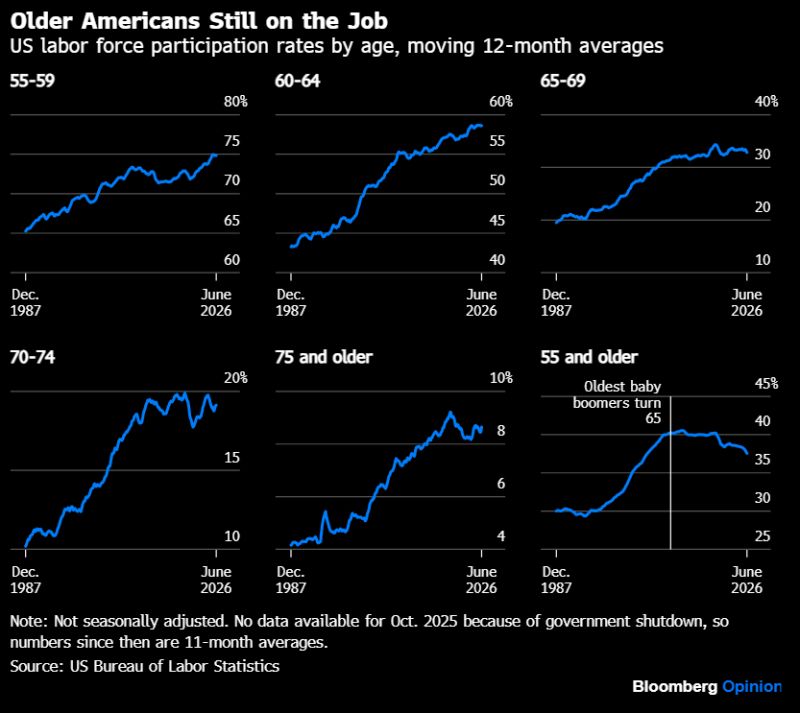
America isn't retiring anymore. It's working longer than ever
One in three Americans aged 55 and older is still working or looking for work, and that share has been climbing for nearly 40 years. The biggest change is among older workers: • Ages 65–69: participation has nearly doubled since the late 1980s, now above 30%. • Ages 70–74: from under 10% to almost 19%. • Ages 75+: participation has doubled to roughly 8%. The numbers are striking. Nearly 11.9 million Americans aged 65+ were employed last year, more than double the level of three decades ago. Between 2015 and 2024, the 65+ workforce expanded 33%, while the overall labor force grew by less than 9%. Longer life expectancy is part of the story. But so are disappearing pensions, rising living costs, and Social Security benefits that no longer stretch as far. Retirement is increasingly becoming a luxury rather than the default. Source: hedgeye
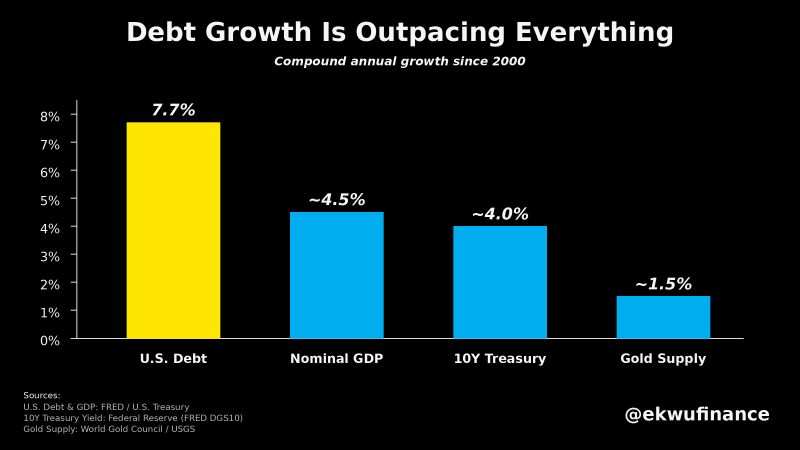
U.S. debt has been growing much faster than the economy for over two decades
Since 2000, U.S. debt has compounded at 7.7% annually, far outpacing nominal GDP (~4.5%) and the 10-year Treasury yield (~4%). Meanwhile, gold supply has expanded by only about 1.5% per year. For central banks, the contrast is striking: one asset becomes increasingly abundant as debt issuance accelerates, while the other remains structurally scarce. That helps explain why many central banks have been steadily increasing their gold holdings in recent years. Source: Lukas Ekwueme @ekwufinance
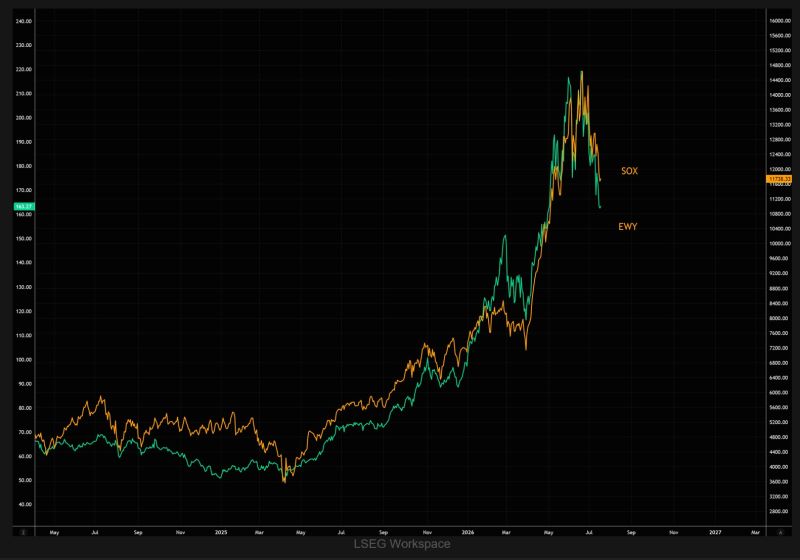
The chart below shows the SOX relative to the EWY iShares Korea ETF
Korea's speculative AI rally remains one of the key drivers of the broader AI trade, making this relationship well worth watching. Source: TME
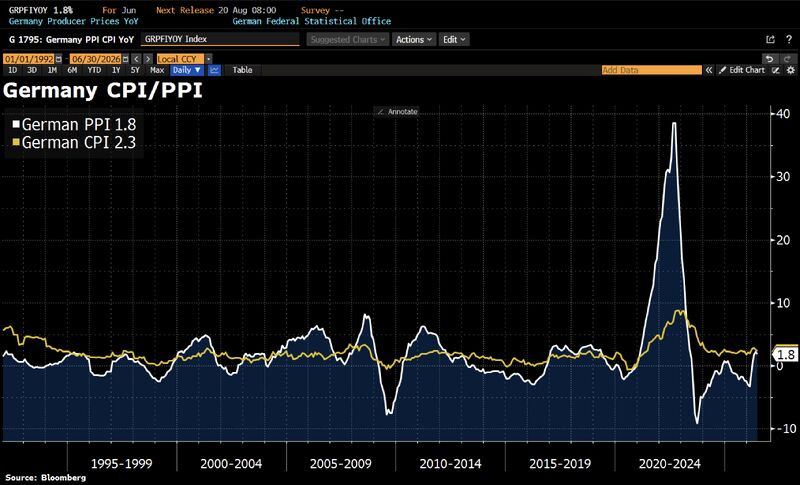
In Germany, factory-gate inflation offers a hopeful signal for consumers
Producer prices slowed to 1.8% YoY in June from 2.2% in May, below the June CPI of 2.3%, and fell 0.3% MoM. Crucially, German producers charged 2.2% less for consumer goods YoY, led by food prices down 4.5% YoY; a positive signal for retail inflation. Source: HolgerZ, Bloomberg
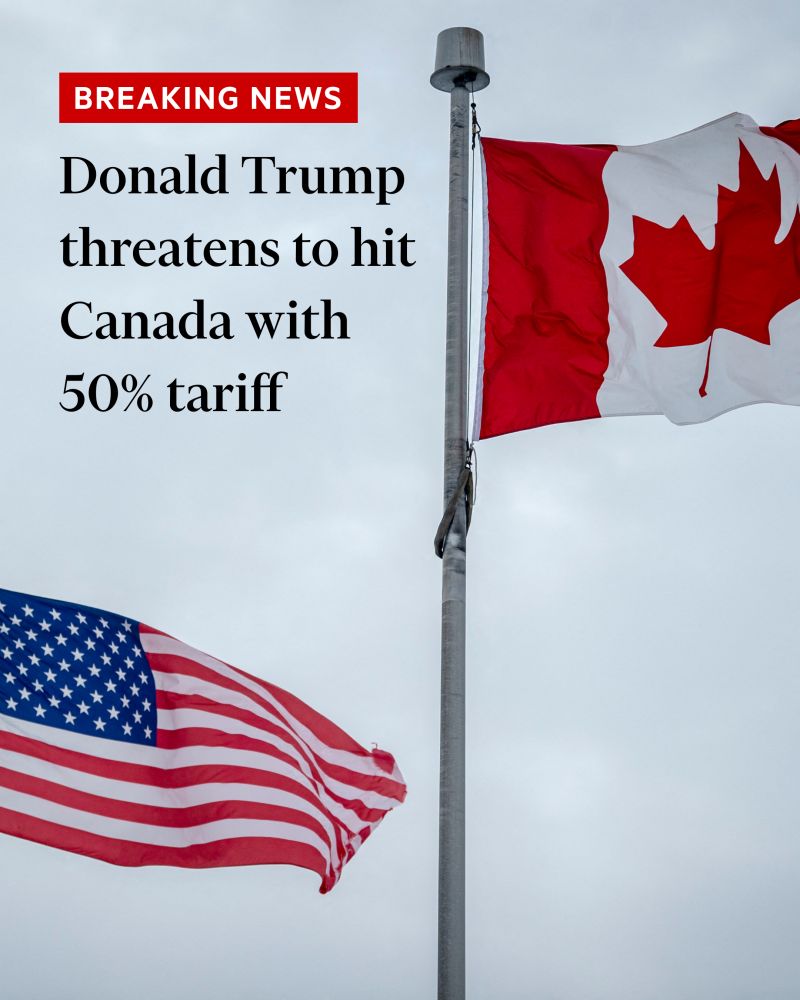
The US has said it will hit Canada with tariffs of 50 per cent on a wide range of goods in a move that threatens to reignite Donald Trump’s trade war
Senior Trump administration officials accused Canada of engaging in unfair trade practices, saying its provinces had halted the purchase of US alcohol, slapped tariffs on US cars and discriminated against American cheese. “At the outset of the president’s trade policy, which he implemented earlier last year, there were only two countries that retaliated against the United States: the People’s Republic of China and Canada,” said a senior administration official. Trump’s move on Monday risks re-inflaming a global trade skirmish that had eased after the US Supreme Court earlier this year knocked down the president’s global emergency tariffs. Canada is the US’s second-biggest trading partner, with trade between the two amounting to $716bn last year. Source. FT
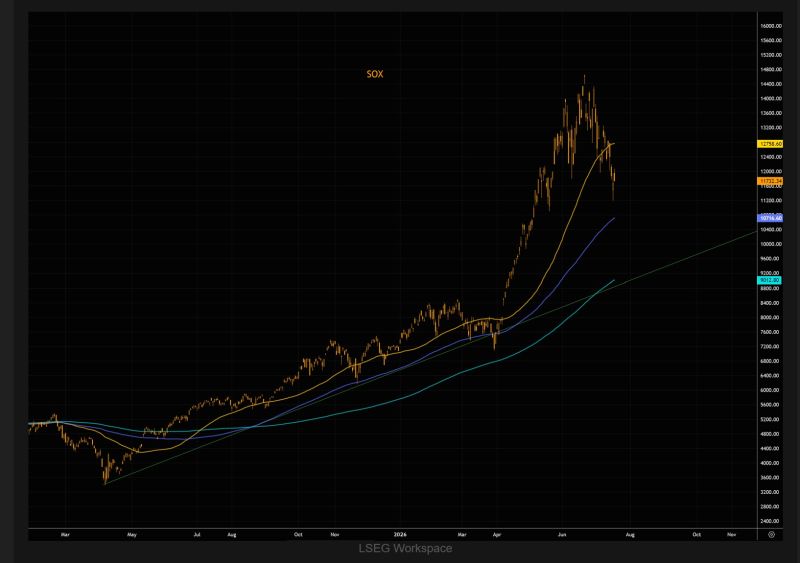
The SOX semiconductors index has posted just three positive sessions over the past 13 trading days.
While the index is well below its 50-day moving average, it still sits comfortably above the 100-day moving average. The 200-day moving average coincides with the longer-term uptrend, creating an important technical support zone. Until positioning is further reset, expect elevated volatility and erratic price action. Source: TME
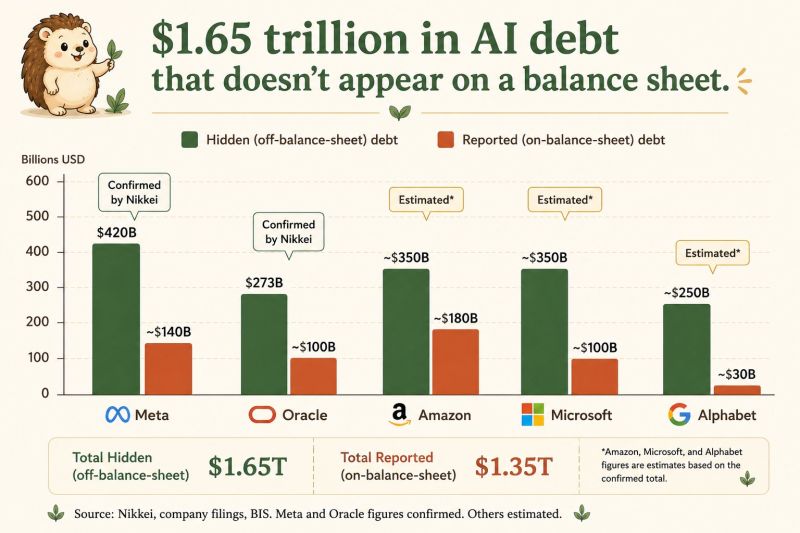
Bi Tech's AI debt may be far larger than investors realize.
A Nikkei investigation found that Alphabet, Microsoft, Amazon, Meta, and Oracle have $1.65 trillion of off-balance-sheet obligations, exceeding the $1.35 trillion of debt they officially report. These commitments—GPU contracts, data center leases, and joint ventures—remain largely invisible under current accounting rules until facilities become operational. Meta alone reportedly has $420 billion in hidden obligations, while Oracle's exposure has exploded over the past four years. The key risk? Investors focusing on earnings may be seeing only part of the picture. As AI infrastructure comes online, these commitments will gradually move onto balance sheets. If AI demand falls short of expectations, expensive assets could face write-downs, with losses ultimately flowing to shareholders and the private credit investors who financed the AI buildout. Source: Hedgie