
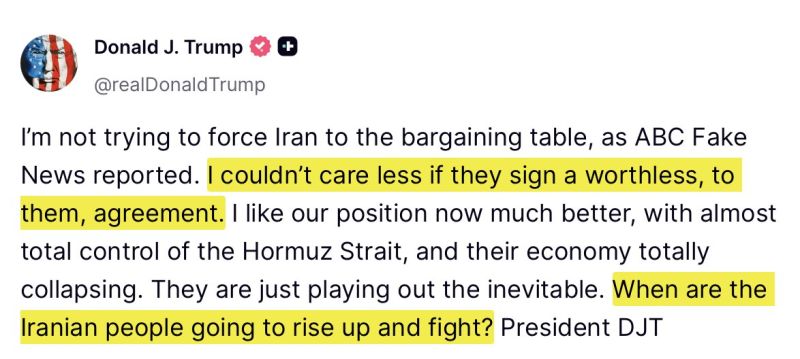
PRESIDENT TRUMP says he's NOT trying to force Iran to the bargaining table and "couldn't care less" if they sign a deal.
"When are the Iranian people going to rise up and fight?" Source: Bull Theory
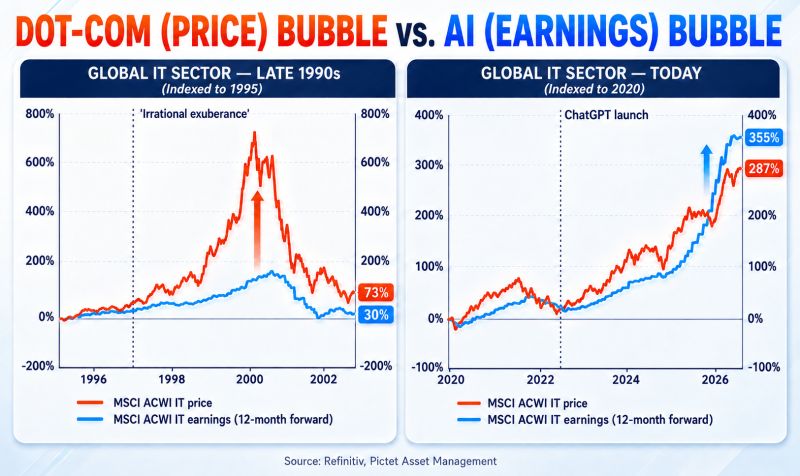
Of course, there are many questions on whether these earnings are sustainable, circular financing, China competition, etc...
But for now, this bubble looks different than the dot-com one Source: Pictet Asset Management, Refinitiv
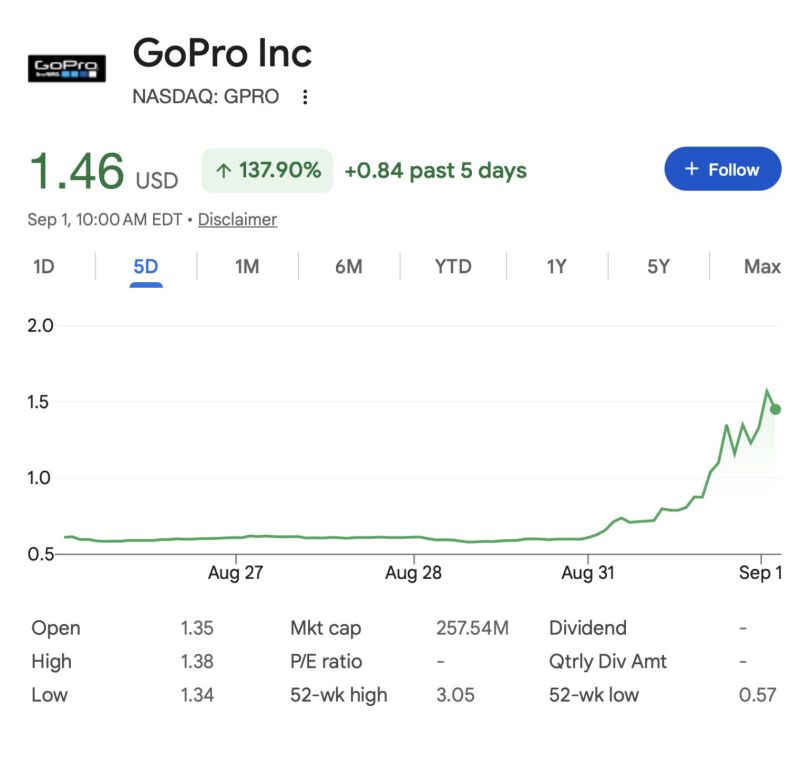
GoPro just surged nearly 138% in five days—and action cameras are no longer the main story.
The company plans to merge with optical photonics specialist Starman Optical in a deal valued at approximately $285 million. GoPro shareholders are expected to receive around $1.14 per share in cash while retaining roughly 10% of the combined company. The strategic pivot is dramatic: From consumer cameras to AI data centers, defense, aerospace and government infrastructure. Why does it matter? AI data centers rely on optical transceivers to move enormous volumes of data between thousands of GPUs, servers and storage systems. As AI workloads scale, high-speed connectivity is becoming a critical bottleneck—and a major investment opportunity. Investors are now betting that this transaction could transform GoPro into an AI infrastructure play. The stock jumped 46% in one session and another 78% in premarket trading. A spectacular repricing—but the deal still requires shareholder and regulatory approval. Source: Milk Road AI
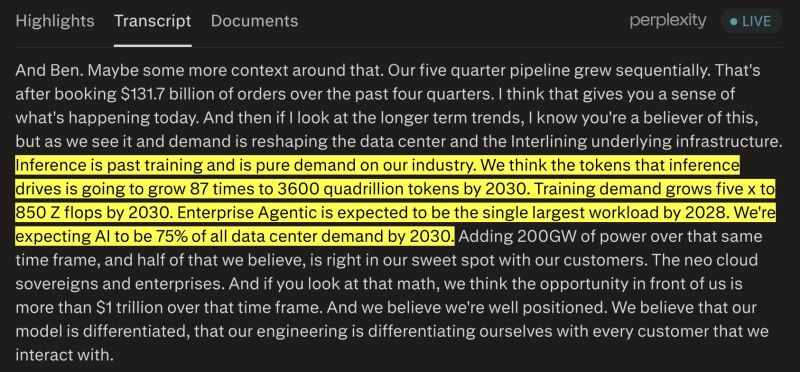
$DELL ON AI INFERENCE DEMAND:
“Inference has passed training and is pure demand on our industry” Dell expects inference token demand to grow 87x to 3,600 quadrillion tokens by 2030, while training demand grows 5x “Enterprise agentic to be the single largest workload by 2028” Source. Wall St Engine
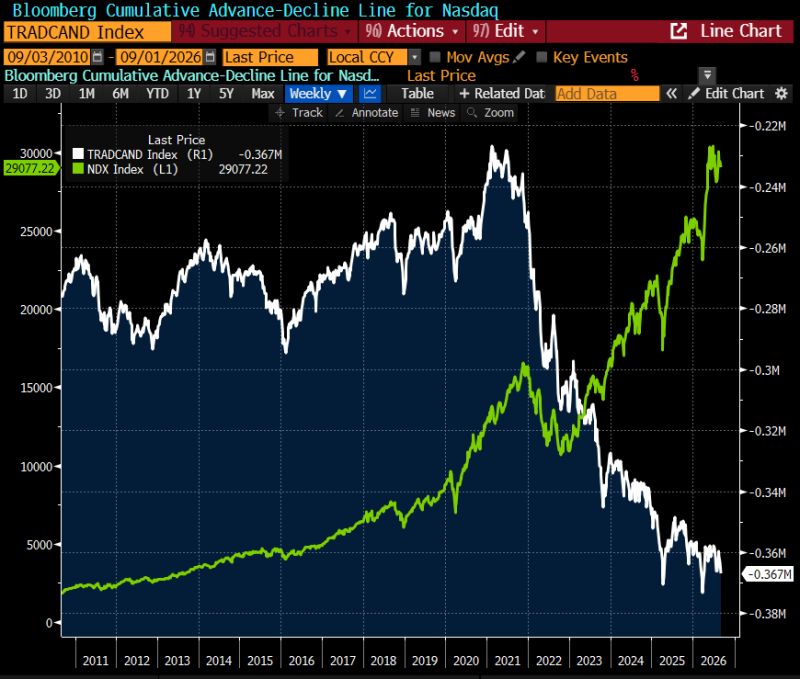
Is the dichotomy between the Nasdaq 100 Index (in green) and the Advance-Decline line (in white) something to be worried about?
Source: Bloomberg, RBC
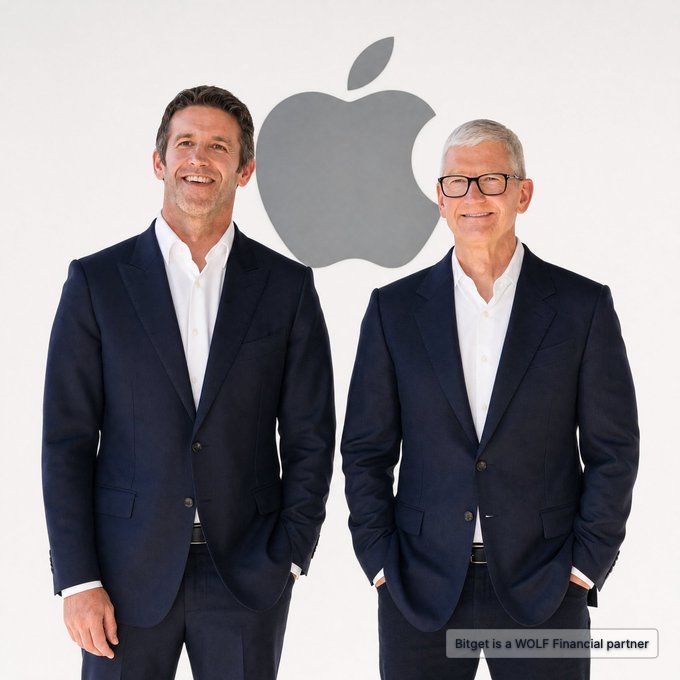
Here is how Apple $AAPL has performed each year since Tim Cook became CEO of the company:
2011: +25.6% 🟢 2012: +32.6%🟢 2013: +8.1%🟢 2014: +40.6%🟢 2015: -3% 🔴 2016: +12.5%🟢 2017: +48.5%🟢 2018: -5.4% 🔴 2019: +89%🟢 2020: +82.3%🟢 2021: +34.7%🟢 2022: -26.4%🔴 2023: +49%🟢 2024: +30.7%🟢 2025: +9.1%🟢 2026*: +17.9% (so far) 🟢 Source: WOLF
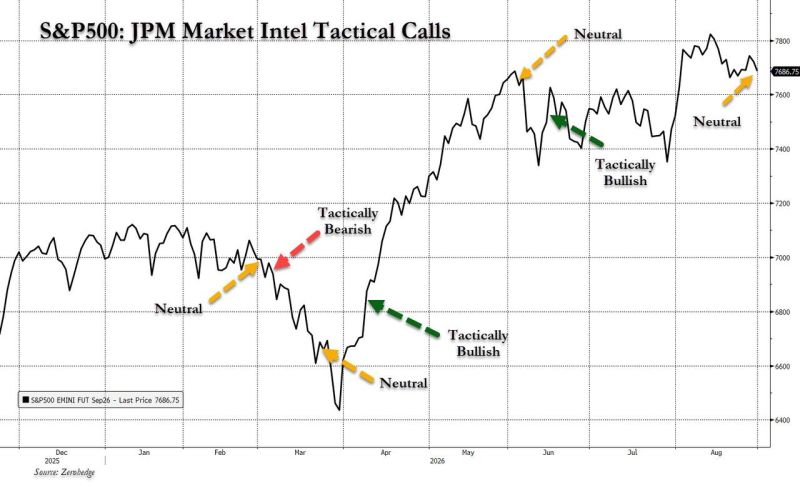
JPMorgan’s trading desk is turning tactically cautious after accurately navigating several of 2026’s major market inflection points.
The message is not outright bearish: economic growth and earnings remain resilient. But the next two to three weeks could be volatile and directionless. Six risks stand out: September is now a live Fed meeting, with markets pricing a higher probability of a rate hike. Investor positioning offers no clear directional signal. Heavy post-Labor Day bond issuance could widen credit spreads. September is historically the S&P 500’s weakest month. Momentum strategies are experiencing an unusually severe unwind. Even strong Broadcom earnings may fail to revive AI and semiconductor stocks. The main catalysts are payrolls, CPI, oil prices and geopolitical developments. JPMorgan’s conclusion: reduce net-long exposure and consider more market-neutral positioning. This is not a call for a bear market. It is a warning that strong fundamentals may not prevent a choppy September—particularly beneath the index level. Source: zerohedge
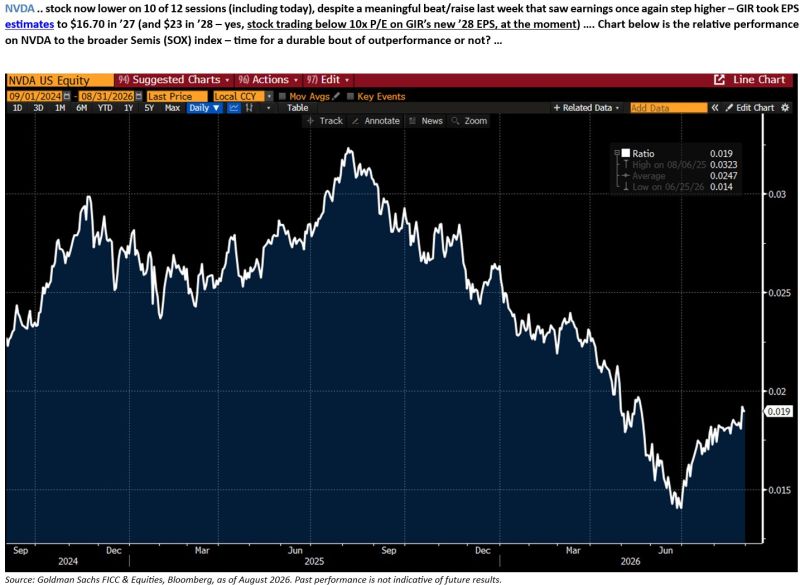
$NVDA now trades under 10x GS’s updated 2028 EPS estimates, per GS’s Peter Callahan
Chart below is the relative performance of Nvidia relative to the broader semiconductors SOX index. Source: Bloomberg, GS, Negligible capital on X