
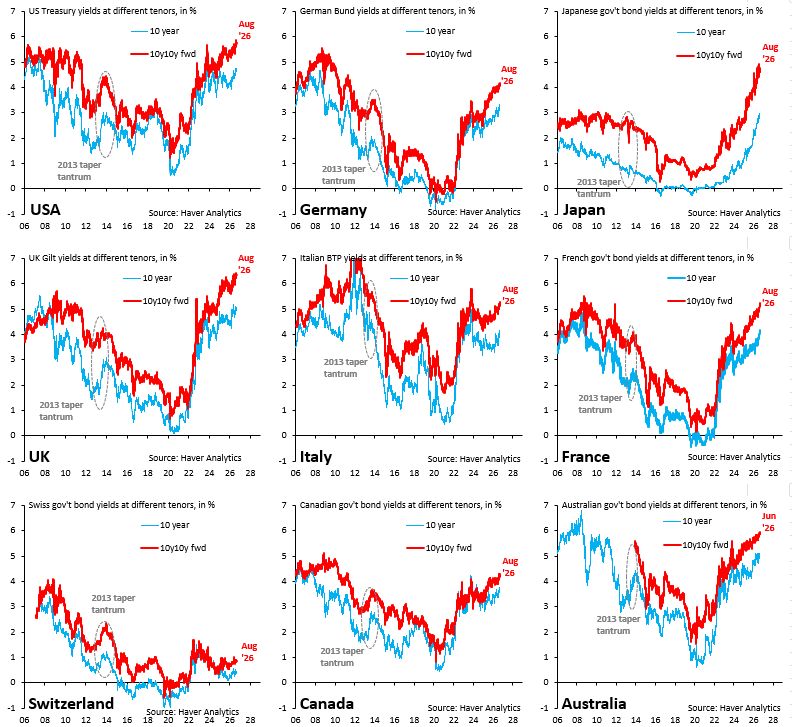
US efforts to contain the rise in long -term yields face two major obstacles
(i) once you draw a line in the sand, markets will test you; (ii) global long-term yields are rising, which inexorably drags up US long-term yields no matter what the US does... Source: Robin Brooks
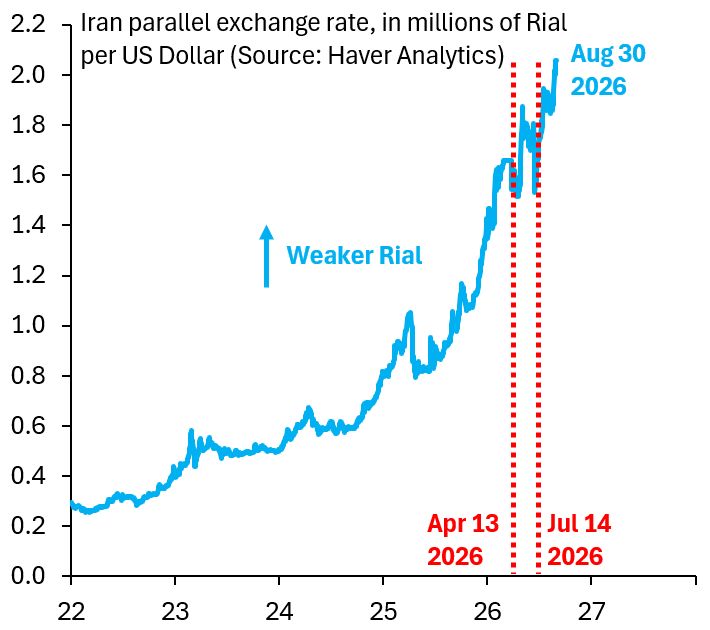
The narrative that Iran holds the upper hand is increasingly difficult to defend.
The rial is hitting fresh lows almost daily as the blockade tightens its grip on the economy, while Tehran’s control over the Strait of Hormuz is steadily weakening. Iran’s remaining leverage is its ability to drive oil prices higher—and so far, even that strategy is failing. Source: Robin Brooks
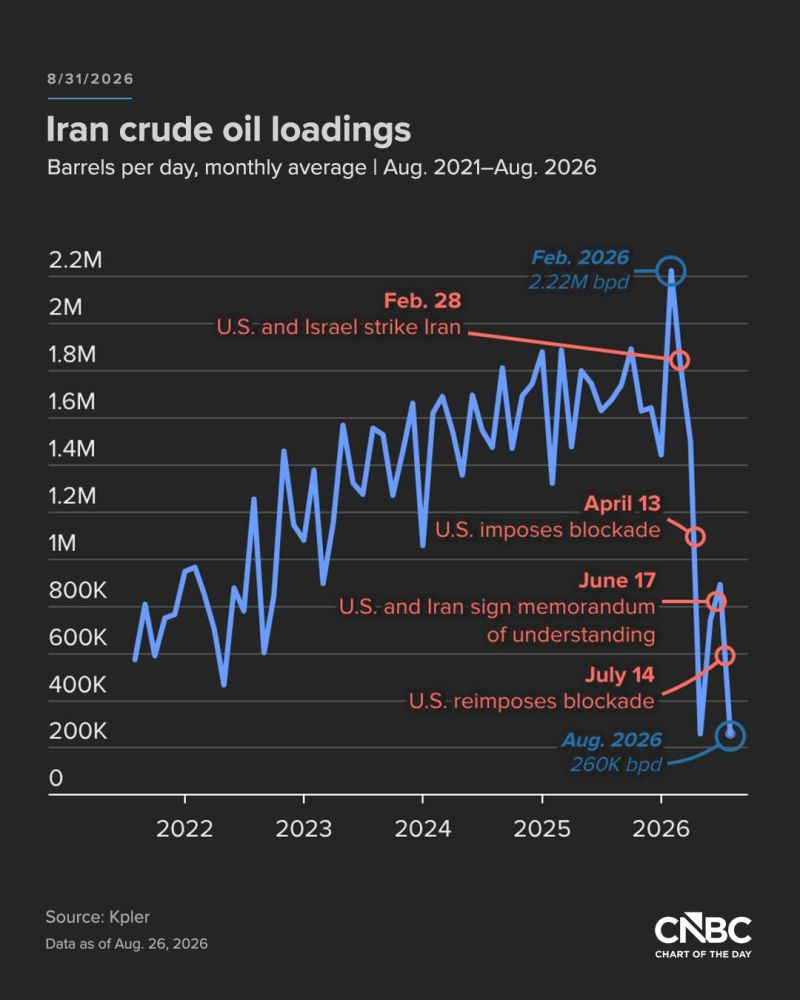
Iranian crude oil exports have plunged in August
The U.S. relies on economic pressure through its naval blockade, rather than military strikes, to coerce Tehran into a deal to fully reopen the Strait of Hormuz. Tehran has loaded about 260,000 barrels per day for export at its ports so far this month, a decline of more than 80% compared with 1.7 million bpd in August 2025, according to data shared Thursday by the trade intelligence firm Kpler. Source: CNBC
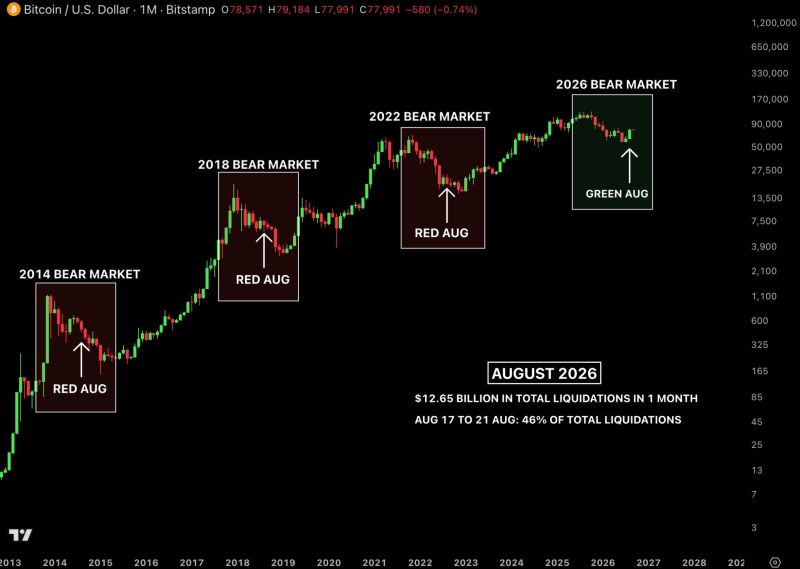
Bitcoin has just delivered its first positive August during a bear market.
BTC gained 25.1% over the month, climbing from $62,794 to $78,545. It was Bitcoin’s third-best August on record, with the price surging as much as 30% from its monthly low to high. The fuel behind the rally? A brutal short squeeze. Between August 17 and 21, traders suffered $5.8 billion in liquidations. August 19 alone accounted for $2.7 billion in short liquidations—the largest single-day short wipeout on record. Total liquidations for the month reached $12.65 billion. But history now offers a warning: whenever Bitcoin has closed both July and August in positive territory, September has finished in the red. Momentum is powerful. Seasonality says caution. September could be the real test. Source: Bull Theory
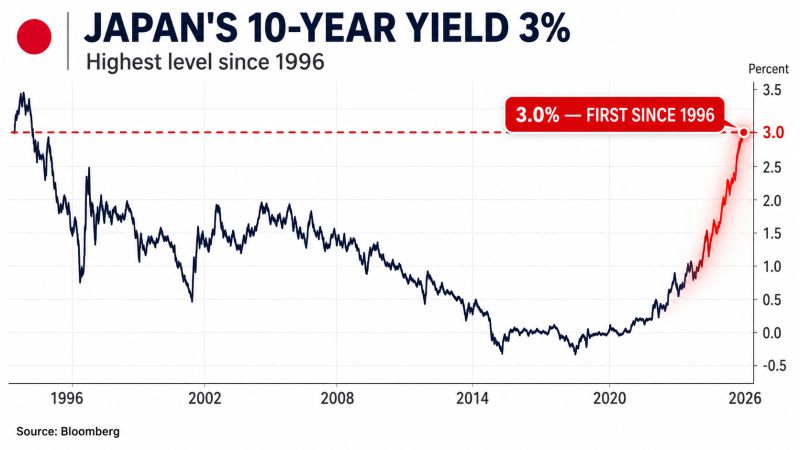
Japan’s bond market has crossed a historic threshold
The 10-year JGB yield has hit 3% for the first time since 1996—doubling from roughly 1.5% in just 12 months. But the bigger story is who now sets the price. Foreign investors account for around 66% of monthly JGB trading volume, up from only 12% in 2009, as the Bank of Japan retreats from negative rates and massive bond purchases. Markets are responding: • A 92% probability of a BOJ rate hike by September • An October increase already more than fully priced in • Record debt-servicing costs of ¥36.6 trillion—around $230 billion—budgeted for the next fiscal year, up 17% For decades, the BOJ dominated Japan’s bond market. Now, market forces are taking control—and the cost of financing the world’s most indebted major economy is rising fast. Investors, not the BOJ, are increasingly setting the price of Japanese debt. Source: Global Markets Investor, Bloomberg
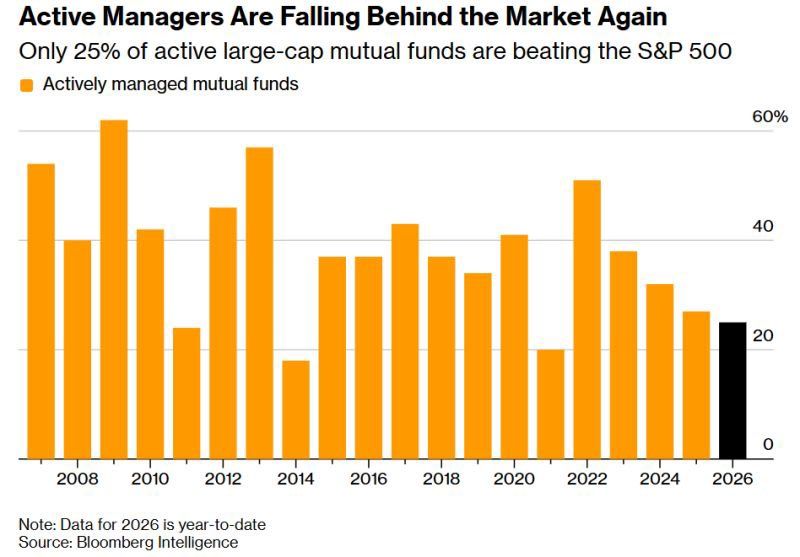
Only 25% of large-cap managers are beating the S&P 500 this year.
Source. Bloomberg
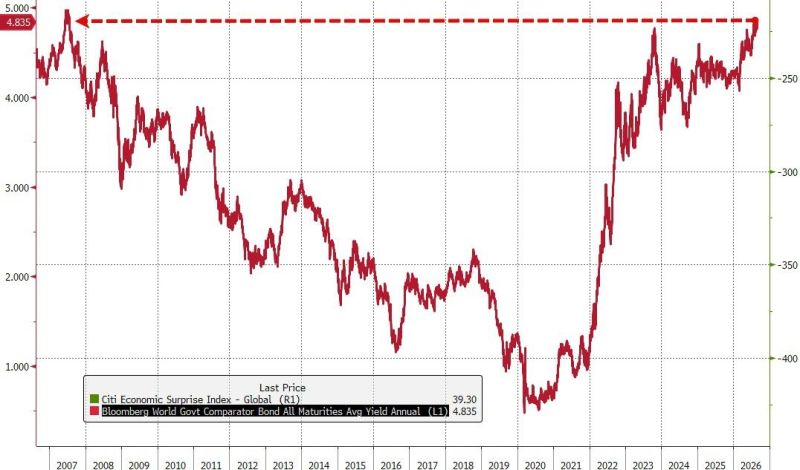
Global sovereign bond yields (in aggregate) hit their highest since 2007
Source: zerohedge
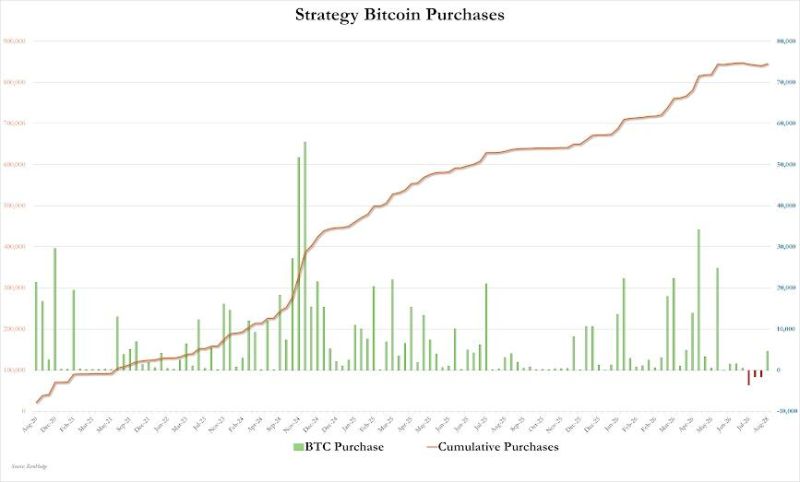
Strategy has started buying bitcoin again after a summer spent selling it.
The Bitcoin treasury company picked up 4,603 BTC for $369.7 million in the week to August 30, at an average of $80,318 apiece, according to a filing with the Securities and Exchange Commission. That takes its stack to 845,050 BTC, bought for $63.73 billion at an average of $75,412. It paid for the purchase by issuing stock. Strategy sold 4,531,421 MSTR shares through its at-the-market programme over the same week, raising $602.8 million net of commissions. Bitcoin took $369.7 million of that, STRC buybacks $151.8 million, dividends on the same preferred stock $50.7 million, and $30 million went into its USD Cash account. This is the biggest purchase since May 18th. Strategy sold 6,948 BTC for roughly $432.5 million between May and August, working out at about $62,250 a coin. It has now bought back at $80,318, roughly 29% higher, leaving it 2,345 BTC lighter than before the selling started, with about $63 million of the difference retained in cash... Source: zerohedge