
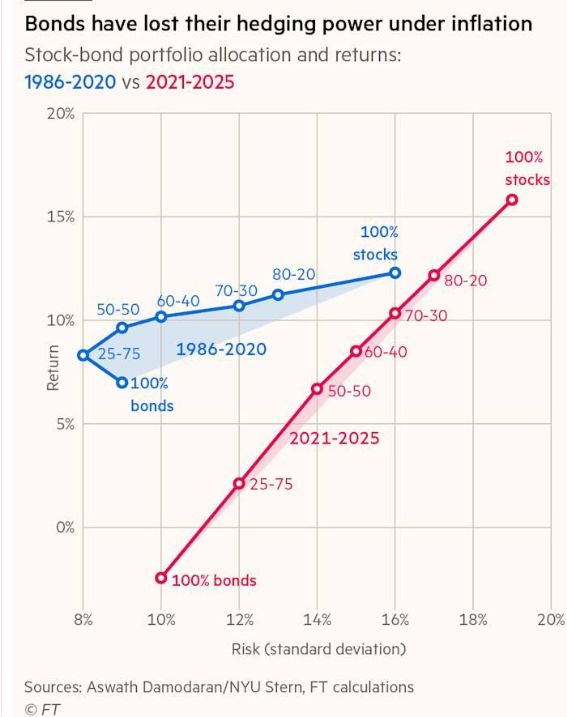
A lost decade in bonds well under way
Source: Global_Macro
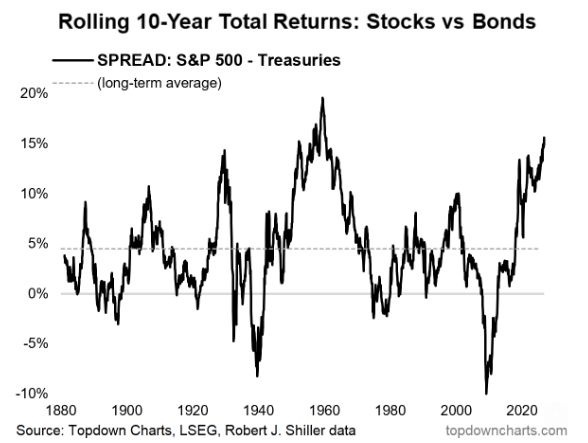
Stocks are now outperforming Bonds over the last 10 years by the largest margin in 66 years
Source: Topdown Charts, LSEG
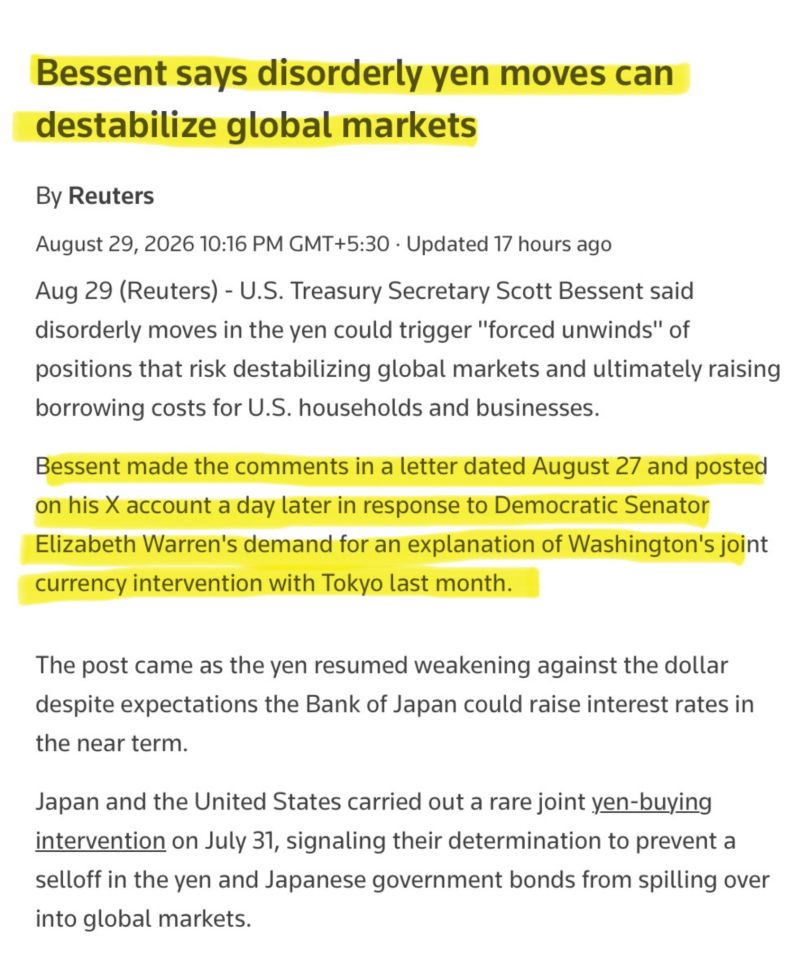
EVEN THE US TREASURY SECRETARY IS NOW WARNING ABOUT YEN CARRY UNWIND.
Scott Bessent said a disorderly, sharp decline in the yen could set off forced unwinds of major trading positions. He warned this could spread stress across global markets, not just Japan. The end result, he said, would be higher borrowing costs for US households and businesses. This warning comes in a letter responding to Senator Elizabeth Warren, who questioned the US and Japan's joint intervention to defend the yen last month. The yen is already weakening again, sliding back toward 160 per dollar. That is the same level that triggered the original intervention just weeks ago. Bessent also pointed to Argentina, saying the Treasury used the same emergency fund last year to stop a currency crisis there before it spread further. He says Acting early is cheaper than waiting for a full blown crisis. If the Treasury Secretary himself is this concerned about the fallout, the risk here is bigger than markets are currently pricing in. Source: Bull Theory
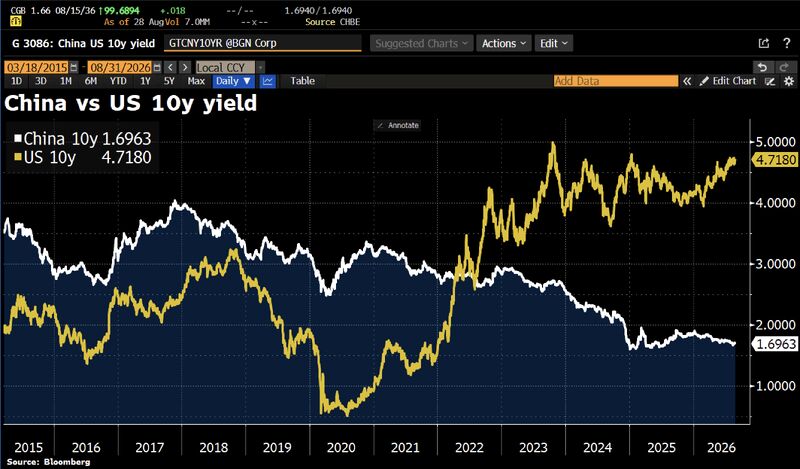
The great bond divergence: China 10y bond yields now 300bps below 10y USTs.
But this is not due to markets passing judgment on the 2 countries' fiscal profiles. According to Barclays, China's super-low yields reflect its closed capital account, high savings rate, and lack of investable assets. Source: HolgerZ, Bloomberg
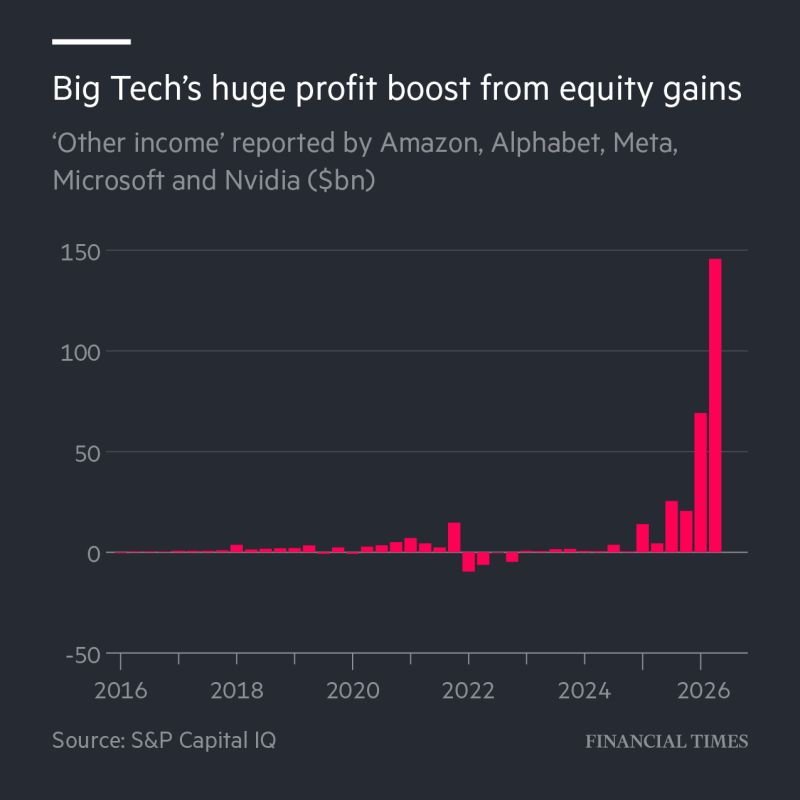
Big tech giants booked a more than $160bn windfall last quarter from investments in other AI companies
Flattering their earnings and raising concerns that paper gains are overstating the strength of the AI boom. Source: FT
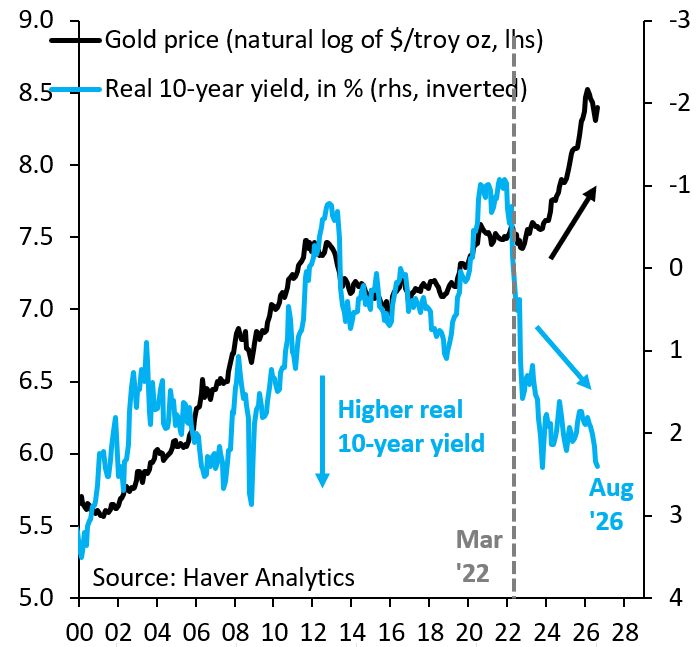
As shown on the chart below, rising real 10-year yields has recently NOT been an issue for Gold prices. And the trend might continue.
If the Fed hikes in September, it'll only do so to anchor long-term yields, though obviously that won't be the stated reason. As highlighted by Robin Brooks, Yield caps among rising debt and out-of-control deficits are the bread and butter of the debasement trade. Gold might keep rising. Despite the rate hike. Because it is view as the ultimate hedge against money debasement. Source: Robin Brooks
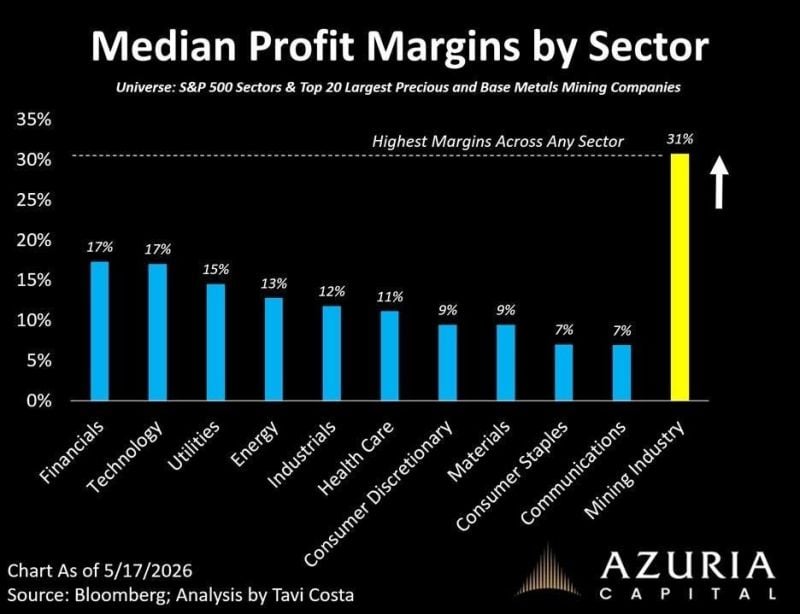
This chart is a good reminder that the mining industry is generating profits on a scale no other sector in the market can even come close to matching.
Source: Otavio (Tavi) Costa
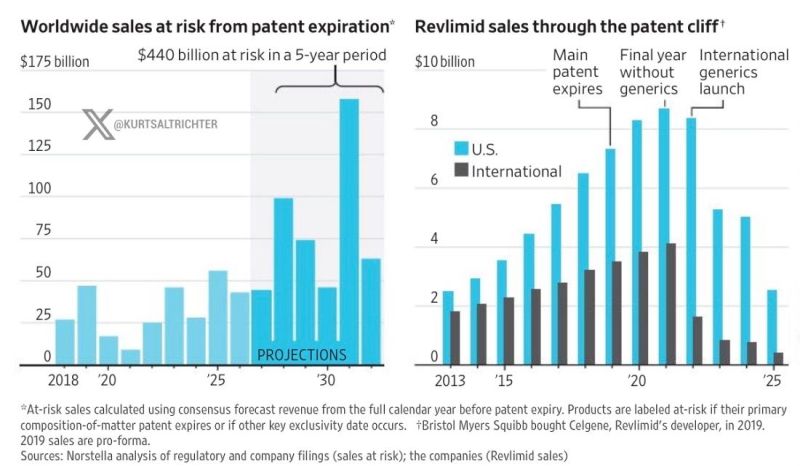
As highlighted by Kurt S. Altrichter, Big Pharma is heading toward a $440 billion patent cliff. And this is bullish
Many of the industry’s biggest cash-generating drugs will lose exclusivity this decade. Novo Nordisk could see 77% of its 2025 sales exposed by 2033, while Keytruda—a $32 billion blockbuster—is set to lose patent protection before 2030. Once generics and biosimilars enter the market, revenues can collapse within just a few years. The industry’s response? Buy growth. Pharmaceutical companies announced $114 billion of deals last quarter—the highest level since 2019. That wave of M&A is driving capital into biotech, helping the sector gain more than 30% this year. With $440 billion of revenue potentially at risk, Big Pharma’s race to replenish its pipeline is creating a powerful bid for takeover targets across the biotech sector. Source: Kurt S. Altrichter, CRPS®