
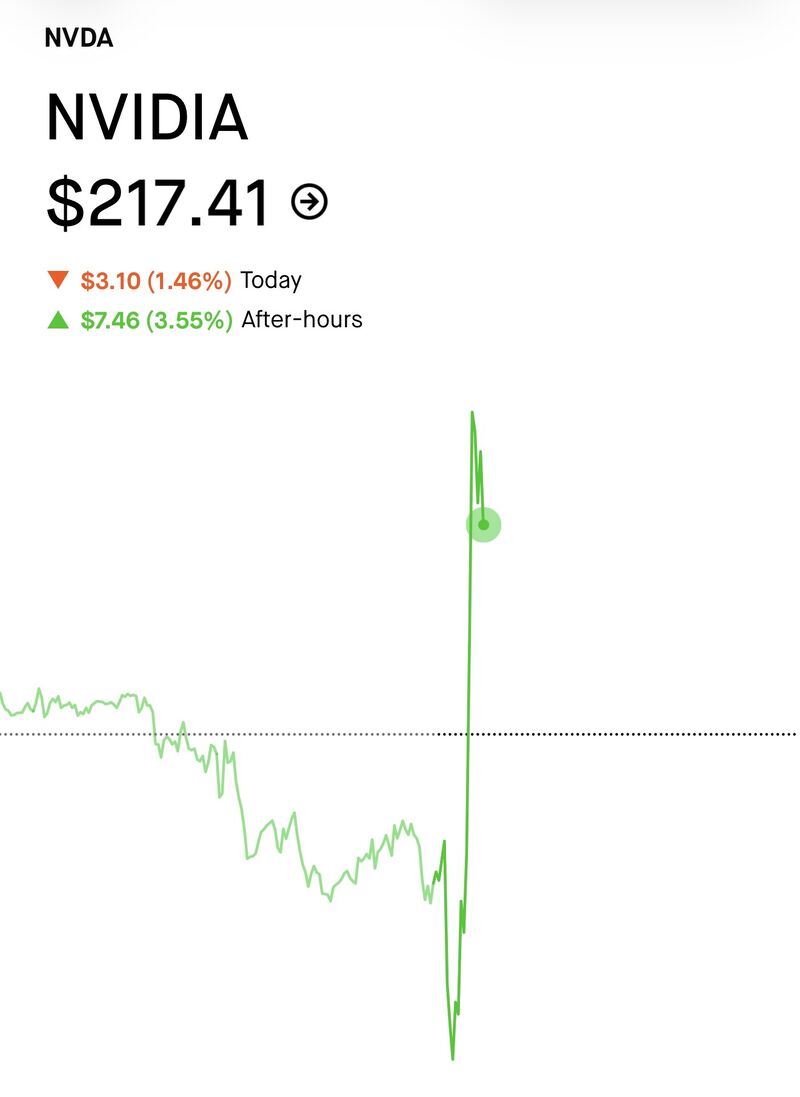
Yesterday evening in after-hours trading $NVDA reversed sharply and closed up nearly 4% after a stunning comment from its CFO:
“We expect revenue to grow by approximately 70% in fiscal 2028. This is a supply-constrained outlook.” In other words, the world’s largest company believes it could nearly double revenue again next year—and demand would be even stronger IF SUPPLY COULD KEEP UP. What makes this remarkable is the timing. NVIDIA rarely provides guidance this far in advance. Offering such a confident outlook one year ahead suggests management has exceptional visibility into the AI infrastructure pipeline. The message is clear: The AI investment cycle is NOT slowing down. And the rise of AI agents may be about to unlock an entirely new wave of economic value. This is bullish 🚀 Semis, photonics, memory, power, neocloud, etc. Source: Michael Sikand
Nvidia $NVDA has agreed to acquire Hugging Face for $12.9B
Hugging Face hosts millions of AI models and datasets and has become a major hub for open-source AI developers. Hugging Face was recently hacked by OpenAI AI agents during a cybersecurity test. Source: Trend Spider, Bull Theory

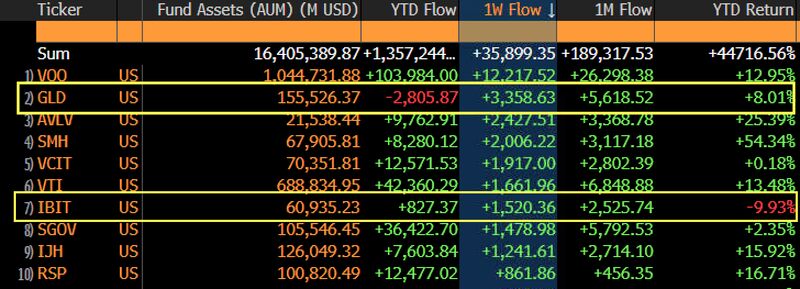
Gold and Bitcoin ETFs have combined for +$7b in flows in past week, by far a record for a 5-day period as debasement trade steals spotlight from AI.
Also notable $IBIT YTD flows are now positive. Source: Eric Balchunas, Bloomberg
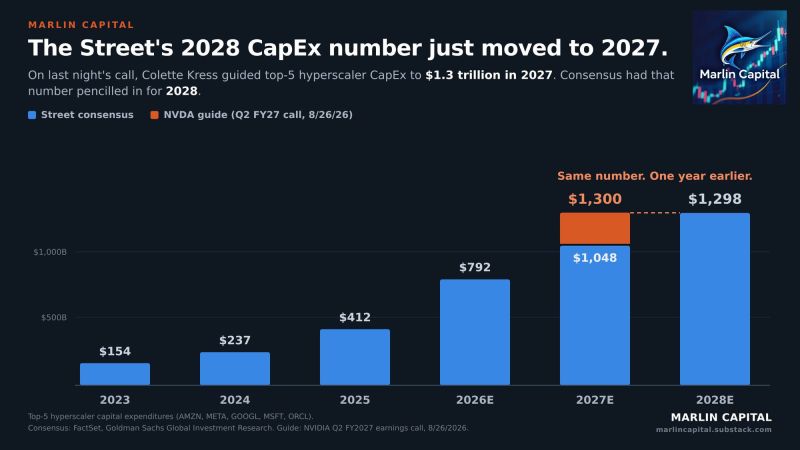
As highlighted by David Marlin on X, the most important line from tonight's $NVDA call came from the CFO.
“CapEx by the top 5 hyperscalers is expected to reach $800B in 2026 and $1.3T in 2027.” Consensus had $1.3T in 2028. She just moved it up a year to 2027‼️ It seems (again) that everyone is underestimating the strength of this AI supercycle Source: Marlin Capital
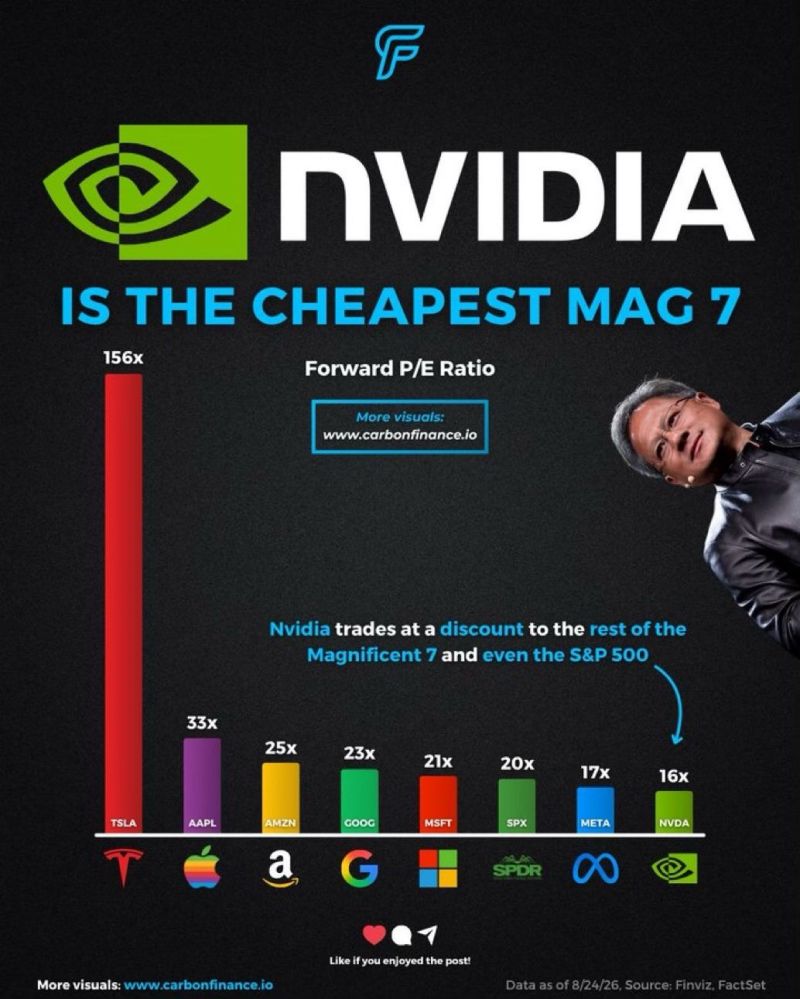
For what PE ratio is worth as a valuation tool for Tech stocks, Nvidia $NVDA is the cheapest of the Mag 7 on a Forward PE Ratio basis:
TSLA: 156x AAPL: 33x AMZN: 25x GOOG: 23x MSFT: 21x SPX: 20x META: 17x NVDA: 16x
Michael Burry has opened a bullish position in Nvidia $NVDA
Labeling the position as a "hedge" Source: Michael Burry Stock Tracker ♟

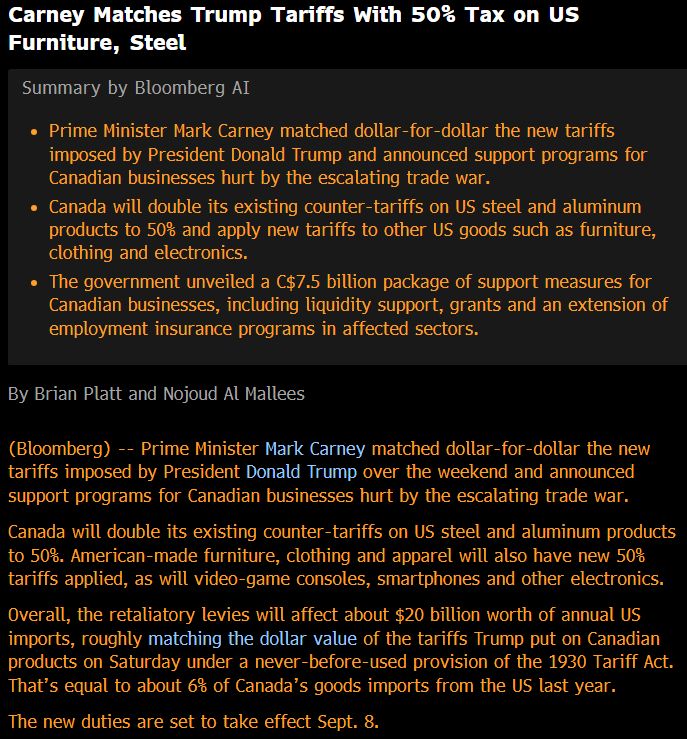
In case you missed it... Canada to double existing counter-tariffs on US steel and aluminum products to 50%, in addition to other tariffs on furniture, clothing, and electronics.
Source: Kevin Gordon
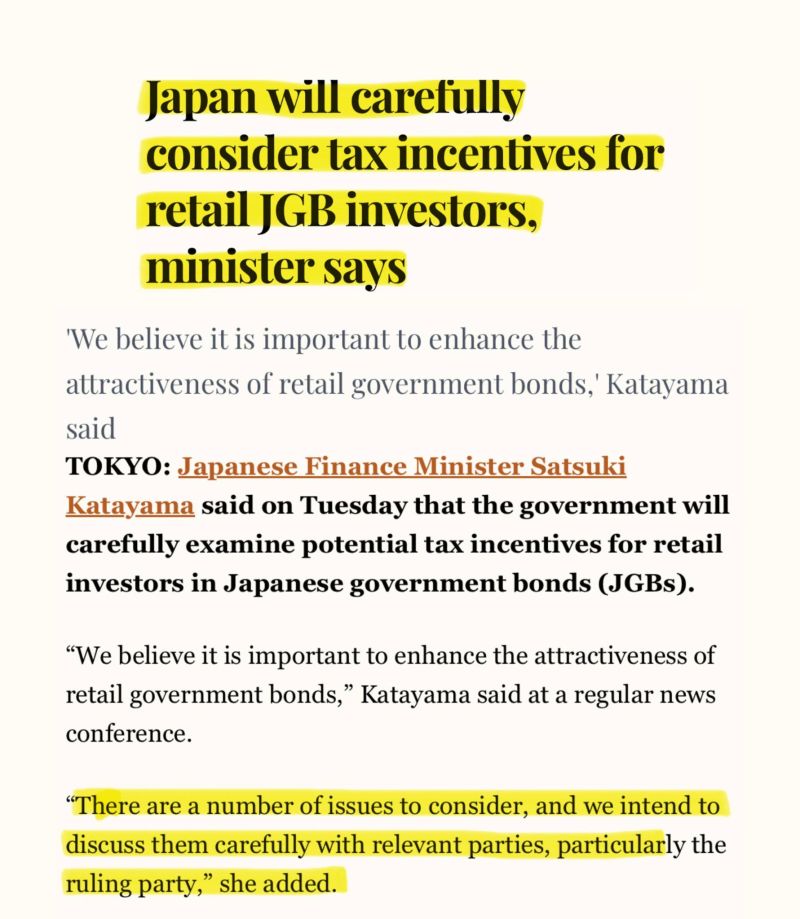
JAPAN IS TRYING TO FIND NEW BUYERS FOR ITS MASSIVE BOND MARKET.
For decades, the Bank of Japan was the buyer of last resort for Japanese government debt. But since 2024, the BOJ has been reducing its bond purchases — leaving a growing demand gap as yields rise. Now Tokyo wants households to help fill it. Japan’s Finance Ministry is reportedly considering adding government bonds to the New NISA tax-free investment program as part of its fiscal 2027 tax reforms. Some lawmakers are even pushing for inheritance-tax incentives. The challenge is huge: → BOJ owns roughly 50% of JGBs → Banks and institutions hold around 40% → Japanese households own just 2% Meanwhile, long-term Japanese yields are trading around levels not seen in decades. Japan spent years using its central bank to absorb government debt. Now it increasingly needs private investors to take over. The big question: Will Japanese households become the bond market’s new buyer of last resort? Source: Bull Theory