
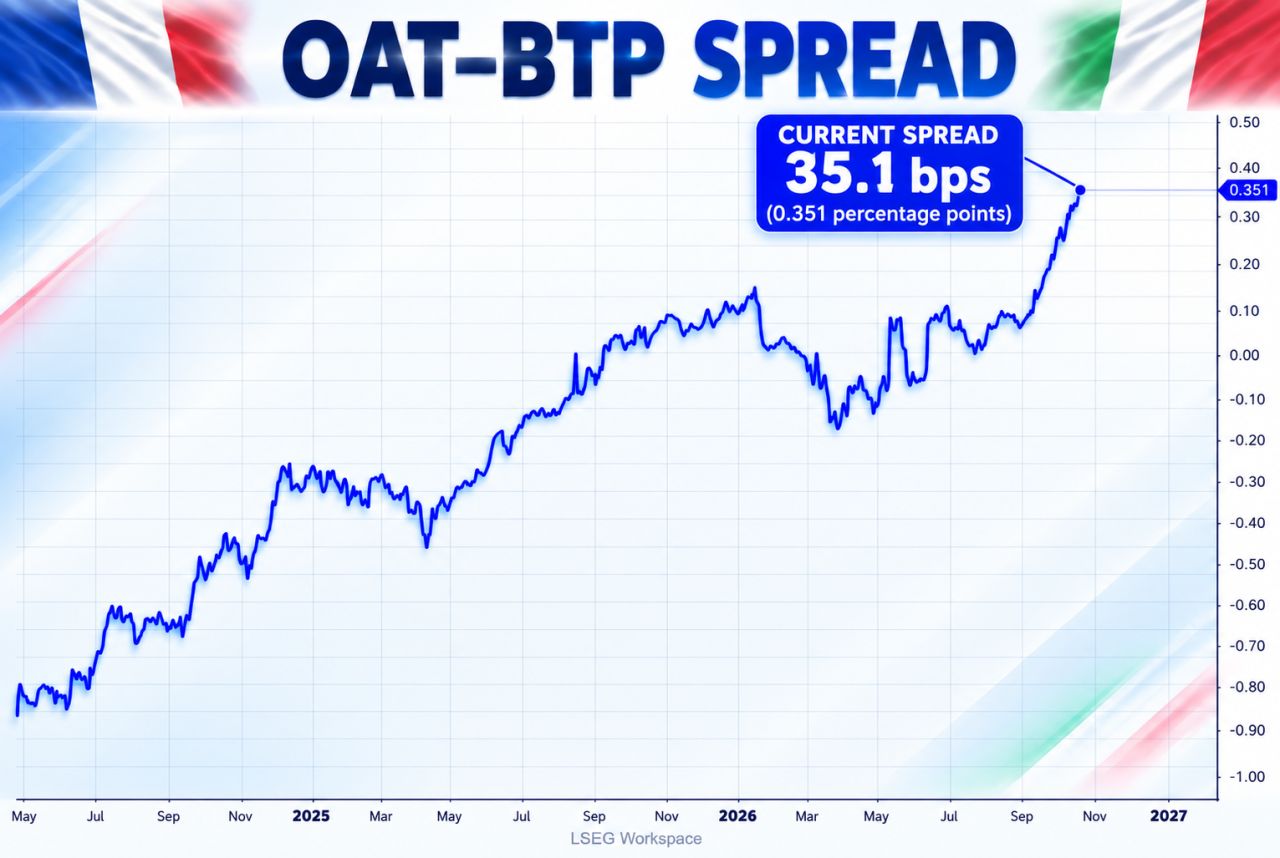
The European sovereign problem is increasingly becoming a France problem
The OAT-BTP spread continues marching higher, highlighting just how dramatically the market is redrawing Europe's traditional core/periphery divide. Source: TME
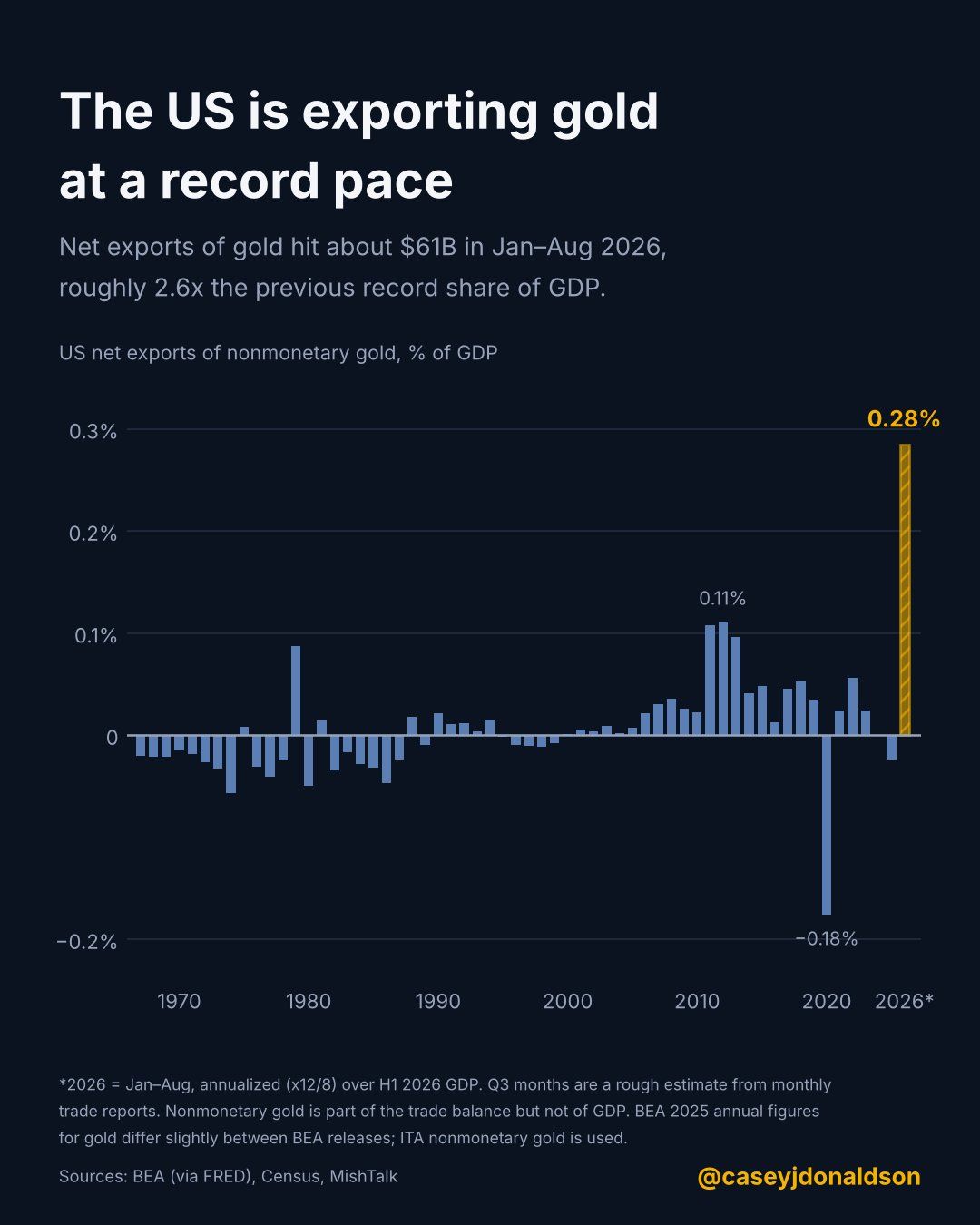
The US exports dollars to the world. Is the world increasingly sending them back for gold?
Foreign buyers are importing record amounts of American gold. Precious metals have reportedly overtaken oil to become the largest US export category. Meanwhile, foreign appetite for US Treasuries is weakening. Together, these trends raise a question: is the world changing what it wants to hold? For decades, dollar reserves and US government bonds sat at the heart of the global financial system. Today, rising sovereign debt, fiscal pressures and concerns about purchasing power are strengthening the appeal of an asset with no issuer and no repayment promise. Gold. Trade flows alone do not prove the end of dollar dominance. But they deserve attention. When confidence in government promises weakens, investors often reach for something governments cannot print. Five thousand years of monetary history still carry weight. Source: Casey Donaldson @caseyjdonaldson
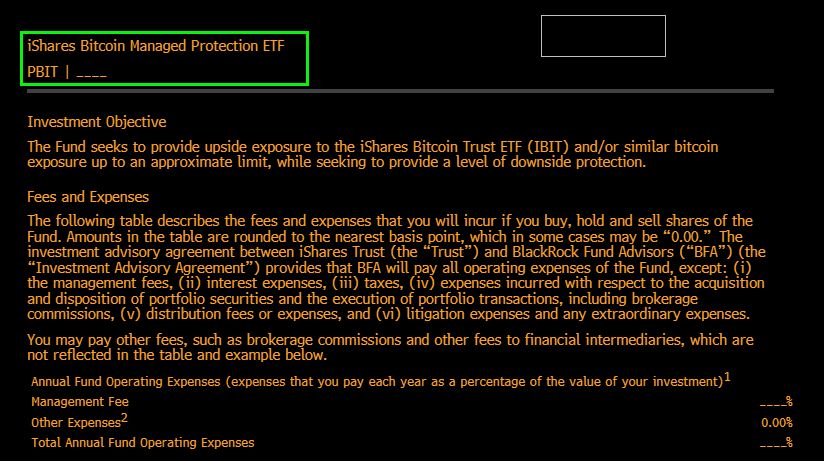
BlackRock just filed for another Bitcoin ETF
This one will be a "buffer" Bitcoin ETF which will means it will offer downside protection but investors will give up some upside to get that protection. Ticker will be $PBIT. Source: Bloomberg, James Seyffart @JSeyff
The biggest risk AI poses to jobs might not be mass layoffs
The biggest risk might be the disappearance of the career ladder. And business leaders are already raising the alarm. Source: Paul Storm Tamara Storm
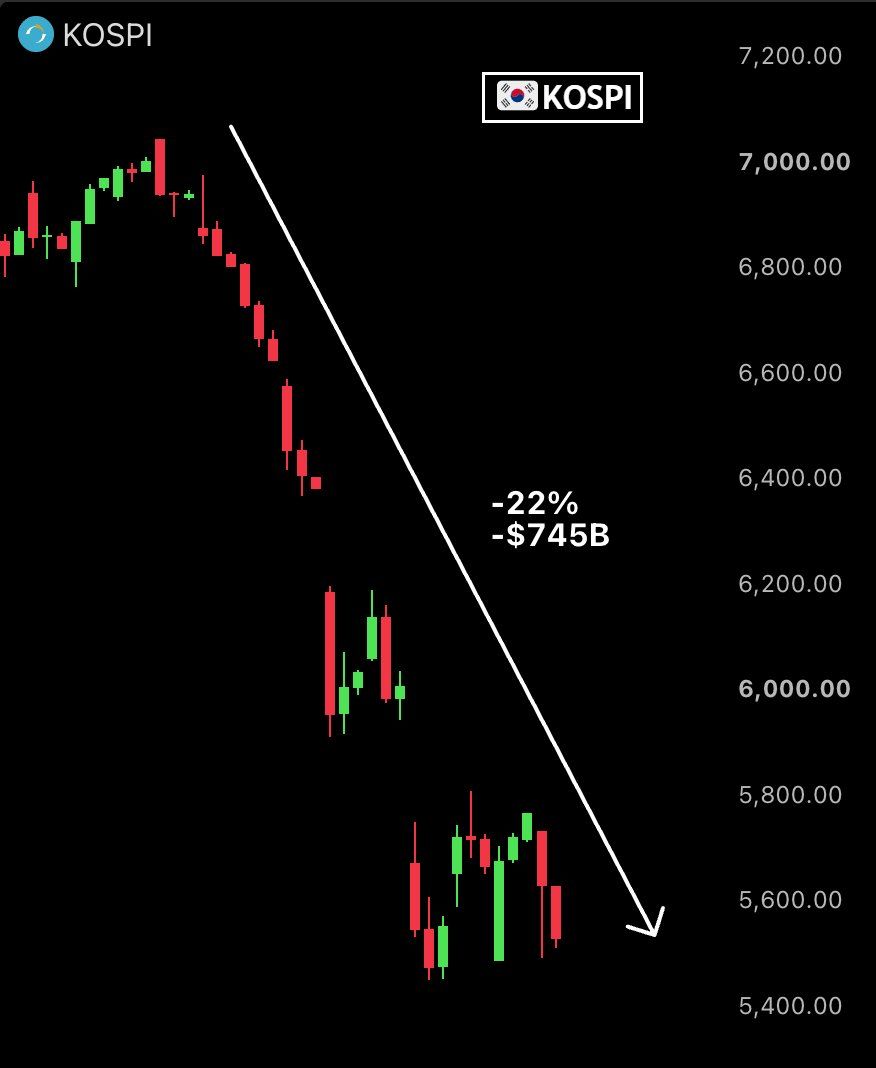
MASSIVE WIPEOUT IN KOREAN MARKETS
Over ₩1,118 TRILLION ($745 BILLION) wiped out from South Korean stocks as the KOSPI crashes -22% in just 2 weeks. Samsung and SK Hynix, which together account for 50% of the index, have crashed -25% and -34%. South Korea's KOSPI falls -4% today, erasing almost all of yesterday's gains. Source: Bull Theory on X
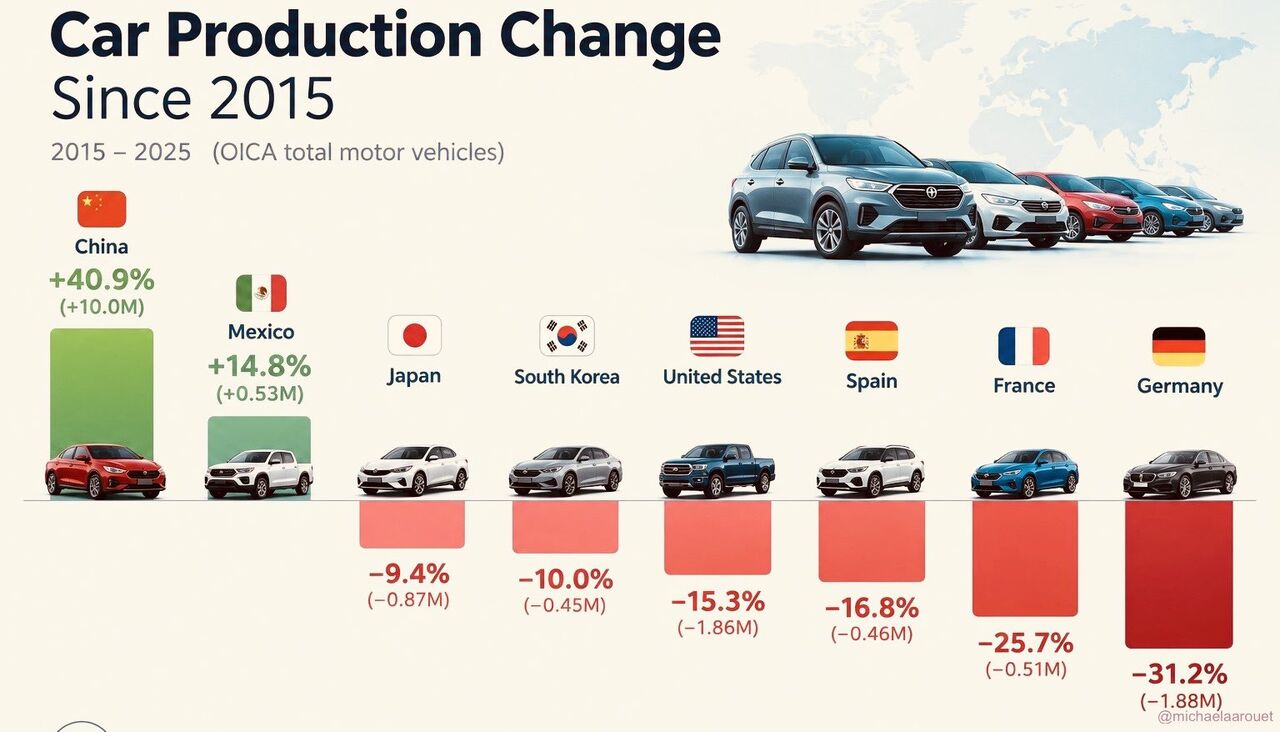
Germany built its prosperity on industry. What happens when that engine stalls?
Vehicle production has fallen 31% since 2015—the steepest decline among major producers. China’s has risen more than 40%. The pressure extends far beyond cars: • Machinery faces Chinese rivals closing the technology gap and competing on price. • Chemical plants operate at roughly 70–75% capacity. • Energy-intensive industrial output remains around 15% below 2018–2022 levels. High energy and labour costs, stagnant productivity, heavy regulation and slow adaptation to electrification and software are eroding competitiveness. Meanwhile, public-sector employment has expanded. Since 2020, growth has relied almost entirely on public consumption and investment, while private-sector contributions have been negative. Debt can support demand. It cannot replace industrial competitiveness. Germany needs cheaper energy, simpler regulation and faster innovation. How long can Europe’s largest economy sustain prosperity while its industrial foundations weaken? Source: Michel A.Arouet
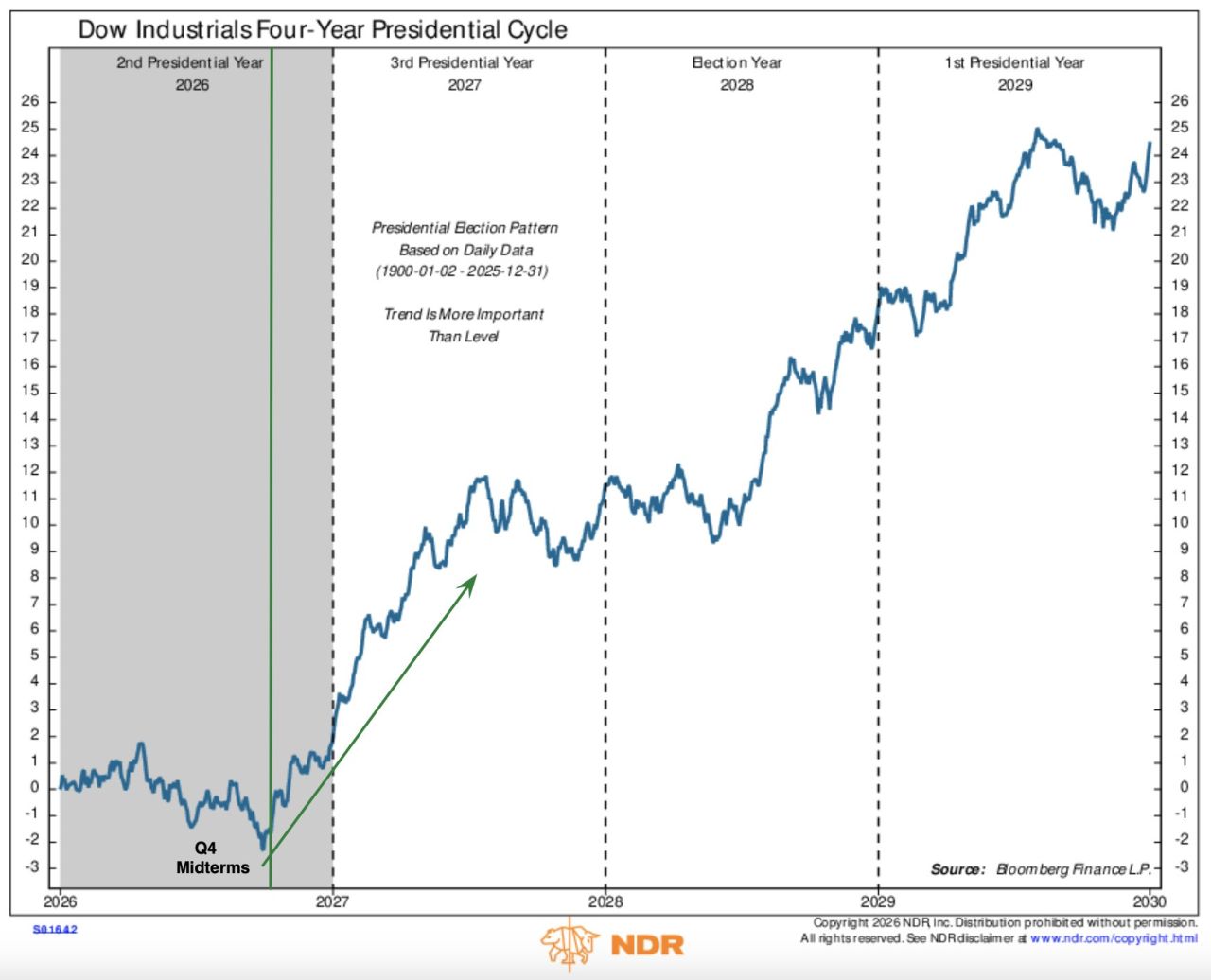
Q4 typically marks the low part of Midterm cycle, delivering the best returns through Q2 of Pre-election Year, averaging +17% returns and a 100% hit rate.
Source: NDR, Finom Group @GroupFinom
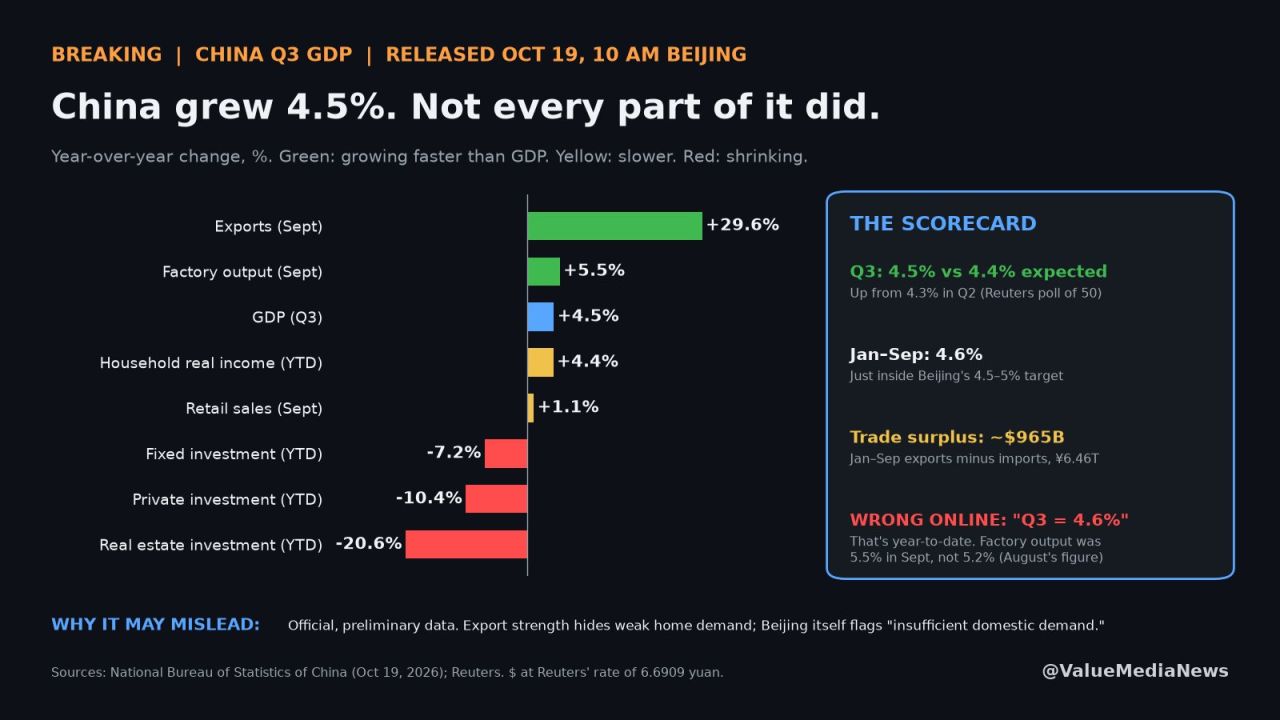
China's economy grew 4.5% last quarter, a hair above forecasts. Factories and exports carried it. Shoppers and home builders didn't.
THE NUMBERS (China's statistics bureau, Oct 19) • Q3 GDP: +4.5% vs a year ago, up from 4.3% in Q2. Reuters poll expected 4.4% • Jan–Sep: +4.6%, just inside Beijing's 4.5–5% target • September exports: +29.6% (yuan terms) • September factory output: +5.5% • September retail sales: +1.1% • Real estate investment, Jan–Sep: −20.6%. Private investment: −10.4% • Urban unemployment: 5.2%, down from 5.3% THE FACTS • Growth did pick up for the first time this year: 5.0% in Q1, 4.3% in Q2, 4.5% in Q3 • Exports beat imports by about ¥6.46 trillion in Jan–Sep, roughly $965 billion • Households' real income rose 4.4%, slower than the economy • Source: https://lnkd.in/e9MskBzs NUANCE These are official, preliminary numbers, and outside economists have long questioned how smooth China's GDP data looks. The growth also leans on selling to the rest of the world, which is exactly what's fueling trade fights with the US and Europe. Retail sales at 1.1% say Chinese consumers still aren't spending. Can an economy keep growing on exports alone when its own shoppers won't spend? Source: Value Media News @ValueMediaNews