
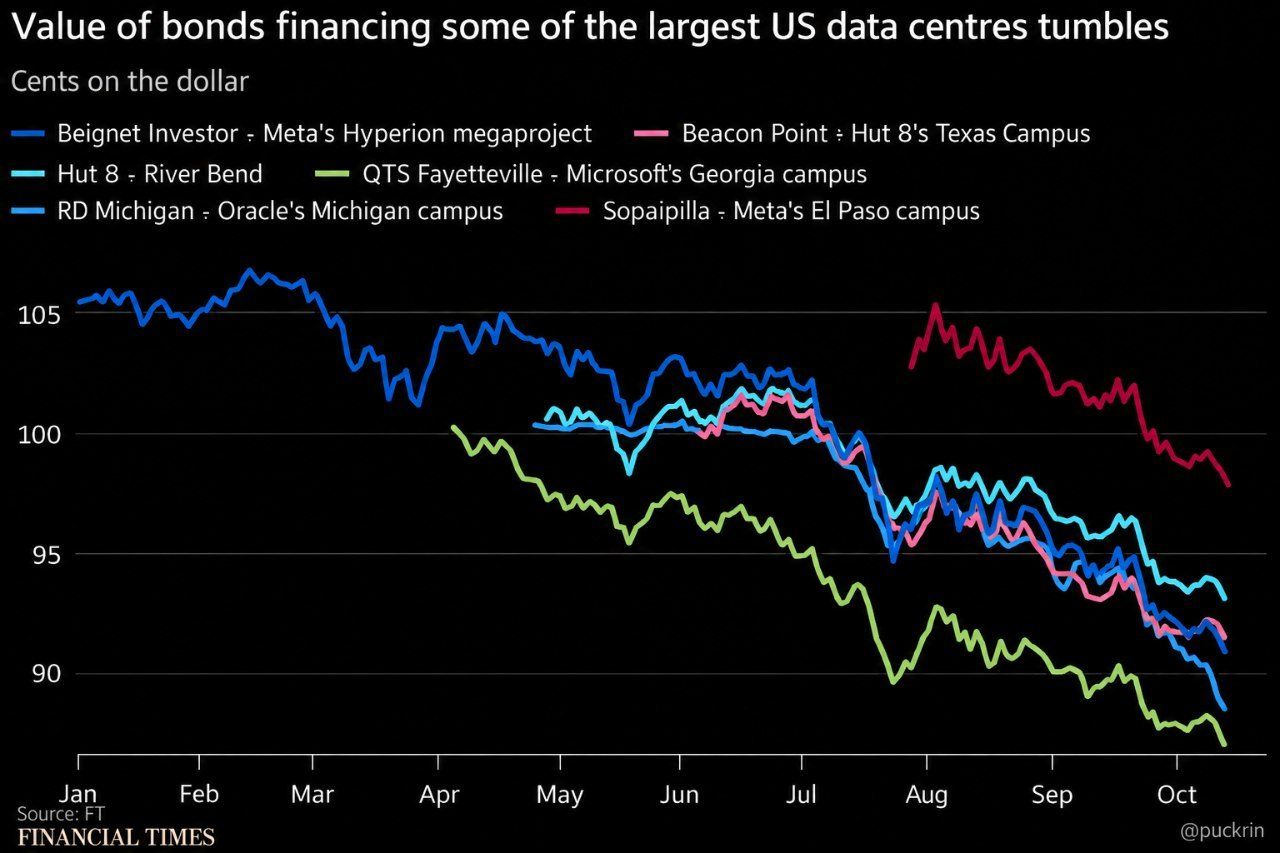
The AI bond rout has now hit the blue-chip tenants as well.
Meta's Hyperion: 91c. Hut 8's Nvidia-leased sites: 91-93. Microsoft-leased Excalibur: 87. All were sold as the "safe" end of the AI trade. Well, it's now very quickly repricing like the risky end. Source: Nic @puckrin, FT
Frankfurt Airport facing kerosene shortage. The reasons are maintenance of a pipeline and low river water levels
Lufthansa is taking steps to address difficulties in sourcing kerosene at Frankfurt Airport, one of Europe’s main air traffic hubs. The German airline has put in place precautionary measures involving the loading of additional fuel on certain flights, with the aim of minimising the need to refuel upon arrival at the German airport. The decision, reported by the German newspaper *Bild*, concerns an operational strategy known as ‘tankering’: aircraft carry more fuel than is necessary for the flight they are about to undertake, so as to have a reserve available for the next flight and reduce their reliance on fuel supplies at the destination airport. Lufthansa has stated that, thanks to the measures taken, ‘no flight cancellations are currently planned’. The measures will remain in force until further notice and will be updated as the situation develops.

A railroad is like a lie – you have to keep building to it to make it stand." - Mark Twain, 1867
Source: zerohedge
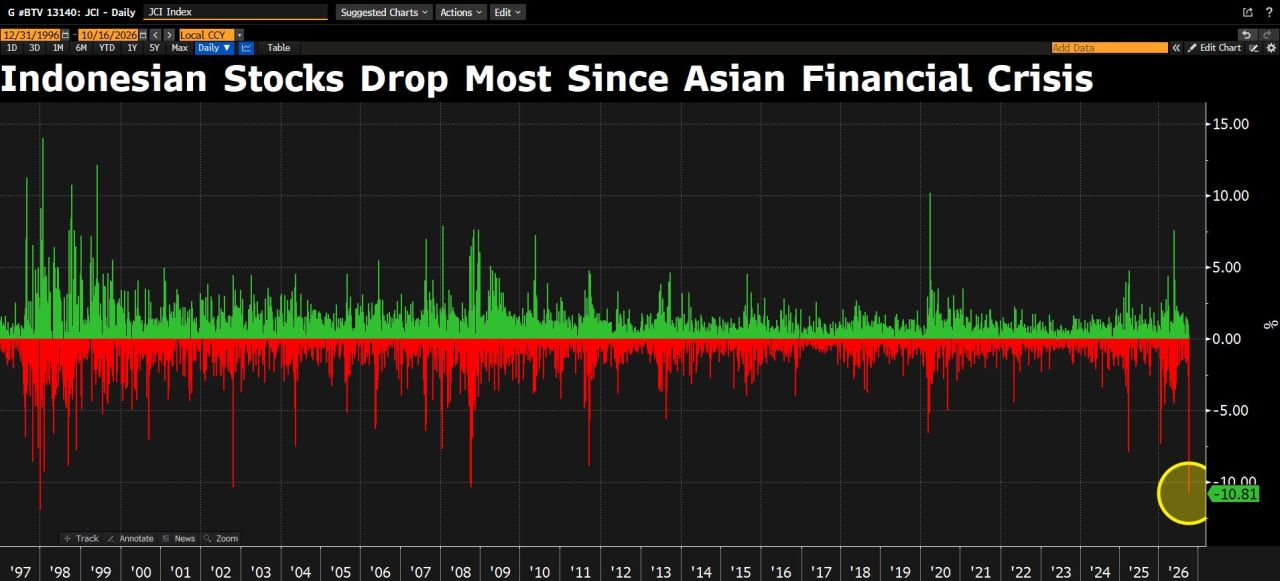
Indonesian stocks plunge -12%, the most since the Asian Financial Crisis in the late 1990s.
MSCI weighs removing Indonesia from its global benchmarks, says it no longer merits EM status Source: David Ingles, Bloomberg
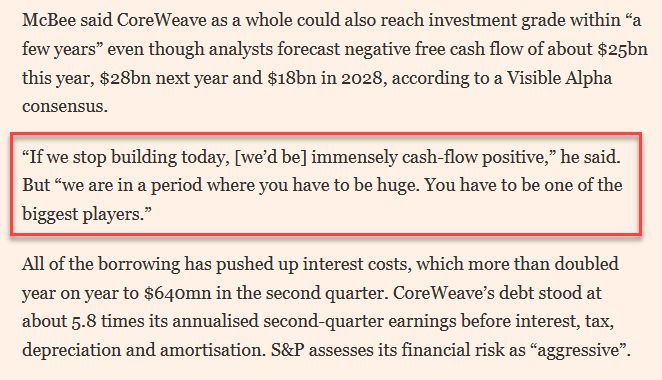
Leopold low 2.0?
Leopold reportedly loaded up on CoreWeave and other AI-related calls in early September, just weeks before the latest selloff. Consider the CRWV November $95 call, which has collapsed from a high of $18 to just $1 since September 8. None knows the specific options Leopold bought, but this contract carries substantial open interest. The options unwind may also have amplified the selloff. Dealers who initially bought delta to hedge call exposure may subsequently have been forced to sell as those calls lost value, adding further pressure to the underlying stocks. Meanwhile, DRAM has crashed back to the Leopold lows, while CRWV is as oversold as during the initial selloff. With positioning washed out, options crushed, and technicals deeply oversold, could this be a buying opportunity? Source: TME

BTFD ?
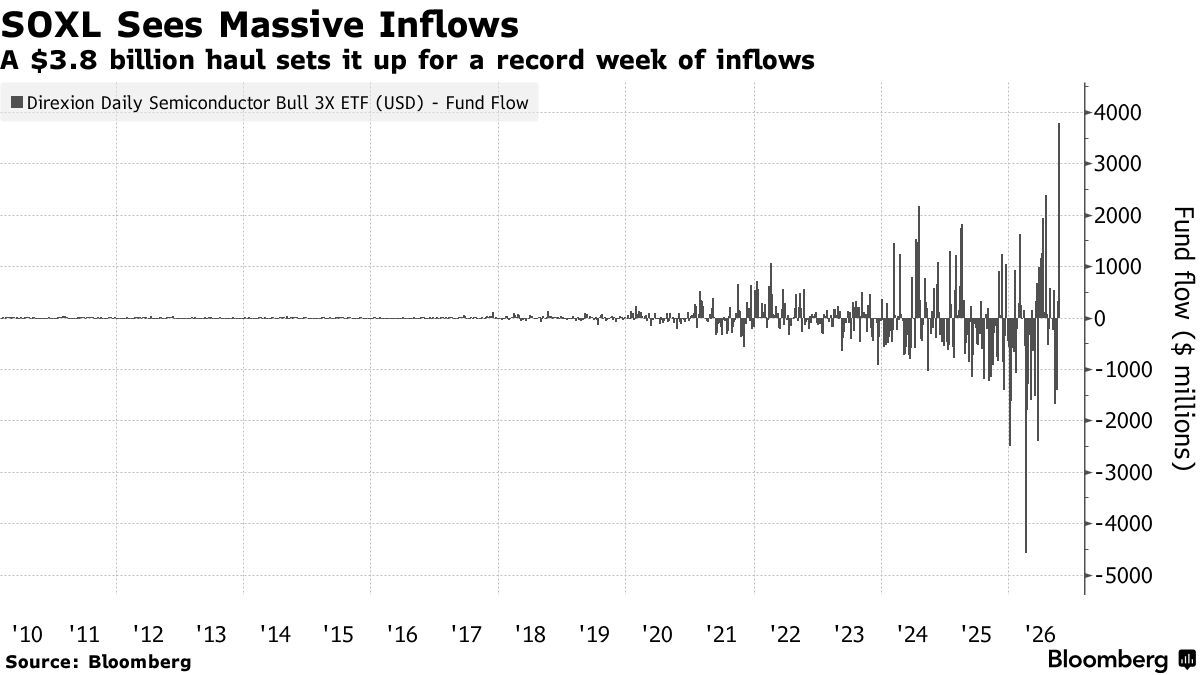
The 3x Long Semiconductor ETF $SOXL is on pace for its largest ever week of net inflows - Bloomberg Source: Bloomberg
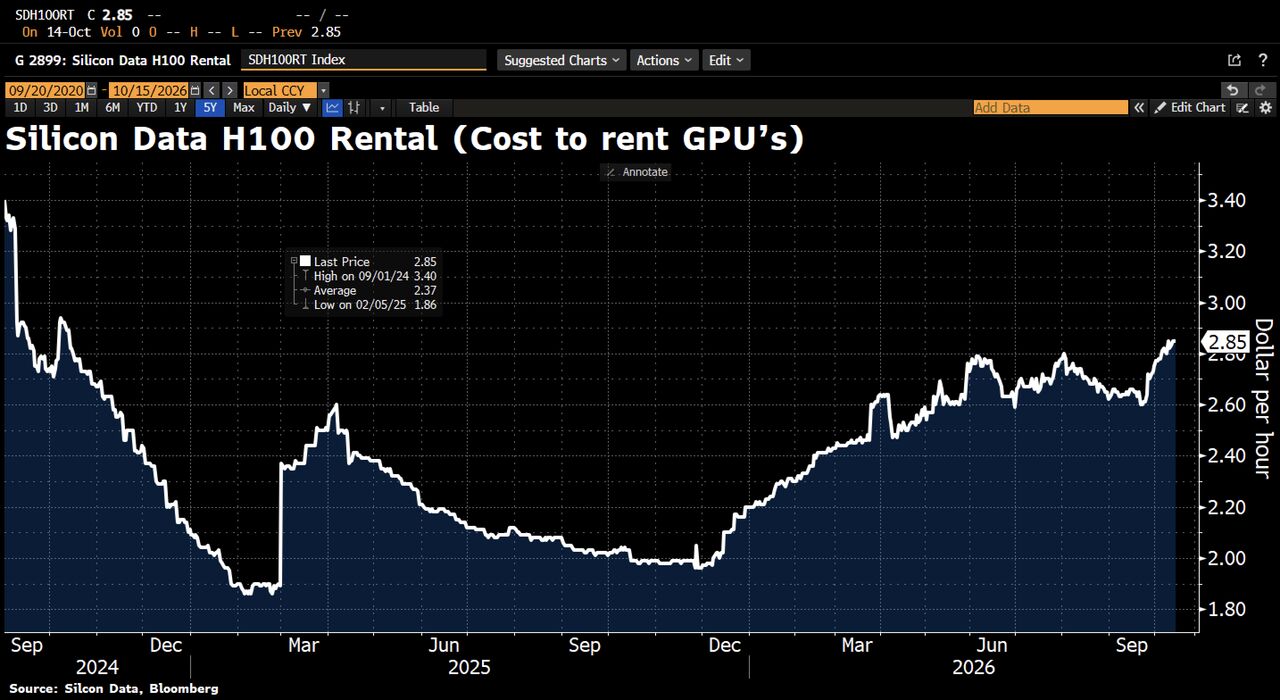
AI bubble fears meet rising GPU rental prices:
Nvidia H100s now cost $2.85 per hour to rent, up 53% from the Feb 2025 low and the highest since 2024. Older chips were supposed to get cheaper as new ones arrived. This chart tells a different story. Source: HolgerZ, Bloomberg
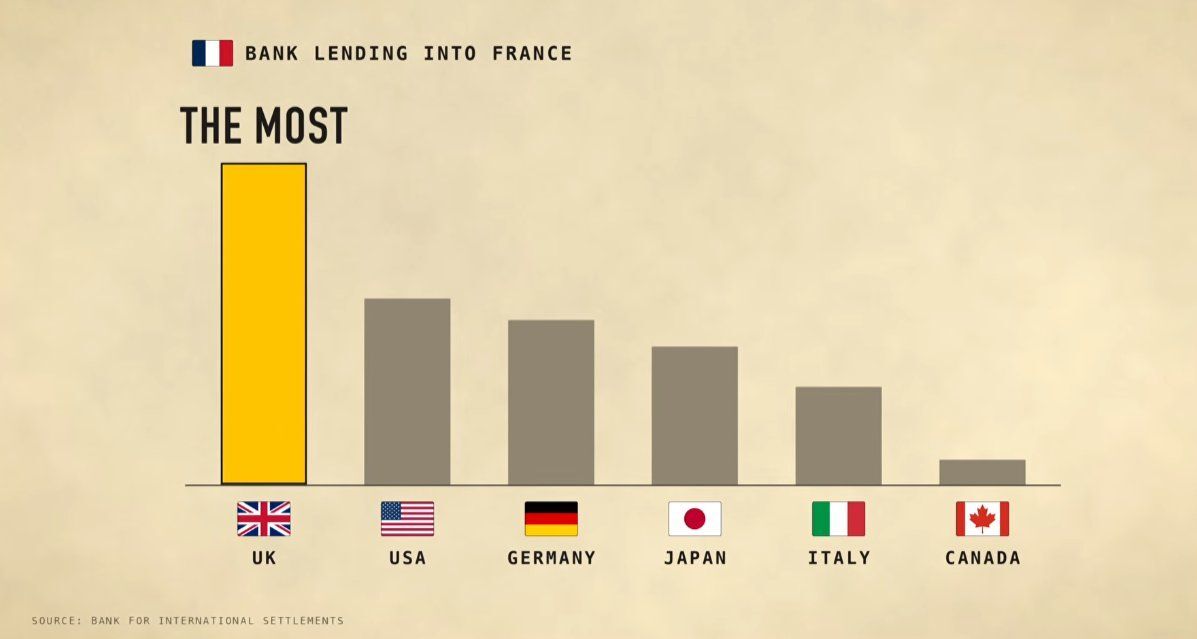
The United Kingdom has purchased the most amount of French bonds out of any nation.
This puts the UK at the greatest risk of potential contagion & losses if France were to default on their debt or require an IMF & European Central bank loan. When Greece experienced this in 2011 European Banking Crisis, youth unemployment skyrocketed to 60% by 2013. Source: Financelot