
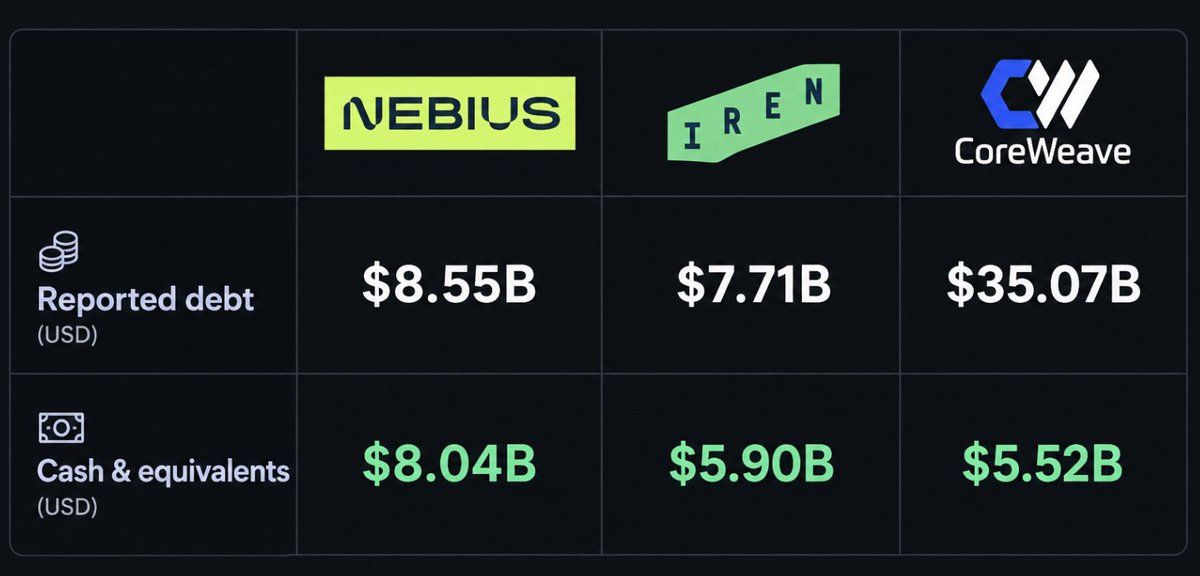
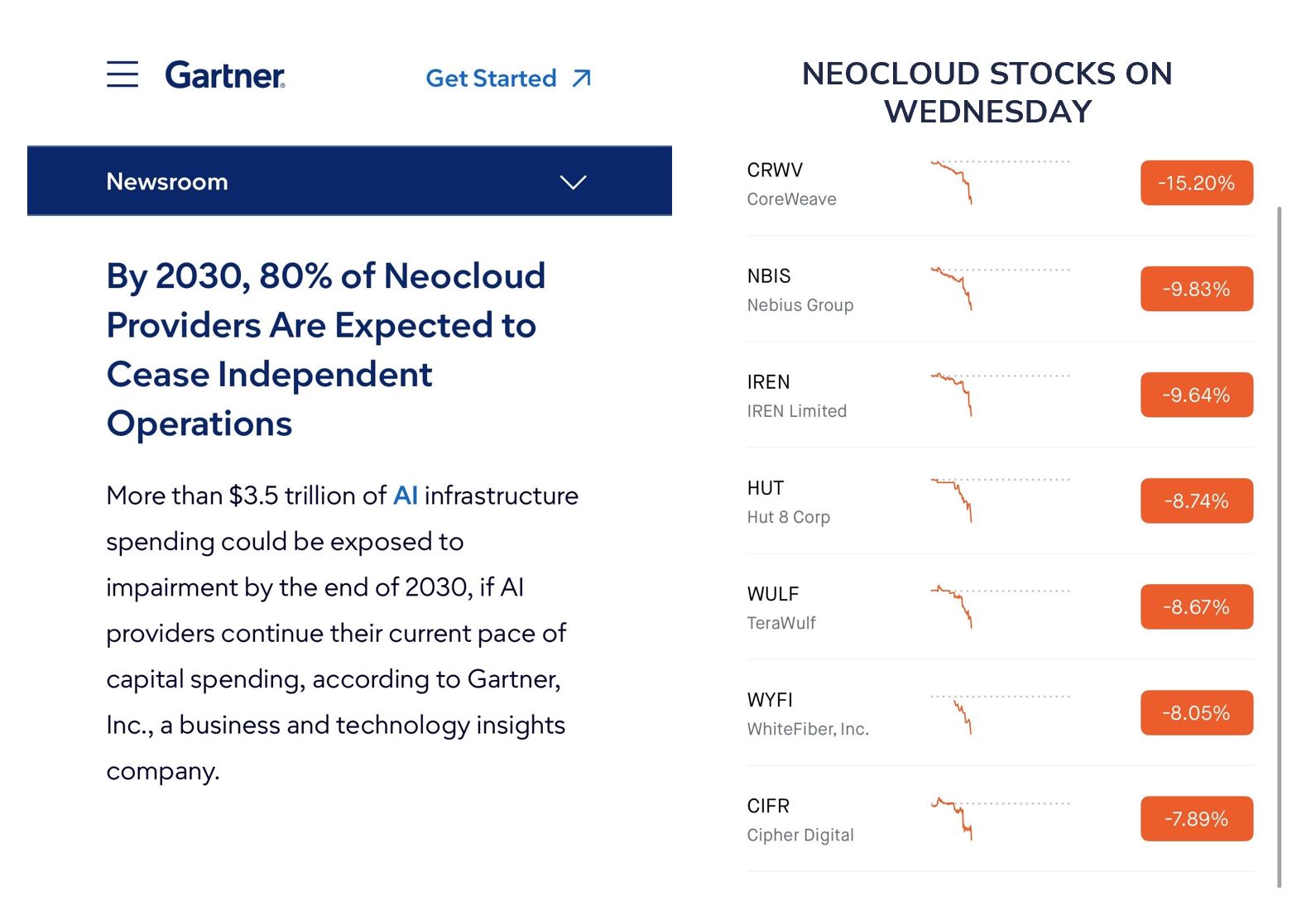
Coreweave $CRWV does not represent the whole of NeoCloud.
Balance sheet check: • $CRWV — $35.07B debt | $5.52B cash • $NBIS — $8.55B debt | $8.04B cash • $IREN — $7.71B debt | $5.90B cash Source: FreeFromMatrix
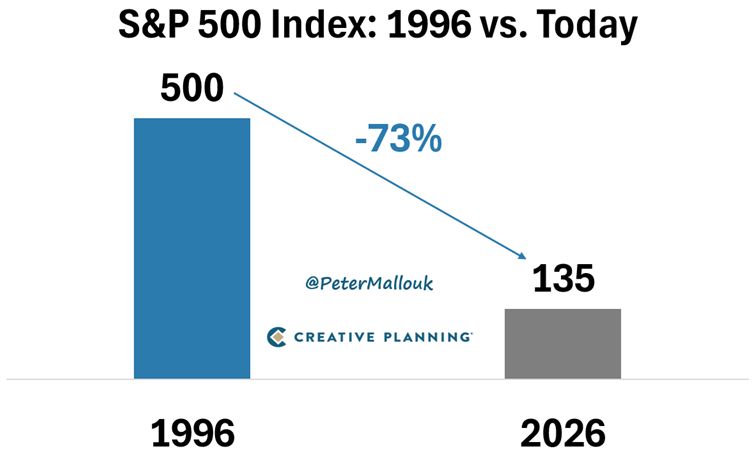
73% of the companies in the S&P 500 in 1996 are no longer in the index.
That's capitalism in action. Creative destruction. Constant disruption. No company stays on top forever. Source: Peter Mallouk
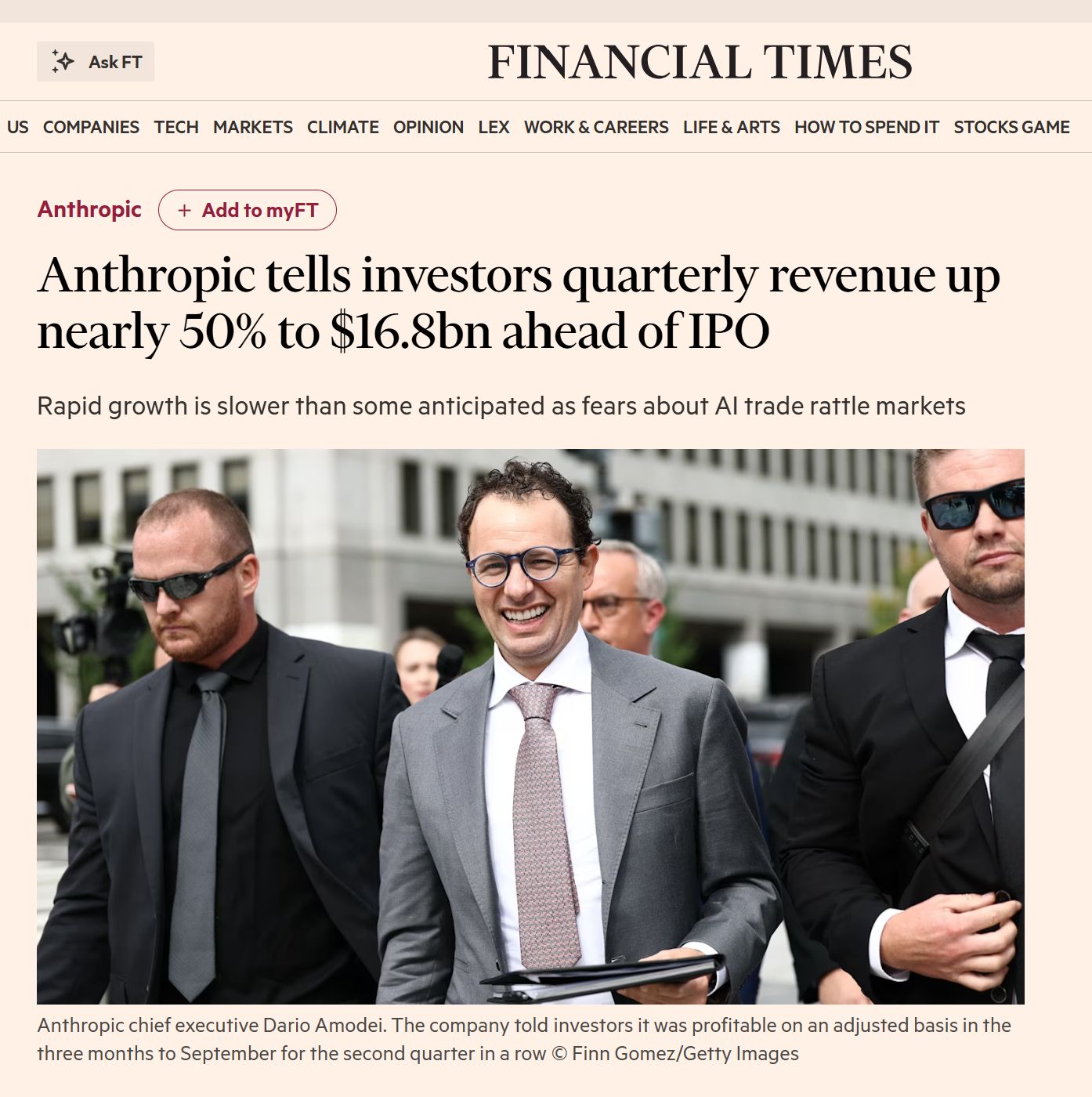
Anthropic just printed $16.8bn in ONE quarter.
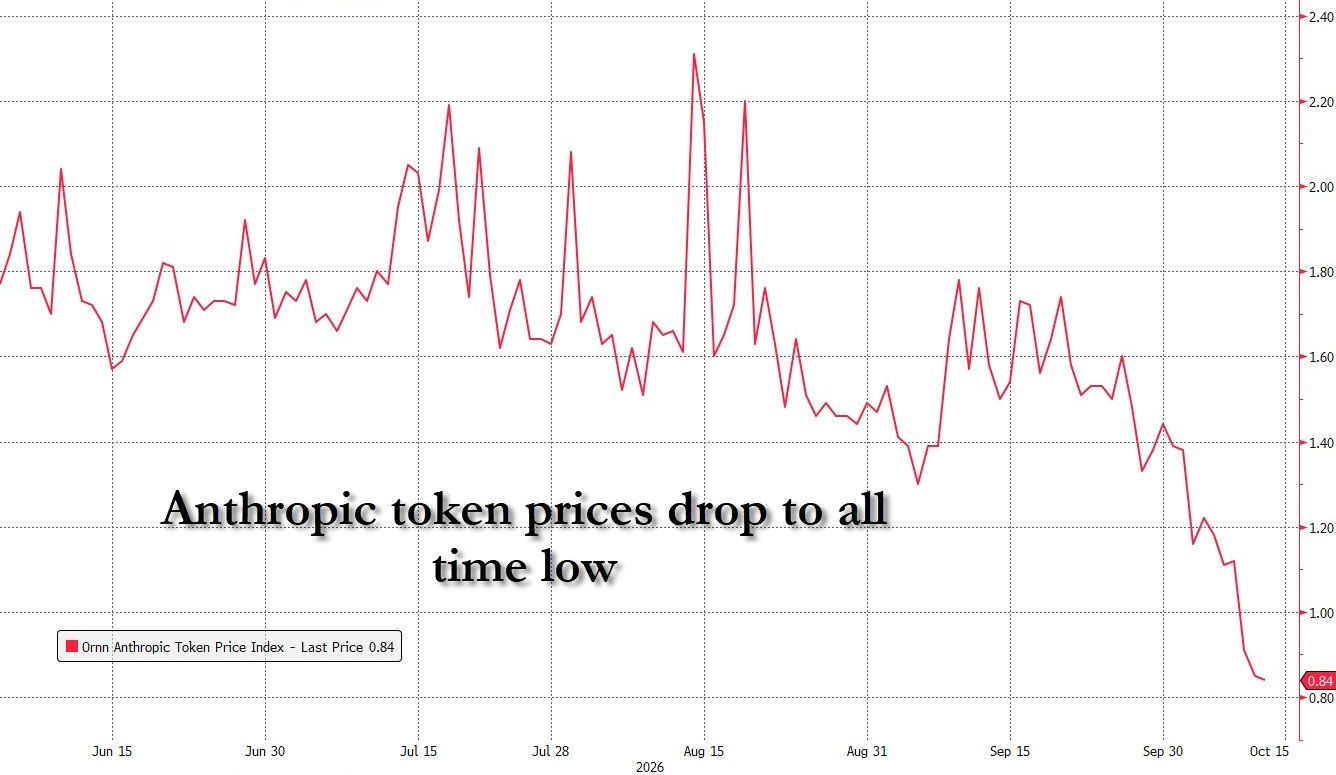
+46% QoQ. Profitable (adjusted). Cash-flow positive. $1.70 of revenue per $1 of compute. Few companies in history have printed a quarter like this. So why is the perp future on Binance down 14% from its high? 📉 Because markets price the slope, not the level. → Monthly run-rate growth: ~33% (Jan–Jul) vs 3–7% (Aug–Sep) → $100bn by year-end now needs Q4 to roughly double that pace → Token prices have halved in a month → Usage up, spend flat (Ramp data) → OpenAI is back, and it’s now a two-horse race → “Adjusted” profit, with $518bn of compute commitments ahead The key question: Can volume grow faster than prices fall? What to watch: the S-1 (~25 Oct), token prices, Q4 run rate, credit spreads. Spectacular numbers. Harder questions.
Neocloud stocks remain a risky place
GARTNER: “.. By 2030, Gartner predicts that cost pressure and a lack of a differentiating business model will force over 80% of neocloud providers to cease independent operations.” Source: Carl Quintanilla
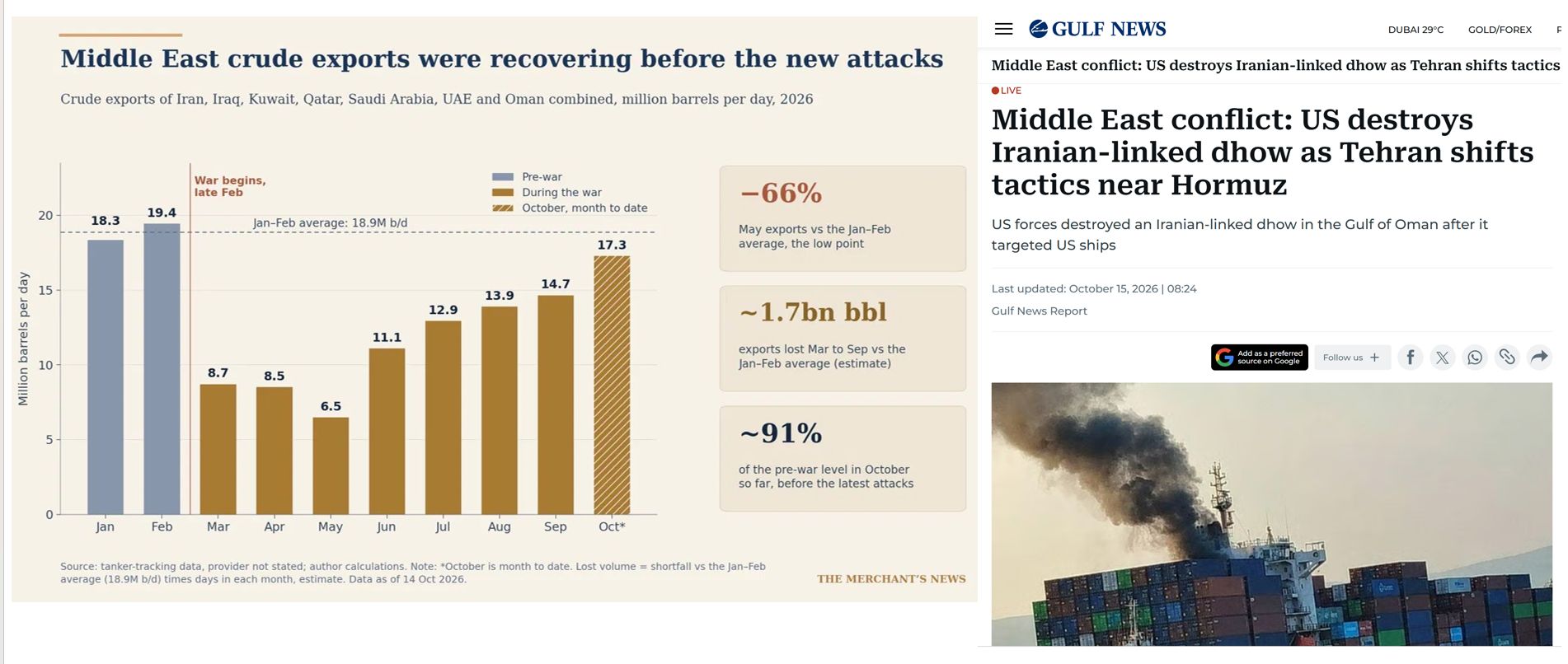
Middle East crude exports were approaching pre-war levels.
Then the attacks resumed. Combined exports from Saudi Arabia, Iraq, the UAE, Kuwait, Iran, Qatar and Oman tell the story: ▪️ Jan–Feb: 18.9 million barrels/day ▪️ May trough: 6.5 million — down 66% ▪️ September: 14.7 million ▪️ October so far: 17.3 million — 91% of pre-war levels The recovery relied on ingenuity: Saudi pipelines diverted crude to the Red Sea, while shuttle tankers carried barrels through Hormuz to supertankers waiting outside. But the cumulative damage remains enormous: 1.7 billion fewer barrels exported between March and September than at the pre-war pace. And October’s rebound is fragile. ⚠️ The figures cover only the first two weeks. Six ships were hit around Hormuz on 11 October. More than 10 empty supertankers have turned back near Fujairah. Export routes can adapt. A sustained recovery still requires security. Source: Jack Prandelli on X, Gulf News
One reason for the skepticism: Anthropic token prices have tumbled to all time low
Source: Zerohedge
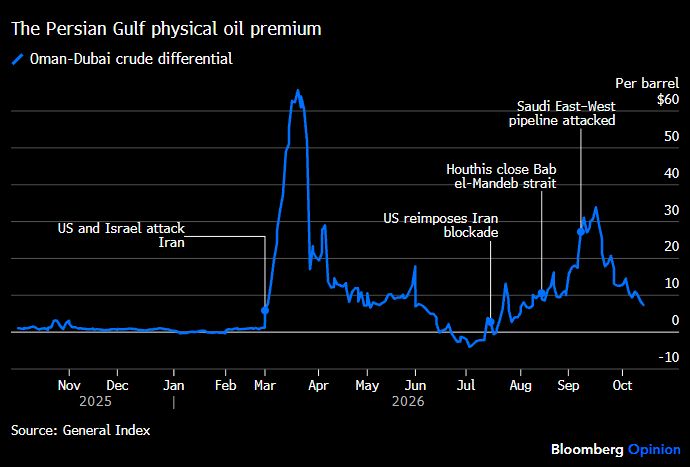
Middle East oil flows are bending. But they haven’t broken.
Despite renewed Iranian attacks, regional crude exports excluding Iran are holding at roughly 75% of pre-war levels, down from a late-September peak near 95%. Yet here’s the surprise: Average flows over October 1–10 remained above September’s average—and well above August’s. The disruption is making shipments more erratic: busy tanker crossings followed by quiet days. Kuwait is struggling most. Saudi Arabia, the UAE and Iraq are proving more resilient, with bypass routes providing crucial support. But the risks remain clear: continued attacks could disrupt both Hormuz and Red Sea traffic. The market signal to watch? Physical premiums for Middle Eastern crude have fallen to a near 2½-month low. For now, the physical market is signalling less scarcity—even as the security headlines worsen. Source: Javier Blas, Bloomberg
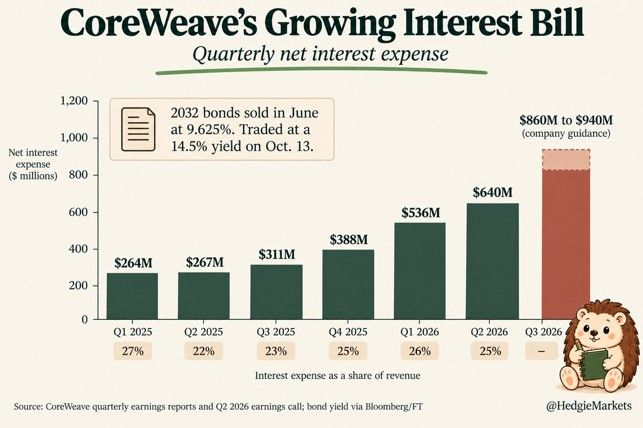
CoreWeave shares fell about 13% Wednesday as its 2032 bonds hit a record 14.5% yield.
Those bonds were issued in June at 9.625%. That’s an increase of nearly 5 percentage points in four months in the yield investors demand to hold its unsecured debt. The figures behind the move: ▪️ More than $35 billion raised this year. ▪️ Around $52 billion in debt and lease obligations. ▪️ $640 million in net interest expense last quarter—roughly a quarter of revenue. ▪️ A $104 billion backlog, with revenue dependent on infrastructure delivery and customer payments. Venture capitalist Chamath Palihapitiya shared the yield chart, warning of a potential private credit bubble linked to AI. According to figures he cited, private lenders charge AI borrowers spreads of 6.2 percentage points, compared with 6.1 points for other borrowers. CoreWeave’s backlog has grown. So has the yield on its debt. Source: Hedgie