
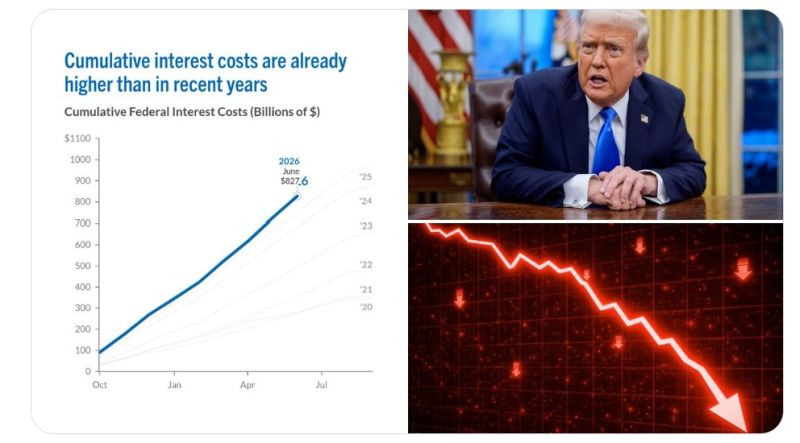
The US is now borrowing money to pay interest on money it already borrowed
US federal interest costs have reached roughly $2.85 billion per day, more than $1 trillion a year. That’s around 14% of federal spending and now rivals or exceeds some of Washington’s largest spending categories. Meanwhile, US national debt has crossed $40 trillion. The problem is not just the size of the debt. It’s the cost of refinancing it. The US continuously rolls over maturing debt by issuing new Treasuries. But much of that debt was originally issued when interest rates were significantly lower. Now it is being refinanced at much higher yields. The 30-year Treasury recently reached 5.27%, its highest level since 2007. That creates an increasingly uncomfortable cycle: Higher rates → higher interest costs → larger deficits → more borrowing → even higher interest costs. And this doesn’t stop in Washington. Treasury yields are the foundation of the US financial system. Higher government borrowing costs ultimately feed into mortgages, corporate debt, car loans and business investment. The debt problem is increasingly becoming an interest-rate problem. Source: Bull Theory
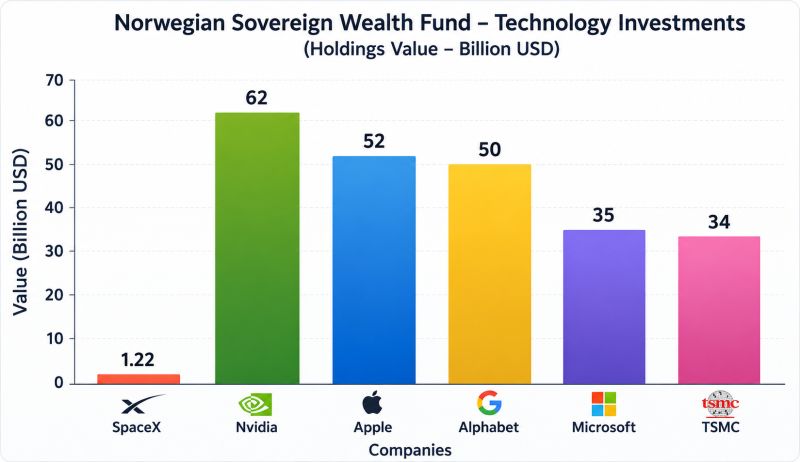
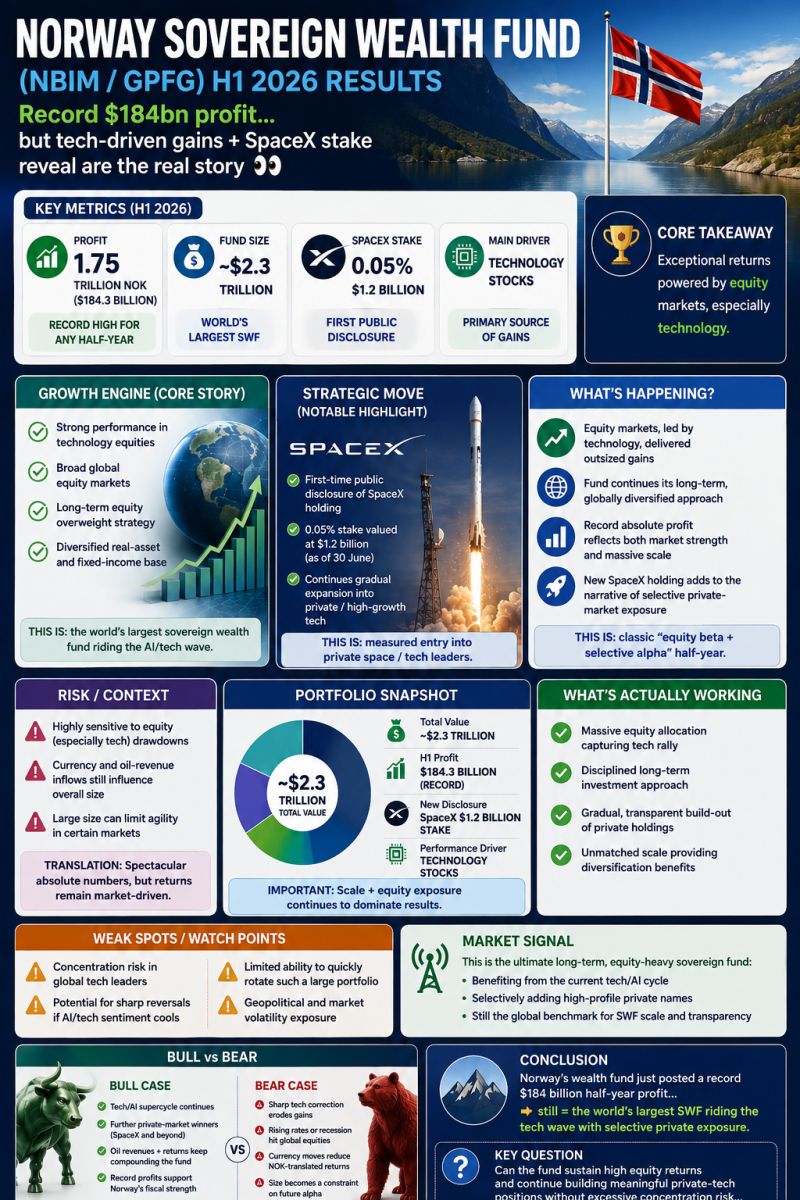
The world's largest sovereign wealth fund, the $2.3 trillion Norway Sovereign Wealth Fund, has disclosed for the first time that it holds a 0.05% stake in SpaceX.
The fund's stake in hashtag#SpaceX remains quite limited when compared to the other technology stocks in its portfolio. Source: ATA CAN
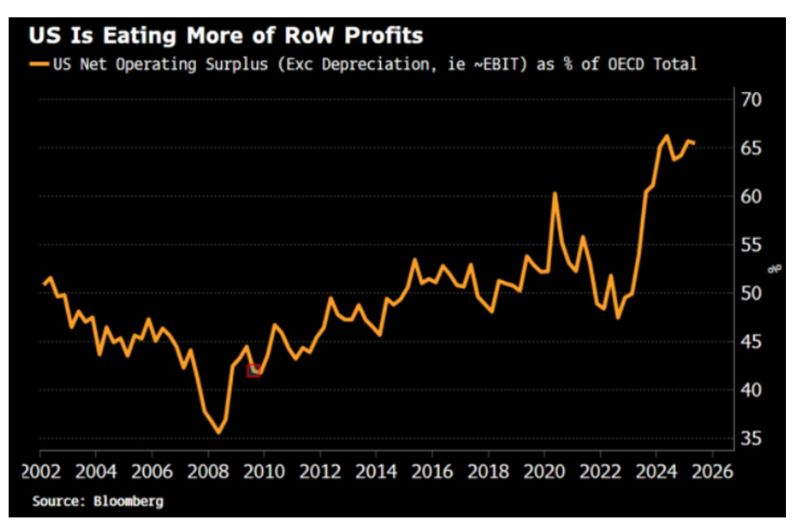
The US is generating almost 2/3 of OECD profits...
Warren Buffet: "Never bet against america" Source: Bloomberg
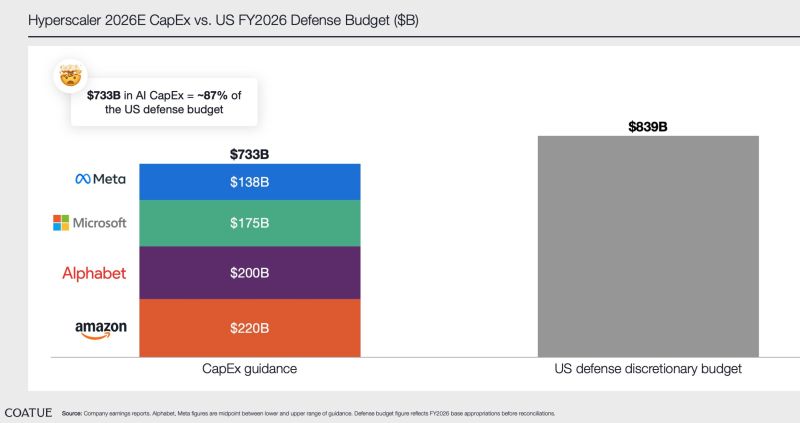
Four companies now spend like a superpower.
Hyperscaler AI capex is on track for ~$733B in 2026, about 87% of the base US defense budget.
Wall Street has been buying Leopold Aschenbrenner's book
• Nebius $NBIS *Goldman Sachs disclosed a 10.5% in August • SanDisk $SNDK *Jane Street disclosed a 5% stake in August • Core Scientific $CORZ *Citadel disclosed a 6.5% stake in August • CoreWeave $CRWV *Magnetar holds 14.9%, Goldman holds another 8.1% • Applied Digital $APLD *Jane Street disclosed a 7.1% stake in May • IREN $IREN *Bank of America disclosed a 5.8% stake in June His Q2 13F is due in 3 days and his updated holdings will be public Source: Leopold Stock Tracker

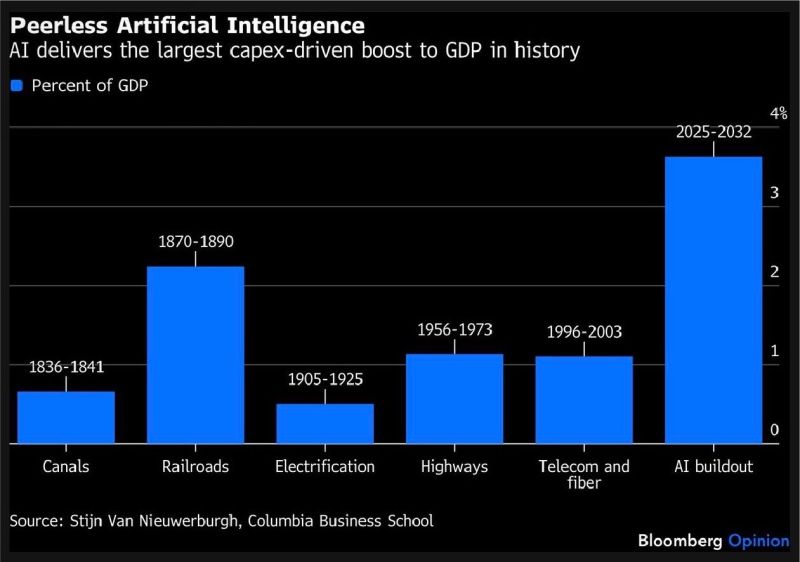
“Virtually nothing matters more to markets at present than the AI buildout. It’s such a sudden and massive stimulus for the US that it has shifted macroeconomic data. "
Columbia Business School’s Stijn Van Nieuwerburgh argues that without it, the US would be in recession. He estimates AI infrastructure investment at roughly 2.8% of GDP, larger than the railroad boom, and it’s projected to keep rising Source: Annmarie Hordern Bloomberg
Norway Sovereign Wealth Fund H1 2026 results in a nutshell Record $184B profit... but tech-driven gains + SpaceX are the real story
Source: Emmanuel – Big Tech & AI Investor
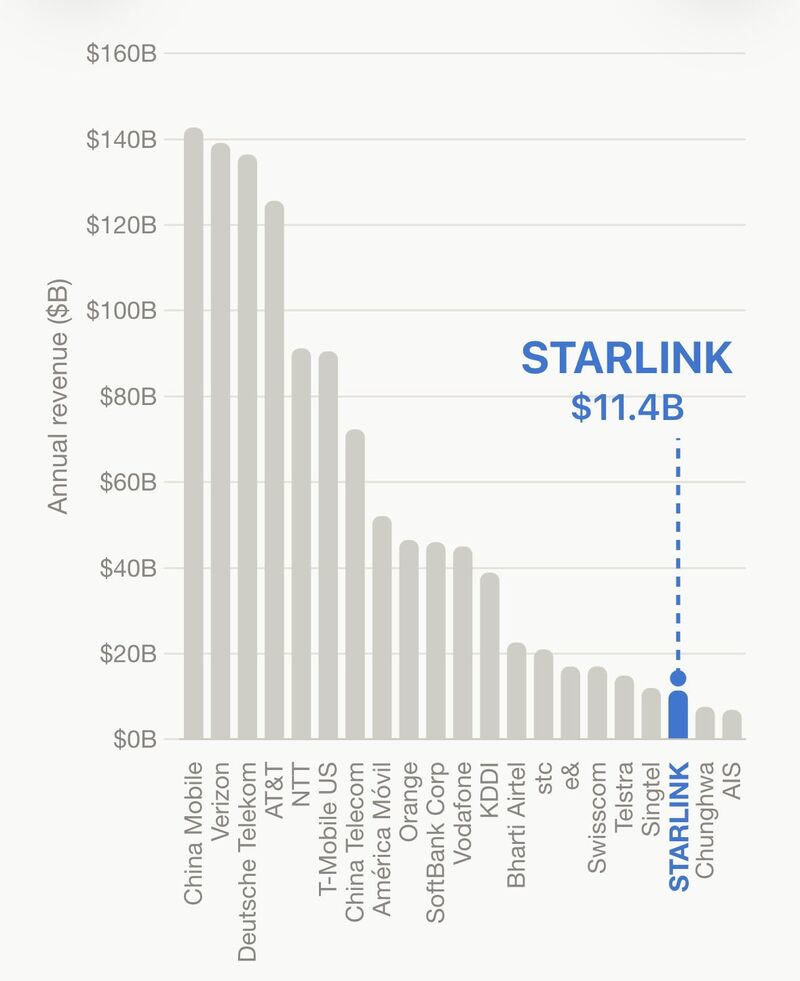
Starlink has a lot of room left to grow into, telecom is a truly massive market.
Source: Christian Keil