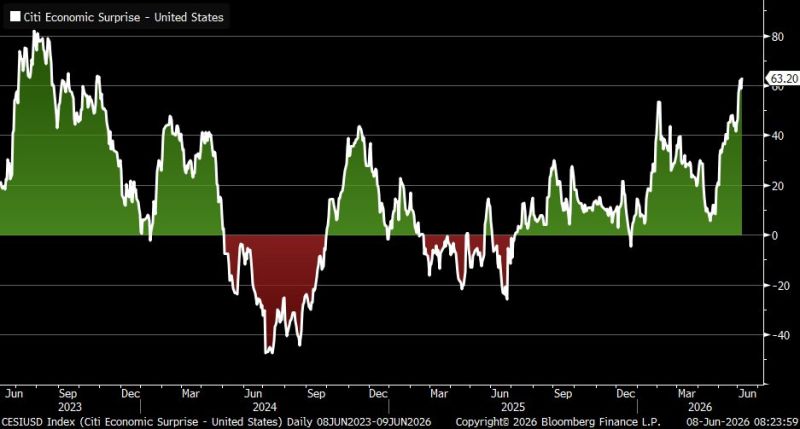

From Mag7 to MANGOS
Source: Evan
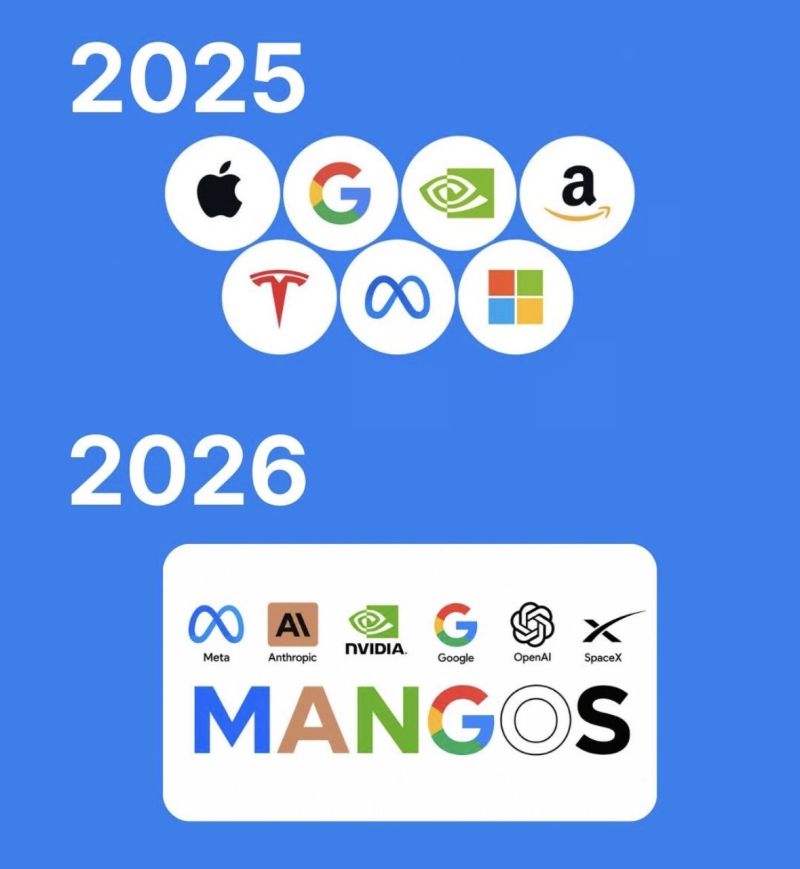
This chart is comparing how different AI models perform on a set of benchmark tests — mainly around coding, reasoning, and knowledge tasks.
The key takeaway: Claude Mythos 5 / Fable 5 is claiming better performance than GPT-5.5 and Gemini 3.1 Pro on these specific benchmarks. Example: SWE-Bench Pro (agentic coding): Claude: 80.3% GPT-5.5: 58.6% Gemini 3.1 Pro: 54.2% What does that actually mean? “Agentic coding” This measures how well an AI can: understand a software engineering task, navigate codebases, edit files, debug issues, and complete coding workflows autonomously. So higher % = the model solved more real-world coding tasks correctly.
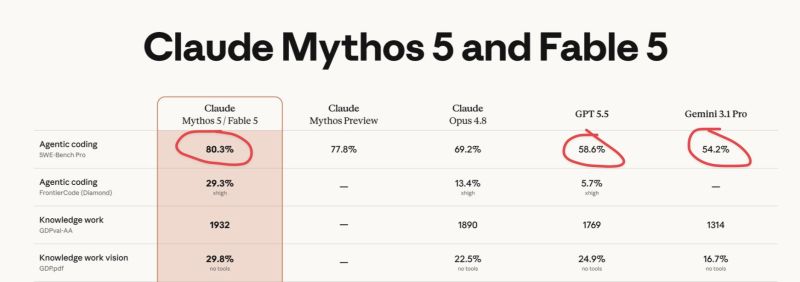
ProShares issued press release indicating it plans to launch 2x leveraged SpaceX ETF on *same day* as IPO.
Source: Nate Geraci
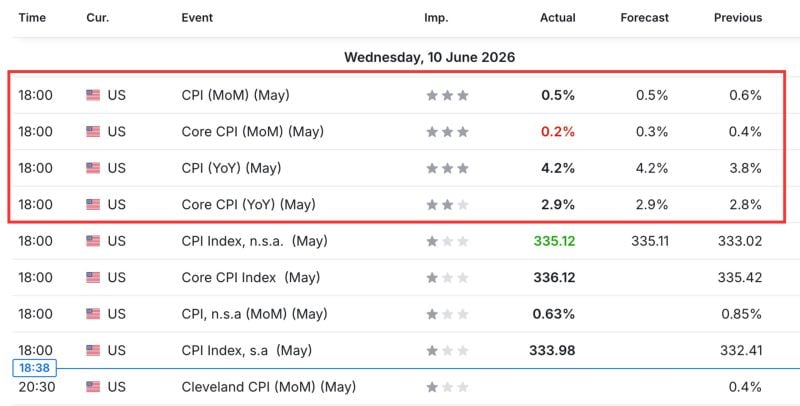
US Inflation just jumped to 4.2% the highest since 2023.
US CPI rose from 3.8% to 4.2% in May, but the increase is mainly driven by higher oil and energy prices linked to geopolitical tensions, not underlying inflation. The key focus is Core CPI, which excludes food and energy and came in lower than expected at 0.2% month-on-month versus 0.3% expected and 0.4% previously, indicating that underlying inflation is slowing faster than anticipated. This shifts the macro outlook for the Fed, as it cannot directly address oil-driven inflation through interest rates. If oil prices fall, inflation could ease and rate cuts may return to the table; if oil rises further, inflation could accelerate and force renewed tightening. Overall, the next move in oil will be decisive for the macro narrative. Source: Bull Theory
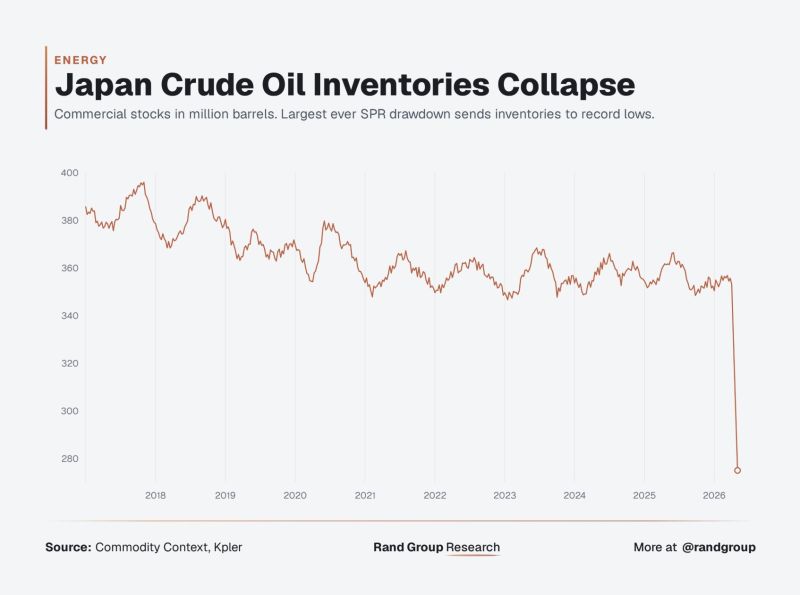
Japan's Crude Oil reserve was built in 1980.
Took 45 years to fill. Took 8 weeks to drain. Source: Rand Group
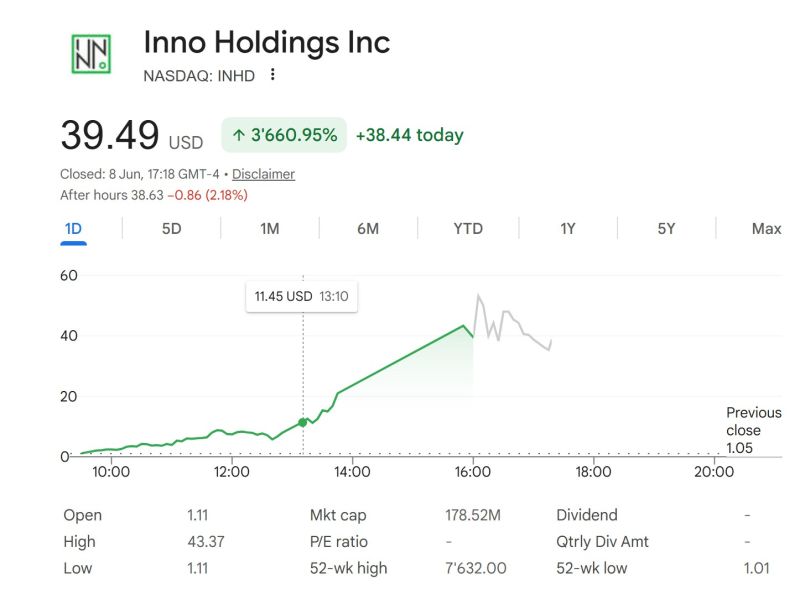
THIS RANDOM CHINESE STOCK WAS UP OVER 3600% + YESTERDAY
THE STOCK WAS AT $1.13 AT OPEN IF U INVESTED $1,000 AT OPEN YOU WOULD HAVE OVER $36,000 8 HOURS LATER $INHD Source: Gurgavin
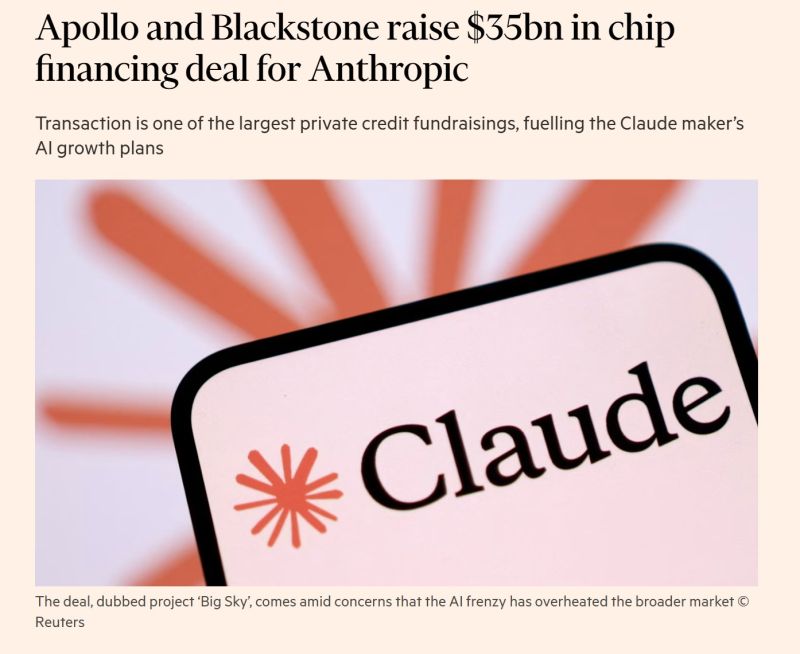
Apollo and Blackstone have finalised a $35bn private credit deal that will help finance Anthropic’s growth plans, as banks and investment groups across Wall Street pour capital into the AI boom.
The two private investment groups led the financing, one of the largest private credit deals completed, which will fund Anthropic’s purchase of Alphabet-developed chips. It underscores the massive appetite investors have for AI and the deep pockets they are willing to dig into to finance the data centre infrastructure and computing power needed by companies including Anthropic, OpenAI and Meta. Yet the deal, dubbed project “Big Sky”, comes amid concerns that the AI frenzy has overheated the broader market. Shares in chipmakers rebounded on Monday after tumbling last week, led by Broadcom’s fall in market value. It adds to a deluge of chip-backed loans that sparked debate over how quickly graphics processing units would depreciate as AI technology evolves. The transaction wrapped up days after Alphabet completed one of the largest equity offerings in history, as it looks to raise $85bn to fund Google’s AI build-out, and as SpaceX prepares for a flotation that could raise a record $86bn. Anthropic is readying its initial public offering, following its blockbuster $65bn private financing round. Source: FT
In case you missed it... Citi U.S. Economic Surprise Index has risen to its highest since October 2023
Source: Kevin Gordon Bloomberg