

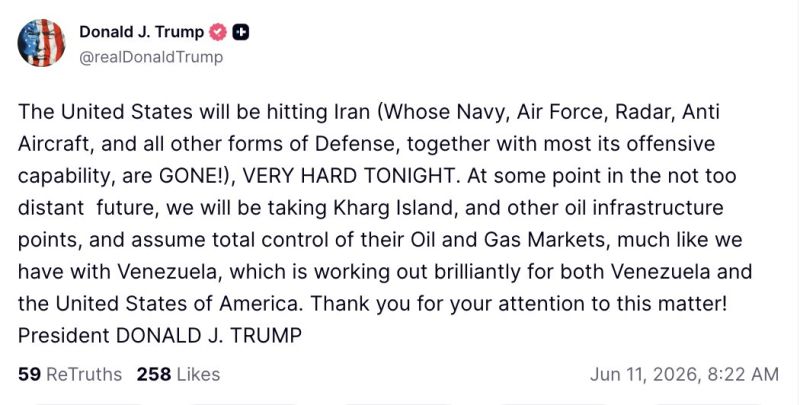
PRESIDENT TRUMP JUST POSTED THIS: "The United States will be hitting Iran ... VERY HARD TONIGHT"
"At some point in the not too distant future, we will be taking Kharg Island, and other oil infrastructure points, and assume total control of their Oil and Gas Markets, much like we have with Venezuela" Markets do not seem to care anymore...
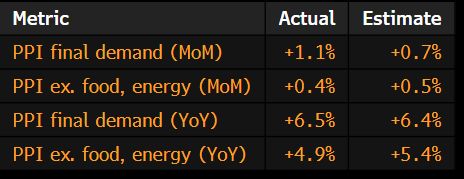
US PPI inflation for May came in hotter than expected at the headline level but softer at the core level (please see the Bloomberg table below).
Echoing yesterday’s CPI data, this suggests that the PPI spillover from energy into broader prices remains relatively muted for now. It also suggests that the pass-through from PPI to CPI is being offset by margin pressure. Source: Mo El Erian, Bloomberg
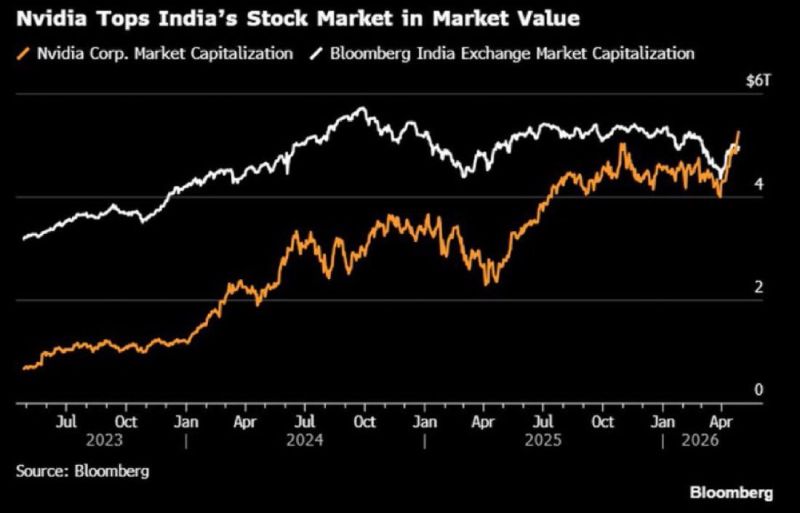
Nvidia $NVDA is now worth more than India 🇮🇳
Source: Bloomberg, Barchart
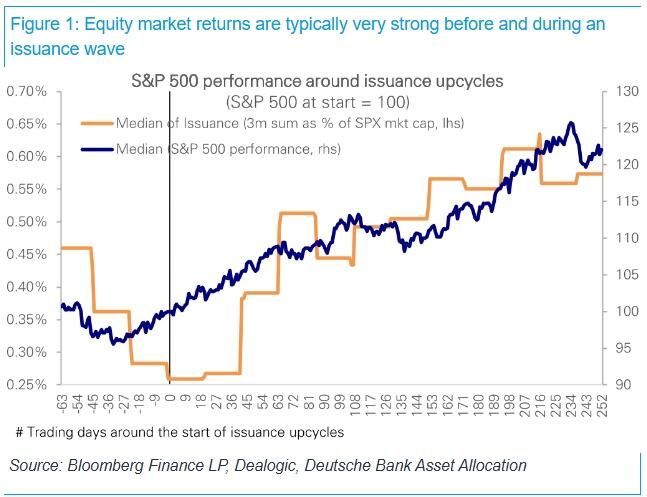
One of the biggest fears on Wall Street right now? That the surge in IPOs and equity issuance could trigger a market sell-off.
But history says the opposite. According to Deutsche Bank’s Jim Reid and strategists Binky Chadha & Parag Thatte, issuance waves usually happen because markets are strong — not because they’re about to crash. Companies raise capital when: • Investor demand is high • Earnings momentum is strong • Risk appetite is elevated Since early 2023, US equity issuance has jumped from ~$30bn to ~$120bn per quarter. Mega-IPOs are coming. Yet even the largest deals are only ~0.1% of the S&P 500 market cap. Past issuance cycles? Median returns were: • +8% over 3 months • +20% over 12 months The only major exception: 2008. Bottom line: strong demand is absorbing new supply. This market still feels a lot more like 1999 than 2008. Source: Zerohedge, DB
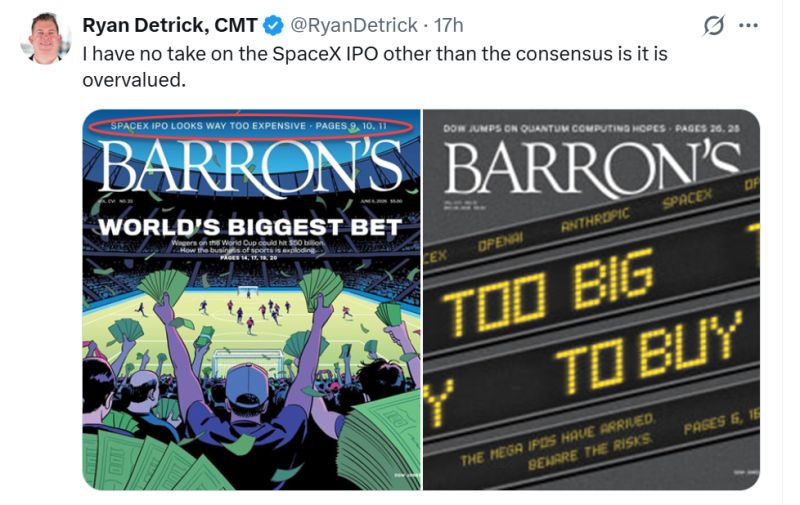
A positive contrarian note on SpaceX and Anthropic Saying they have overvalued seems to be the consensus
A positive contrarian note on SpaceX and Anthropic Saying they have overvalued seems to be the consensus
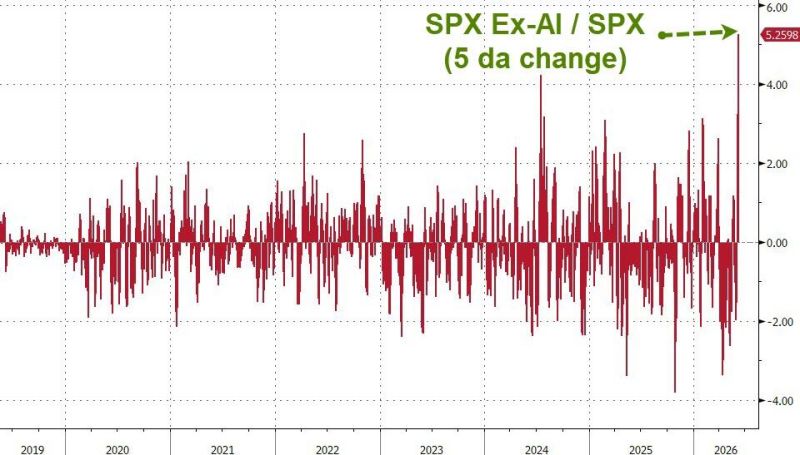
S&P 500 ex AI vs. S&P 500 5-day change
That is the biggest spread since AI was birthed... Source: zerohedge, Bloomberg
Oil falls. Yields rise. Something has shifted
Oil down 15% in three weeks. The two-year yield up 15bps last week to 4.15% - its highest since early 2025. For the first time in months, US macro is back in the driving seat. Source: Jonny Matthews | SuperMacro
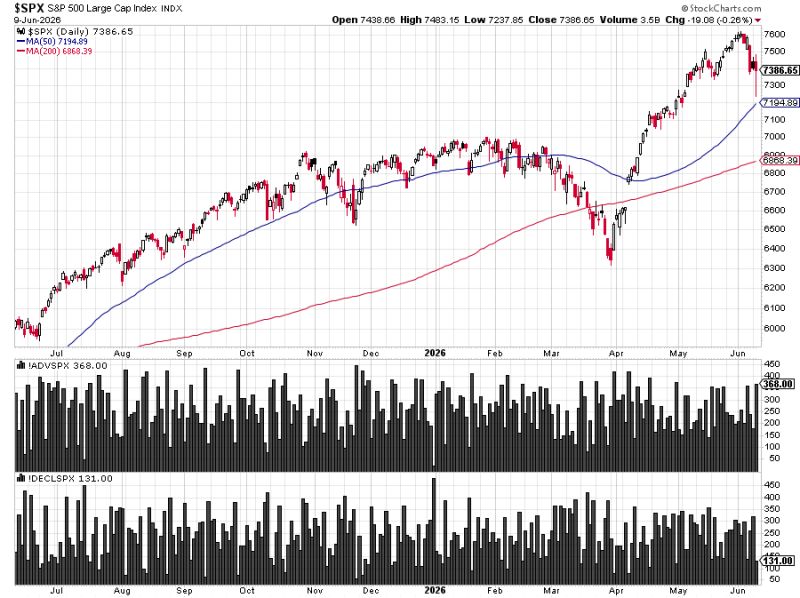
Rotational market lives on. We note that 368 stocks were higher in the S&P 500 yesterday. The most since late April.
Rare to see so many stocks going up with the S&P 500 retreating. Source: Ryan Detrick