
12 Jul 2024
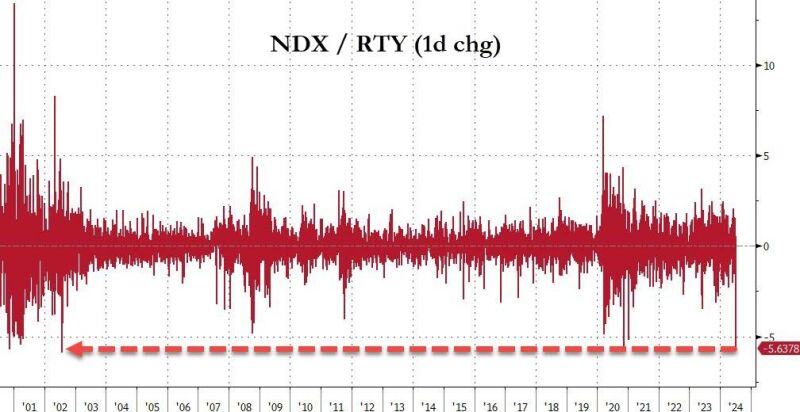
That RTY (Russell 2000) / NDX (Nasdaq 100) spread was over 600bps at its peak today.
By the close it was the biggest relative outperformance of the Russell 2000 over Nasdaq 100 since 2002... Source: Bloomberg, www.zerohedge.com
12 Jul 2024
🚨 🚨 🚨 HUGE SECTOR ROTATION OUT OF TECH AND INTO SMALL CAPS HAPPENING NOW 🚨 🚨 🚨
⬇ Nasdaq 100 $QQQ -1.0% ⬆ Russell 2000 $IWM +3.3% Source: Stocktwits
11 Jul 2024
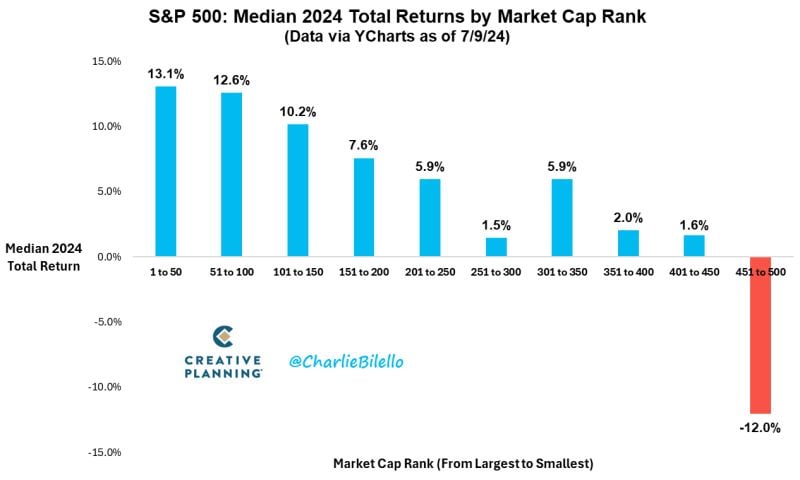
The 50 largest stocks in the S&P500 have a median return of +13% this year while the 50 smallest stocks in the index are down 12%.
$SPX Source: Charlie Bilello
11 Jul 2024
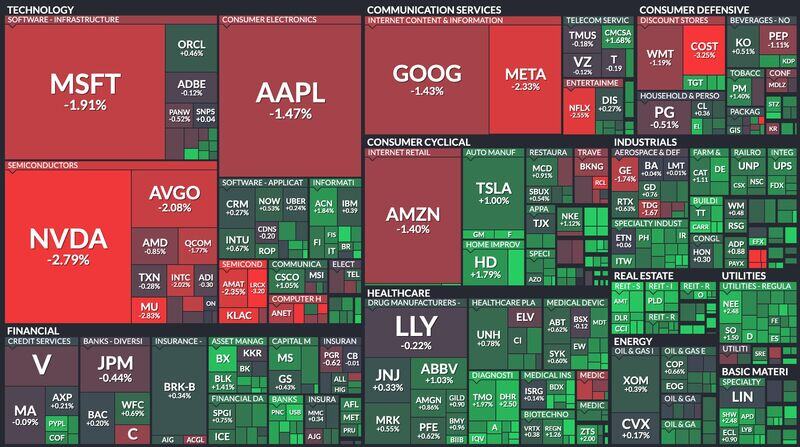
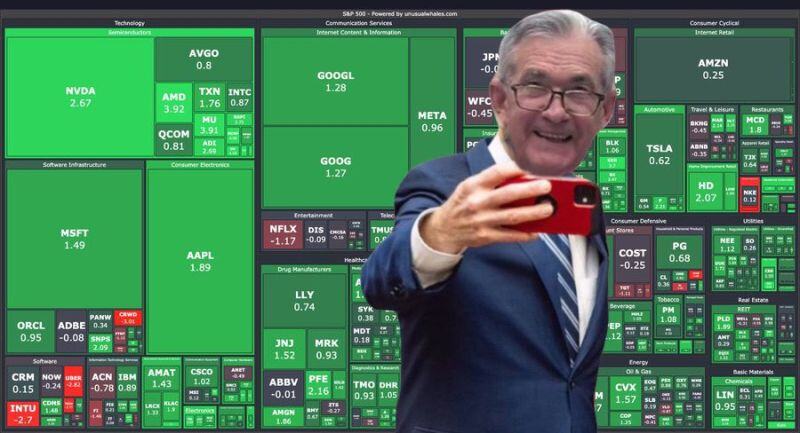
The S&P 500 climbed Wednesday to a fresh record, breaking above 5,600 for the first time, as a sharp rise in semiconductor stocks led the market higher.
The broad market index jumped 1.02%, closing at 5,633.91, and notching a seventh straight day of gains.
11 Jul 2024
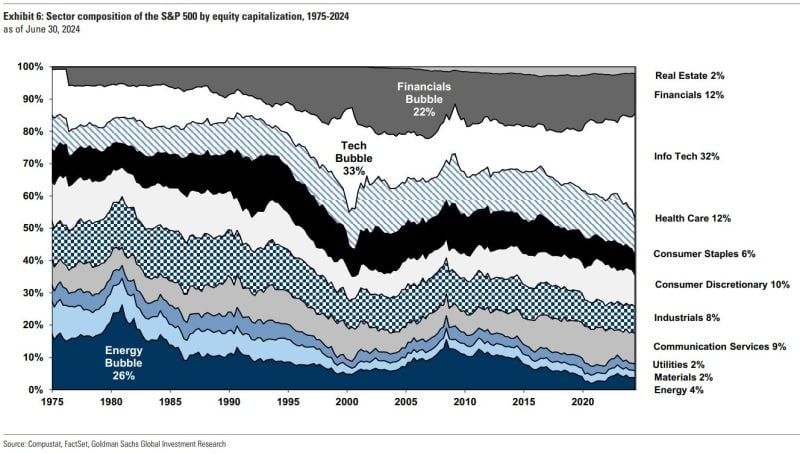
Sector composition of the S&P500 has shifted significantly over time.
energy used to be 26% of the index... Source: Goldman Sachs, Blake B. Millard
10 Jul 2024
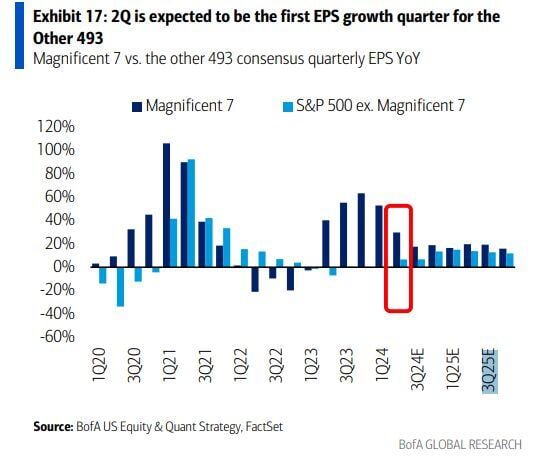
The S&P 493 earnings have been flat to down for the past five quarters.
2Q is expected to mark the first growth quarter for the Other 493. Could it lead to a more balanced market? Source: BofA
10 Jul 2024
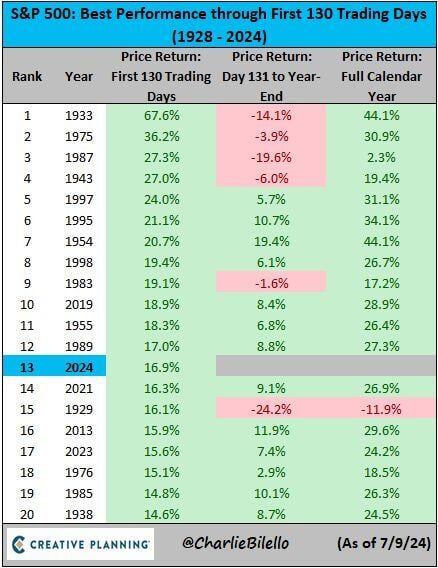
The S&P 500 is up 16.9% in 2024, the 13th best start to a year going back to 1928 and the best start to a presidential election year in history.
$SPX Source: Charlie Bilello
10 Jul 2024
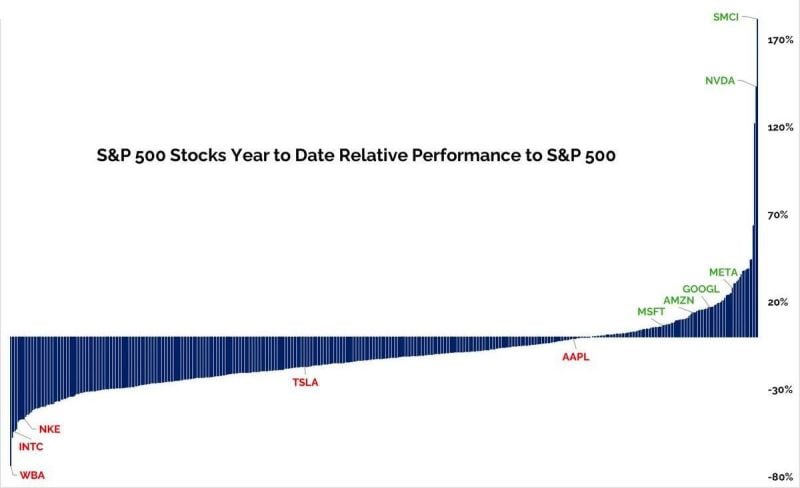
A good chart on how narrow the US market has been this year:
Source: Hidden Value Gems This was actually made originally by Grant Hawkridge https://lnkd.in/e8nwsZYA