
Hyperscaler capex just got revised UP $58B to $660B for 2026
Alphabet dropped a BOMB: $175-185B guidance vs $119.5B estimate That's +$55B from Google alone The AI infrastructure arms race just went nuclear ☢️ Source: Ben Pouladian @benitoz
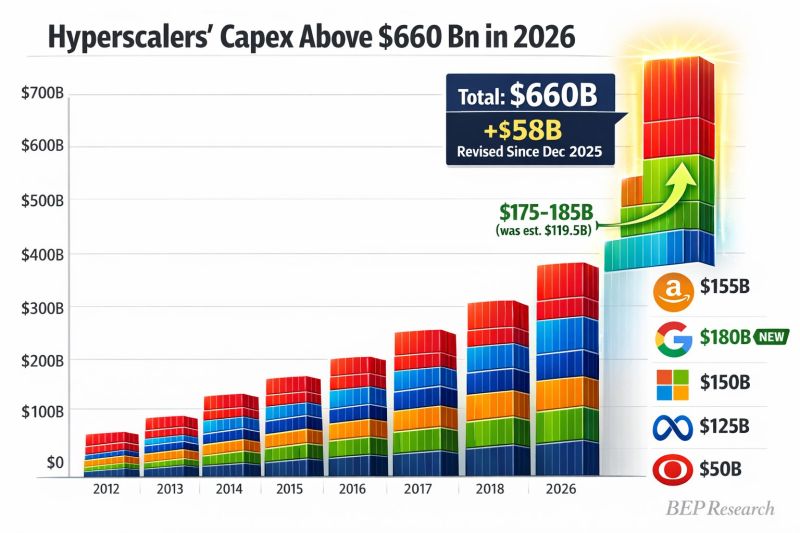
2026 CAPEX:
$GOOGL - $175B-$185B vs $119B est $META - $115B-$135B vs $110B est $TSLA - $20B vs $11B est $AMZN - *tomorrow vs $145B est The hyperscalers are going all in on AI. Source: Geiger Capital

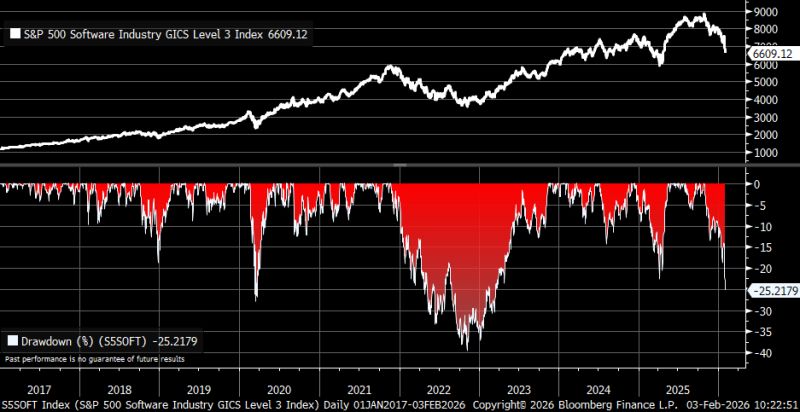
The drawdown in S&P 500 Software stocks is now -25.2% from the high...
That's worse than last year's plunge Source: Kevin Gordon @KevRGordon Bloomberg
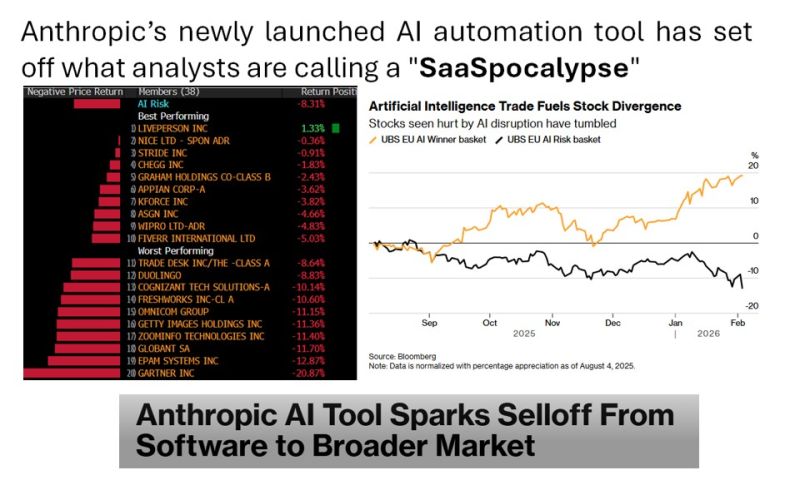
Anthropic’s newly launched AI automation tool has set off what analysts are calling a "SaaSpocalypse", rattling global technology markets
Anthropic recently released 11 new plug-ins for its Claude Cowork agent, an agentic, no-code AI assistant designed for enterprise users. The tool is aimed at automating tasks across legal, sales, marketing and data analysis functions Vishwa Sharan @vmsharan_ "Anthropic latest AI tool can automate tasks in legal, sales, marketing, and data analysis. Routine work such as document review, compliance tracking, risk flagging, and data processing. It essentially targets professionals in service automation. Expect reduced demand for consulting engagements, lesser billing hours. IT firms may see slower headcount growth or reductions as AI handles clerical work, shifting focus to higher level AI oversight and innovation" Source: Bloomberg
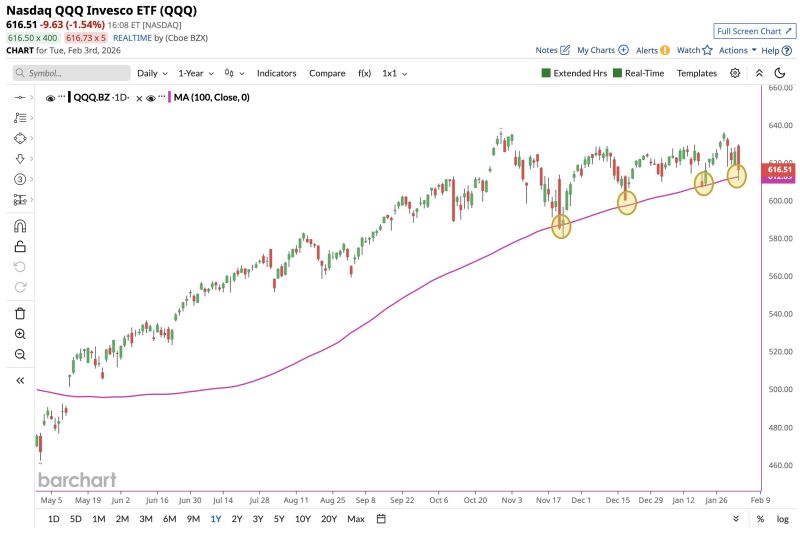
Nasdaq $QQQ survives the 100-day moving average test again
✅ Absolutely incredible Source: Barchart
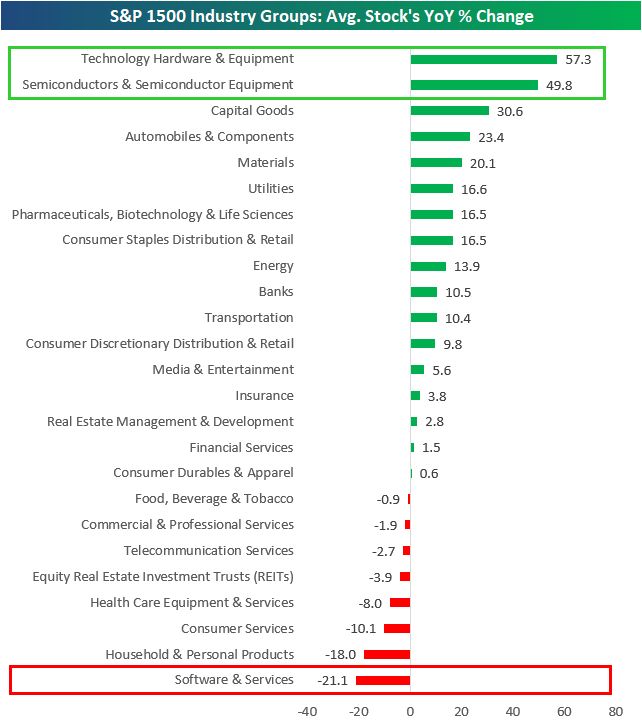
Amazing dichotomy between Tech hardware and software stocks over the last year.
Hardware and semis stocks are up the most of any group with average gains of 50%+. Software stocks are down the most of any group with an average decline of 20%+. Source: Bespoke
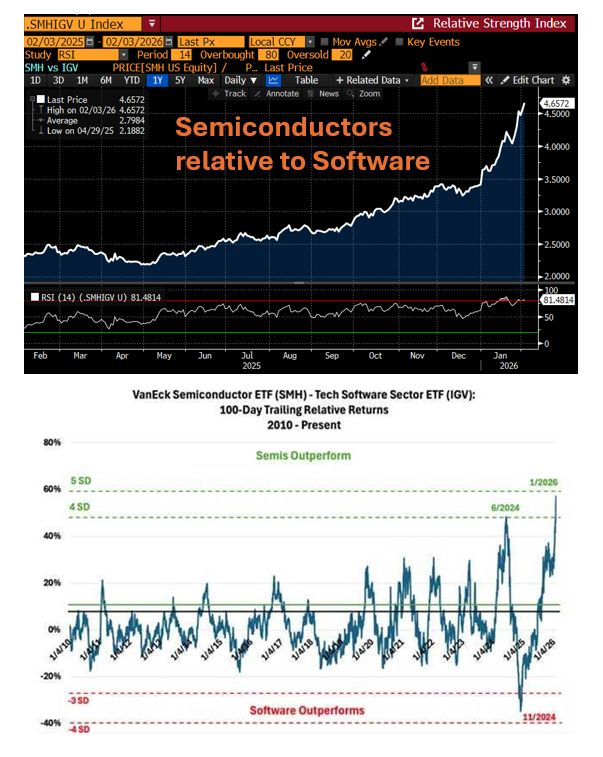
The semiconductors relative to software performance is getting very very extreme...
Long / short positioning on this pair by hedge funds is also hitting extreme levels Source: RBC, Bloomberg
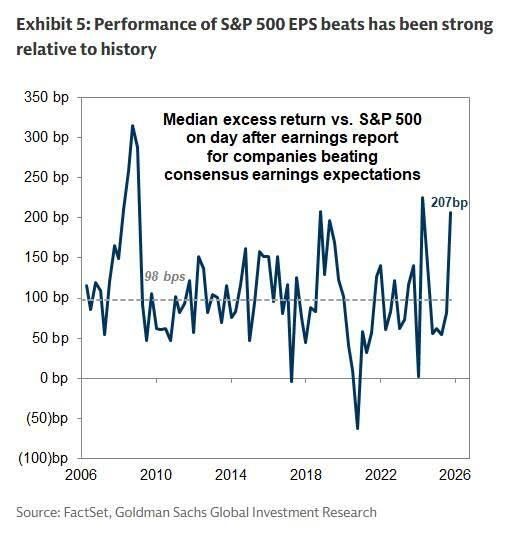
Goldman notes that after a few quarters of uninspiring market that follows positive earnings release, beats are finally being rewarded.
Companies beating consensus EPS estimates have outperformed on the day after reporting by +207 bp on average, more than double the historical average of +98 bp.