Straight from the Desk

Syz the moment

Live feeds, charts, breaking stories, all day long.

31 Aug 2026

The great bond divergence: China 10y bond yields now 300bps below 10y USTs.

But this is not due to markets passing judgment on the 2 countries' fiscal profiles. According to Barclays, China's super-low yields reflect its closed capital account, high savings rate, and lack of investable assets. Source: HolgerZ, Bloomberg

31 Aug 2026

As shown on the chart below, rising real 10-year yields has recently NOT been an issue for Gold prices. And the trend might continue.

If the Fed hikes in September, it'll only do so to anchor long-term yields, though obviously that won't be the stated reason. As highlighted by Robin Brooks, Yield caps among rising debt and out-of-control deficits are the bread and butter of the debasement trade. Gold might keep rising. Despite the rate hike. Because it is view as the ultimate hedge against money debasement. Source: Robin Brooks

28 Aug 2026

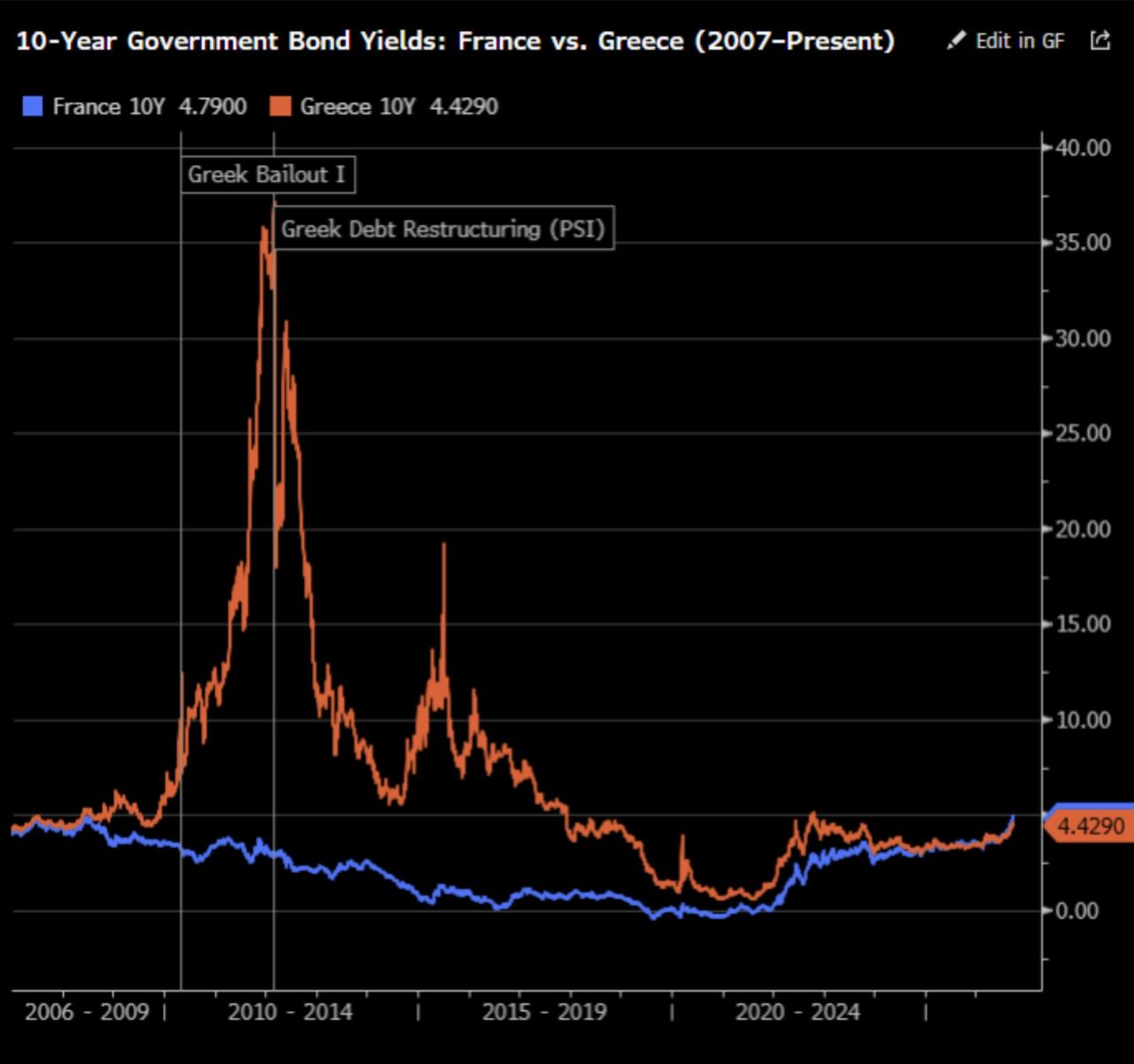
A great chart by FT on the changing ownership of government bonds. France may be the European bond market to watch!

Indeed, in light of 2027 Presidential election. foreign investors could trigger the next phase of France’s sovereign downgrade Despite repeatedly breaching EU debt and deficit limits, non-resident investors still held a striking 57% of French government debt at the end of 2025. France also benefits from the perceived safety net of the European Central Bank, with markets broadly assuming that the ECB would intervene in the event of a severe bond-market crisis. But the 2027 presidential election could put both foreign investor confidence and that ECB backstop to the test. Source: Financial Times, Christophe BESSON

26 Aug 2026

JAPAN IS TRYING TO FIND NEW BUYERS FOR ITS MASSIVE BOND MARKET.

For decades, the Bank of Japan was the buyer of last resort for Japanese government debt. But since 2024, the BOJ has been reducing its bond purchases — leaving a growing demand gap as yields rise. Now Tokyo wants households to help fill it. Japan’s Finance Ministry is reportedly considering adding government bonds to the New NISA tax-free investment program as part of its fiscal 2027 tax reforms. Some lawmakers are even pushing for inheritance-tax incentives. The challenge is huge: → BOJ owns roughly 50% of JGBs → Banks and institutions hold around 40% → Japanese households own just 2% Meanwhile, long-term Japanese yields are trading around levels not seen in decades. Japan spent years using its central bank to absorb government debt. Now it increasingly needs private investors to take over. The big question: Will Japanese households become the bond market’s new buyer of last resort? Source: Bull Theory

25 Aug 2026

The U.S. Treasury may have found a new weapon for the bond market: its nearly $1 TRILLION cash pile.

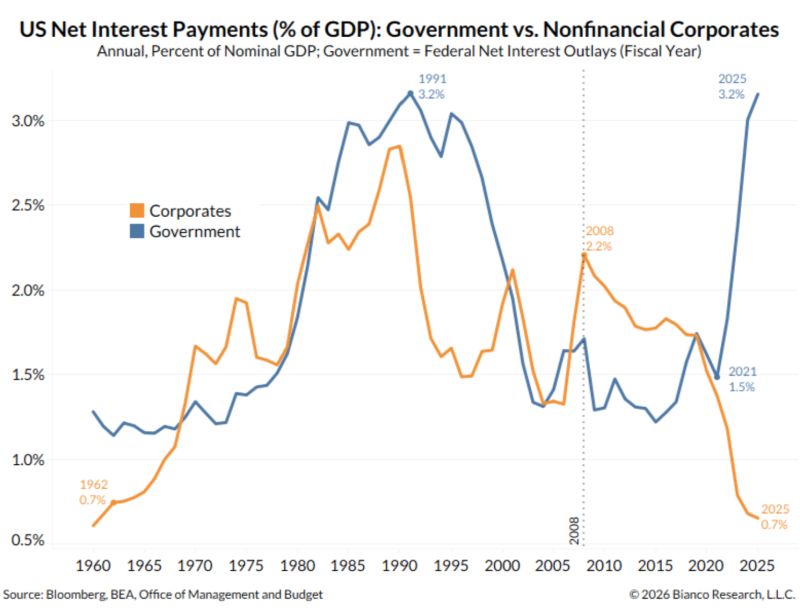
Treasury is considering using its TGA — effectively the government’s bank account at the Fed — to fund long-term bond buybacks. The mechanics are powerful: Buy long-duration Treasuries → TGA falls → cash enters the banking system → liquidity rises → long-end supply falls. Treasury could therefore support bonds today, then issue T-bills later to rebuild its cash balance. This is not QE: the Fed isn’t printing new money. But the timing matters. Effectively, Treasury can temporarily transform: Long-duration debt → short-duration debt That could suppress long-end pressure while injecting liquidity into markets. But it doesn’t solve America’s debt problem. It postpones it, shortens it — and potentially takes the U.S. another step toward fiscal dominance and financial repression. Source: Macro Liquidity by Sunil Reddy

25 Aug 2026

Foreign demand for USTs is at its lowest level in over a decade.

Is this why Bessent has to step in and offset some of that lost demand through Treasury QE ??? Source: Bloomberg, Lukas Ekwueme

25 Aug 2026

The Fed owns more than HALF of Treasuries maturing in 10–15 years.

Of the roughly $1.03 trillion outstanding in this maturity bucket, the Federal Reserve holds around $540 billion. Why? Much of it is the legacy of QE after 2008 and especially COVID, when the Fed bought trillions of dollars of long-duration Treasuries. Those bonds have now rolled down the curve. And the bigger picture is striking: 👉 The Fed still owns roughly $1.6 trillion of Treasuries with 10+ years to maturity. That means a massive amount of duration remains outside private investors’ hands. But as the Fed’s portfolio gradually shrinks, someone else must absorb that supply. And unlike the Fed, private investors care about price. So the key question isn’t just how much debt Washington will issue. It’s who will buy it — and at what yield? Source: TreasuryBonds.com

21 Aug 2026

The Bessent twist adds another wrinkle.

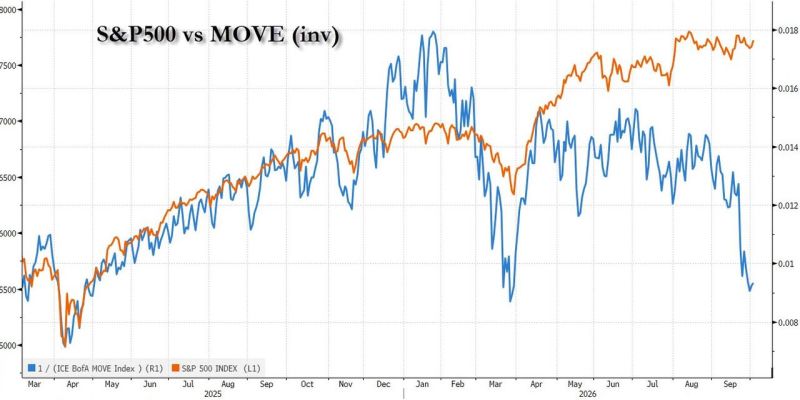
Treasury's move initially compressed the long end, which should ordinarily have supported tech through lower discount rates, but tech underperformed the rates rally. Now the 10-year yield is back where it started and tech is rolling over again. With AI increasingly capital-intensive, hyperscaler CDS widening and semis vol having collapsed, the setup is worth watching. Rates relief didn't do much for tech. Now that relief is disappearing. Source: The Market Ear

Thinking out loud

Sign up for our weekly email highlighting the most popular posts.

Follow us

Thinking out loud

Investing with intelligence

Our latest research, commentary and market outlooks