
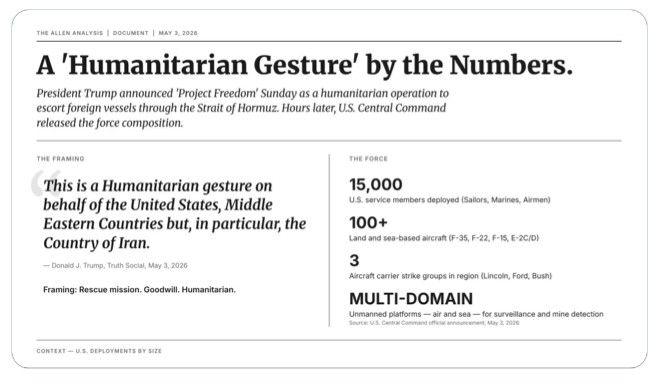
The Pentagon just announced 15,000 service members, guided-missile destroyers, over 100 aircraft, and unmanned platforms deployed to the Strait of Hormuz. Operation begins Monday morning.
Meanwhile, a senior U.S. official then told CNN, on the record, that Project Freedom "is NOT an escort mission." The Wall Street Journal said the same. The administration is calling it a coordination framework. Governments talking to insurance companies talking to shipping firms. 15,000 troops. 100 hundred aircraft. Guided-missile destroyers. Coordination framework??? really? Source: Brian Allen
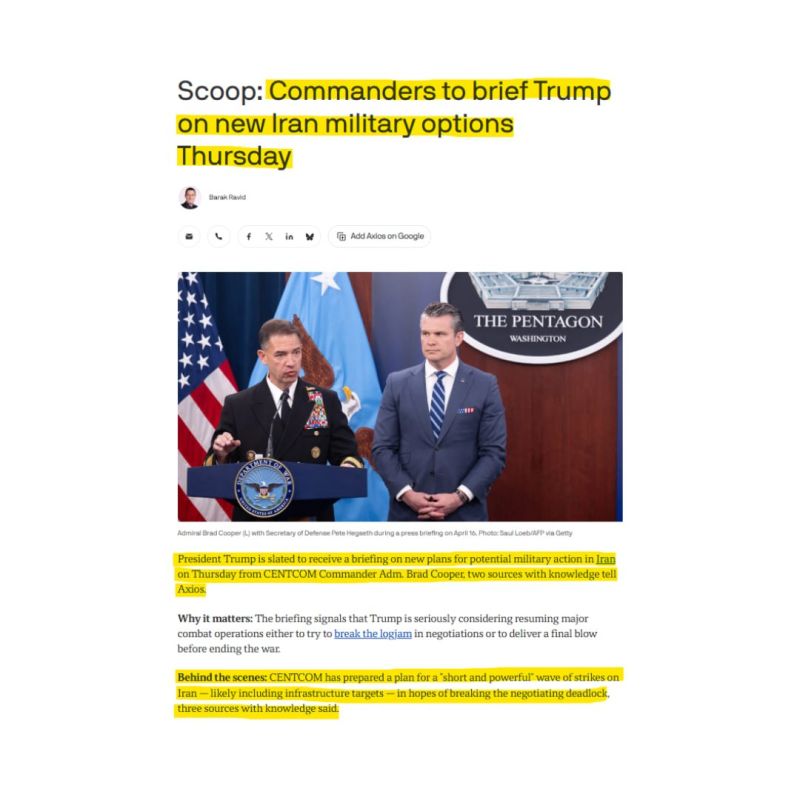
Trump to be briefed on new military options for Iran.
CENTCOM Commander Brad Cooper is set to present updated plans for potential military action, per Axios. The briefing signals the US is weighing a return to major combat operations amid stalled negotiations. Options under consideration include escalation to break the deadlock or delivering a decisive strike before ending the conflict. Source: Bull Theory Activate to view larger image,
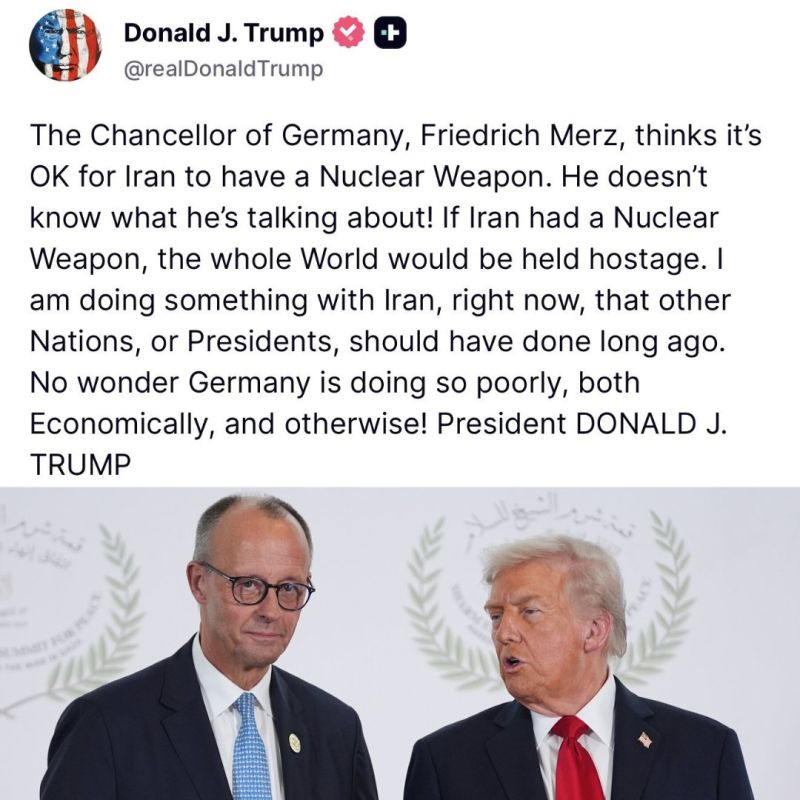
DONALD TRUMP JUST ERUPTED ON GERMAN'S CHANCELLOR MERZ
"The Chancellor of Germany, Friedrich Merz, thinks it’s OK for Iran to have a Nuclear Weapon. He doesn’t know what he’s talking about!" "If Iran had a Nuclear Weapon, the whole World would be held hostage. I am doing something with Iran, right now, that other Nations, or Presidents, should have done long ago." Source: Eric Daugherty @EricLDaugh
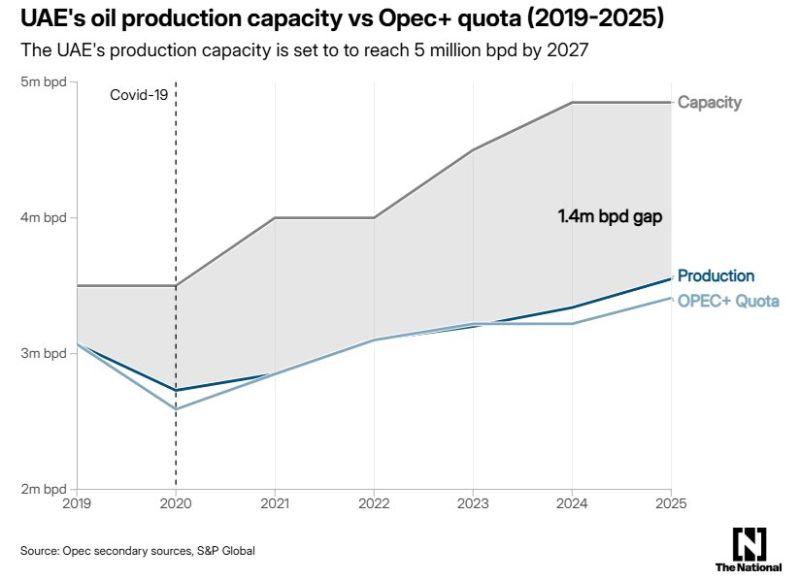
UAE could now potentially produce more oil than the OPEC+ quota previously allowed them…
This move could force others to follow. Oil supply is going UP. Source: Geiger Capital
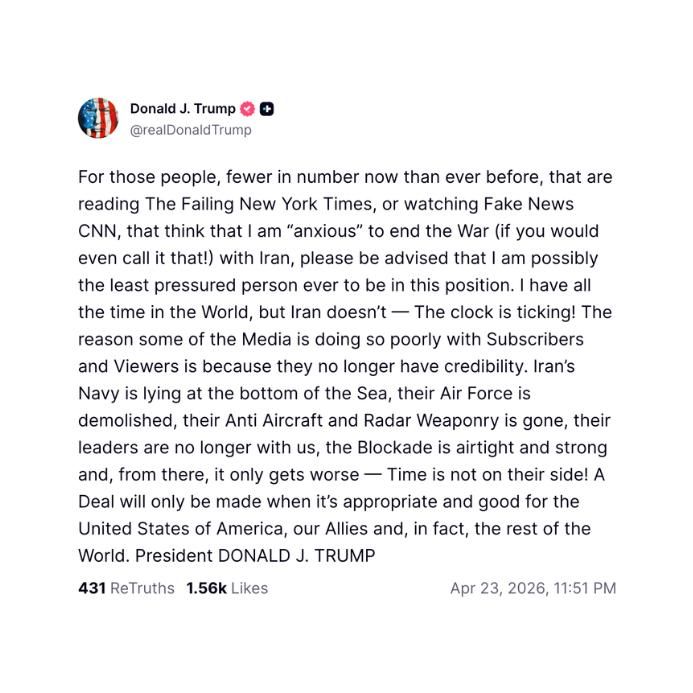
Trump's message is simple: A deal happens on his terms, or it doesn't happen at all.
"A DEAL WILL ONLY BE MADE WHEN IT'S APPROPRIATE AND GOOD FOR THE UNITED STATES." "I am possibly the least pressured person ever. I have all the time in the World, but Iran doesn't. The clock is ticking!" Trump says "the clock is ticking" for Iran and he has "all the time in the world" to make a deal. Says Iran's navy is "at the bottom of the sea," air force is "demolished," leaders are "no longer with us," and the blockade is "airtight."
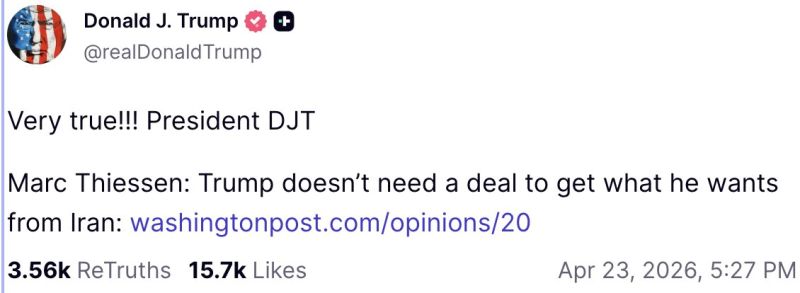
This is a short but important post by Trump.
It means that: 1) The war is over (and the extended ceasefire confirms it) 2) Trump is ok with walking away from Iran even without a deal, and letting the world clean up the Hormuz mess So yes, the war might be over. But the consequences of this war might be felt for a very long time.
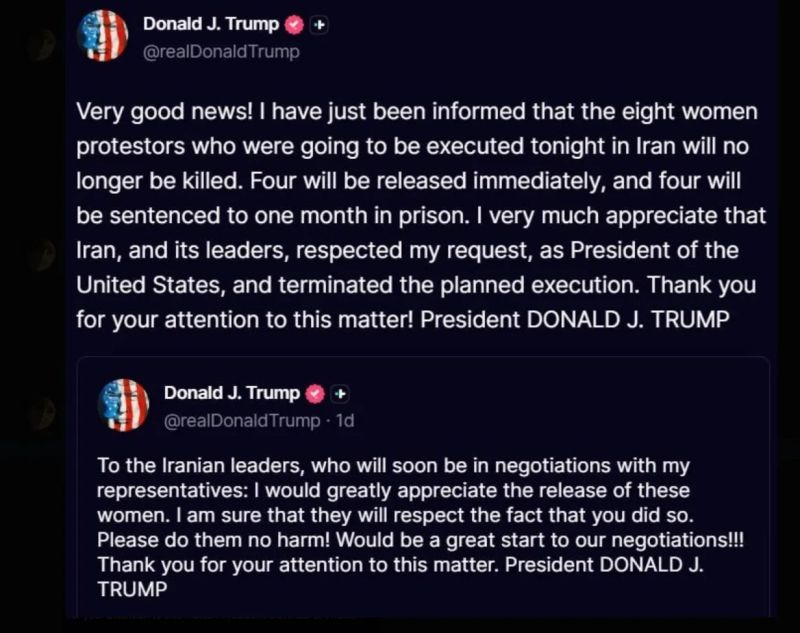
Trump just announced Iran called off the planned execution of 8 women protesters.
- 4 will be released immediately - 4 will serve one month in prison - Iran responded directly to Trump's personal request made yesterday ahead of negotiations - Trump says Iran's leaders "respected my request as President of the United States"
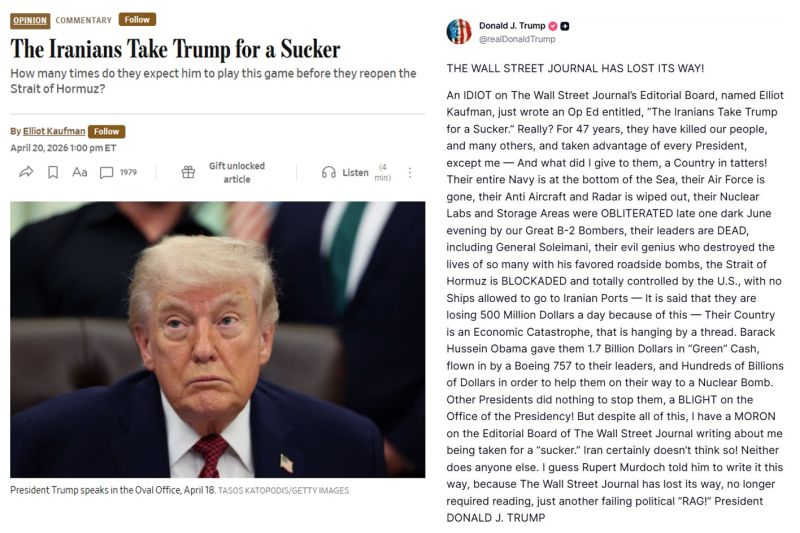
Trump goes nuclear on the Wall Street Journal after they published an op-ed titled "The Iranians Take Trump for a Sucker."
"What did I give them? A country in tatters! Their Navy is at the bottom of the sea, their Air Force is gone, their leaders are DEAD, their Nuclear Labs were OBLITERATED." He also drops a specific number: Iran is "losing 500 million dollars a day" from the blockade. And calls the WSJ "just another failing political RAG" that "Rupert Murdoch told to write." The irony is that both Trump and the WSJ are making each other's case. The WSJ says Iran played Trump. Trump says he destroyed Iran. Both can be true simultaneously. Iran's military is devastated AND the regime survived, kept the Strait, and is negotiating from a position of leverage. Still, Iran is losing $500 million revenue a day. And that's the economic leverage the US is using.