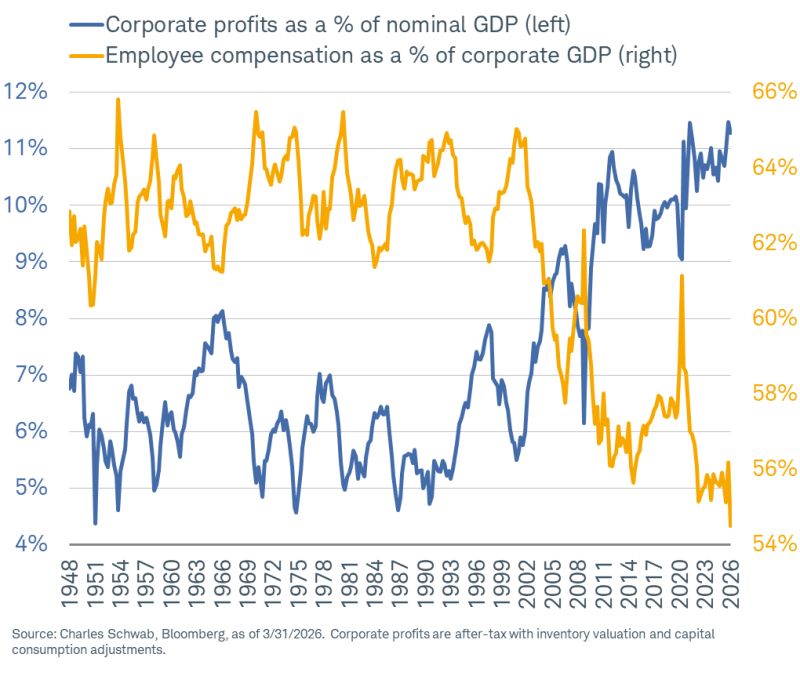

US PPI inflation for May came in hotter than expected at the headline level but softer at the core level (please see the Bloomberg table below).
Echoing yesterday’s CPI data, this suggests that the PPI spillover from energy into broader prices remains relatively muted for now. It also suggests that the pass-through from PPI to CPI is being offset by margin pressure. Source: Mo El Erian, Bloomberg
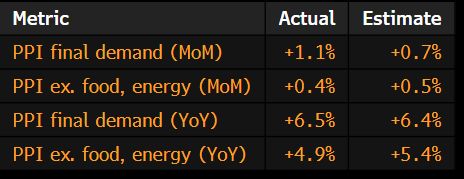
US Inflation just jumped to 4.2% the highest since 2023.
US CPI rose from 3.8% to 4.2% in May, but the increase is mainly driven by higher oil and energy prices linked to geopolitical tensions, not underlying inflation. The key focus is Core CPI, which excludes food and energy and came in lower than expected at 0.2% month-on-month versus 0.3% expected and 0.4% previously, indicating that underlying inflation is slowing faster than anticipated. This shifts the macro outlook for the Fed, as it cannot directly address oil-driven inflation through interest rates. If oil prices fall, inflation could ease and rate cuts may return to the table; if oil rises further, inflation could accelerate and force renewed tightening. Overall, the next move in oil will be decisive for the macro narrative. Source: Bull Theory
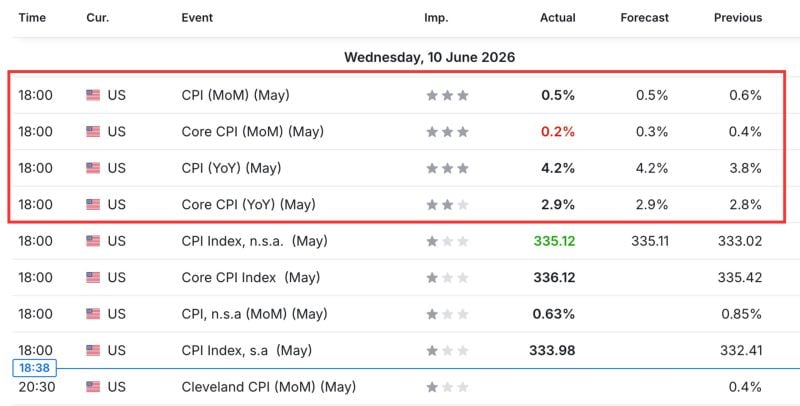
In case you missed it... Citi U.S. Economic Surprise Index has risen to its highest since October 2023
Source: Kevin Gordon Bloomberg
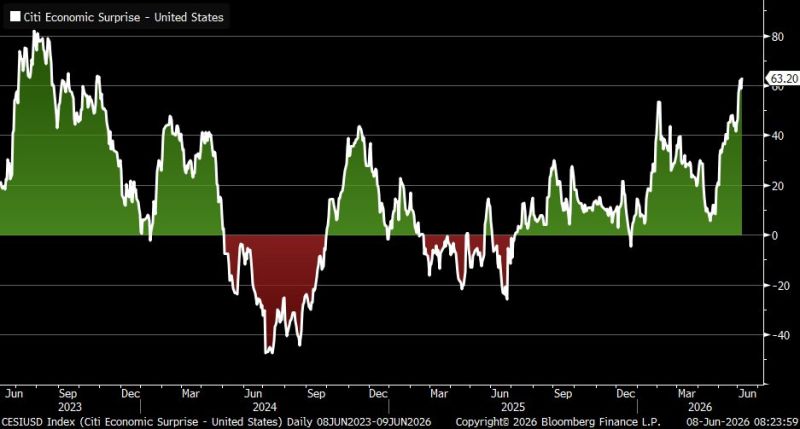
The K-Shaped Economy:
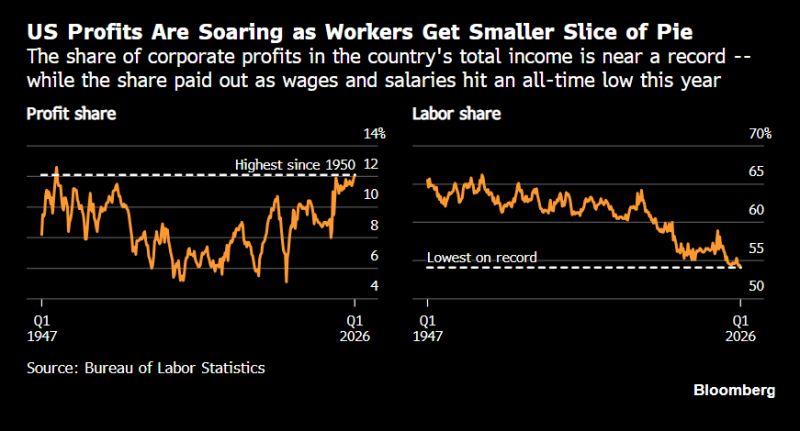
U.S. corporations are keeping the largest share of national income since 1950, while the share going to workers hit an all-time low. Source: Hedgeye, Bloomberg
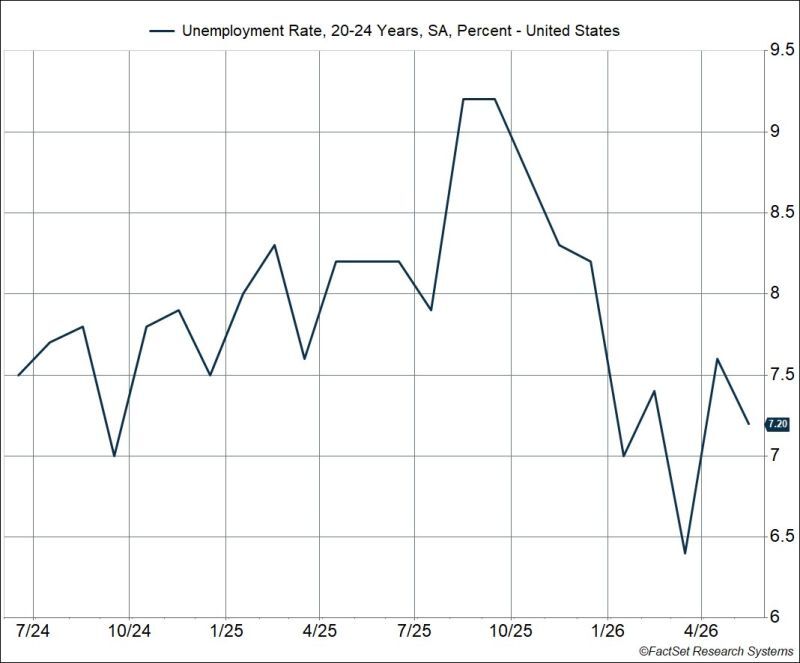
No, AI isn't taking young people's jobs.
Age 20-24 unemployment rate dropped again last month. Now to 7.2% from 9.2% last September. Source: Ryan Detrick, CMT
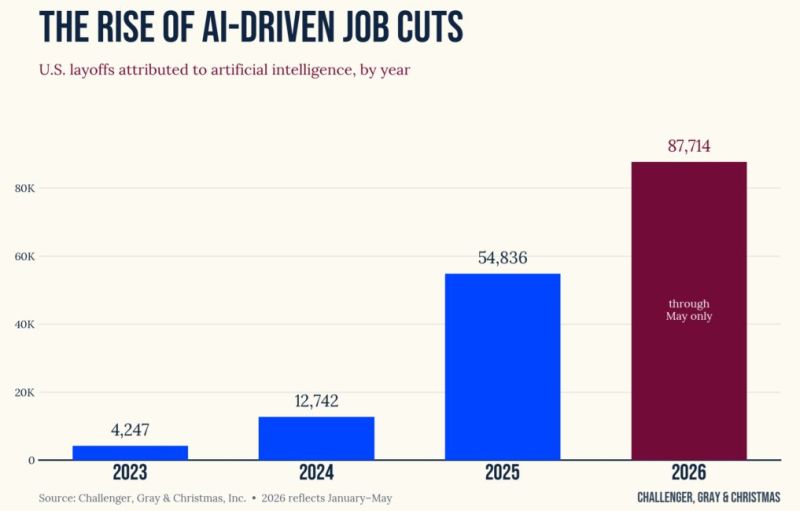
For the 3rd month in row, AI was the #1 reason for job cuts in the US.
88k job cuts were attributed to AI so far this year, a 60% increase over the AI-driven job cuts in all of 2025. Source: Charlie Bilello
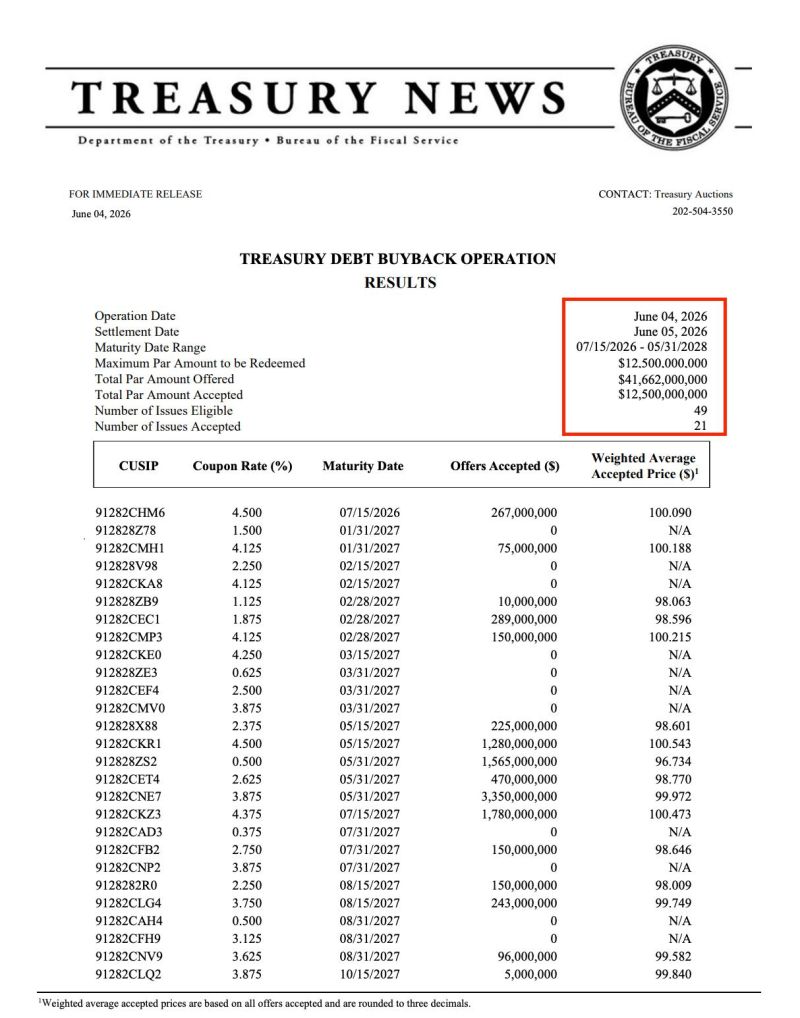
The US Treasury just bought back $12,500,000,000 of its own debt to improve liquidity.
Source: Bull Theory
The K-shape economy
Corporate profits as a % of nominal GDP: right near an all-time high Employee compensation as a % of corporate GDP: all-time low Source: Kevin Gordon