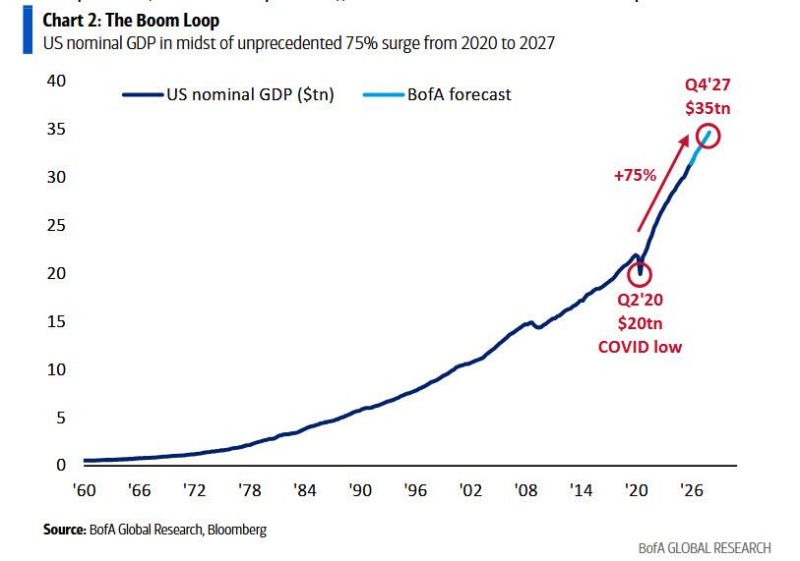

Why is the Fed expanding its balance sheet again (QE)?
The stock market is at an all-time high. Credit spreads are near all-time lows. And inflation has been above the Fed's target level for 62 consecutive months, averaging over 4% per year since 2019. So why is the Fed expanding its balance sheet again (QE)? Source: Charlie Bilello
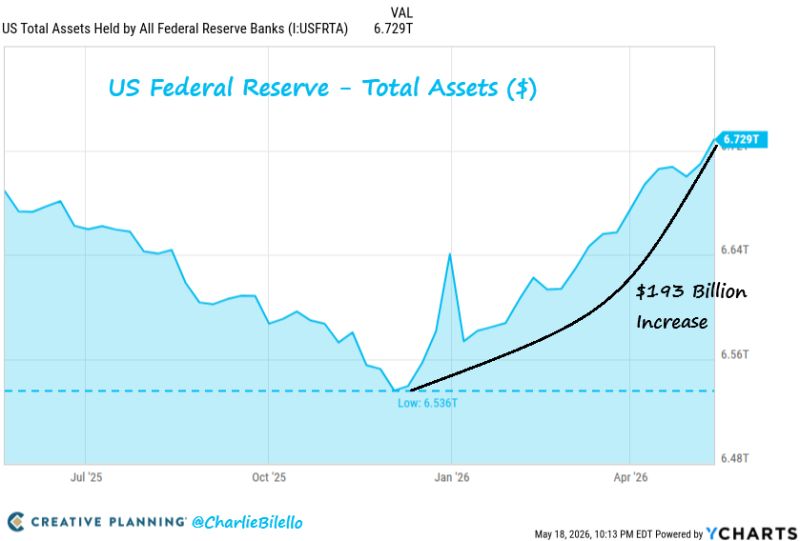
Interesting statistic: If you spent $10 million every day since Jesus was born, you would’ve spent $7.4 trillion. The US debt is $39 trillion.
Of course. it does not account for inflation. The $7.4 trillion figure is in nominal dollars, as if someone spent today’s $10 million every day for ~2,026 years. If you adjust for inflation, the comparison becomes messy because: - Dollars did not exist for most of that period. - Inflation data only exists meaningfully for recent centuries. “$10 million per day” could mean either: -> $10 million in today’s purchasing power each day, or -> $10 million nominal dollars each day, which is unrealistic historically. It still shows that today’s U.S. debt is over five times larger than that total. Source: Bull Theory

Japan Producer Prices Jump by Most Since 2014, Backing BOJ Hike
Source: Bloomberg
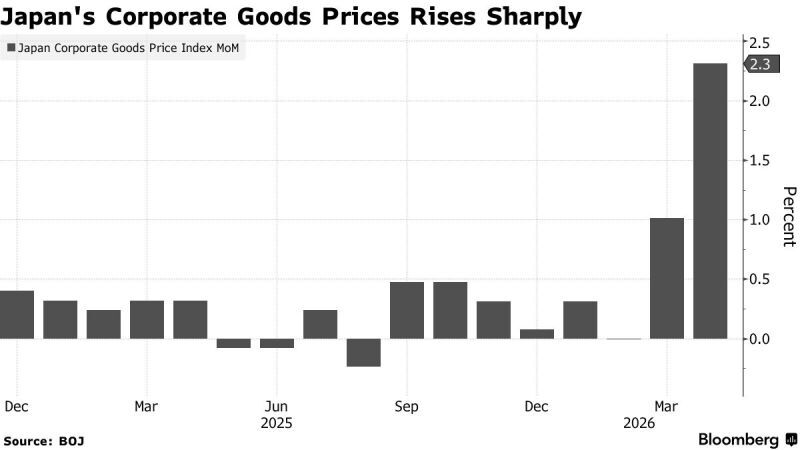
Inflation is now outpacing wages in America for the first time in 3 years.
Before the US-Iran war started in late February, inflation was sitting at 2.4%. It has risen to 3.8% in just two months, driven almost entirely by the energy price shock from the war. Real average hourly wages fell 0.5% in April alone and are now down 0.3% annually. Americans are earning more dollars but buying less with them. Source: Bull Theory
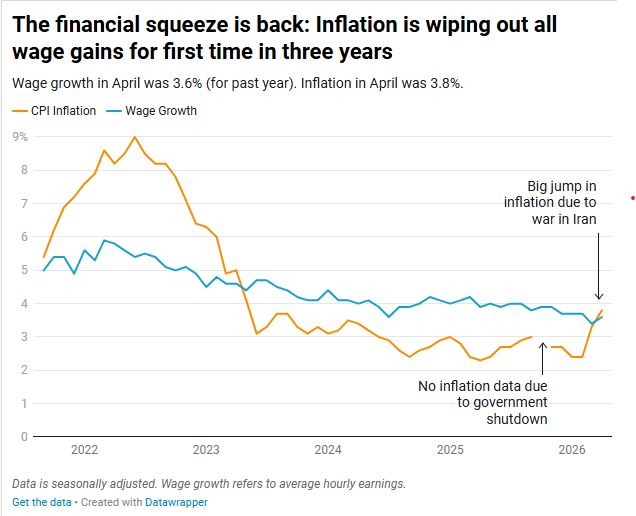
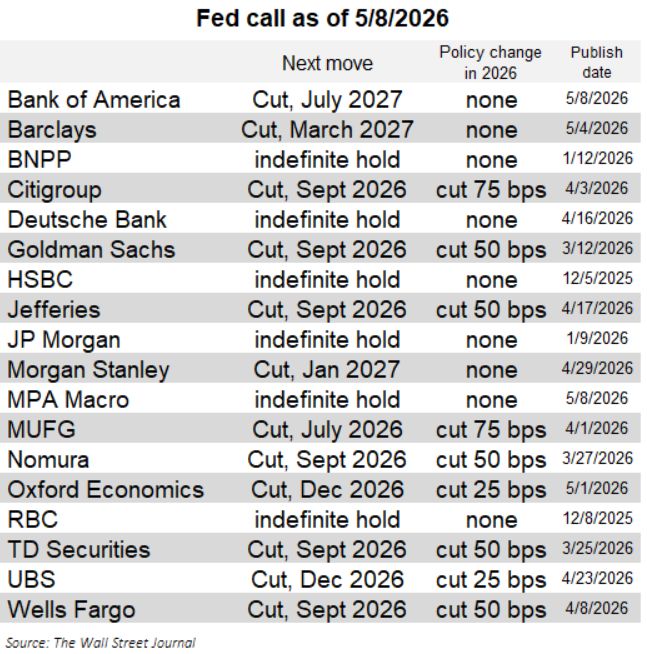
More sell-side firms and Fed watchers are removing/delaying cuts from their outlook, including a couple forecasters after the April NFP.
Half now see no cuts this year (and risks are clearly tilted to this group continuing to grow given inertial nature of these forecasts). Source: Nick Timiraos
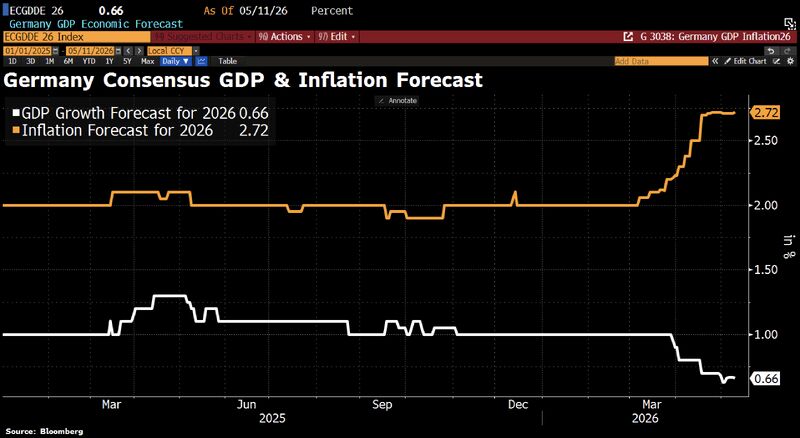
Germany appears to be heading towards stagflation.
Consensus GDP forecasts for 2026 have been revised down from more than 1% to just 0.66%, while inflation forecasts have climbed above 2.7%. Against this backdrop, the ECB is now expected to raise interest rates twice – at least, that is what markets are pricing in. Source: HolgerZ, Bloomberg
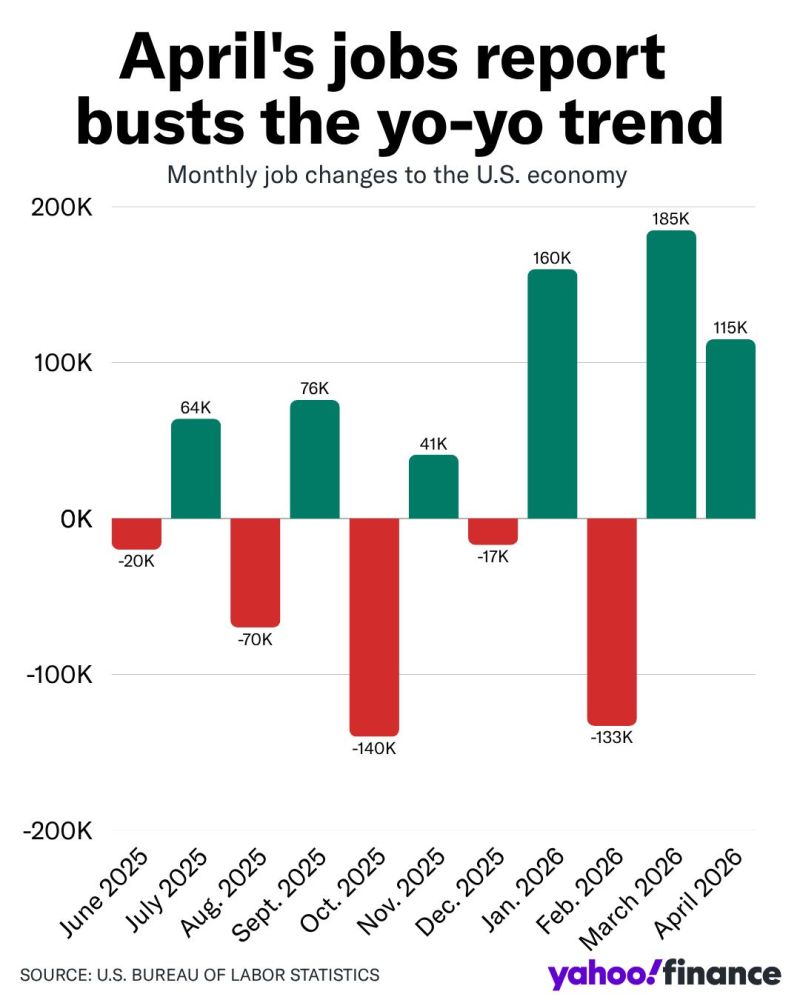
US job growth continued to strengthen in April, Goldilocks is back but read the fine print.
Today's US jobs report delivered exactly what risk assets wanted to see: a labor market strong enough to dispel recession fears, soft enough to keep the Fed in play. The headline numbers: ▪️ NFP: +115K — nearly double the consensus, despite Middle East war headwinds ▪️ Unemployment: 4.3% — steady, still well below the 4.5% line in the sand ▪️ Average hourly earnings: +0.2% MoM — below 0.3% consensus ▪️ Weekly hours worked: higher — demand-side resilience ▪️ Participation: 61.8% — softer than the 62.0% expected ▪️ Net revisions: -16K — March revised up, February down Why this matters for portfolios: The wage print is the story. Combined with this week's ULC and ECI data, the message is unambiguous: the labor market is less an inflation engine. That's a rather good news for the Fed (but don't expect them to cut in June) — and for duration, equities, and risk assets broadly. But here's the uncomfortable second-order read: What's "good news" for markets, muted wage growth, contained earnings — is the same data point feeding a deeper structural story: labor's declining share of GDP. Resilient demand. Constrained supply (retirements, fewer immigrants). And compensation that no longer keeps pace with productivity or capital returns. Markets celebrate. The Fed's job looks slightly easier. But the economic, social and political implications of this divergence are only beginning to surface. Source chart: Yahoo Finance
Investing at the time of high nominal growth...g all this money to build data centers with no revenue models. It's all going bust." (Clone)
BofA writes that nominal GDP is in the midst of a 75% boom in 7 years, from $20tn in ‘20 to $35tn in ‘27... In that kind of macro context, equities historically outperformed bonds. Period. Source: BofA, zerohedge