
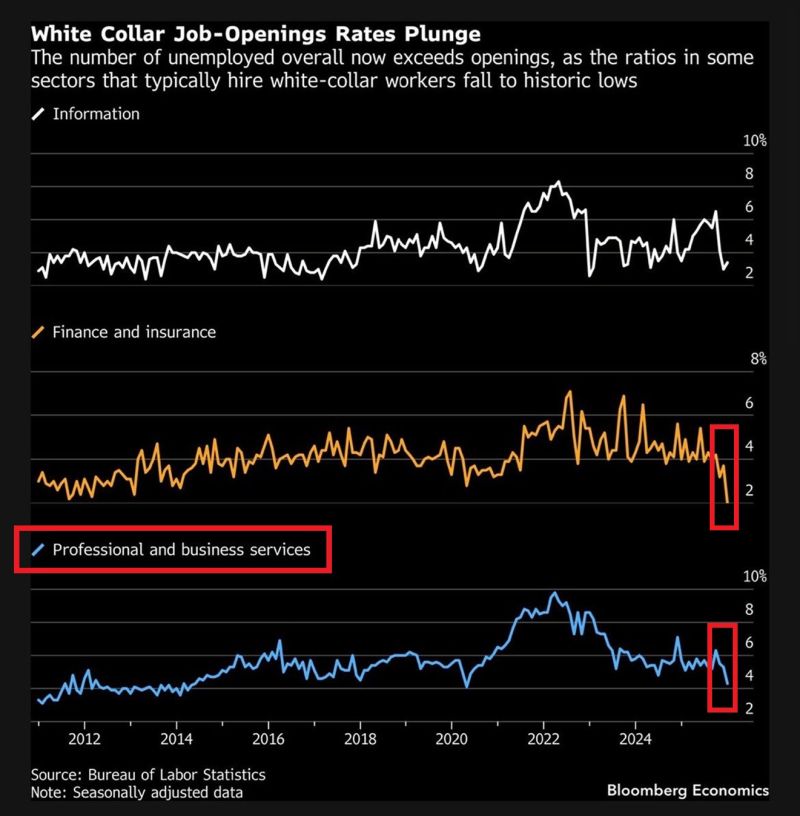
US white-collar recession is getting WORSE:
Job opening rates in key white-collar sectors are plunging to historic lows, according to BLS data. Finance and insurance rate is down to ~2%, the lowest in at least 14 years. Information sector openings are down to ~3%, near the cycle lows. Professional and business services FELL to ~4%, the 2nd-lowest in 12 years. All 3 sectors have seen openings fall -50% or more from their 2022 peaks. Source: Global Markets Investor, Bloomberg
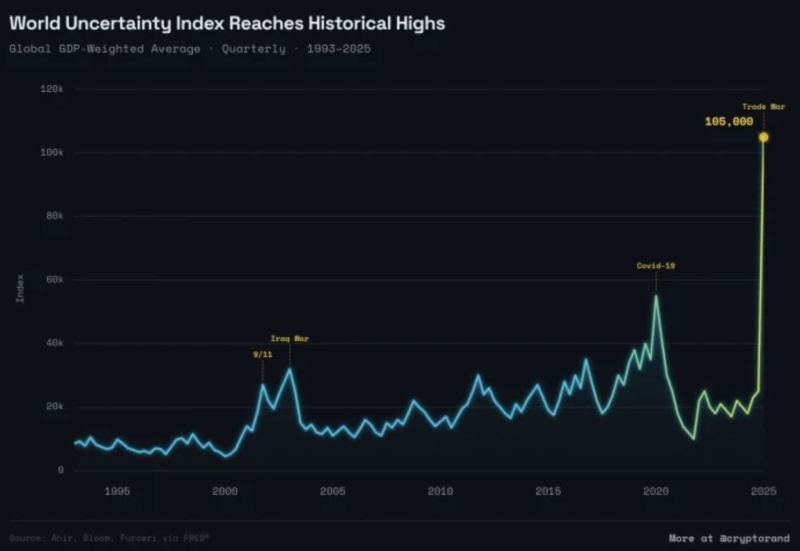
The World uncertainty index reaches the highest level in history, surpassing Covid, the Global Financial Crisis, and the Dot Com Bubble
Source: Barchart @Barchart
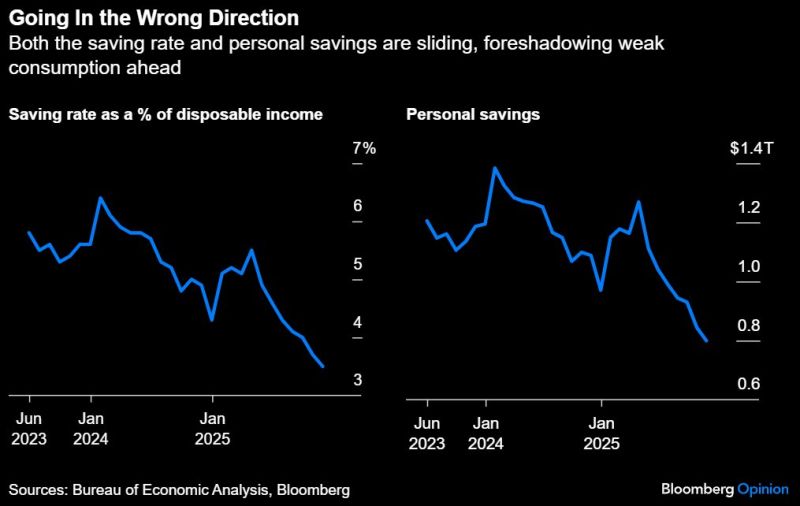
The K-Shaped Economy: Personal savings have dropped by -$469.2 billion since April, a decline of -37%.
The personal saving rate tumbled from 5.5% in April to 3.5% in November, the lowest since 2008, excluding the Covid-era distortions of 2020. Dwindling savings mean there’s less of a cushion to meet necessary payments, let alone make discretionary purchases. Delinquency rates on loans ranging from mortgages to credit cards rose to 4.8% in Q4, the highest since 2017. American's wallets are hurting. Source: Bloomberg, Hedgeye
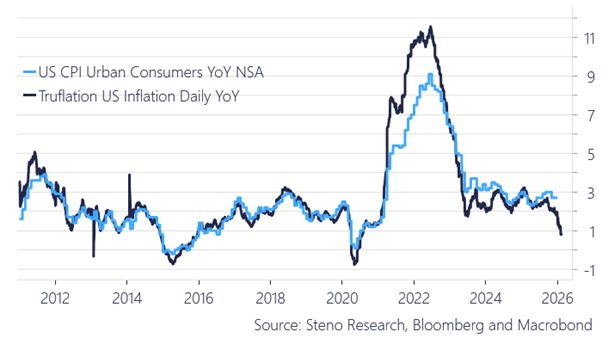
Will Truflation prove to be correct
Truflation is a digital, real-time alternative to government inflation numbers. Unlike the traditional CPI, which updates monthly and is based on a fixed “basket of goods,” Truflation tracks millions of prices daily from sources like Amazon, Zillow, and grocery stores. It’s faster, more reflective of actual spending, and transparent because it uses blockchain technology. This means you can see changes in prices almost immediately, giving a clearer picture of how your money’s value is changing in real time.
Brace yourselves: "One Shouldn't Panic" At How Bad The January Jobs
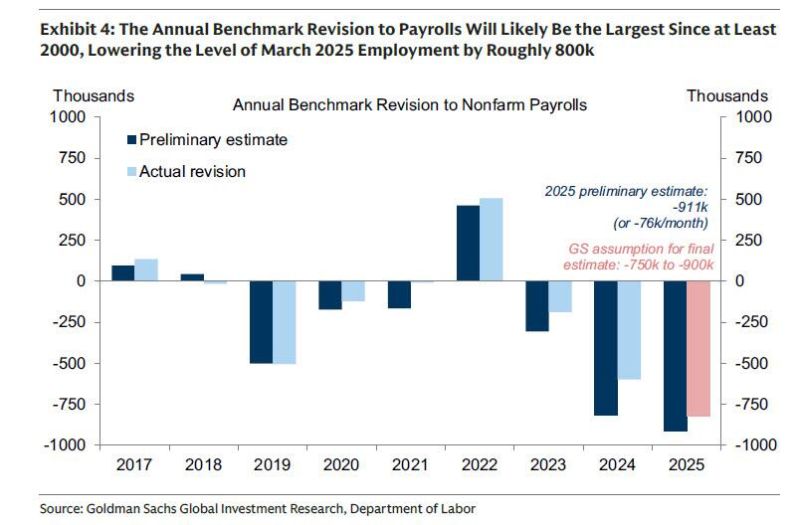
The real focus of Wednesday’s January jobs report is not the monthly headline figure but the major BLS revisions that could erase over one million previously reported jobs, revealing a much weaker labor market than believed. Economists are already preparing markets for softer data, with some suggesting that 50,000 monthly job gains may become the new benchmark amid a federal hiring freeze, productivity gains, and immigration shifts. The report may also appear weaker due to updates to the “birth-death” model, which could eliminate tens of thousands of previously estimated jobs each month. While unemployment is expected to hold around 4.4%, the Fed is closely watching signs that job growth has been overstated, marking a broader transition from labor hoarding to a cooling and more fragile economic environment.
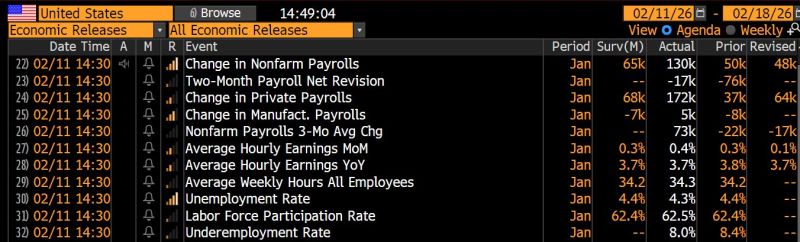
The January jobs report just SMASHED expectations.
Establishment Survey showed 130k new payrolls, well above 65k consensus estimate – and ahead of “whisper numbers” that were closer to 50k or even lower. This is the strongest number since April 2025... And here’s the kicker: -34,000 GOVERNMENT jobs. Private sector up. Government down ‼️ According to Household Survey, employment jumped by 528k in January, pushing the unemployment rate down to 4.3% from 4.4% in December. US Treasuries are selling off in response, with US 10y yield up 6bps. This better than expected report has caused odds of a rate cut in March to drop from around 20% to 6%. Source: Bloomberg, HolgerZ
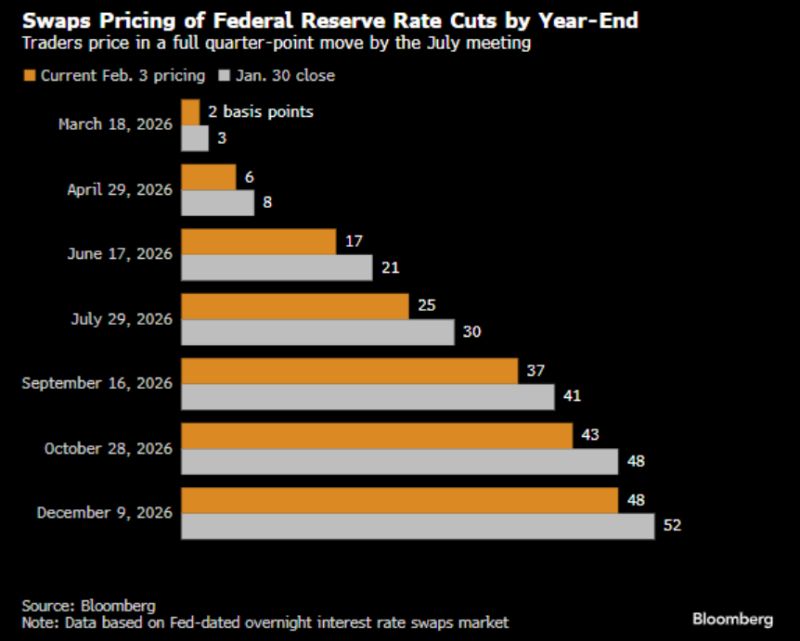
Rates Traders Target Dovish Policy Shift Under a Warsh-Led Fed
➡ Since Trump’s Friday announcement, flows in options linked to the Secured Overnight Financing Rate — which closely tracks the central bank’s path — have reflected bets on a more dovish tilt once Warsh takes his post in time for the Fed’s June meeting. Source: Christophe Barraud @C_Barraud on X, Bloomberg
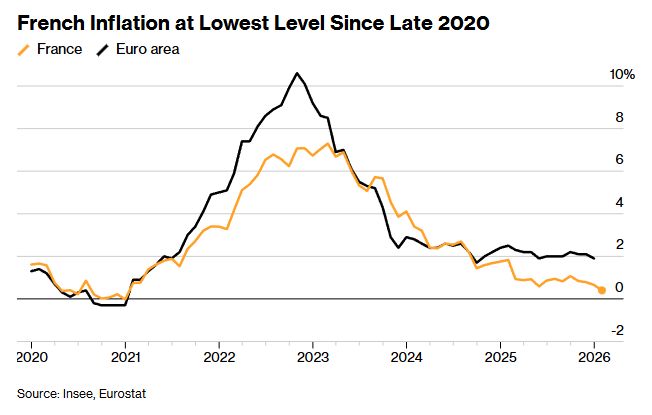
In case you missed it French Inflation Rate Unexpectedly Sinks to Five-Year Low
Source : Bloomberg