
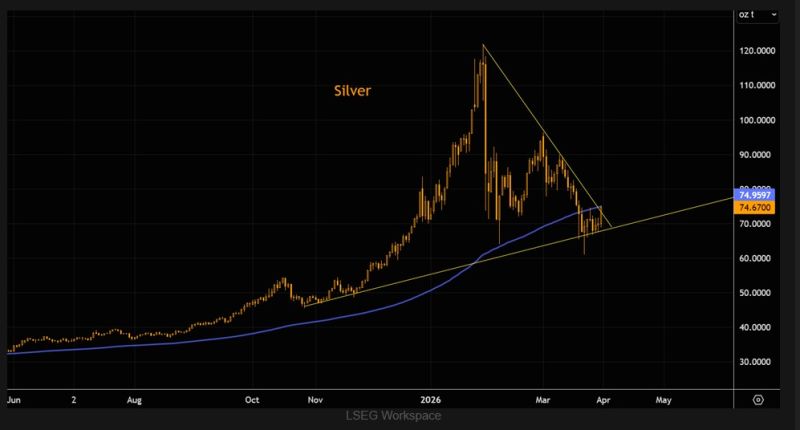
Silver printed a large hammer candle not long ago, marking a short-term flush. Since then, price has consolidated, and yesterday we saw the first “serious” upside candle in a while.
We’re now close to breaking above the downtrend line in place since the top, as well as the 100-day. Is silver about to turn sexy again? Source: TME
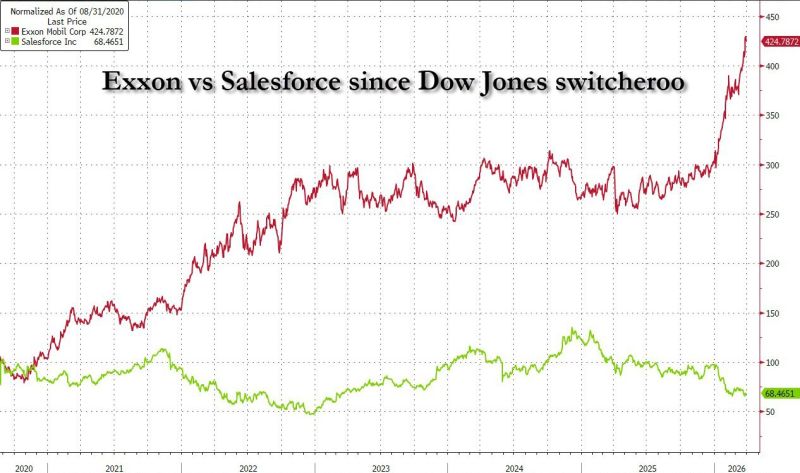
Since Exxon was kicked out of the Dow Jones "Industrial" Average and replaced by Salesforce in August 2020, Exxon is up 325%. Salesforce is down 32%
Source: zerohedge
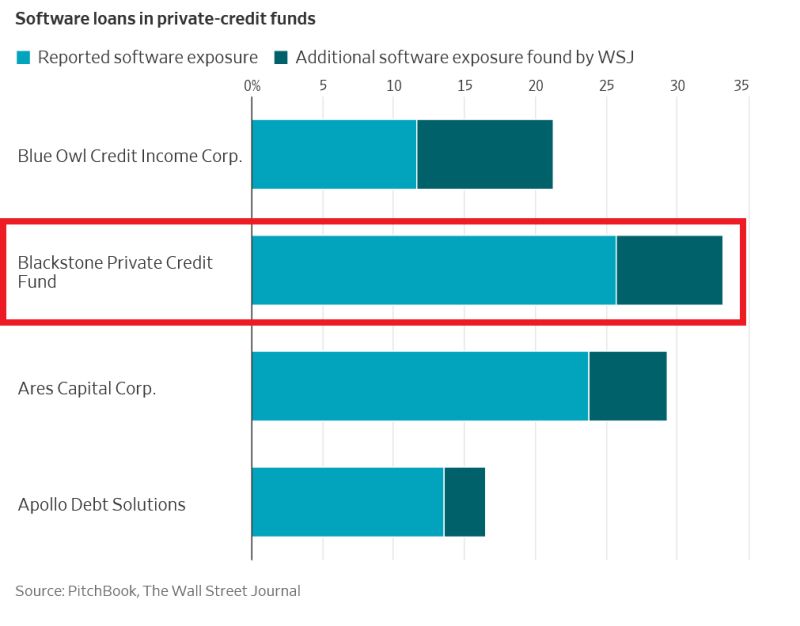
Private Credit’s Hidden Software Risk
Top private credit funds Apollo, Ares, Blackstone, and Blue Owl understate software exposure, averaging 25% vs. 19% reported. Blackstone leads at 33%, Blue Owl nearly doubles its reported share. Rising AI fears make this sector a key driver of record fund withdrawals, highlighting larger-than-expected risks. Source: Will Schryver, The Wall Street Journal, Global Markets Investor
With markets getting close to oversold, everyone's hedged and global CTAs massively net sellers, there is some dry powder if the TACO trade finally takes place
Source: Goldman Sachs, RBC
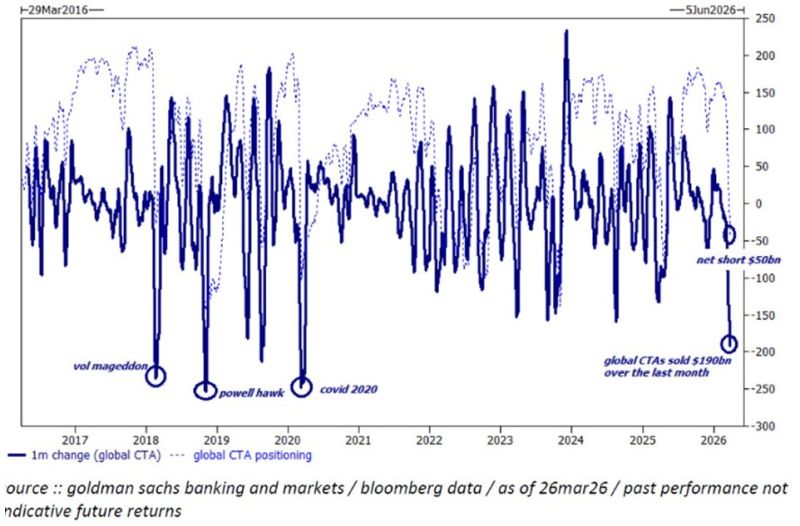
Could we see more pain?
Yes, on the surface, the S&P 500 looks nearly oversold, but underneath, the situation looks different with only 11% of SPX constituents being oversold. Source: TME, Bloomberg, GS
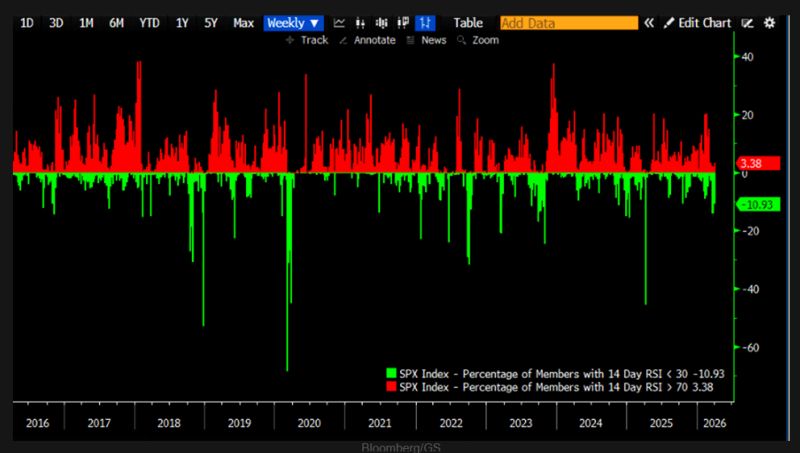
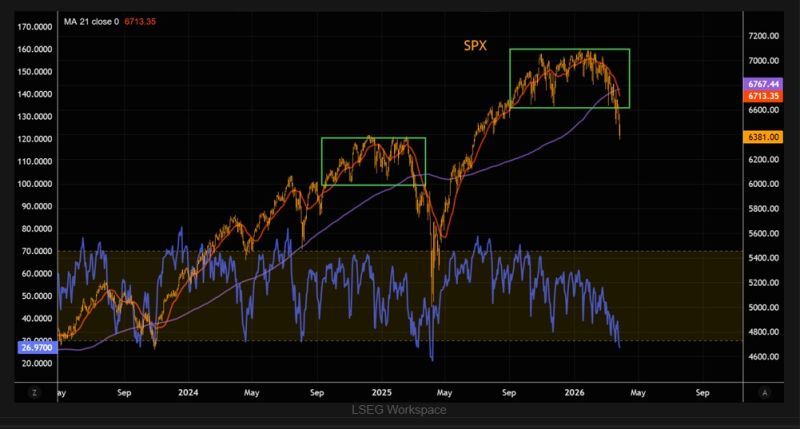
The sp500 technical picture remains pretty much the same: not pretty
We’re now well below the 200-day, with the 21-day crossing below it, a “light” death cross. RSI is at its most oversold levels since the Liberation Day panic, so a bounce is possible. But beware of the "catching a falling knife" strategy - very often a risky one. Source: TME, LSEG Workspace
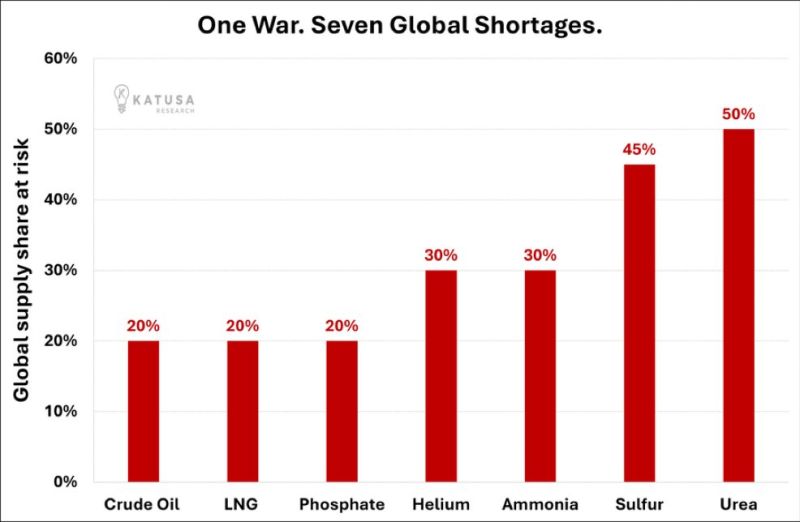
One war, 7 global shortages
Source: ADAM @AdameMedia Katusa Research
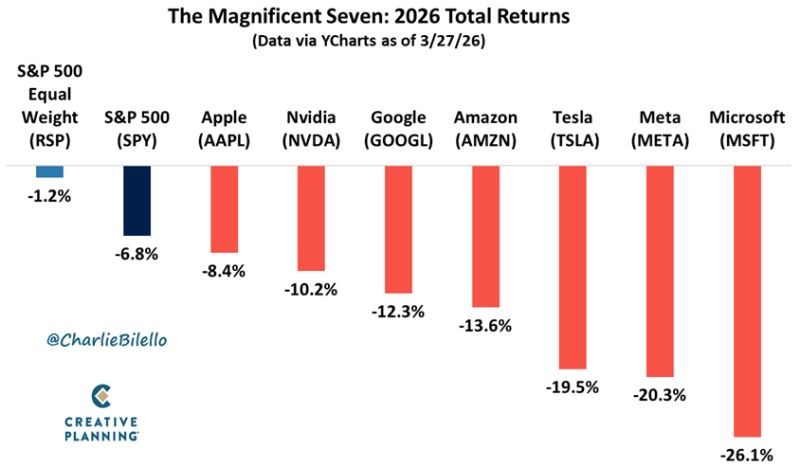
All 7 members of the Magnificent Seven are down on the year
(-8% for Apple to -26% for Microsoft) and underperforming the average stock in the S&P 500 (which is down -1%) by a wide margin.Source: Charlie Bilello