Straight from the Desk
Syz the moment
Live feeds, charts, breaking stories, all day long.
- All
- equities
- United States
- Macroeconomics
- Food for Thoughts
- markets
- bitcoin
- Central banks
- geopolitics
- Fixed Income
- gold
- europe
- Asia
- AI
- Commodities
- investing
- Technology
- Crypto
- technical analysis
- nvidia
- china
- ETF
- earnings
- oil
- Forex
- energy
- banking
- magnificent-7
- Real Estate
- Volatility
- Alternatives
- apple
- emerging-markets
- switzerland
- tesla
- Middle East
- United Kingdom
- amazon
- assetmanagement
- microsoft
- ethereum
- russia
- meta
- Industrial-production
- ESG
- Healthcare
- Global Markets Outlook
- bankruptcy
- Turkey
- brics
- Market Outlook
- africa
- performance
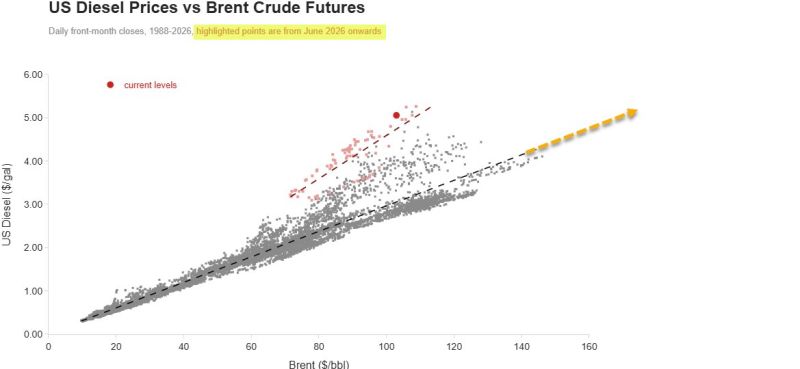
U.S. distillate fuel inventories fall to the lowest level since 2003
Source: Bloomberg, Hedgeye
Here’s the current bull market (red line) charted against the nine other bulls since 1928 that lasted 1,000+ days:
Source: Bespoke
ONLY 10% OF AMERICANS ARE NOW KEEPING THE ENTIRE US ECONOMY FROM CRASHING.
28 million people are driving 49% of everything Americans spend. The other 221 million account for just 37%. This is the highest concentration of consumer spending ever recorded in US history. Every 1% rise in the stock market increases consumer spending by 0.05%. Markets are up double digits this year. The entire consumer economy is now a direct function of where the S&P 500 closes every day. The bottom 80% have nothing left to contribute. National household debt just crossed $18 trillion. Credit card balances hit a record $1.2 trillion as lower income households borrow just to cover basic expenses against prices that are 25% higher than 2020. Deloitte projects that a 10% stock market correction would cause real consumer spending growth to fall to just 0.2% in 2027 and drop 1% in 2028. The 28 million people keeping this economy running are fully invested in the stock market. The US economy has never been this dependent on this few people. And those people have never been this dependent on the stock market. Source: Bull Theory, FT
U.S. Strategic Petroleum Reserve (SPR) stocks fall to 2-year low
Source: zerohedge
Bloomberg's US Macro Surprise data slumped yesterday with headline and core PCE printing below expectations on a MoM basis
Initial jobless claims a little weaker than expected, GDP disappointing, personal consumption weak (income unch), core capital goods orders declined, and a plunge in new home sales... Source: zerohedge
The Fed expanded the money supply by nearly $9 trillion under Powell.
Inflation has averaged >4% per year over the past 6 years. Powell's explanation? It was nearly all due to rolling “supply shocks" over which the Fed has no control. The truth: this inflation was made in Washington as it always is - from too much government borrowing/spending and too much government creation of money. Source: Charlie Bilello
In case you haven't noticed, there is just a tad excess liquidity out there...
SOFR – FF is the spread between two key US short-term rates: 1/ SOFR (Secured Overnight Financing Rate): the rate at which financial institutions borrow cash overnight, collateralized by US Treasuries (i.e. in the repo market). 2/ FF (Federal Funds rate, usually the effective fed funds rate, EFFR): the rate at which banks lend reserves to each other unsecured overnight. So the spread is secured rate minus unsecured rate. Under textbook conditions, secured borrowing is cheaper than unsecured borrowing — you're posting Treasuries as collateral, so the lender takes less risk and accepts a lower rate. That makes SOFR – FF slightly negative (typically a few basis points below zero) in calm markets. This is the "normal" state. SOFR materially below FF — usually means abundant reserves and ample cash chasing limited collateral. Cash holders accept low secured rates because they have nowhere else to put it. This is typically a sign of: - The Fed's RRP (reverse repo facility) being heavily used - QE having left the system flush - or scarcity of high-quality collateral (Treasury bills, in particular). Source: zerohedge
The Nasdaq 100 closed >30,000 for the first time ever; 30,001.32 (+1.8%).
From 126.22 points at its start in 1985 to 30,000 today. That's a 28,756.38% total return, or 14.7% annualized; for 41 straight years. Compounding is the eighth wonder of the world. Source: HolgerZ, Bloomberg
Investing with intelligence
Our latest research, commentary and market outlooks