
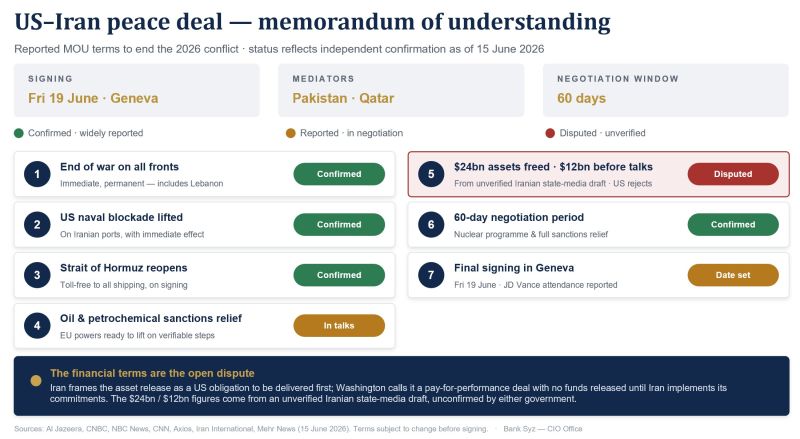
Here are the reported terms of the US-Iran peace deal MOU:
1. Immediate and permanent end to war on all fronts, including Lebanon 2. US naval blockade on Iranian ports lifted immediately 3. Strait of Hormuz to reopen within 30 days 4. US oil and petrochemical sanctions on Iran suspended 5. $24 billion in frozen Iranian assets released during 60-day negotiation period, $12 billion before talks even start 6. 60-day negotiation period for Iran's nuclear programme and full sanctions relief 7. Final signing in Geneva on June 19. JD Vance expected to attend The US disputes point 5, saying no funds will be released without Iran fulfilling commitments first.
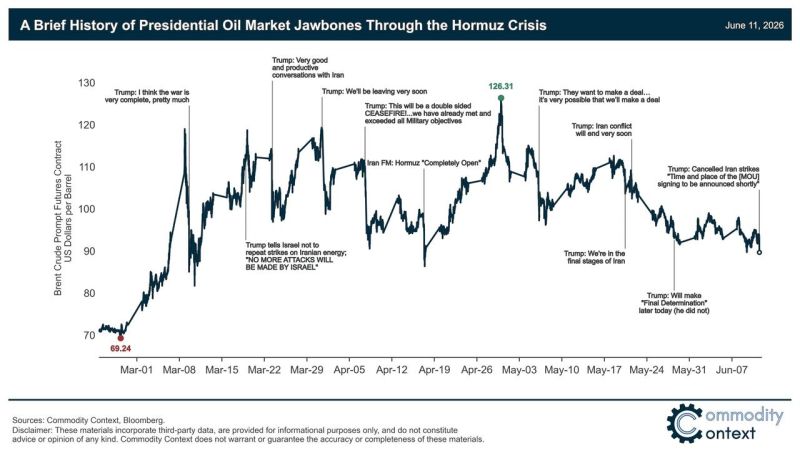
Yesterday was a "TACO-Thursday", with Trump's rhetoric intraday-flipping from 'blowing the sh*t out of Iran' to a 'no strikes
Deal pretty much wrapped up' sparking a plunge in oil (ignoring denials), spike in stocks, and big drop in yields (shrugging off hot headline PPI and ECB rate-hikes). CNN reports that this is the 38th time that President Trump has declared a peace deal is imminent... Source: zerohedge
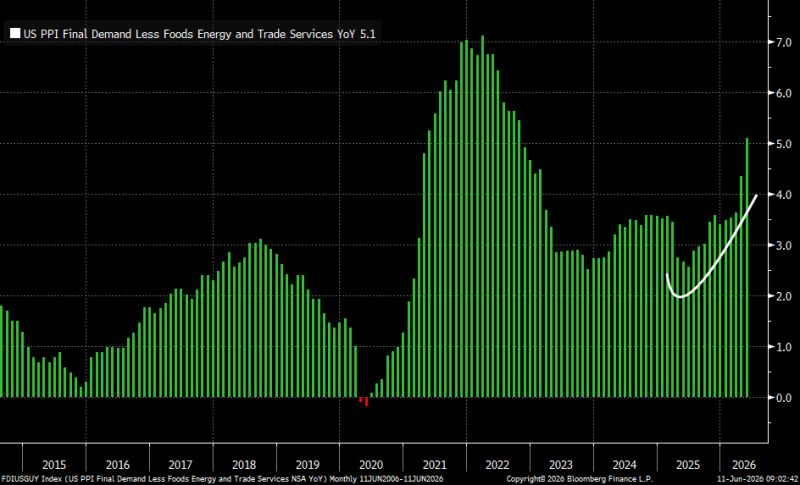
The SuperCore PPI (i.e., no food, energy or trade) has been accelerating for 11 months.
Source: Bernstein Advisors
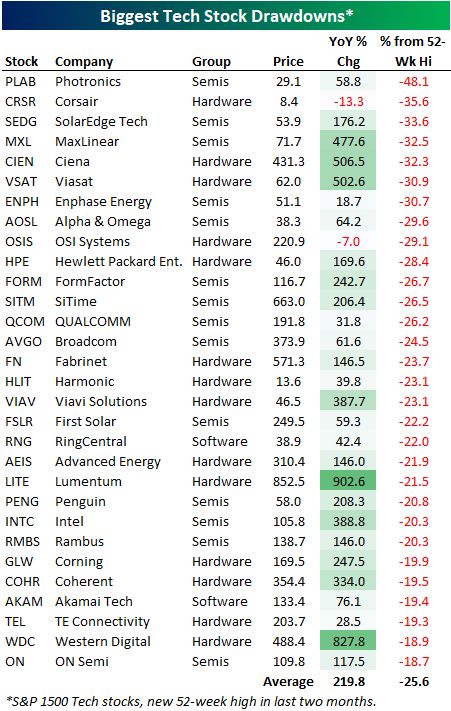
Here are the biggest drawdowns from S&P 1500 Tech stocks that have made 52-week highs in the last two months. A couple of these are in 30%+ drawdowns yet still up 500%+ y/y.
Source: Bespoke
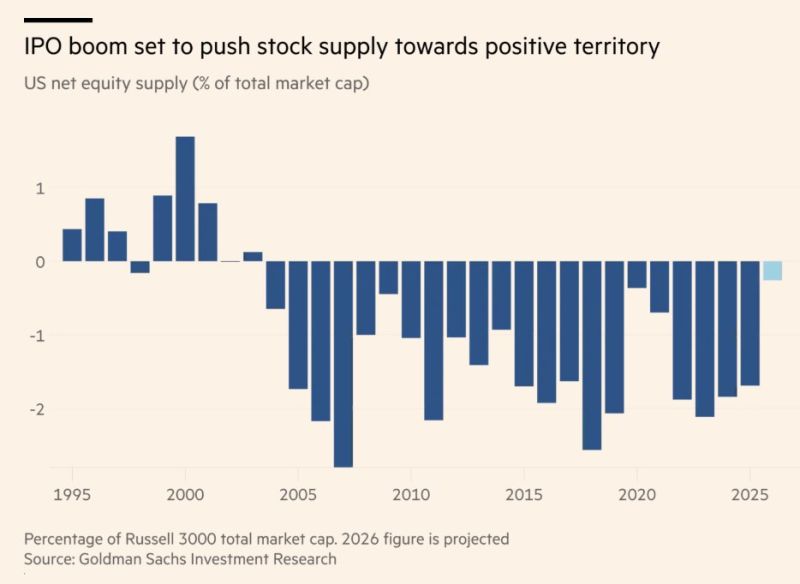
One of the biggest hidden drivers of the US stock market may be coming to an end.
Since 2003, US equities have been in a historic era of NEGATIVE net supply. Translation: Companies bought back more stock than the market created through IPOs and new share issuance. Less supply + relentless demand = higher prices. That dynamic helped fuel one of the greatest bull markets in history. Now the trend is reversing. For the first time in 23 years, US stock market supply is expected to stop shrinking. Why? Because the AI race is becoming insanely expensive. Big Tech firms are preparing massive share sales to finance AI infrastructure spending. At the same time, IPO giants like SpaceX, OpenAI, and Anthropic could eventually bring huge new supply to public markets. Goldman Sachs estimates net equity supply could turn flat in 2026 after two decades in negative territory. The AI boom may not just change technology. It may fundamentally change the market structure that powered US equities since the GFC. Source: FT
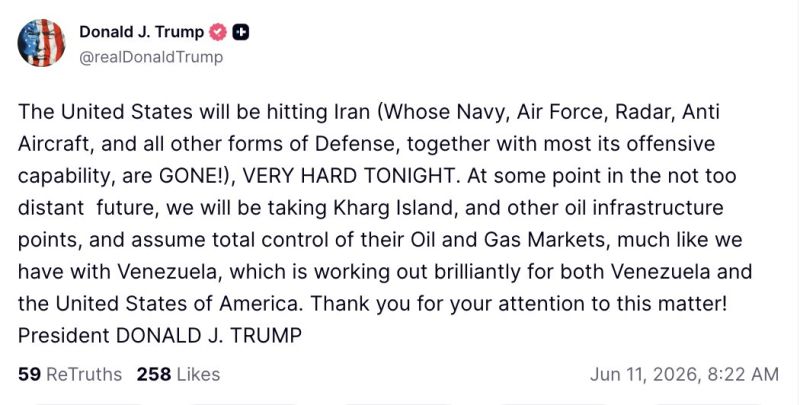
PRESIDENT TRUMP JUST POSTED THIS: "The United States will be hitting Iran ... VERY HARD TONIGHT"
"At some point in the not too distant future, we will be taking Kharg Island, and other oil infrastructure points, and assume total control of their Oil and Gas Markets, much like we have with Venezuela" Markets do not seem to care anymore...
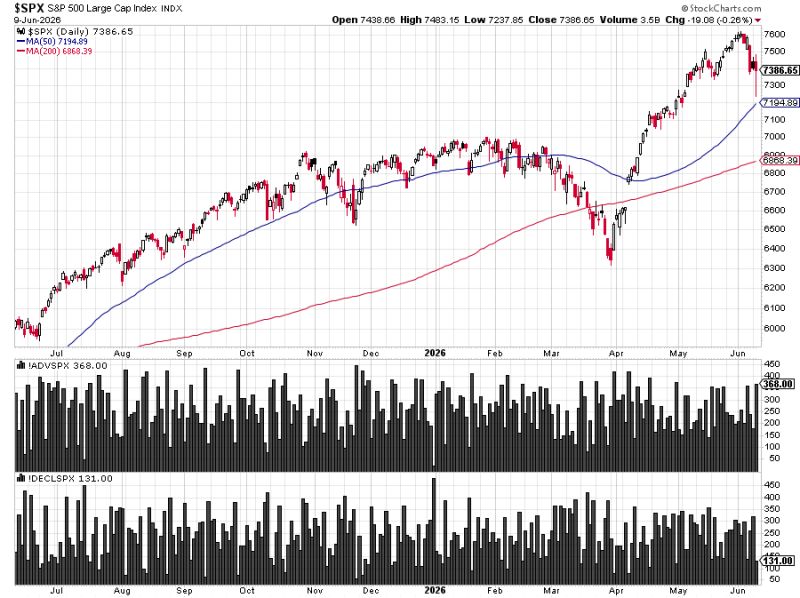
Rotational market lives on. We note that 368 stocks were higher in the S&P 500 yesterday. The most since late April.
Rare to see so many stocks going up with the S&P 500 retreating. Source: Ryan Detrick
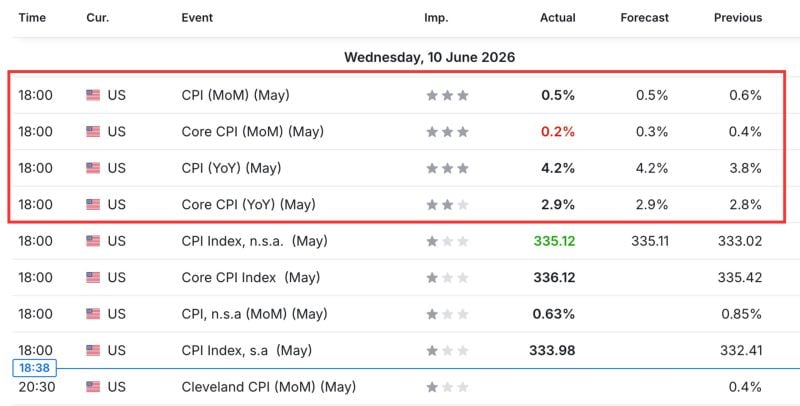
US Inflation just jumped to 4.2% the highest since 2023.
US CPI rose from 3.8% to 4.2% in May, but the increase is mainly driven by higher oil and energy prices linked to geopolitical tensions, not underlying inflation. The key focus is Core CPI, which excludes food and energy and came in lower than expected at 0.2% month-on-month versus 0.3% expected and 0.4% previously, indicating that underlying inflation is slowing faster than anticipated. This shifts the macro outlook for the Fed, as it cannot directly address oil-driven inflation through interest rates. If oil prices fall, inflation could ease and rate cuts may return to the table; if oil rises further, inflation could accelerate and force renewed tightening. Overall, the next move in oil will be decisive for the macro narrative. Source: Bull Theory