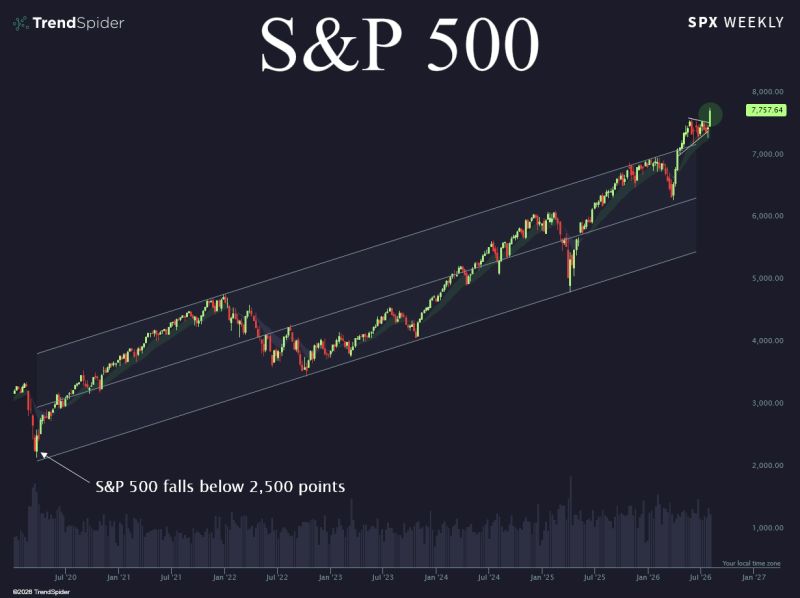
The market just gave us a glimpse of how sensitive gold is to the Fed pat.
What happens if the Fed doesn’t hike at all this year? Source: Katusa Research @KatusaResearch
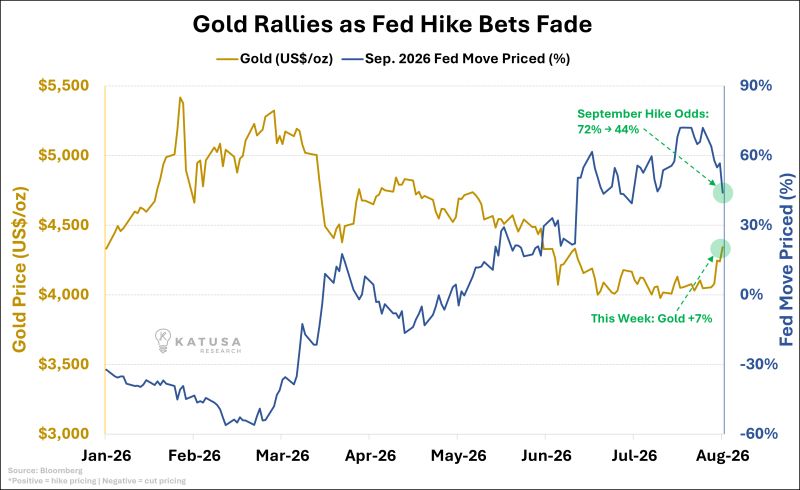
America’s oil safety cushion is being drained from both sides.
Since early April, total U.S. crude inventories have fallen by 166 million barrels, from 712M, marking 17 consecutive weekly declines — the longest streak on record. But the bigger story is the Strategic Petroleum Reserve. Washington has released 111M barrels since March, pushing the SPR down to just 305M barrels — its lowest level since 1983. Normally, SPR releases offset shortages in the commercial market. This time, commercial crude inventories are falling too, declining for 10 straight weeks. In other words, the Gulf crisis isn't simply moving oil from government reserves into private storage. America's entire crude buffer is shrinking. That works if the disruption is temporary. But the longer the crisis lasts, the more valuable — and strategically important — those remaining 305M SPR barrels become. The SPR was built for exactly this kind of shock. Now the shock is steadily consuming it. Source: Jack Prandelli on X, Bespoke
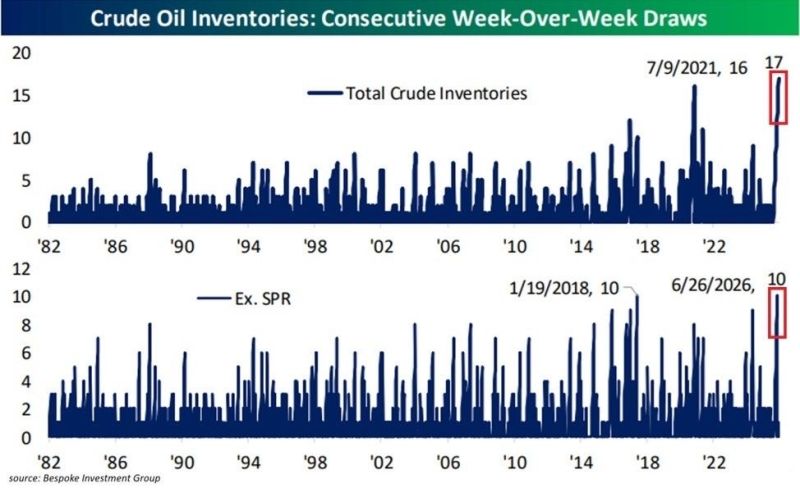
S&P 500 profit margins spiked to 16.9% in Q2, which is by far their highest level in history.
“Profit margins are probably the most mean-reverting series in finance, and if profit margins don't mean revert, then something has gone badly wrong with capitalism. If high profits don't attract competition, there's something wrong with the system.” - Jeremy Grantham Source: Charlie Bilello @charliebilello
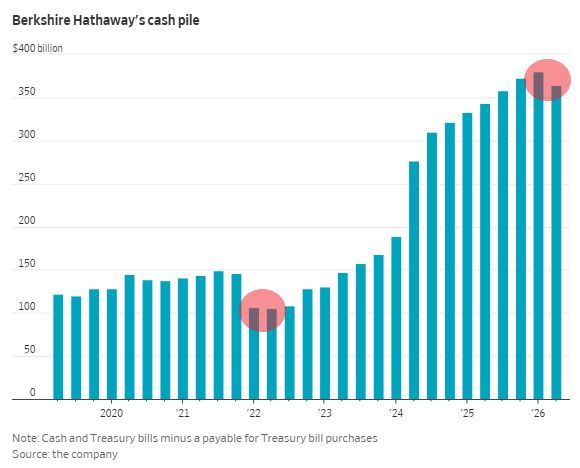
Berkshire Hathaway's massive cash pile declined for the first time in 4 years, meaning it was finally a net buyer of stocks.
Source: Barchart @Barchart
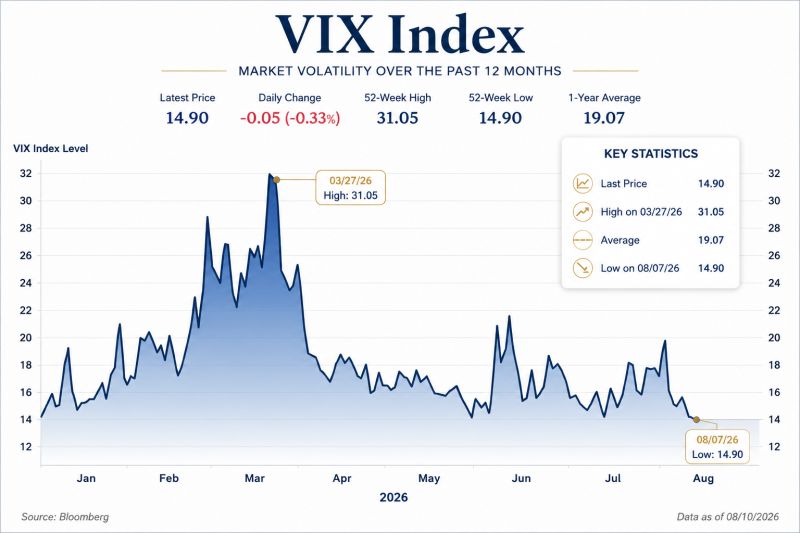
One of the biggest surprise of 2026 is the COLLAPSE of volatility
We have a war in the Middle East, a volatile oil price, a new Fed Chair and mid-term elections ahead. And yet the VIX, a measure of implied volatility in the S&P 500, has fallen to the lowest level since January. Even implied bond-market volatility is nearly 30% below the 5-yr average. So why are markets so resilient? - AI concerns are easing: Strong Big Tech earnings, accelerating cloud growth and expanding backlogs are increasing confidence that AI investment can generate attractive returns. Markets are becoming more selective, rewarding companies with clear monetization. - Earnings are booming and broadening: Q2 S&P 500 earnings growth is tracking around 48%, versus 24% expected initially. Strength is increasingly spreading beyond mega-cap technology. - The economy remains resilient: Manufacturing has accelerated to its strongest level in more than four years, supported by improving demand, production and industrial activity. - Macro risks are fading: Lower oil prices reduce inflation concerns, while a cooling labor market and slower wage growth have lowered expectations for further Fed tightening. - Record highs are not necessarily a warning: Historically, new highs have often been followed by strong medium- and long-term returns. Source: Liz Abramowicz, Bloomberg
The US Department of Defense is putting pressure on the country's defense industry to speed up the production and delivery of weapons.
The call comes amid a domestic debate over the US weapons arsenal, following reports that the war in Iran has led to the country's stockpile of air defense missiles shrinking too quickly. Source: Sweden Herald

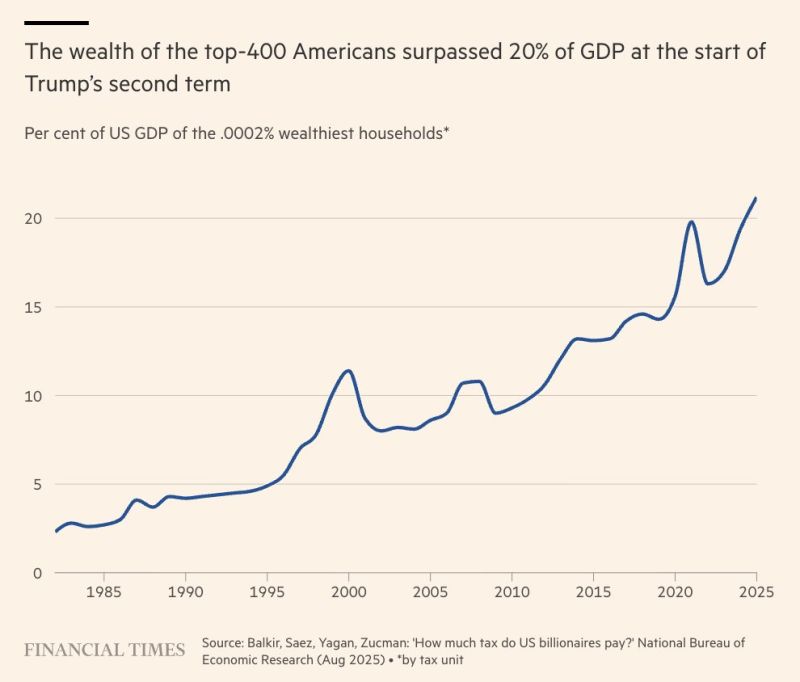
The Growing Concentration of Wealth in America
The country’s 400 wealthiest people saw their share of the US’s total wealth shoot up by 146% over the past 30 years, while that of the entire bottom half of the American population declined by 25% over the same period. Source: FT Trevor Noren
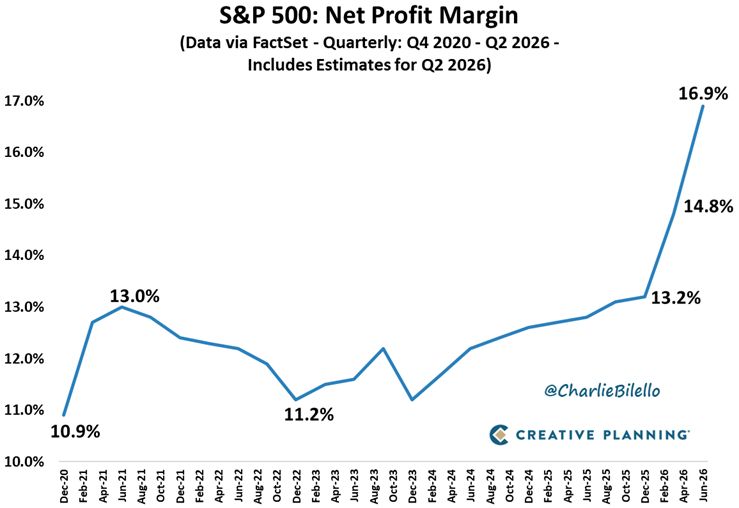
Still hard to believe that just 6.5 years ago, the S&P 500 traded for less than 1/3rd its current price...
CAGR since 2020 lows: +20% $SPX $SPY Source: Trend Spider