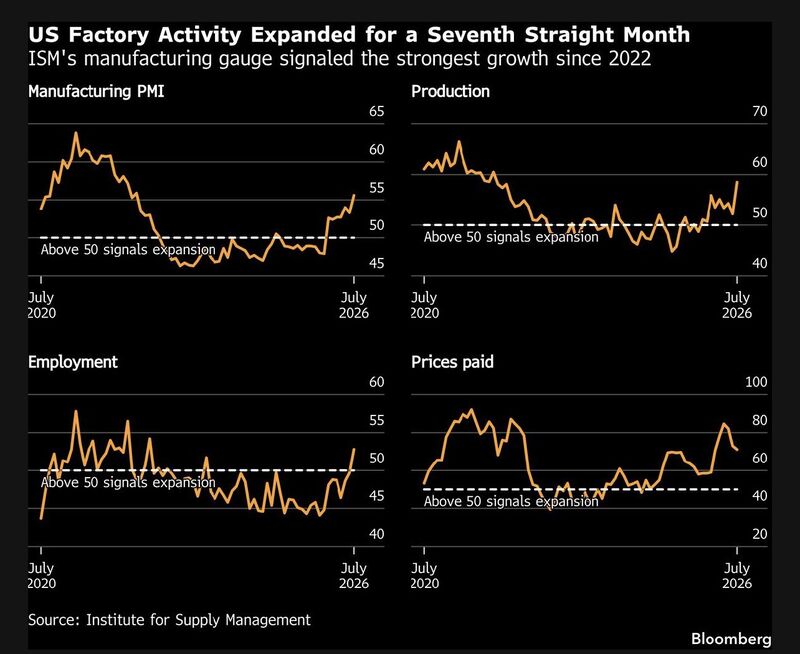

An important observation from Goldman which points out that half The S&P's "record" earnings growth is just "Big Tech" marking up its own stock portfolio.
Here it is, verbatim, from the desk of Goldman's Ioannis Blekos: "S&P 500 EPS growth is tracking at 26% year/year excluding the 'other income' from mega-cap tech's appreciating equity investments. Including those gains, the headline growth rate is 45%." i.e the "record" earnings season you have been told about - the one holding up the most expensive equity market in history - is running at 45% only if you count the gains that Nvidia, and its brethren, book when the stock portfolios they sit on go up. Strip out the mark-to-market of Big Tech valuing its own venture bets, and the number nearly halves, to 26%. Source: GS, zerohedge
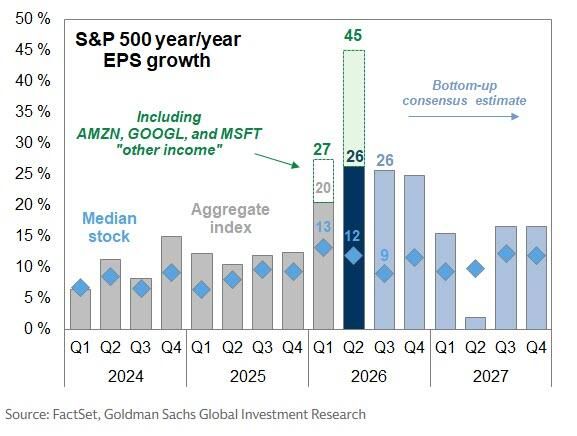
The U.S. has added $450 billion to the national debt since July 1st.
That’s over $15 billion a day. “There are two ways to enslave a country. One is by the sword. The other is by debt.” – John Adams Source: Peter Mallouk @PeterMallouk
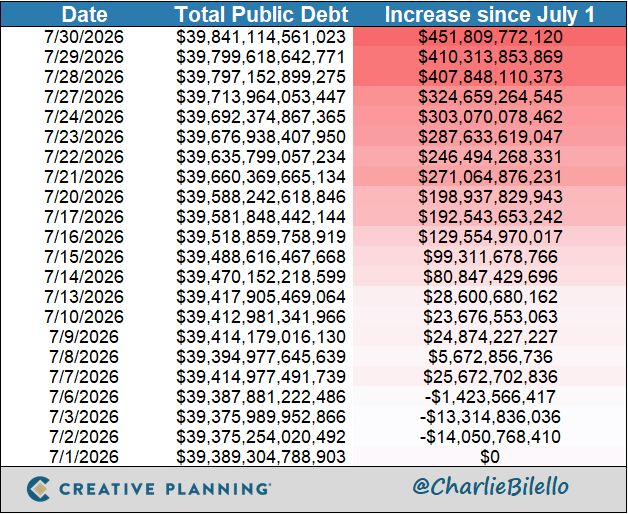
US Treasury will buy back $69,000,000,000 of its own debt over the next 90 days.
Source: The Macro Paper
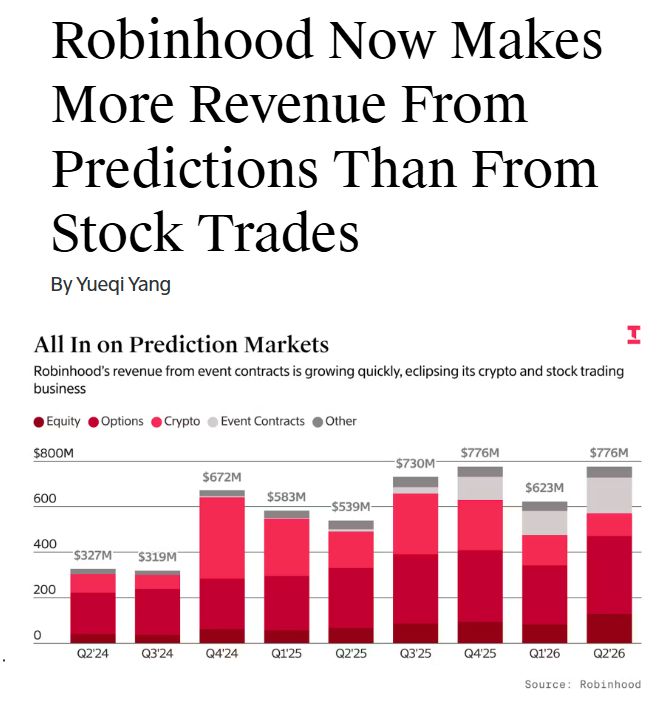
Prediction markets are bigger than stock trading with some brokerages.
Source: Wall Street Mav
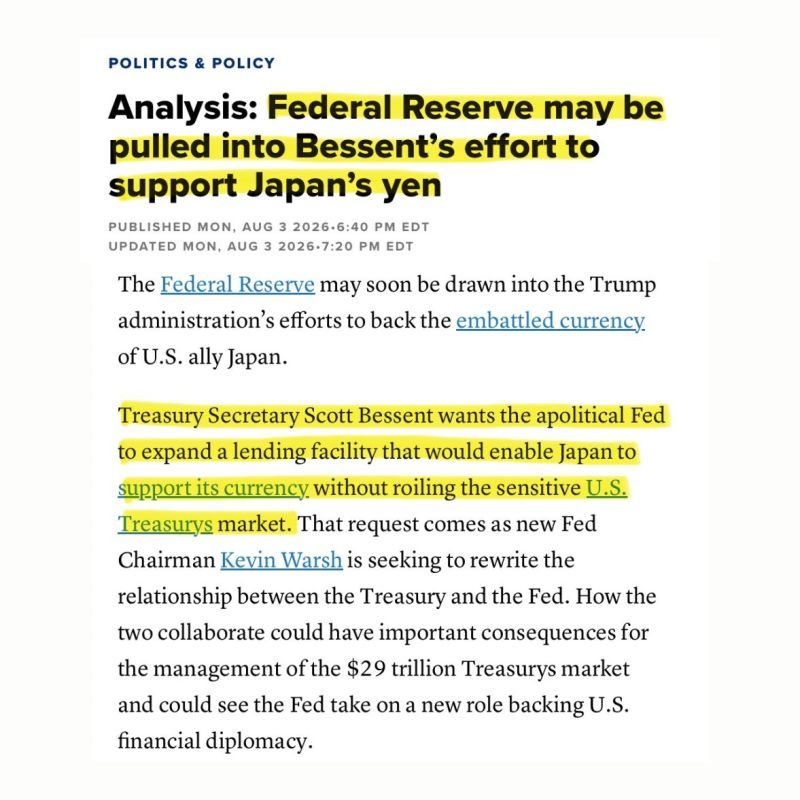
Treasury Secretary Scott Bessent is reportedly urging the Federal Reserve to expand support for Japan, allowing it to raise dollars without selling its massive holdings of US Treasuries.
Japan owns roughly $1.1 trillion in US government bonds. When it intervenes to support the yen, it needs dollars. Once its cash reserves are depleted, selling Treasuries becomes the most direct way to fund further intervention. That is a problem for the US. Large Treasury sales would increase bond supply, pushing prices lower and yields higher. With the 10-year Treasury yield recently climbing above 4.7%, Washington has strong incentives to avoid additional upward pressure. The solution is the Fed's FIMA Repo Facility. It allows foreign central banks to temporarily exchange Treasuries for dollars without selling the bonds into the market. Japan receives dollar liquidity, then later repays the funds and takes back its securities, leaving the bond market largely unaffected. The challenge is capacity. The facility is currently capped at $60 billion per day, while Japan is estimated to have spent $60–80 billion supporting the yen in just one week. According to reports, Bessent wants that limit increased. However, expanding the facility would require approval from the Federal Open Market Committee (FOMC), and the Federal Reserve has so far declined to comment. Source: Bull Theory
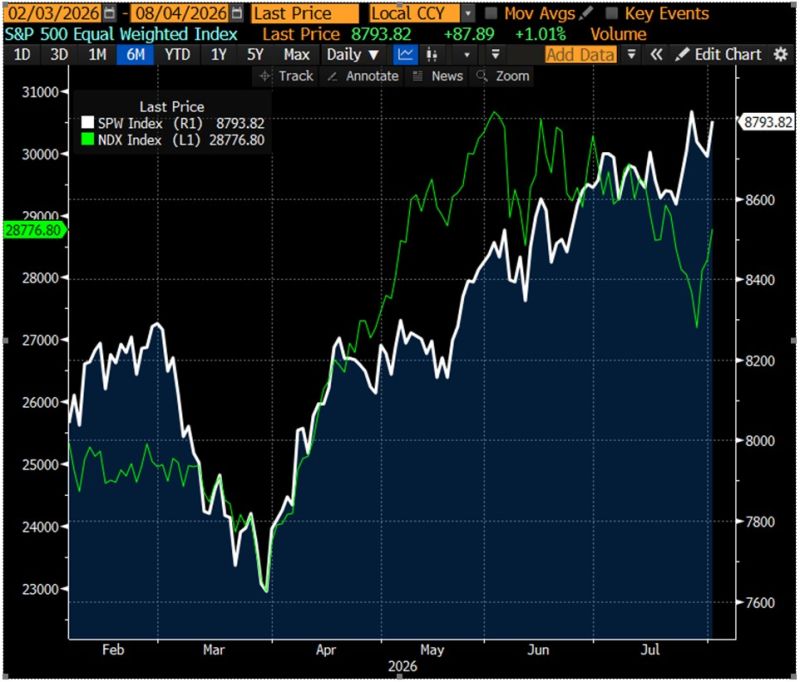
The market broadening in one chart
The S&P 500 Equal-weight index $SPY just hit new all-time high while the Nasdaq 100 $NDX is still over 8% below highs. Source: Bloomberg, RBC
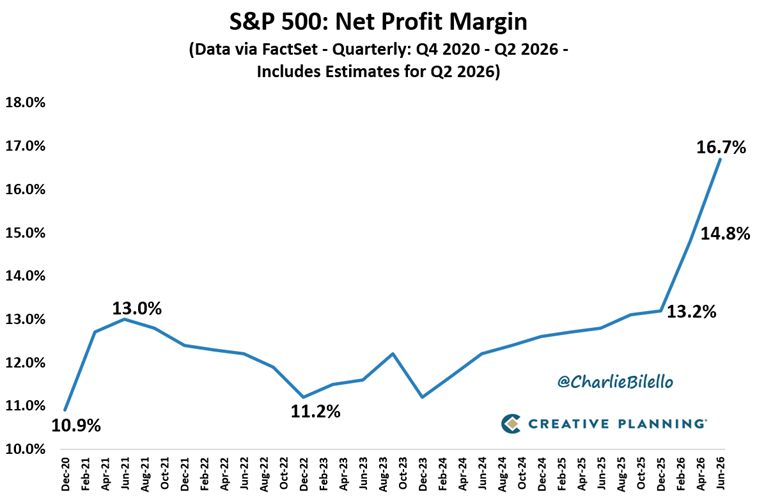
S&P 500 profit margins spiked to 16.7% in Q2, which is by far their highest level in history.
“Profit margins are probably the most mean-reverting series in finance, and if profit margins don't mean revert, then something has gone badly wrong with capitalism. If high profits don't attract competition, there's something wrong with the system.” - Jeremy Grantham Charlie Bilello
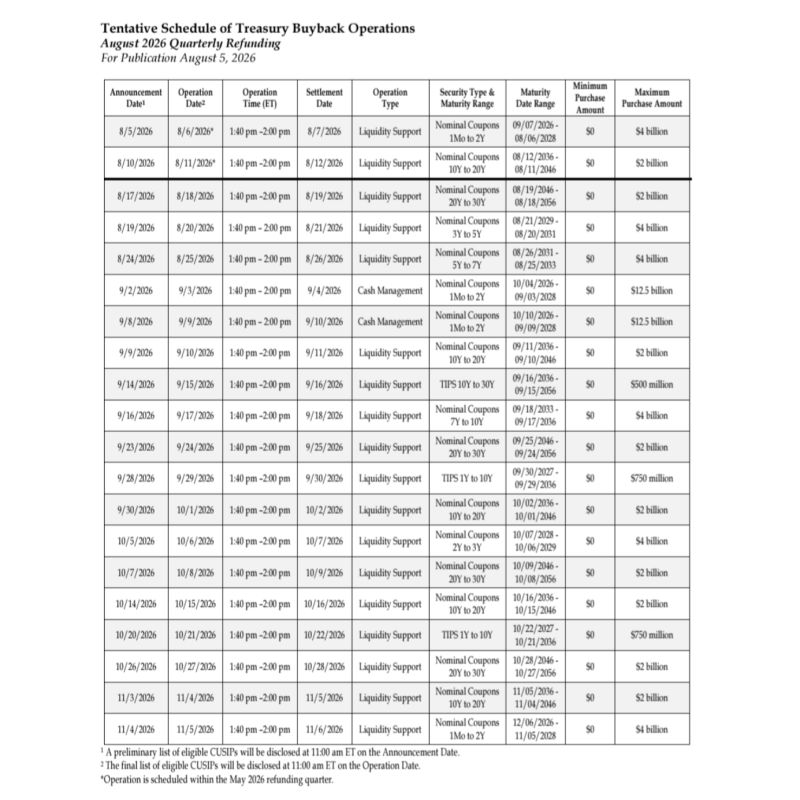
US manufacturing is booming, expanding at the fastest pace since 2022 and beating expectations in many metrics for the month of July.
Omar Sharif of Inflation Insights points out that the ISM production index rose by the most for any July since 1951. Source: Lisa Abramowicz