
The 10-year T-Note yields 371bps over what has become a near non-existent S&P 500 dividend yield.
The latter has dwindled to 1.08%. This is partly a function of bull market valuations and partly a function of the societal rise in buybacks. A 24-year wide here... Source: Jeff Weniger

Japan's currency defense just triggered the largest monthly drop in its FX reserves EVER:
Japan's foreign currency reserves plunged -$94.6 billion, or -8.7%, in August, the largest monthly drop in history, to $995 billion, driven by the Ministry of Finance's intervention to support the Yen. Over the 4 months from May through August, spanning multiple rounds of intervention, reserves have fallen a combined -$174 billion, or -14.9%. Most of this decline came from securities holdings, mostly US Treasuries, which dropped -$87.8 billion in August alone, to $840 billion, while foreign currency deposits fell a smaller -$6.9 billion, to $155 billion. No wonder the US is getting more involved in Japan's currency policy. Source: Global Markets Investor

Junk bond spreads just dropped to 2.6%.
Investors are getting paid almost nothing extra to hold the riskiest corporate debt in America. That is near the tightest level of the entire cycle. Credit always cracks before equities. So far so good. Source: Kurt S. Altrichter, CRPS®

There is a record $8.29 trillion in money market funds right now.
Source: Koyfin

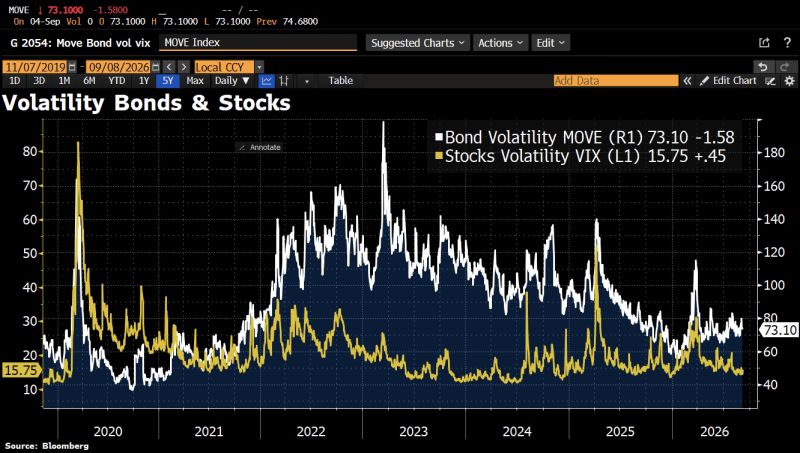
As highlighted by HolgerZ, markets look remarkably relaxed despite bond yields hovering near multi-decade highs.
The MOVE index of US Treasury volatility sits at just 73.1, while the VIX is only 15.75. High yields, low volatility: markets seem to treat elevated rates as the new normal, not a crisis. Source: Holger Zschaepitz, Bloomberg
AI researcher Jacob Coxon quits Anthropic after 3 years at OpenAI and Anthropic, warning that many AI executives privately fear superintelligence "could kill us all" by the end of the decade.
He says both companies are racing toward self-improving superintelligence and "gambling with our lives." Source: Amrith Ramkumar

Gas is flashing red - The buffer is depleted
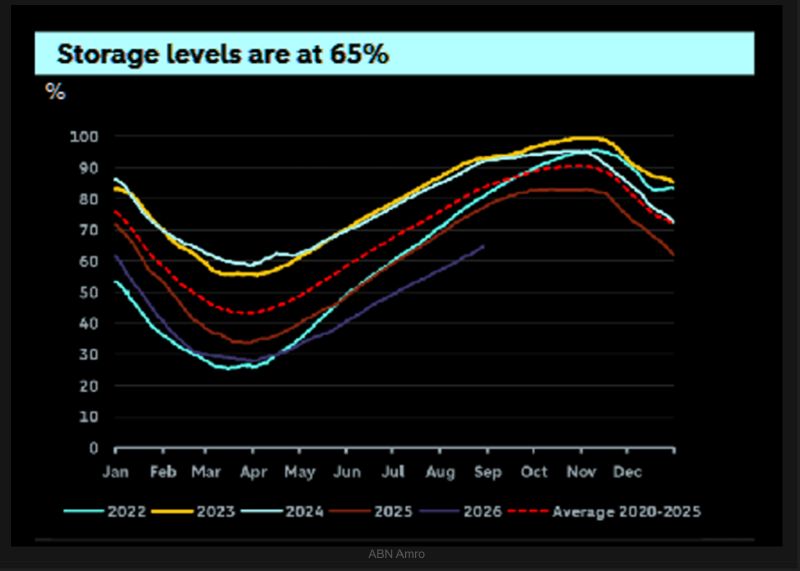
Europe is entering the 2026/27 heating season in its most vulnerable position since 2011. EU gas storage sits at just 65%, versus a five-year average of 82% and well below the EU's 90% target. Unlike a pure weather squeeze, Europe is entering this winter with a structural supply problem already in place. Disruptions at the Strait of Hormuz have effectively knocked out Qatari LNG, with exports collapsing by roughly 96%. Source: ABN Amro, TME
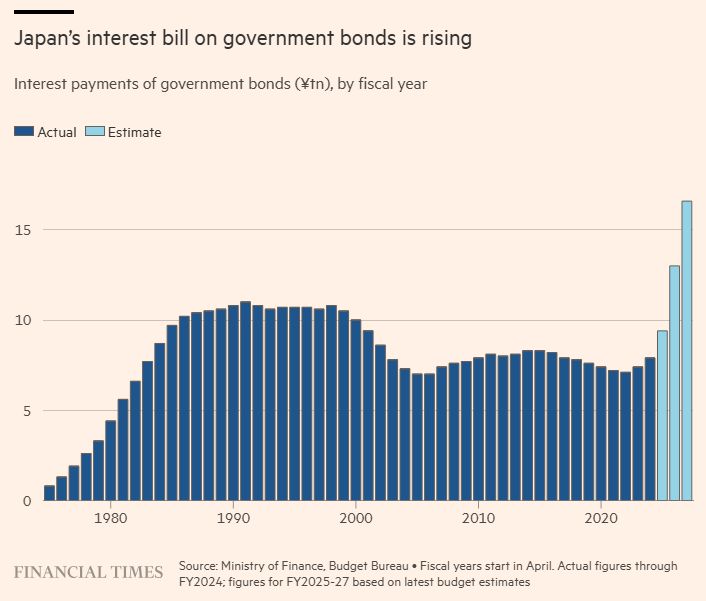
Japan projected to pay an all-time high 16.59 Trillion Yen ($108 Billion USD) in debt interest next year
Source: FT, Barchart