
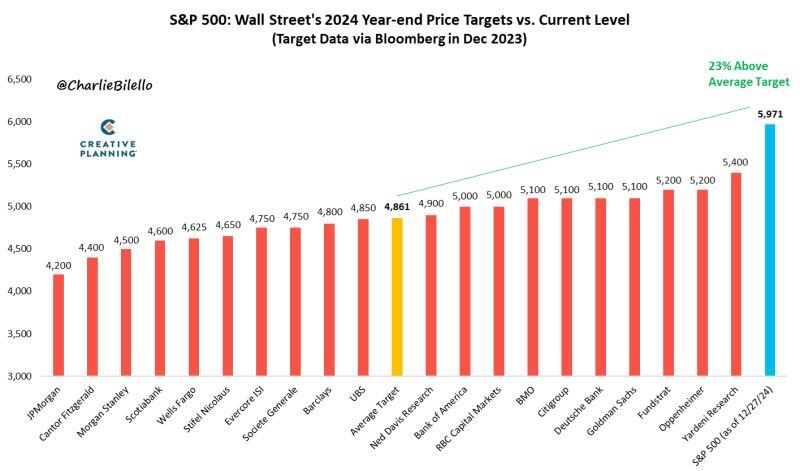
At 5,971, the S&P 500 is over 500 points above above the highest 2024 year-end price target from Wall Street strategists and 23% above the average target (4,861).
$SPX Source: Charlie Bilello
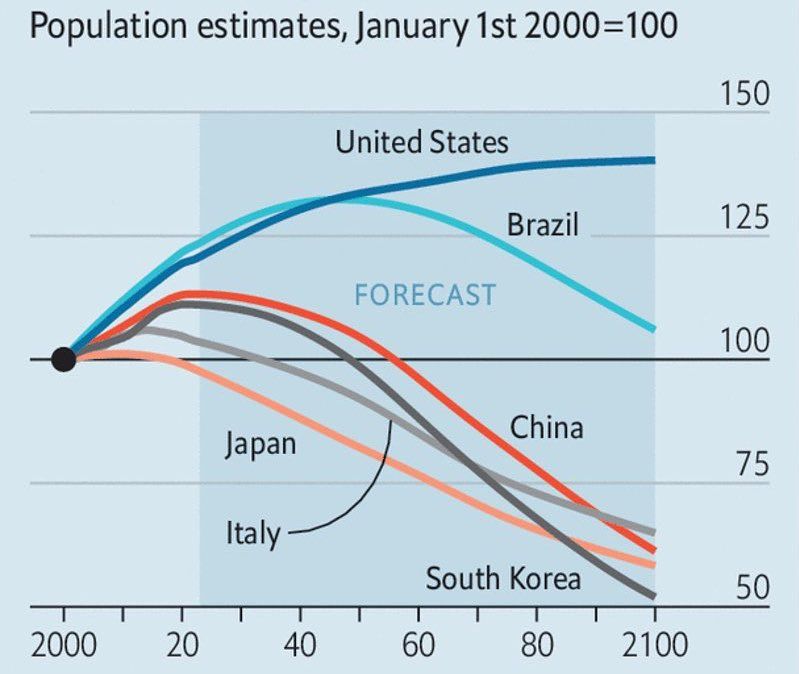
One needs to take long-term forecasts with a pinch of salt, but there is some merit to it. Don’t bet against the US.
Source: Michel A,Arouet, The Economist
The Federal Reserve has reduced the size of its balance sheet by 10.7% this year, the largest percentage decline of any year on record.
Source: Charlie Bilello

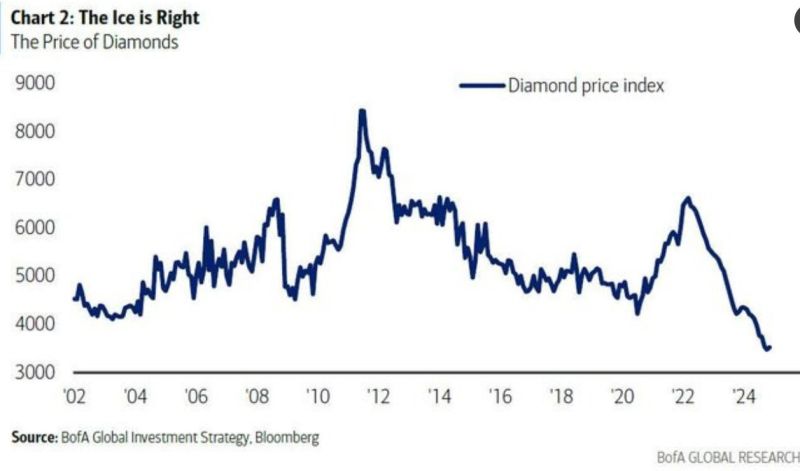
The Price of Diamonds
They say diamonds are a girl's best friend, but not so good for your porfolio. Prices have fallen to their lowest level this century! source : barchart, Bofa
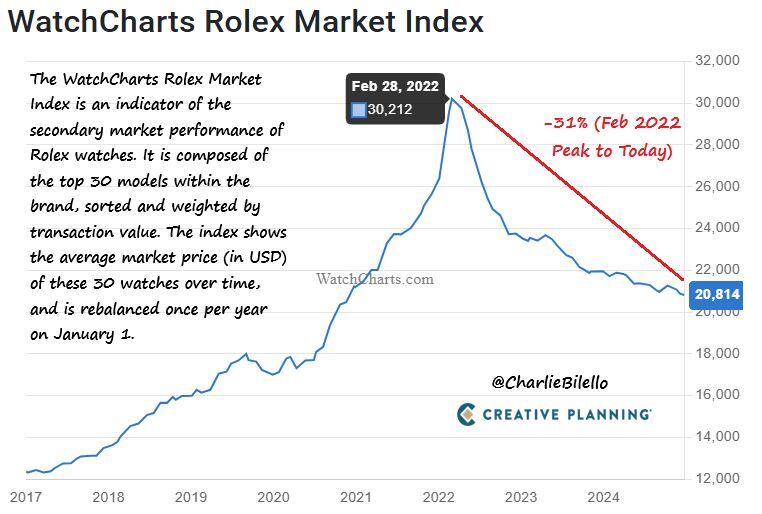
An index of Rolex Watch Prices is at its lowest level since November 2020, down 31% from the peak in March 2022.
Source: Charlie Bilello
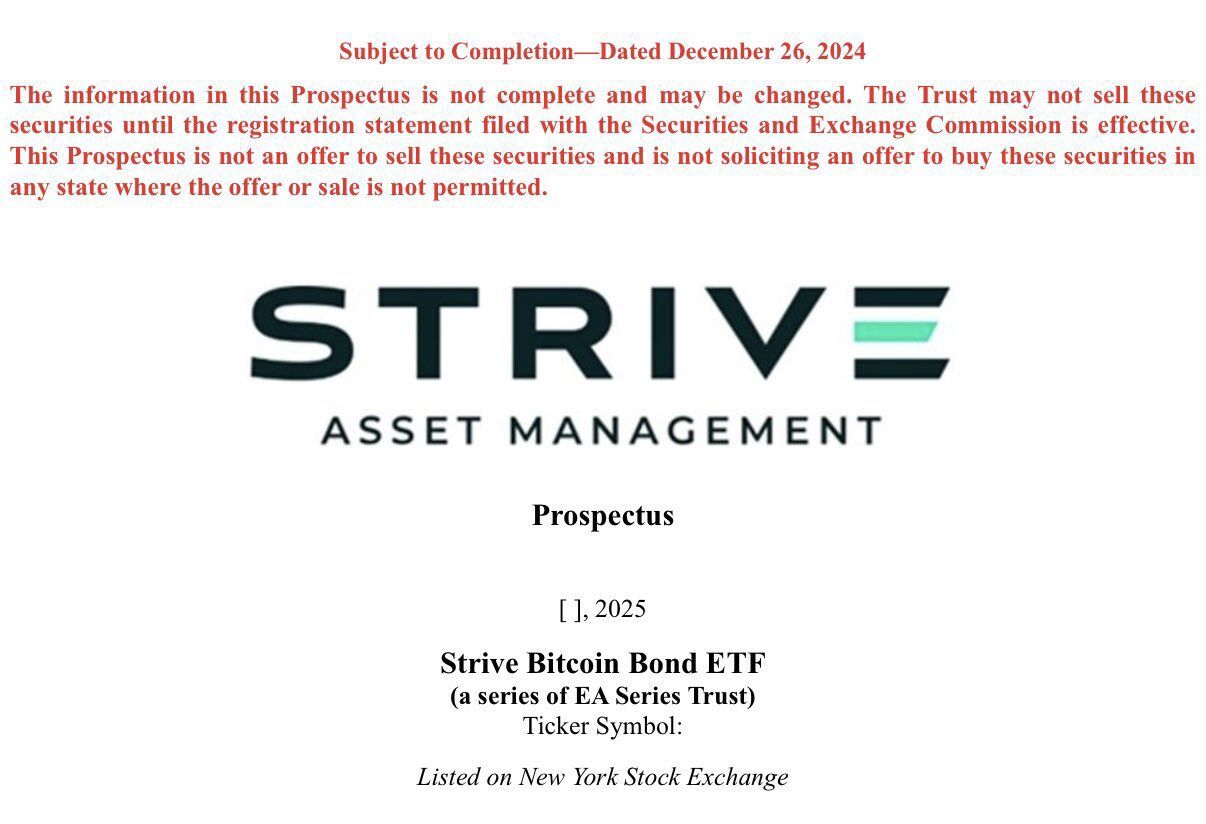
DOGE lead Vivek Ramaswamy’s fund, Strive files for “Bitcoin Bond” ETF 🤯
👉 Strive Asset Management is launching a new ETF that will provide exposure to Bitcoin through convertible securities, primarily focusing on MicroStrategy’s holdings. 👉The Strive Bitcoin Bond ETF will invest at least 80% of its assets in “Bitcoin Bonds” and related derivative instruments, including swaps and options. 👉The actively managed fund will hold both direct positions in Bitcoin-linked convertible securities and derivatives, with allocation decisions based on cost and return potential. 👉The fund will maintain cash positions in short-term US Treasury securities and may invest in other Bitcoin-focused investment vehicles. 👉As a non-diversified fund, it can concentrate holdings in single issuers like MicroStrategy and allocate more than 25% of assets to software and technology sector companies. 👉Operating under a “manager of managers” structure, the ETF will be advised by Empowered Funds, LLC, which can appoint and replace sub-advisers without shareholder approval. 👉The fund’s shares will trade on the New York Stock Exchange and be held through the Depository Trust Company. Source: Vivek⚡️on X, Cryptobriefing
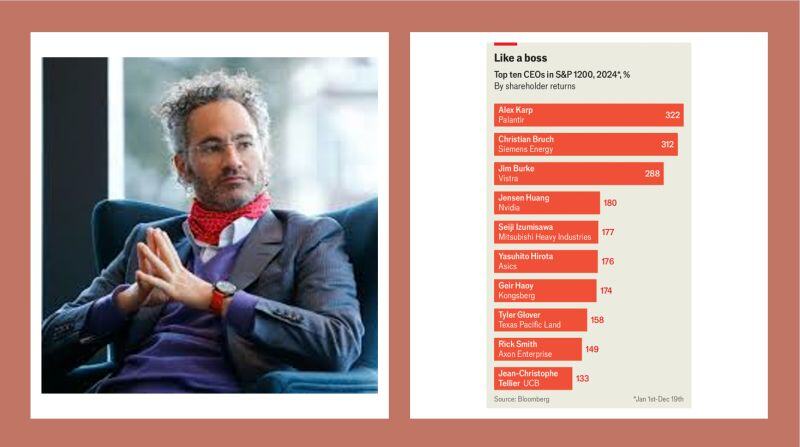
THE ECONOMIST PICKS ALEX KARP AS CEO OF THE YEAR
“Among our finalists, however, it is Mr Karp of Palantir who stands out. Over the course of 2024 his company's market capitalisation has rocketed from $36bn to over $180bn. Its underlying financial performance has been impressive. Palantir is expanding rapidly, with analysts expecting it to notch up revenue growth of 26% in 2024, up ten percentage points from the year before. It has also become much more profitable, with operating margins doubling to 15% in the 12 months to September 2024. In a sign of its ascendancy, Palantir was added to the S&P 500 index of America's most valuable companies in September.”
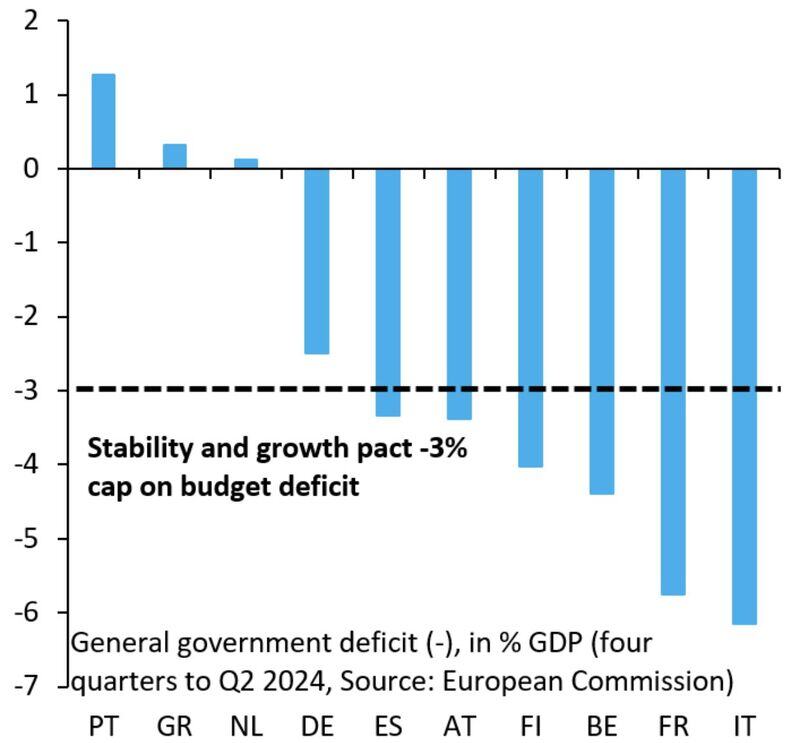
Italy and France are exceeding the EU’s 3% of GDP deficit rule by nearly double!
Chart: @robin_j_brooks, Alex Joosten @joosteninvestor