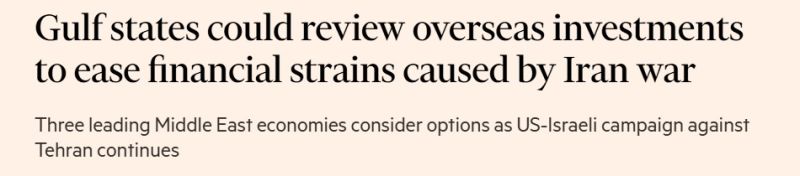
Reports are circulating that Saudi Arabia, the UAE, Kuwait, and Qatar are discussing withdrawing from US contracts and cancelling future investment commitments
According to the Financial Times, the Gulf states are facing growing budget pressure due to the US-Israeli war with Iran, which is disrupting their economies. The conflict has reduced energy revenues, slowed shipping through the Strait of Hormuz, damaged oil and gas infrastructure, hurt tourism and aviation, and increased defence spending. As a precaution, some Gulf governments are reviewing overseas investments and financial commitments, including investment pledges, business contracts, sports sponsorships, and asset holdings. They may also consider invoking force majeure clauses in contracts. The review could affect major global investments, including hundreds of billions of dollars pledged to the US, attracting attention from the White House. According to the FT, Gulf leaders had urged diplomacy before the war and are now frustrated about being drawn into the conflict, questioning whether their financial support for regional initiatives is being used for peace or war. Saudi Arabia held 254 billion riyals in U.S. equity exposure as of Q4 2025. Across the Gulf Cooperation Council (GCC), total financial commitments linked to the United States are estimated at $3–4 trillion, spanning sovereign wealth fund investments, defense procurement, infrastructure partnerships, and bilateral investment agreements. The United Arab Emirates alone has pledged $1.4 trillion in U.S. investments over the next decade, under an economic framework announced during Donald Trump’s first 100 days in office. These figures are not merely financial statistics—they form the economic backbone of the U.S.–Gulf security partnership. In effect, they underpin the strategic relationship that allows the Pentagon to maintain its military presence in the region, including deploying carrier strike groups in the Arabian Gulf. Bottom line: If the war continues, Gulf states may scale back global investments and financial commitments, which could have significant economic and geopolitical consequences, including pressure on the US to pursue diplomacy.
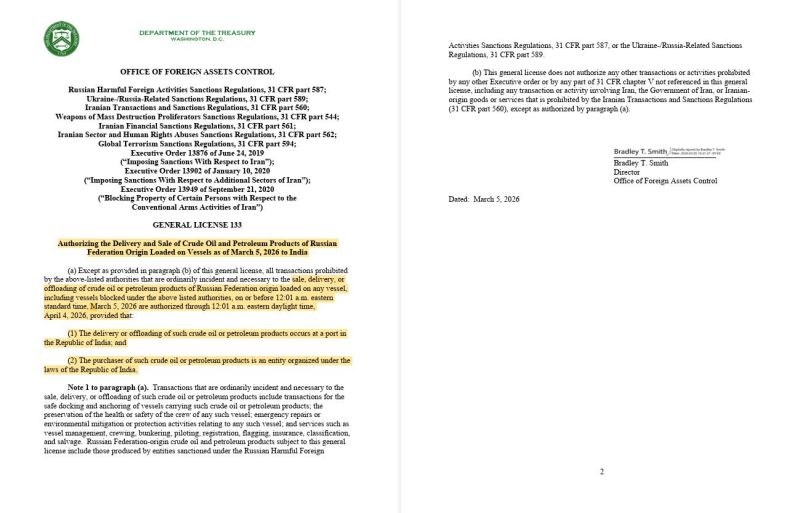
Is Putin the clear a winner in a war that otherwise only have losers?
Apart from higher oil prices 🇺🇸 now eases up on sanctions and lets India and probably others buy more of oil. Source: Carl Bildt
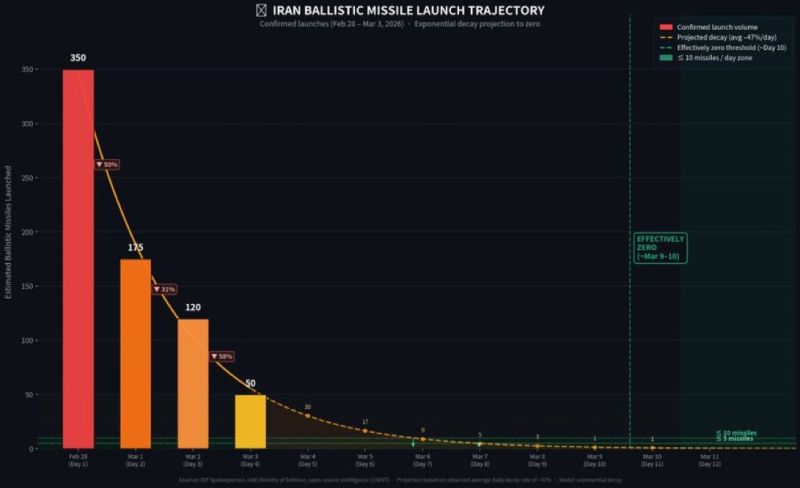
Why Iran Is Now in a Weak Position
Iran finds itself in a dramatically weakened state following the opening days of the conflict. The country's leadership structure was effectively dismantled almost immediately, with Supreme Leader Khamenei killed within the first 30 minutes of fighting — a catastrophic blow to a regime that had spent decades positioning itself as a regional power bent on confronting Israel and the United States. Without coherent leadership, Iran's military response has been visibly deteriorating. On the first day of fighting (February 28), Iran launched its largest barrage — an estimated 150–200 ballistic missiles targeting Israel and other regional positions. By the following day, launch volumes had already fallen sharply to single or low double digits per barrage. By day four, only around 40 missiles were fired, with a near-total interception and miss rate of 99.9%. That represents a decline of roughly 80% in missile launch capacity in under a week — a strong indicator that Iran has rapidly exhausted a significant portion of its arsenal. Compounding the military setbacks is Iran's growing diplomatic isolation. Rather than rallying regional support, the conflict has seen Arab nations turn against Tehran, further limiting Iran's options. While fears of escalation into a broader or nuclear conflict have circulated, the data on the ground suggests the opposite trajectory: Iran's strike capability has already peaked and collapsed, and the conflict may wind down sooner than many analysts expected. Source: Jacob King on X
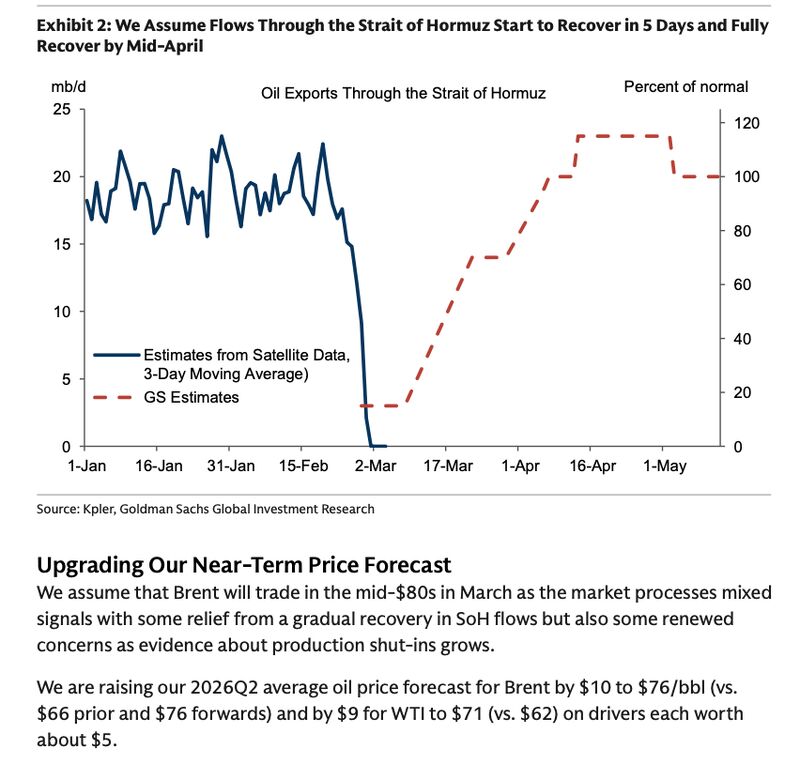
Goldman is assuming that Strait of Hormuz reopens in 5 days. Flows normalize by mid-April. Q2 average Brent price $76/bbl.
Source: Open Square Capital, Goldman Sachs
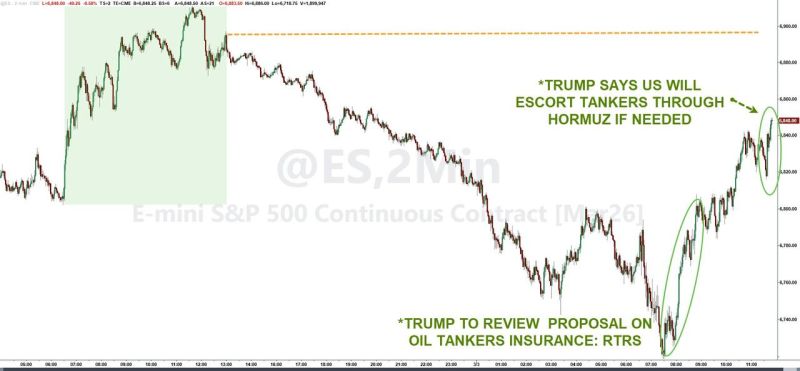
President Trump announced that the United States will provide insurance for "ALL Maritime Trade" via the US Development Finance Corporation (DFC), and will provide Navy escorts, "if necessary."
Effective IMMEDIATELY, I have ordered the United States Development Finance Corporation (DFC) to provide, at a very reasonable price, political risk insurance and guarantees for the Financial Security of ALL Maritime Trade, especially Energy, traveling through the Gulf. This will be available to all Shipping Lines. If necessary, the United States Navy will begin escorting tankers through the Strait of Hormuz, as soon as possible. Markets bounced and oil retreated on the news Source: zerohedge
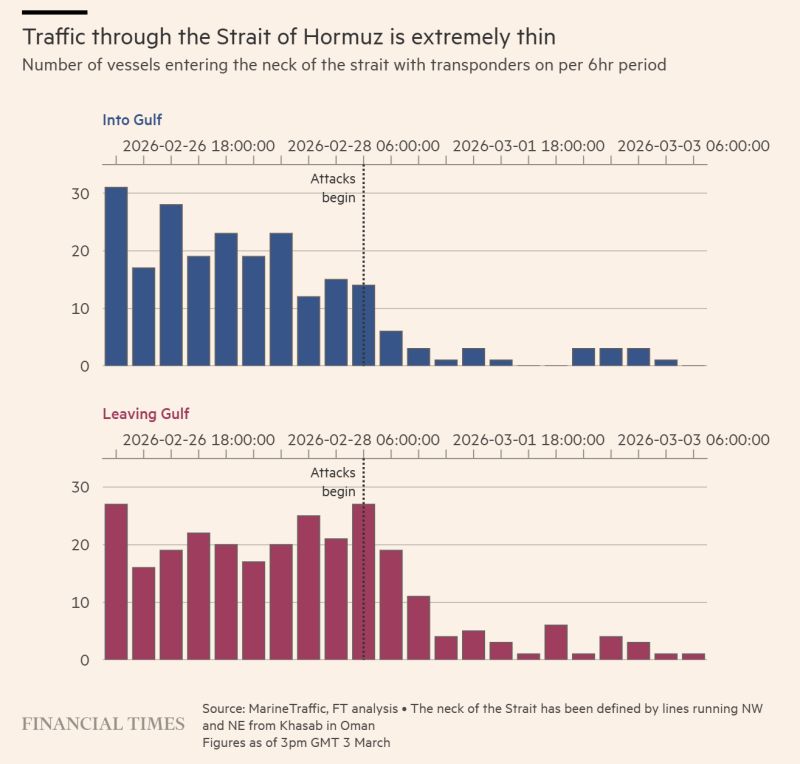
The FT graphic below shows the Strait of Hormuz flow.
(Note: likely understates flow because this will not capture tankers who are making the run with their transponders turned off) Source: Rory Johnston, FT
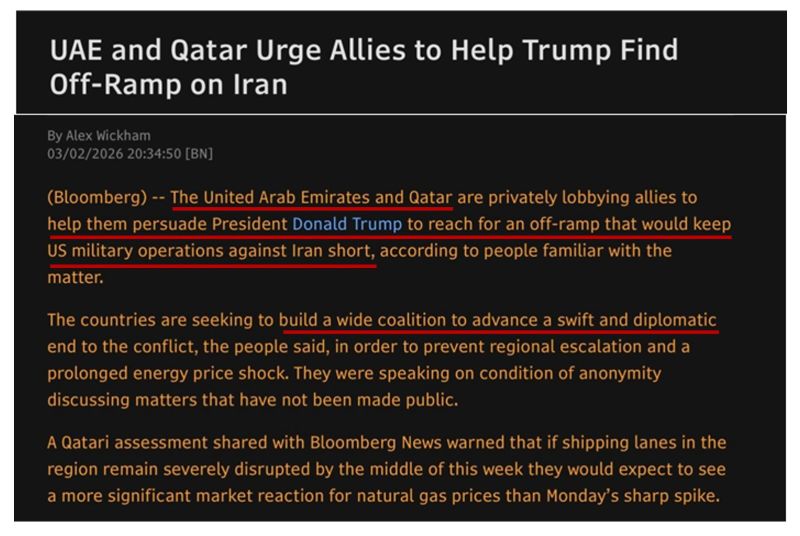
Is Iran’s strategy already working?
Source. Bloomberg
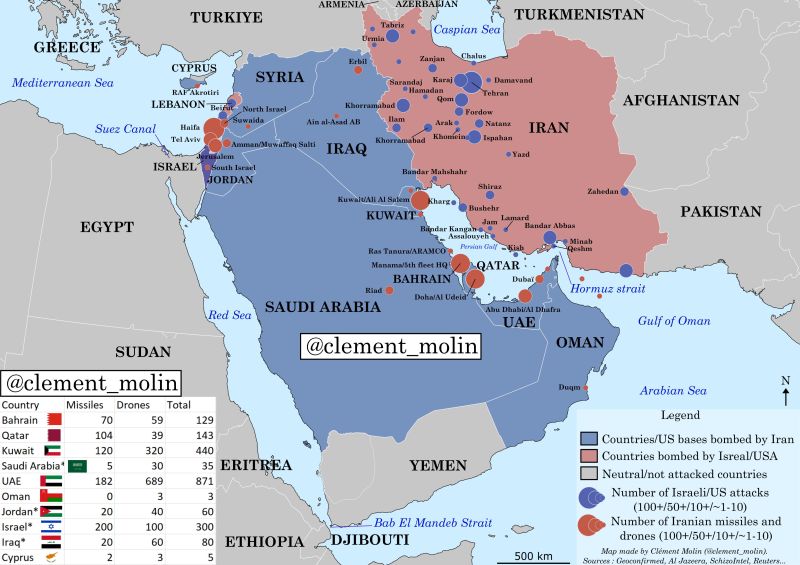
Day 4. Middle East.
As expected, there is some escalation as the war between the U.S. + Israel and Iran is intensifying. Here’s what changed in the last 24 hours: ✈️ Air Superiority Established US and Israeli air forces now hold near-total air control over Iran. Dozens of missile launchers, rear bases, and command centers were hit — especially in Tehran. 🎯 But Iran is far from neutralized Iran continues launching drones and missiles across the region. Some reached critical U.S. bases. Now the conflict has expanded geographically: • Hezbollah joined the fight from Lebanon • Israeli airstrikes followed inside Lebanon • Iranian strikes hit Saudi Arabia (including Ras Tanura / ARAMCO refinery) • US Embassy in Riyadh targeted • Ongoing strikes across Iraq, Kuwait, Bahrain, Qatar, UAE, Jordan, Cyprus, and Israel ⚠️ Notably: 3 American F-16s were reportedly shot down in Kuwait — by error. The Regional Fallout • Protests erupted around U.S. embassies in Iraq and Bahrain • The U.S. has called on all American citizens to leave the region • 20 U.S. cargo aircraft are en route to reinforce logistics and defense systems Strategic Questions Now Emerging ▫️ Despite 4 days of heavy bombardment, the Iranian regime remains intact ▫️ Iranian counter-strikes continue — but how deep are their missile stocks? ▫️ Gulf countries and Israel may soon face air-defense missile shortages This is no longer a contained confrontation. It’s a multi-front regional escalation with air dominance on one side and missile saturation strategy on the other. The coming days will likely determine whether this stabilizes… or spreads further. Source: @Clément Molin on X