
$NFLX announces new logo following earnings
Netflix (NFLX) missed Wall Street third-quarter earnings targets due to an unexpected expense from a dispute with Brazilian tax authorities, though it offered a slightly stronger-than-expected forecast for the rest of the year. Shares fell 4% to $1,186.82 in after-hours trading on Tuesday. Source: John Trades MBA @JPATrades
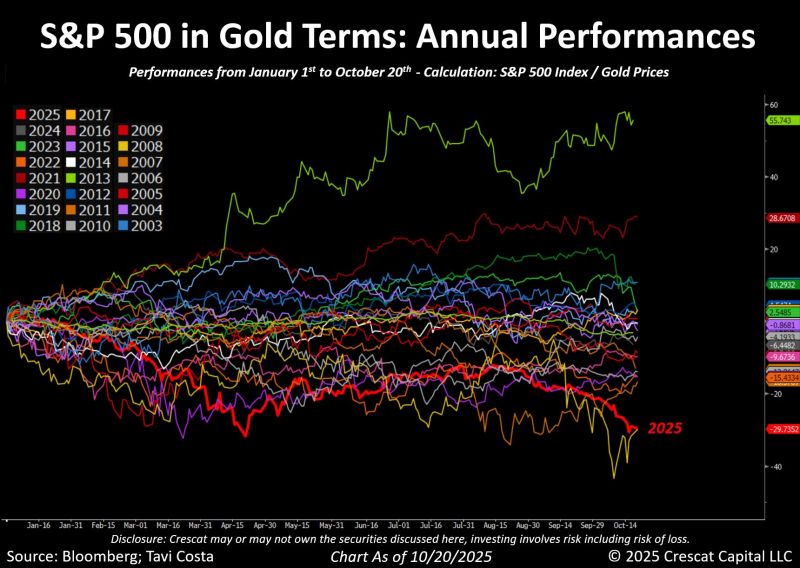
In gold terms, the S&P 500 is down nearly 30% so far this year.
The decline is about to surpass 2008 as the worst year for the index in gold terms in over two decades. Source: Tavi Costa, Bloomberg
Hong Kong’s IPO Comeback
Chinese IPOs in America have collapsed 93% since 2021, raising just $875 million this year vs. $13 billion at the peak. Meanwhile, Hong Kong is reaping the rewards — Chinese listings there surged 164% to $18.4 billion across 56 deals. The turning point came after Beijing’s regulatory crackdown on Didi’s 2021 New York debut — a short-lived listing that ended with a forced delisting. Since then, companies in “strategic industries” face a regulatory maze for U.S. approval. The Nasdaq has raised the bar with a $25 million minimum for Chinese IPOs, while Hong Kong introduced its “Technology Enterprises Channel” to fast-track tech listings. source : cnbc

Love it...
Source: zerohedge
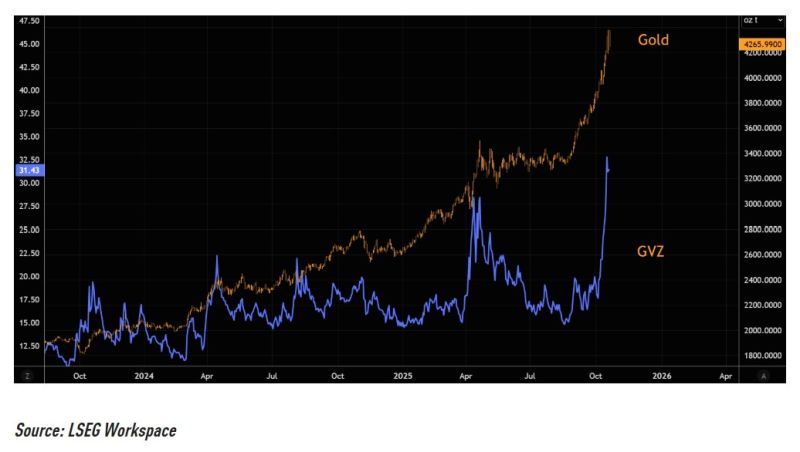
The Short Term Risk For Gold
Gold volatility, GVZ, has exploded to the upside. Everybody underexposed to gold has grabbed calls with both hands, pushing volatilities to extremes. Theta is painfully expensive up here. Once gold pauses or reverses, this could turn into a major headwind. Source: The Market Ear
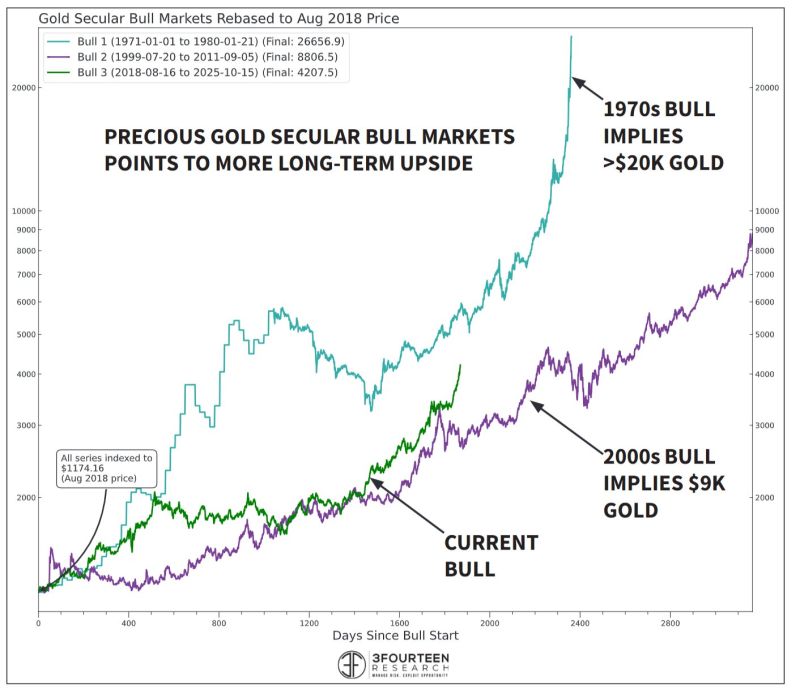
The long-term potential for GOLD
The current gold secular bull market tracking higher than the early-2000s move and lower than the 1970s bull. Source: @3F_Research, Warren Pies This is not an investment
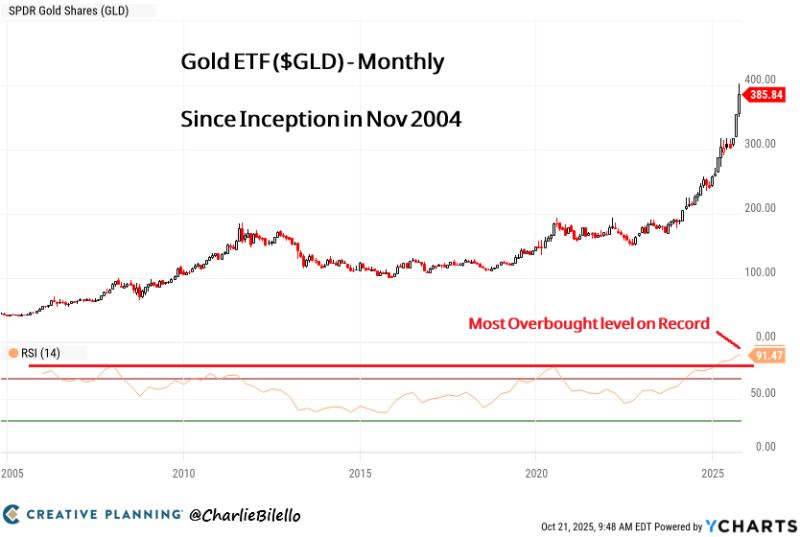
The Gold ETF ended yesterday's session at its most overbought level on record (monthly RSI). Today it is down 4%
$GLD Source. Charlie Biello
Senate Democrats on Monday rejected a GOP-led stopgap funding bill for the 11th time as the shutdown heads into its fourth week.
Senators voted 50-43 on the House-passed bill, which would fund the government through Nov. 21. Democratic Sen. Catherine Cortez Masto of Nevada and Independent Sen. Angus King of Maine were the only senators who broke rank to vote to advance the bill. Sen. John Fetterman (D-Penn.) did not vote. Senator Josh Hawley: "Since Democrats refuse to fund the government, I'm introducing legislation to reinstate SNAP benefits immediately. Source: Politico
