
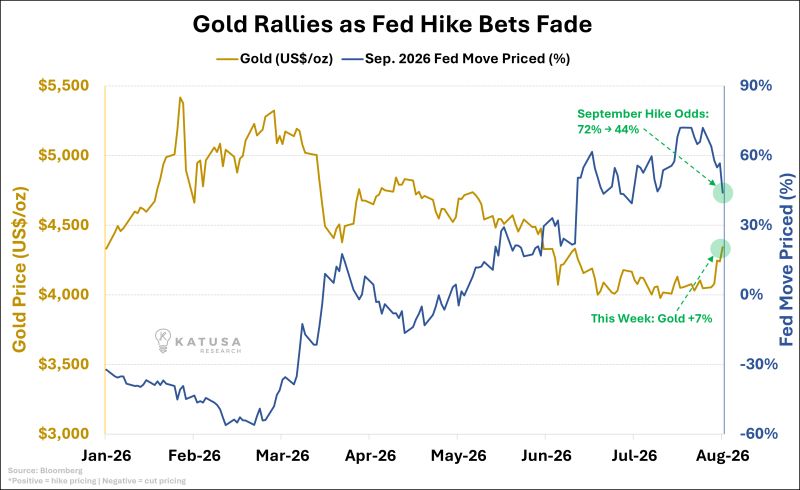
The market just gave us a glimpse of how sensitive gold is to the Fed pat.
What happens if the Fed doesn’t hike at all this year? Source: Katusa Research @KatusaResearch
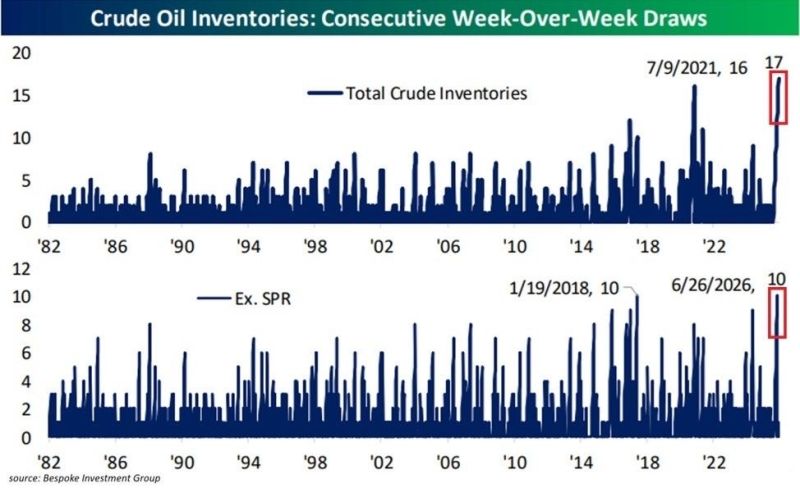
America’s oil safety cushion is being drained from both sides.
Since early April, total U.S. crude inventories have fallen by 166 million barrels, from 712M, marking 17 consecutive weekly declines — the longest streak on record. But the bigger story is the Strategic Petroleum Reserve. Washington has released 111M barrels since March, pushing the SPR down to just 305M barrels — its lowest level since 1983. Normally, SPR releases offset shortages in the commercial market. This time, commercial crude inventories are falling too, declining for 10 straight weeks. In other words, the Gulf crisis isn't simply moving oil from government reserves into private storage. America's entire crude buffer is shrinking. That works if the disruption is temporary. But the longer the crisis lasts, the more valuable — and strategically important — those remaining 305M SPR barrels become. The SPR was built for exactly this kind of shock. Now the shock is steadily consuming it. Source: Jack Prandelli on X, Bespoke
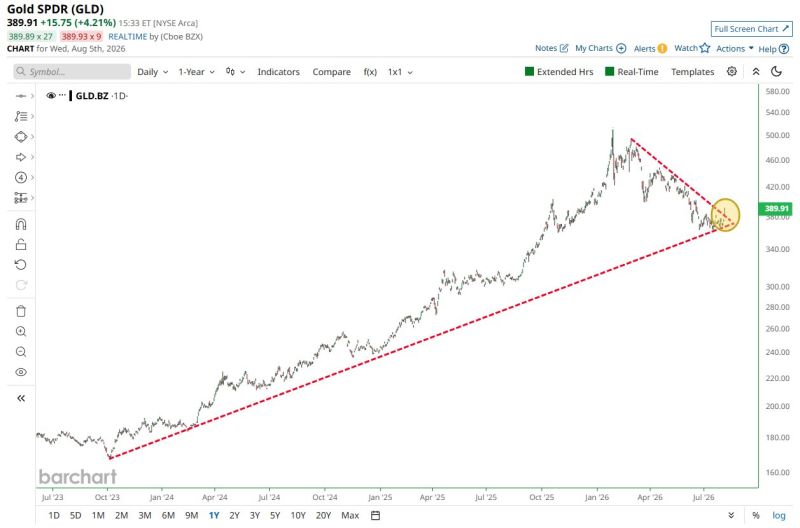
Gold ripping and now finally breaking out
Source: Barchart
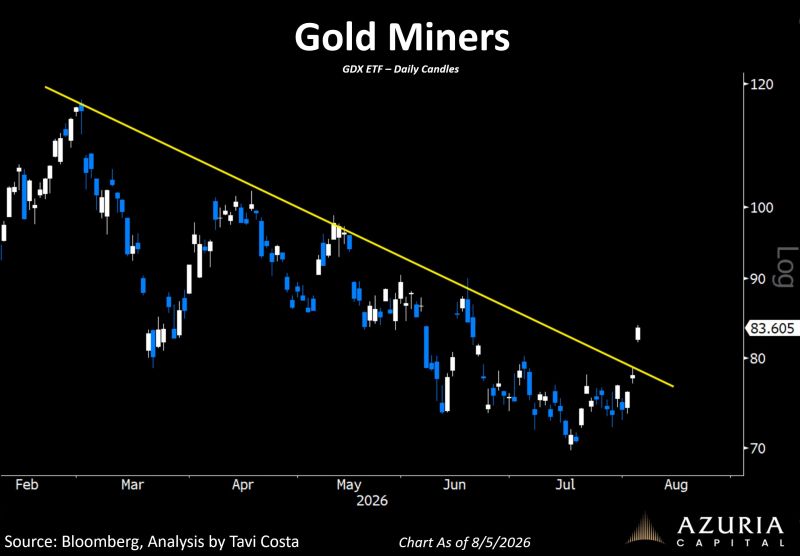
This looks like a clean breakout
#goldminers Source: Tavi Costa
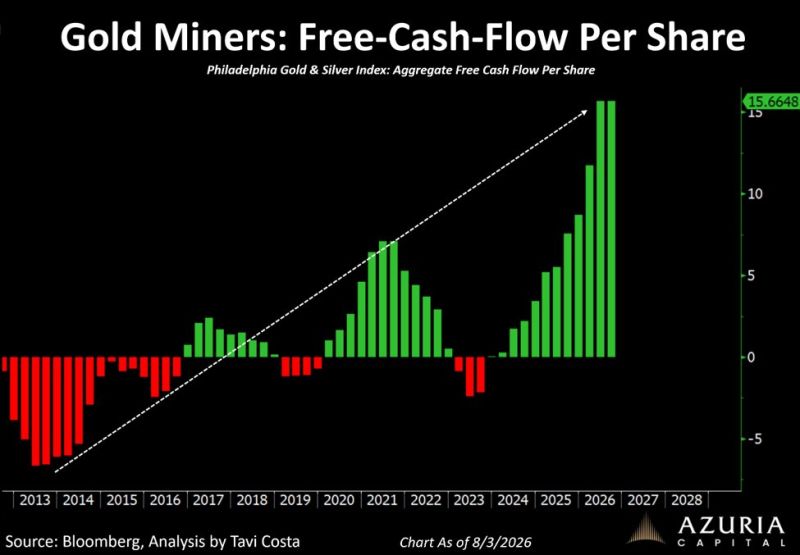
The most profitable period in the modern history of the mining industry???
Source: Tavi Costa
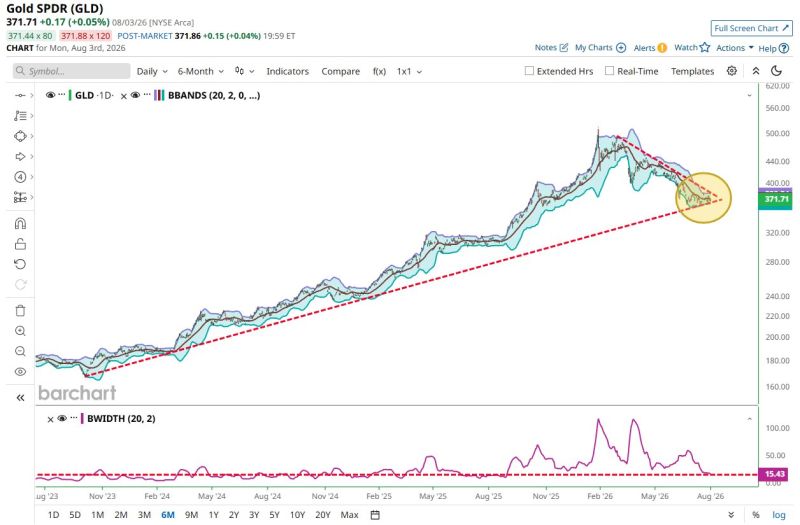
Gold is coiling and getting ready for a big move
Bollinger Bands are now the tightest since August 2025, right before Gold soared 60% over the next 5 months. Source: Barchart
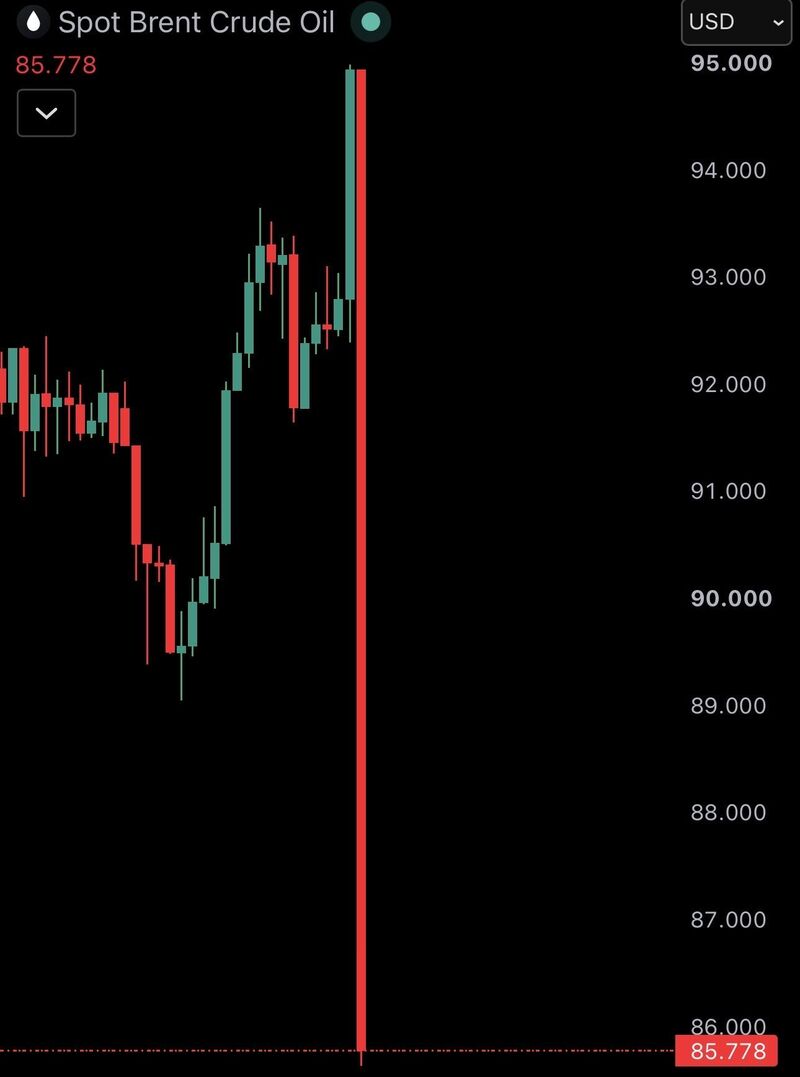
Brent Crude Oil crashes 10% as US and Iran halt strikes.
President Trump said the “perimeters of a deal” had been reached with Iran to reopen the Strait of Hormuz after speaking with Saudi Crown Prince Mohammed bin Salman (MbS). According to Saudi Arabia’s state news agency, both leaders emphasized dialogue, de-escalation, and pursuing a truce to prevent a wider regional conflict. Axios reported that MbS urged Trump to avoid large-scale strikes on Iran, warning of possible retaliation against Israeli and Gulf energy infrastructure. Saudi officials also sought clarity on U.S. military plans. As a key U.S. ally, Saudi Arabia has historically shaped Washington’s Iran policy and appears to have influenced efforts to delay or limit further escalation. Source: zerohedge
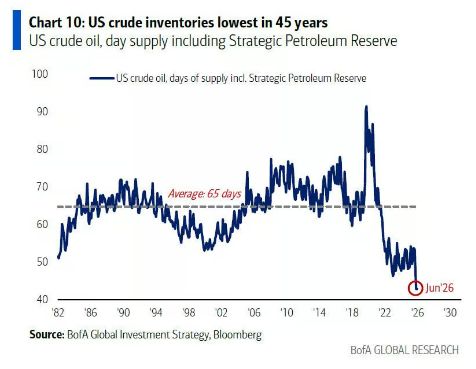
Crude Oil only has 43 days of supply left in the U.S., the lowest inventory in 45 years 🚨 🚨
Source: Barchart, BofA