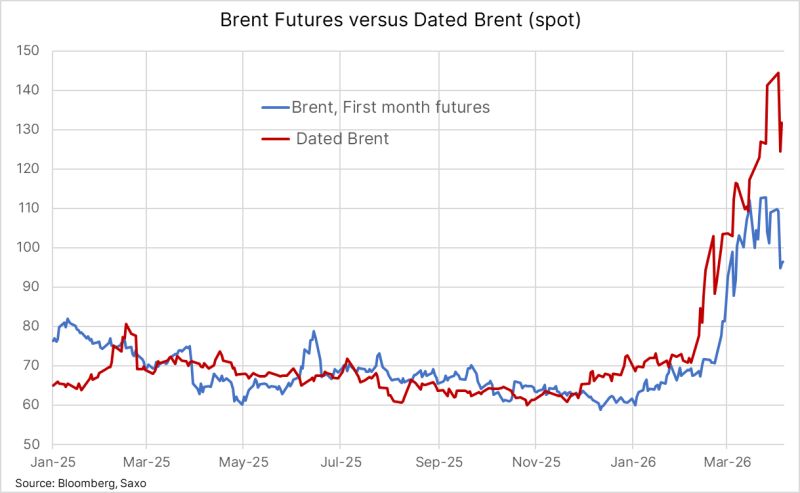

Yesterday, Gold put in its biggest up day in quite some time during yesterday’s session.
The shiny metal broke above the short-term downtrend line and also pushed out of a dynamic wedge-like formation. The key for a more sustained squeeze is a close above the $4800 area, right where the 50-day moving average comes in. More on gold. Source: TME
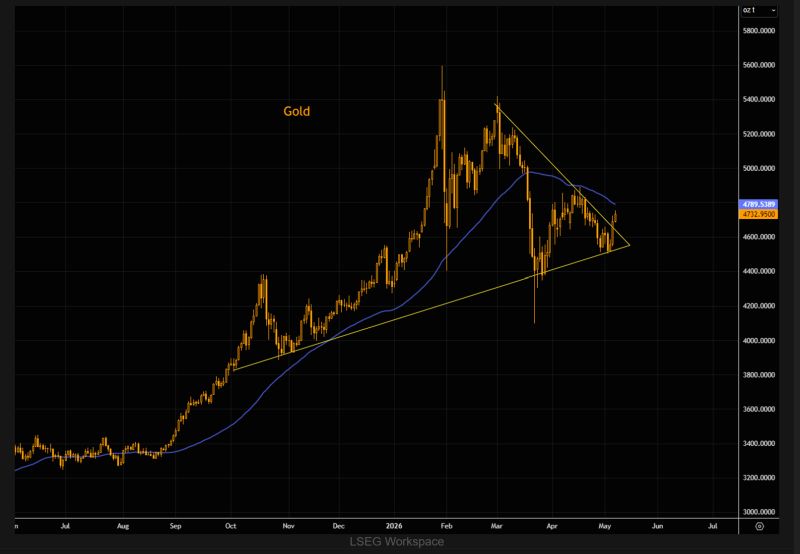
🔥Silver and gold prices are surging:
Silver and gold are up +4.5% and +1.0% on Thursday, on track for the 3rd consecutive day of gains. Silver is now up +10% and gold is up +4.0% over the last 2 trading sessions. Following the recent pullback, investors are returning to gold and silver, with many viewing this dip as a buying opportunity. Furthermore, global growth concerns, central bank demand, and a macro environment increasingly favoring hard assets continue to support prices, reinforcing the broader bullish backdrop. At the same time, decades of underinvestment and constrained supply growth have created a structurally higher price environment for precious metals. Is another leg of the precious metals bull run now unfolding? Source: Global Markets Investor
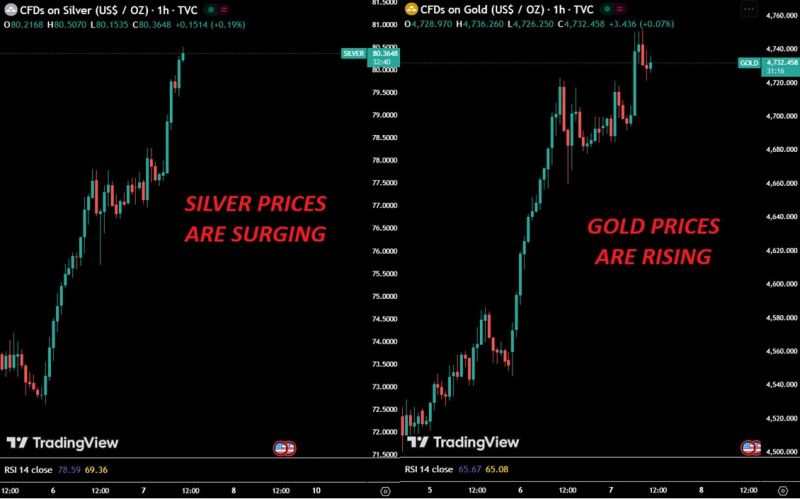
U.S. Farm Bankruptcies Surge +46% as Fertilizer Costs Squeeze Farmers
The American Farm Bureau Federation reported 315 Chapter 12 bankruptcy filings in 2025, up from 216 in 2024 and the third consecutive annual increase. The Midwest got hit hardest with 121 filings, a +70% jump. The Southeast followed with 105, up +69%. Together, those two regions accounted for more than two-thirds of every farm bankruptcy in the country. Fertilizer prices are pouring gasoline on the fire. Urea, the most widely used nitrogen fertilizer on the planet, has ripped +87% year-to-date and trades near $720 a tonne. For corn growers who depend on nitrogen, this is a dire situation. Many farmers are reporting they will cut the amount of fertilizer they use, shift from corn toward less nitrogen-dependent soybeans, or just take the yield loss. Farms are under pressure. Source: Hedgeye
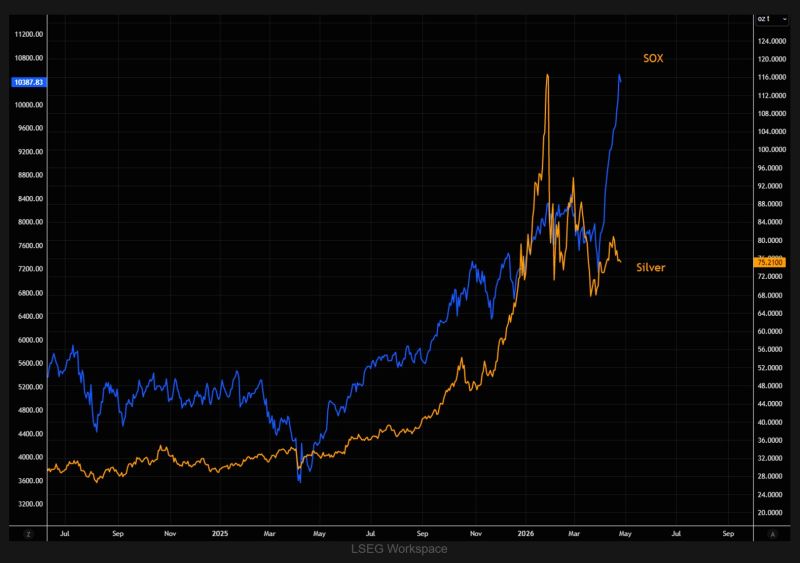
SOX vs. Silver: mind the gap!
AI demand for silver is still small, likely only a low single-digit % of total demand. But it’s the fastest-growing piece, with AI servers using significantly more silver than traditional hardware. And importantly, cost isn’t a constraint. Silver is a tiny part of system spend, making AI a strong marginal buyer. As shown on the hashtag#chart below, the SOX vs silver gap is huge. Is chasing silver upside convexity instead of SOX at 60x P/E a more attractive bet? Source: TME
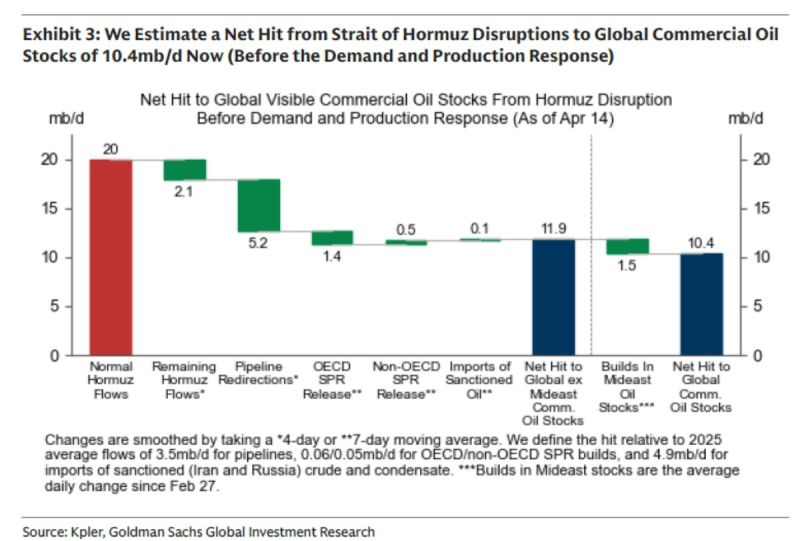
Oil flows from the Gulf
"Estimated oil flows from the Gulf (including pipeline redirections) increased to 10.4mb/d or 45% of normal on higher Yanbu exports as Saudi East-West pipeline full pumping capacity was restored within 4 days after the damage." Source: Goldman, zerohedge
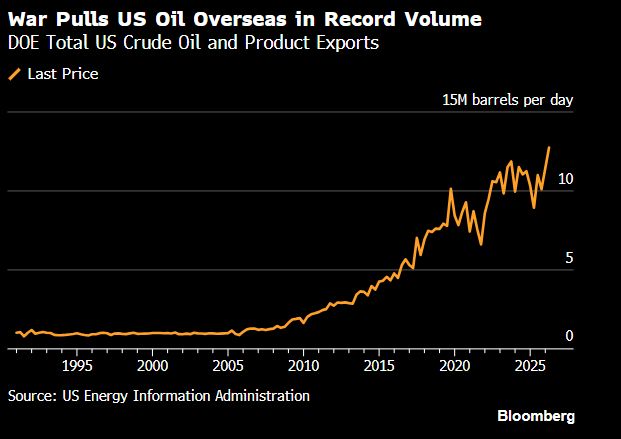
HUGE: The US exported a record 12.7 million barrels of oil per day last week amid the Iran War.
Source: Bloomberg
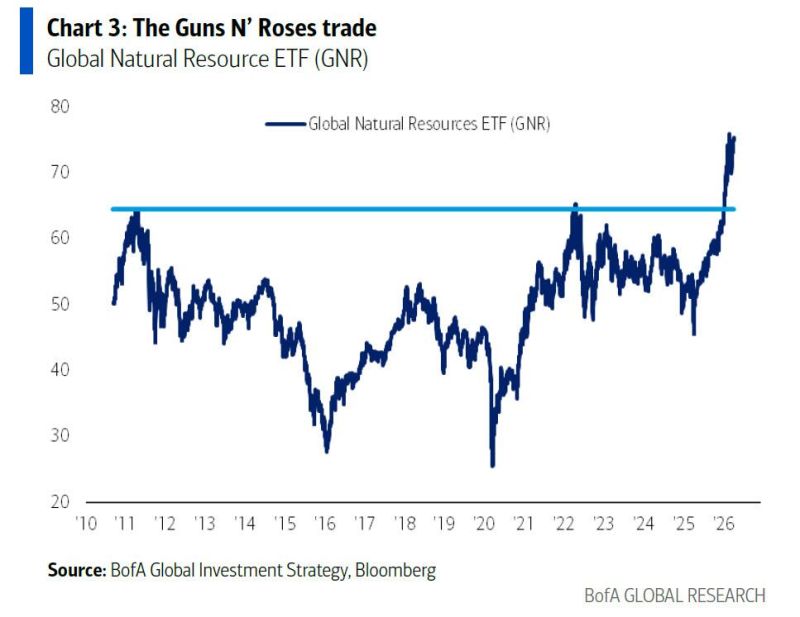
Have you heard about the Guns N' Roses trade?
Source: BofA
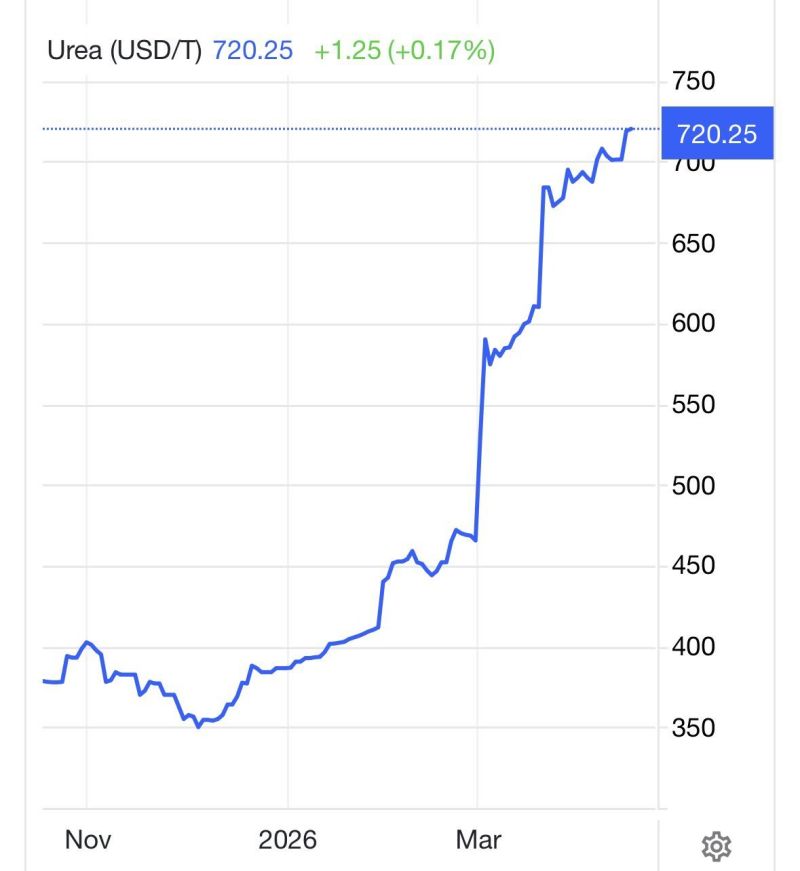
North Sea crude prices for immediate delivery continue to highlight mounting stress in the physical market
While headlines focus on futures, the real stress is building in the physical market. North Sea crude for immediate delivery is surging as European and Asian refiners scramble to replace barrels lost during the month-long Strait of Hormuz blockade. And the key signal? Dated Brent—the benchmark for physical cargoes—is telling a very different story than futures. Dated Brent jumped 7% to $132 June Brent futures are still sitting around $95 That’s not just a gap. That’s a massive dislocation between real supply and paper pricing. Meanwhile, the squeeze is getting worse: Forties Blend—another spot market indicator—traded near $147/barrel Translation: The barrels you can get today are becoming dramatically more expensive than what the market thinks oil should cost tomorrow. Why this matters: When physical markets decouple from futures like this, it often signals: Immediate supply shortages Panic buying from refiners And potential repricing across the entire energy complex Bottom line: Are Physical prices already telling us what futures haven’t caught up to yet??? Source: Ole S Hansen, Saxo Bank