
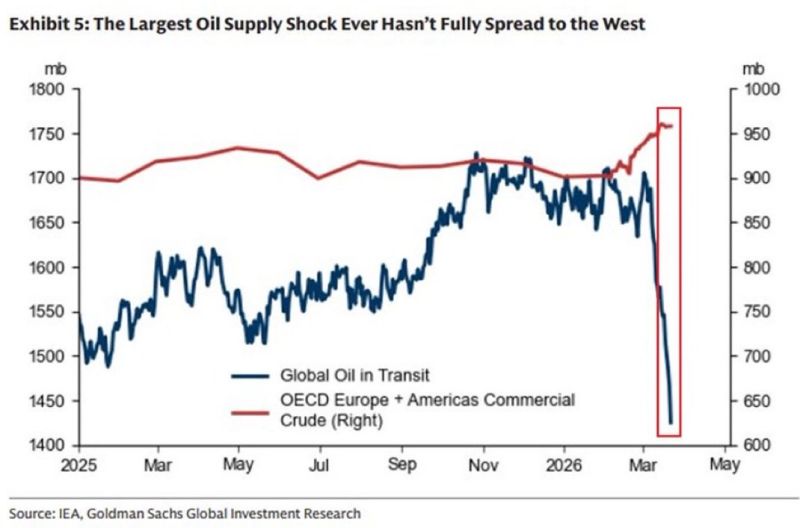
Why the West Remains Calm
Goldman Sachs explains that despite a sharp drop of 270 million barrels in global oil shipments within three weeks, Western economies remain stable. High oil inventories across OECD Europe and the Americas cushion any supply shock, preventing immediate disruption. This insulation allows major U.S. oil companies to achieve exceptional profitability even as global supply tightens. Consequently, the West is not protected but may benefit from current conditions, raising questions about who advantages from ongoing disruptions in the Strait of Hormuz. Source: Qasem Al-Ali (@AlaliQasem)
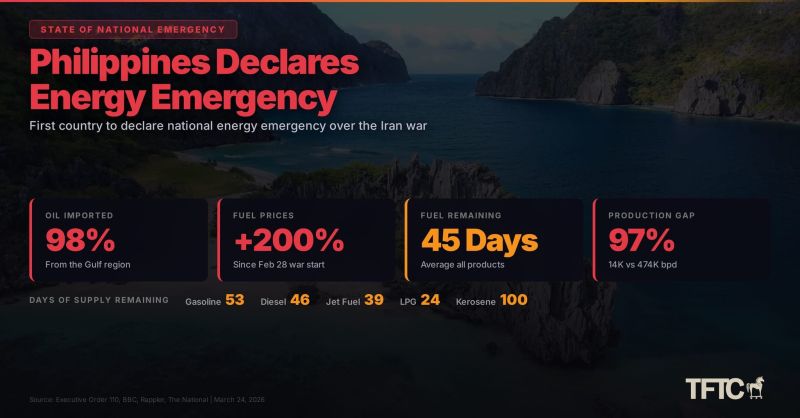
The Philippines has become the first country to declare a national energy emergency amid the Iran conflict
with just 45 days of fuel reserves remaining. President Ferdinand Marcos Jr. signed Executive Order 110, warning of an “imminent danger” to the country’s energy supply. The order, in effect for one year, allows the government to directly procure fuel, enforce rationing, and control distribution of essentials like food and medicine. The vulnerability is stark. The Philippines imports 98% of its oil from the Gulf. Its top suppliers—Saudi Arabia ($1.79B), the UAE ($1.22B), and Iraq ($474M)—are all directly affected by the conflict. With the Strait of Hormuz effectively shut, these supply routes are under severe strain, and Saudi exports to Asia have already been cut for a second straight month. Domestically, the country produces just 14,300 barrels per day but consumes around 474,000—a massive 97% shortfall. This is what a global energy shock looks like in real time. Source: TFTC
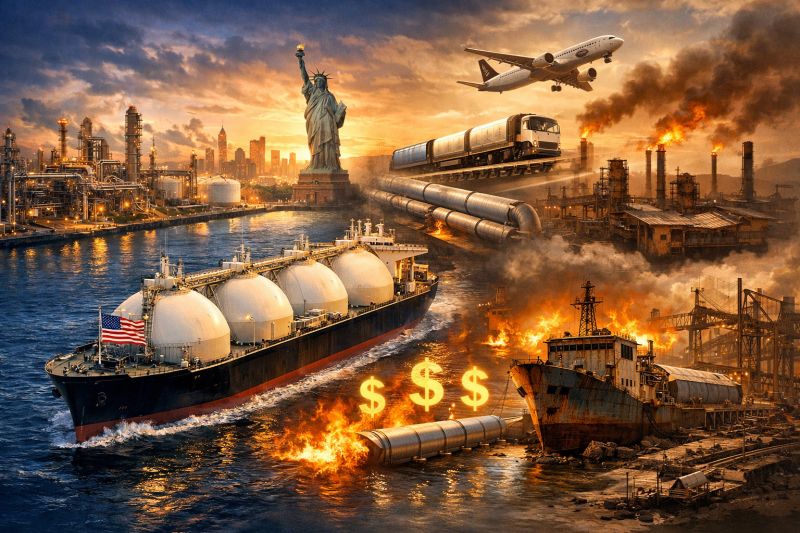
Energy power depends on infrastructure, not reserves
In 2026, global gas reserves tell a misleading story: Russia, Iran, and Qatar hold over 50% of reserves, yet disruptions, sanctions, and conflict limit output. The US, with only ~5% of reserves, dominates through operational export terminals, LNG shipping, and intact infrastructure. The lesson: energy power comes from extraction, processing, and logistics not the size of reserves. Gas in the ground or stranded by damaged infrastructure holds no real value; the strategic asset is functional infrastructure. Source: Jack Prandelli on X
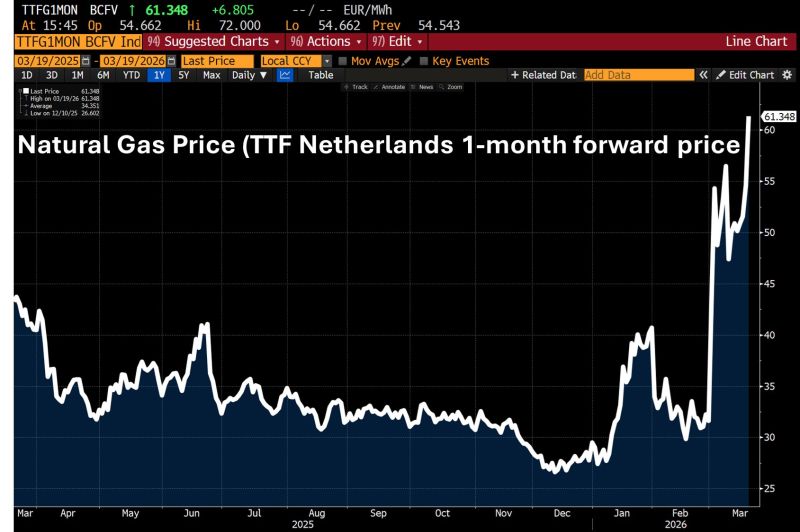
Soon, Europe is about to subsidise energy again. Sounds supportive. But the reality is far more paradoxical
Governments will step in as energy prices surge. But here’s the uncomfortable truth: 👉 Many of these same governments helped create the crisis 👉 By weakening their own energy security 💸 Now comes the real problem: Most European countries are already running structural deficits. They don’t have the fiscal room to absorb another shock. So what happens next? ➡️ Subsidies go up ➡️ Deficits widen ➡️ Policymakers panic And then the “solution” kicks in: 👉 Higher taxes 🧠 Think about the loop: • Governments subsidise households • Then raise taxes to fund it ➡️ Households end up paying for their own “relief” (with a bit of redistribution in between) 🔁 And this doesn’t stop here. The same cycle is playing out across: • Healthcare costs • Welfare expansion • Defence spending ⏳ Until the next crisis hits. And when it does, you’ll hear the same line again: “We must stabilise the economy.” 💥 Which really means: • Deficits explode • Debt issuance surges • Central banks step in 👉 Printing money 👉 Buying bonds 👉 Repeating the cycle 📌 Once you see the system, you can’t unsee it: It’s a loop of: Crisis → Spending → Debt → Money printing → Repeat ⚠️ Now here’s the part most people ignore: If your wealth is tied to assets that: • Don’t generate real returns • Can’t be moved easily • Are fully exposed to domestic policy 👉 You are far more vulnerable than you think (Yes, that includes a lot of real estate) 🧠 The uncomfortable conclusion: This isn’t about one crisis. It’s about a system. And if your portfolio isn’t positioned for it… 👉 It’s probably mispriced for reality Source: Financial Times
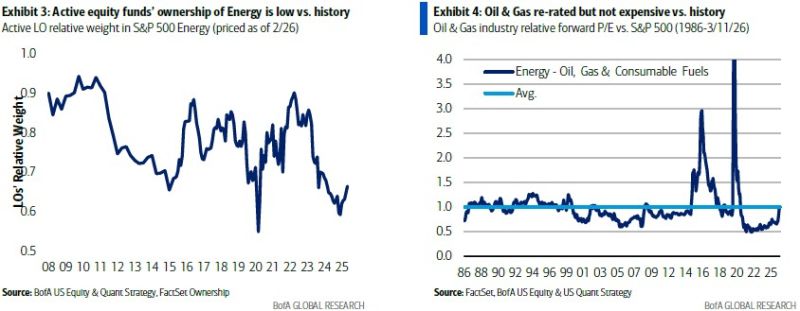
Despite the rally, energy stocks remain under-owned and not expensive vs. history.
Source: BofA, RBC
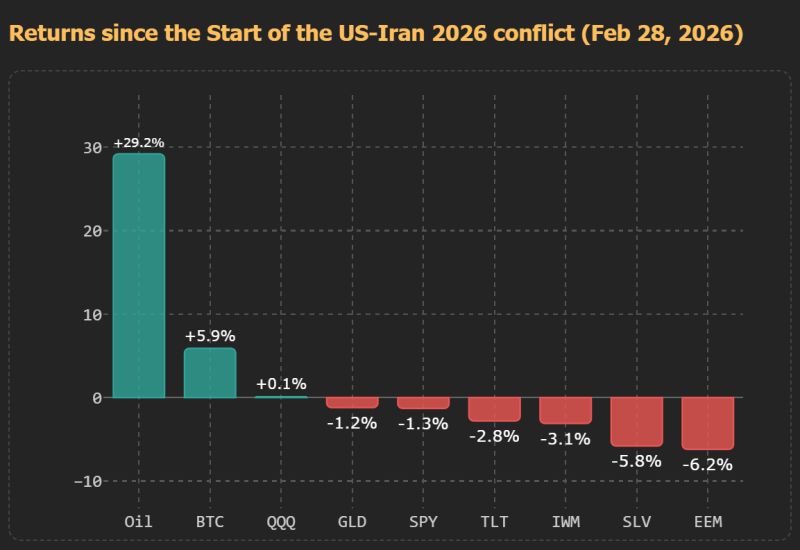
Returns since the start of the conflict
Source: Trend Spider
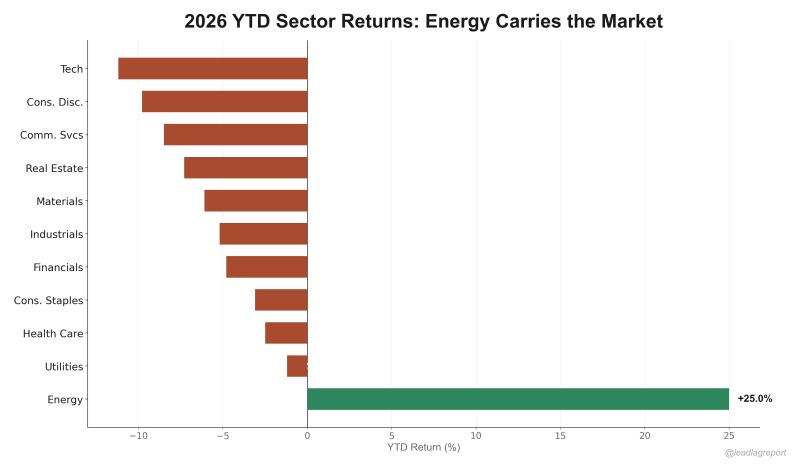
Energy sector up 25% YTD. Everything else red.
One sector carrying the market isn't a rotation. It's a warning. Source: Michael A. Gayed, CFA @leadlagreport
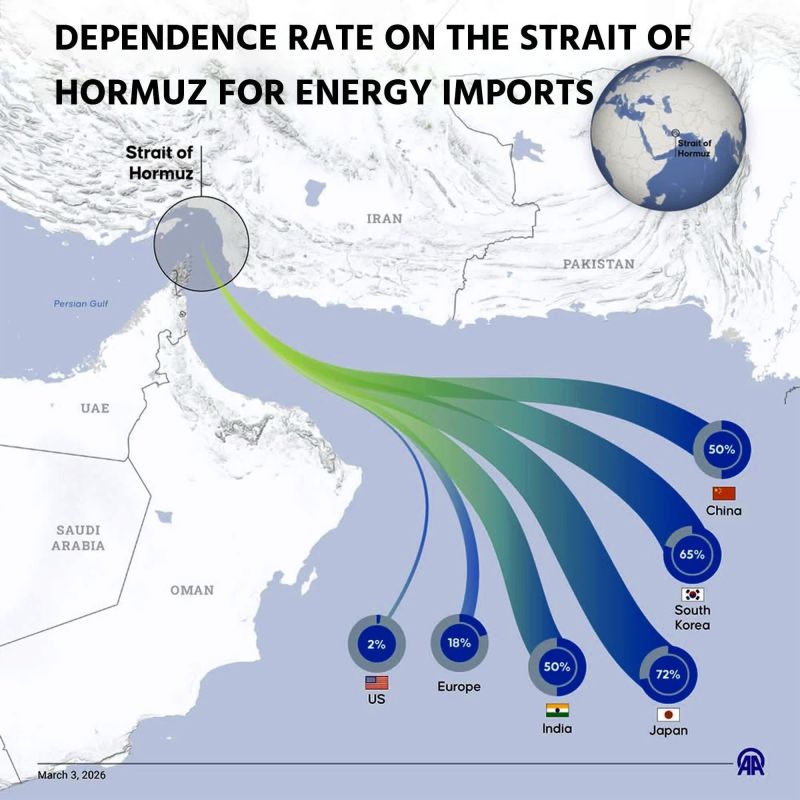
Asian nations rely more on energy imports from the Strait of Hormuz than Europe, the US, or Oceania.
Source: Simon Kuestenmacher @simongerman600