The G7 may be preparing the largest oil reserve release in history.
G7 finance ministers held an emergency call to discuss a coordinated release of strategic petroleum reserves led by the IEA. The U.S. and two other countries support releasing 300–400 million barrels—25–30% of reserves and more than double the previous record. WTI crude briefly spiked to $120 before dropping to $102.5, while U.S. gasoline rose to $3.45 per gallon. This would be the largest emergency release in history. Source: Global Markets Investor

Germany, where spot gas prices have surged to above €60 per megawatt hour.
That makes natural gas roughly 6 times more expensive here than in the US. Source: Bloomberg, HolgerZ

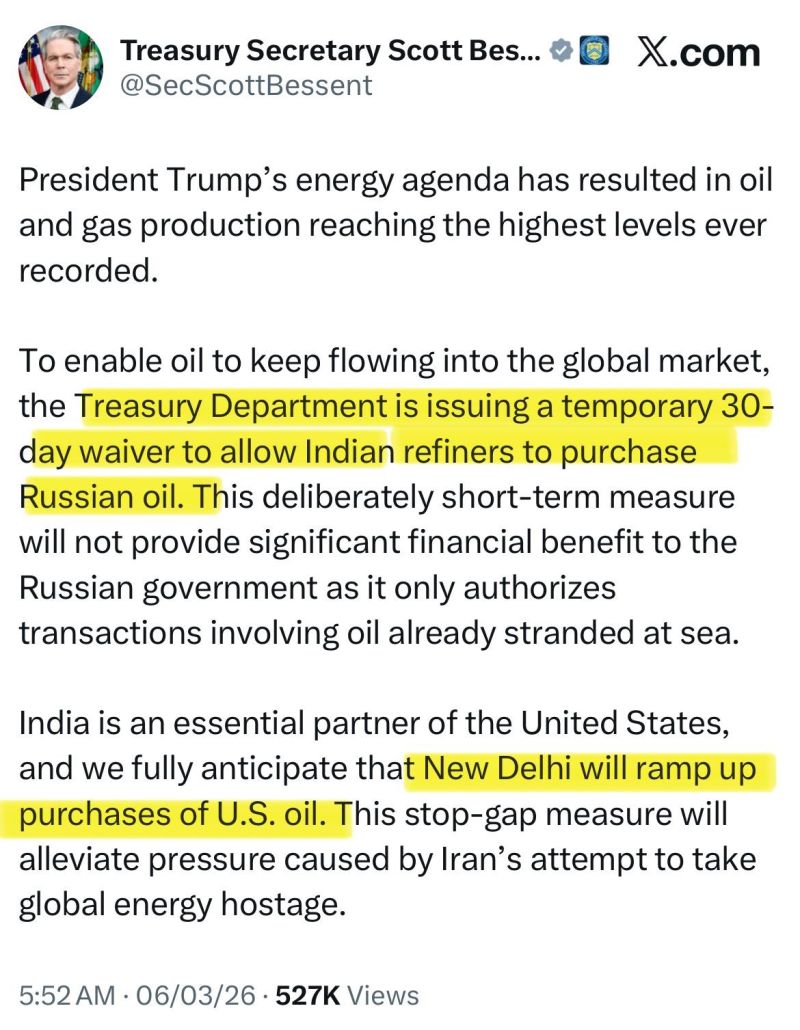
America ALLOWS Modi Regime purchase oil from Russia temporarily.
American EXPECTS, India will purchase costlier oil from it. Narendra Modi’s regime is a puppet in the hands of America who has TRADED ‘India’ in return for support to Rule over India. Source: Raju Parulekar
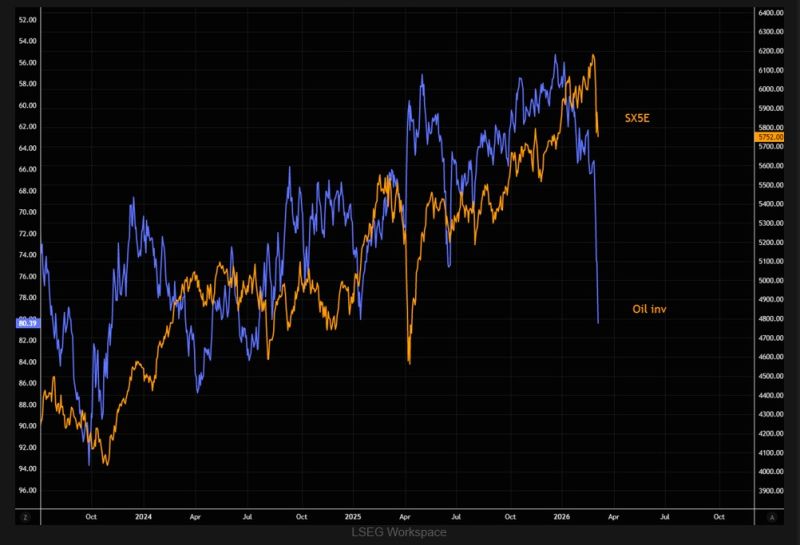
Europe is the energy sucker.
Chart shows SX5E vs oil (inverted). This does not mean SX5E must crash to close the gap, but it shows you clearly just how vulnerable Europe is. Source: The Market Ear
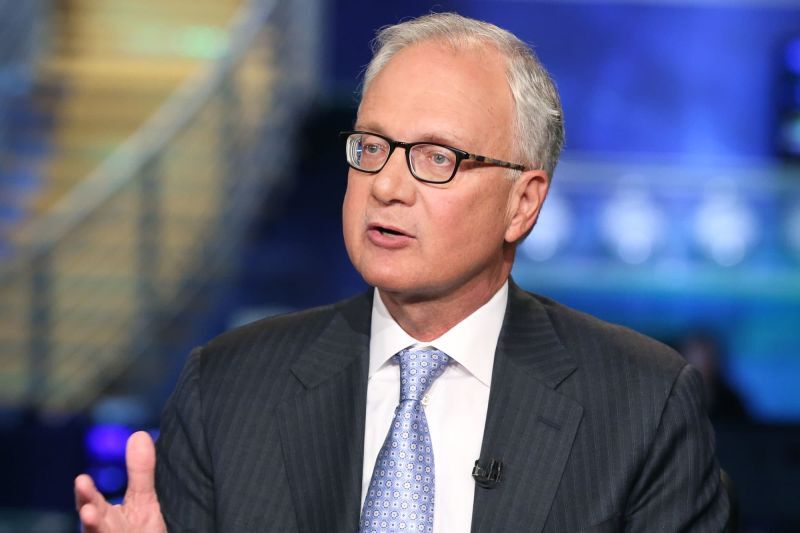
From Yardeni:
“.. in our short-war scenario, oil prices should fall in the coming weeks after a ceasefire .. boosting US consumer spending and benefiting global economies .. The weekend’s Middle East developments make us even more confident in our Roaring 2020s scenario.”
🚨 TTF +25% to ~€40/MWh Biggest day jump since Aug 2023. 8 month high.
Why? Hormuz risk = 15% of global LNG flows exposed, mainly Qatari cargoes. Europe replaced Russian pipeline gas with seaborne LNG. Now that LNG must pass the Gulf. Starting point isn’t comfortable: • EU storage ~31% vs ~40% last year • Germany ~20% • France ~21% Add: • Large speculative shorts • Forced short covering • Front-month panic buying If Qatari LNG is materially disrupted for weeks, analysts see €80–100/MWh possible. Source: Jack Prandelli
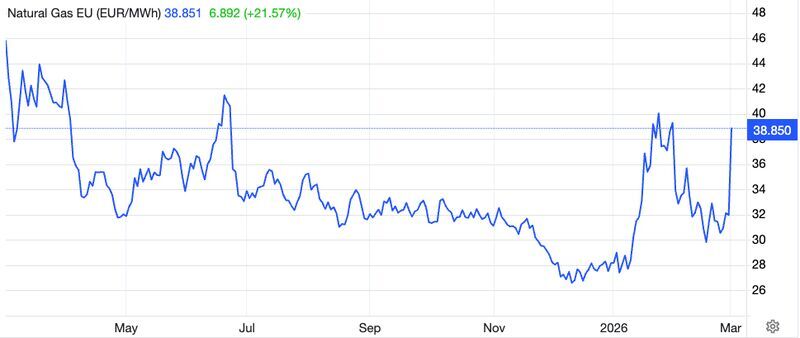
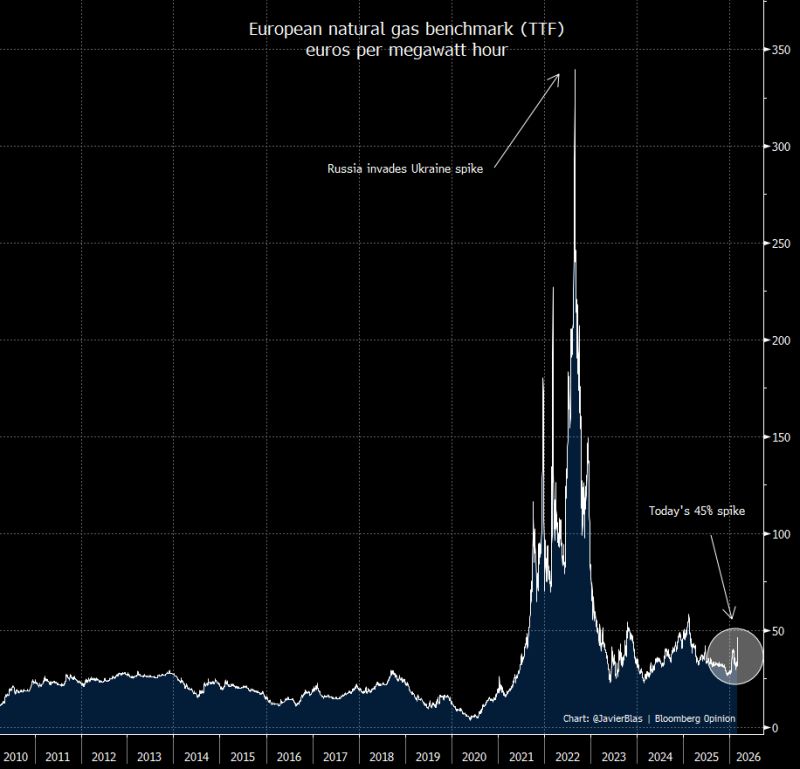
CHART OF THE DAY: European Gas prices are now up 45% after the Qatari LNG production halts
Using European benchmark TTF as a proxy, here's the price chart of the last few years. Source: Javier Blas, Bloomberg
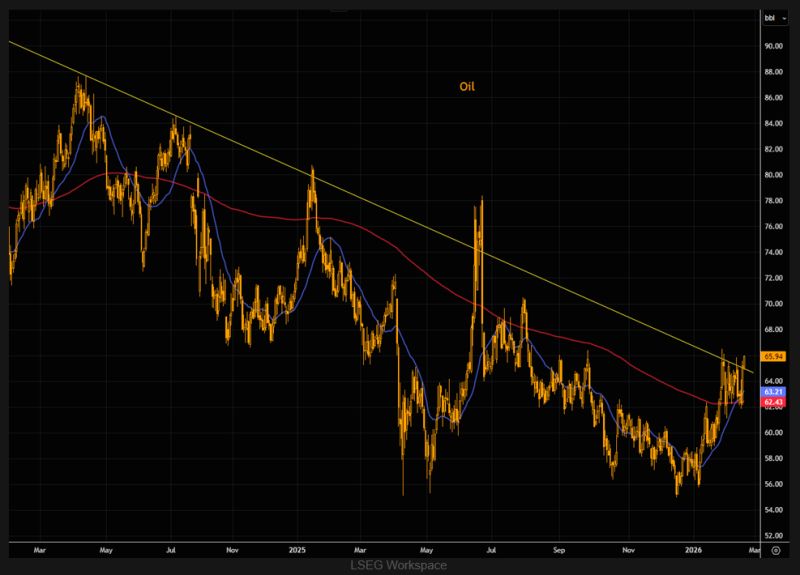
Oil is pushing the massive trend line. We haven't closed here since August.
Source: TME