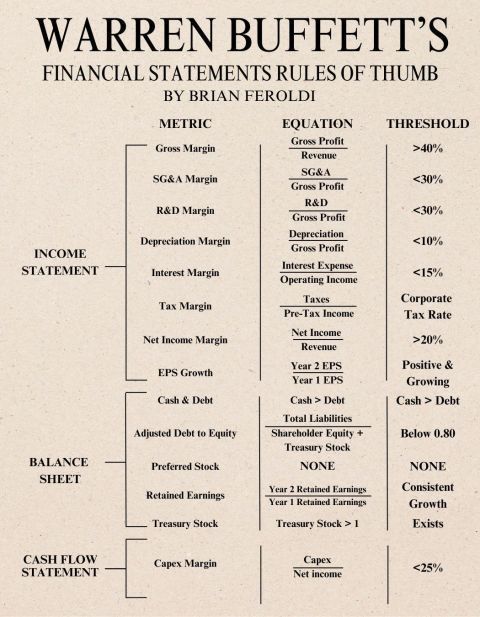

SpaceX wants to become your mobile carrier.
The company has agreed to buy nationwide 800 MHz spectrum from Grain Management—a move that could bring Starlink closer to competing directly with America’s telecom giants. The market reaction? AT&T, Verizon and T-Mobile fell in extended trading. SpaceX rose around 2.5%. The strategic shift is clear: Starlink wants to serve customers directly, with less reliance on traditional operators. And it has a powerful engine behind it: its connectivity business generated $4.29 billion in revenue and $1.66 billion in operating income in Q2. But spectrum alone won’t solve everything. FCC approval is still required. Reliable indoor coverage in cities would likely require ground-based towers. No launch date has been announced. The next telecom battle could combine satellites above us with towers around us. How much of your next phone bill could eventually go to SpaceX? Source. Gurgavin, CNBC
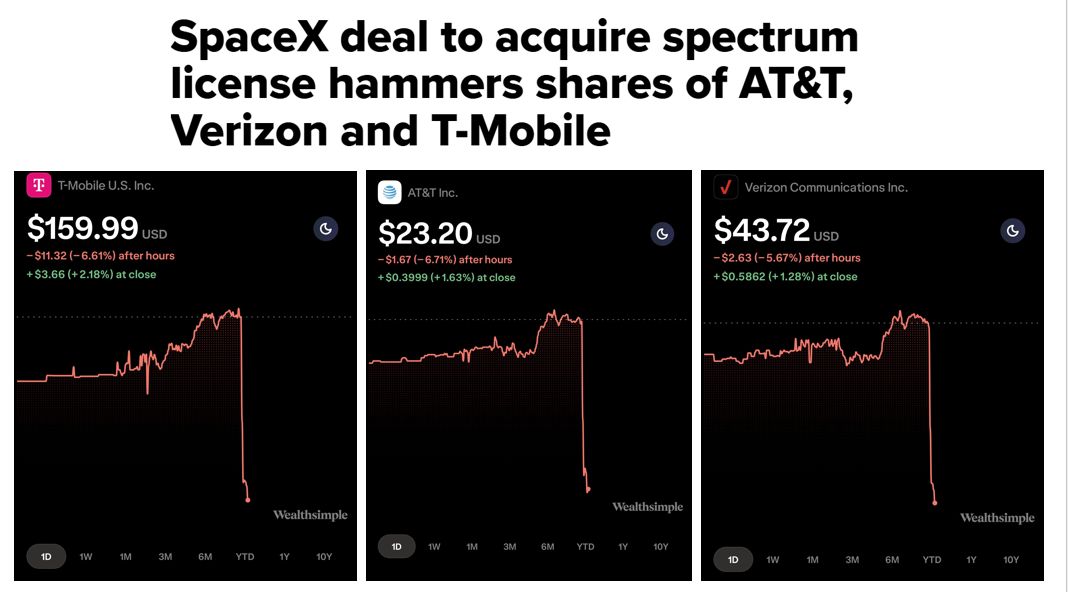
Michael Burry has spent nearly 18 years trying to make The Big Short 2 happen.
Source: Shay Boloor
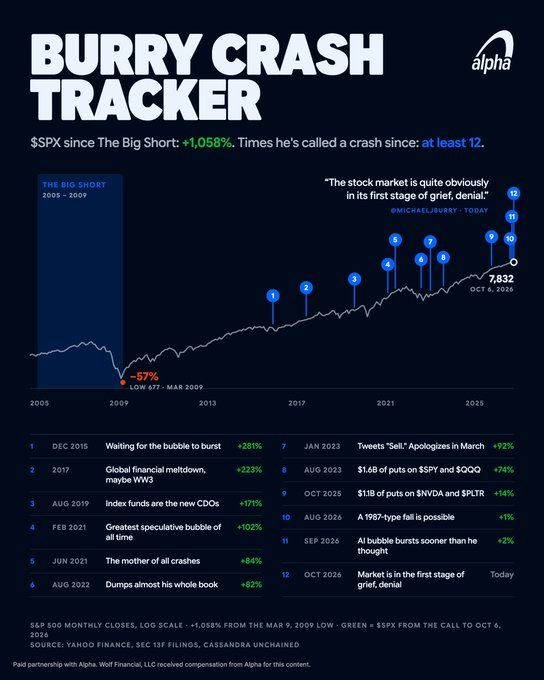
Ratio of $RSP (equal-weighted S&P 500) to $SPY (market-cap weighted S&P 500) just hit a new all time low
Source: zerohedge
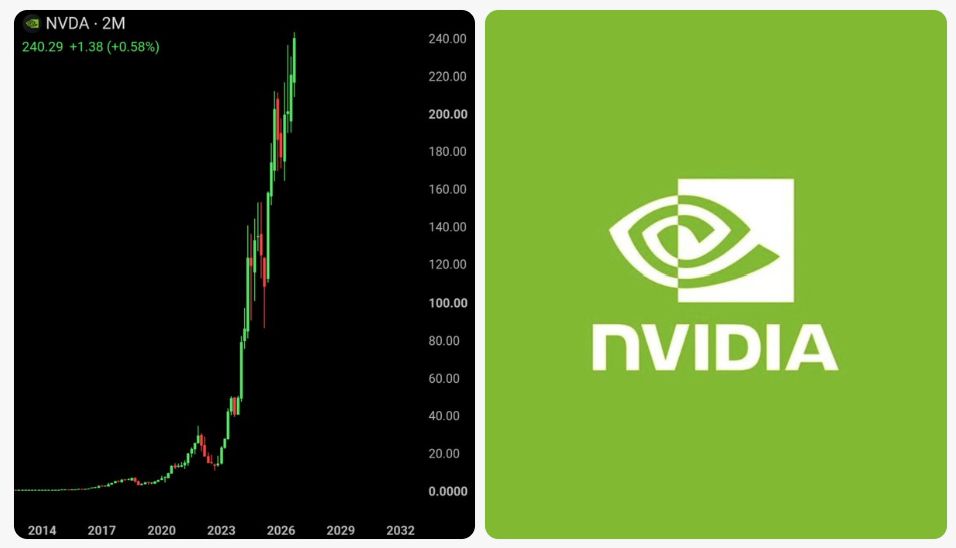
Yesterday, Nvidia just hit a new all time high of $243 for the first time in history.
If you invested $10,000 in $NVDA at the bottom of the 2002 market crisis, you'd have about $43 million today. Source: Bull Theory
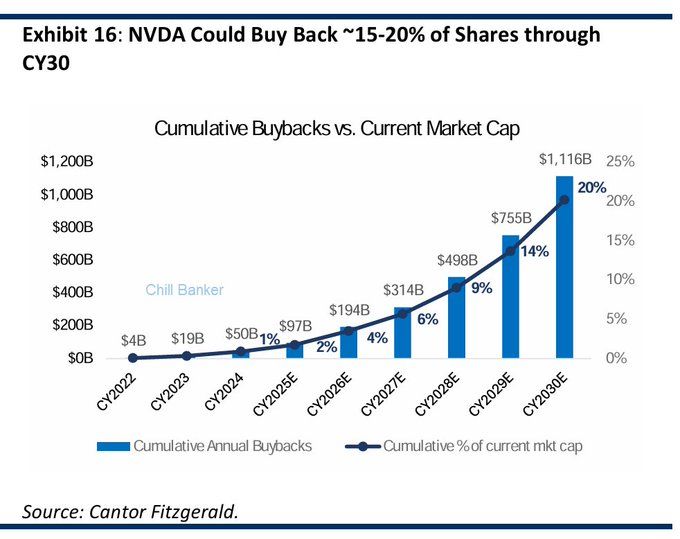
Nvidia could buy back ~20% of its market cap by 2030 because every AI dollar eventually becomes a GPU, a network switch or a system and Nvidia sells all three.
What’s even more wild is capex was under 4% of FCF last quarter making this one of most capital efficient infrastructure businesses ever built. Source: Shay Boloor
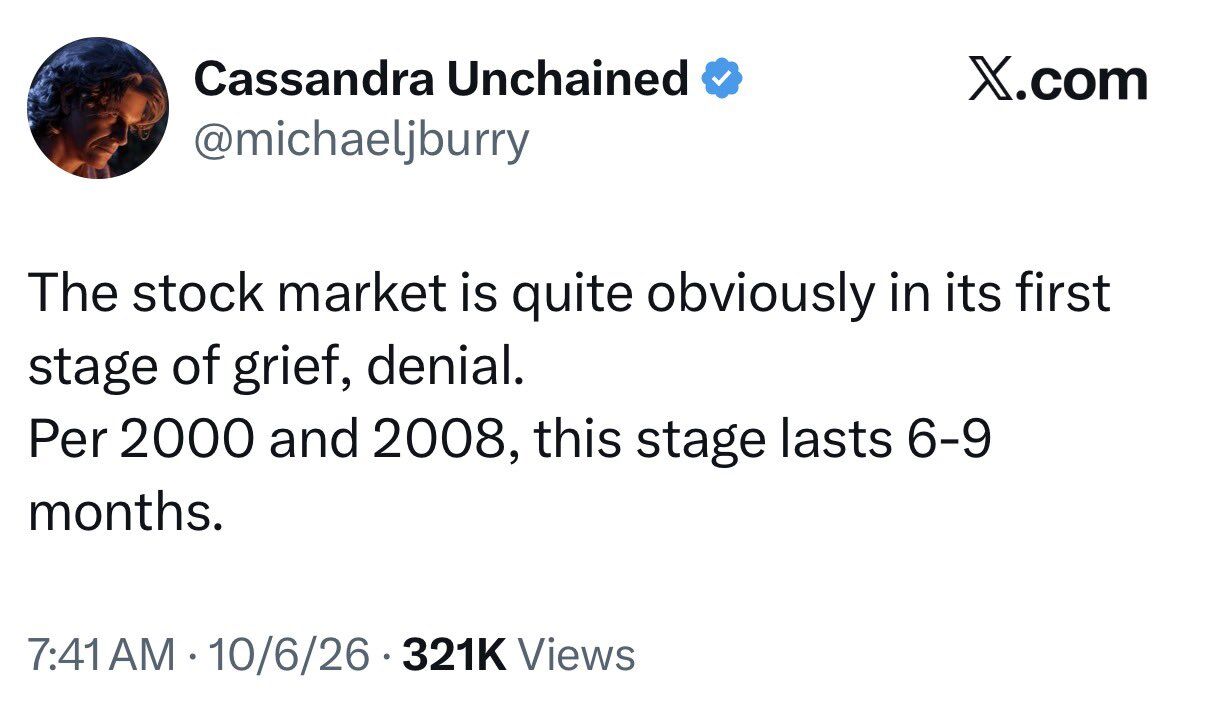
Being right about a crash once doesn’t make you right about markets forever.
Peter Lynch said it best: “Far more money has been lost by investors trying to anticipate corrections, than has been lost in corrections themselves.” Michael Burry’s 2008 call was legendary. But spotting a crisis and compounding wealth over decades require different skills. One rewards a bold contrarian bet. The other demands patience, discipline—and the ability to change your mind. Permanent pessimism can sound sophisticated. It can also carry a huge opportunity cost. 📈 You don’t need to predict every correction to build wealth. You need a strategy that survives them. Source: Oguz Erkan
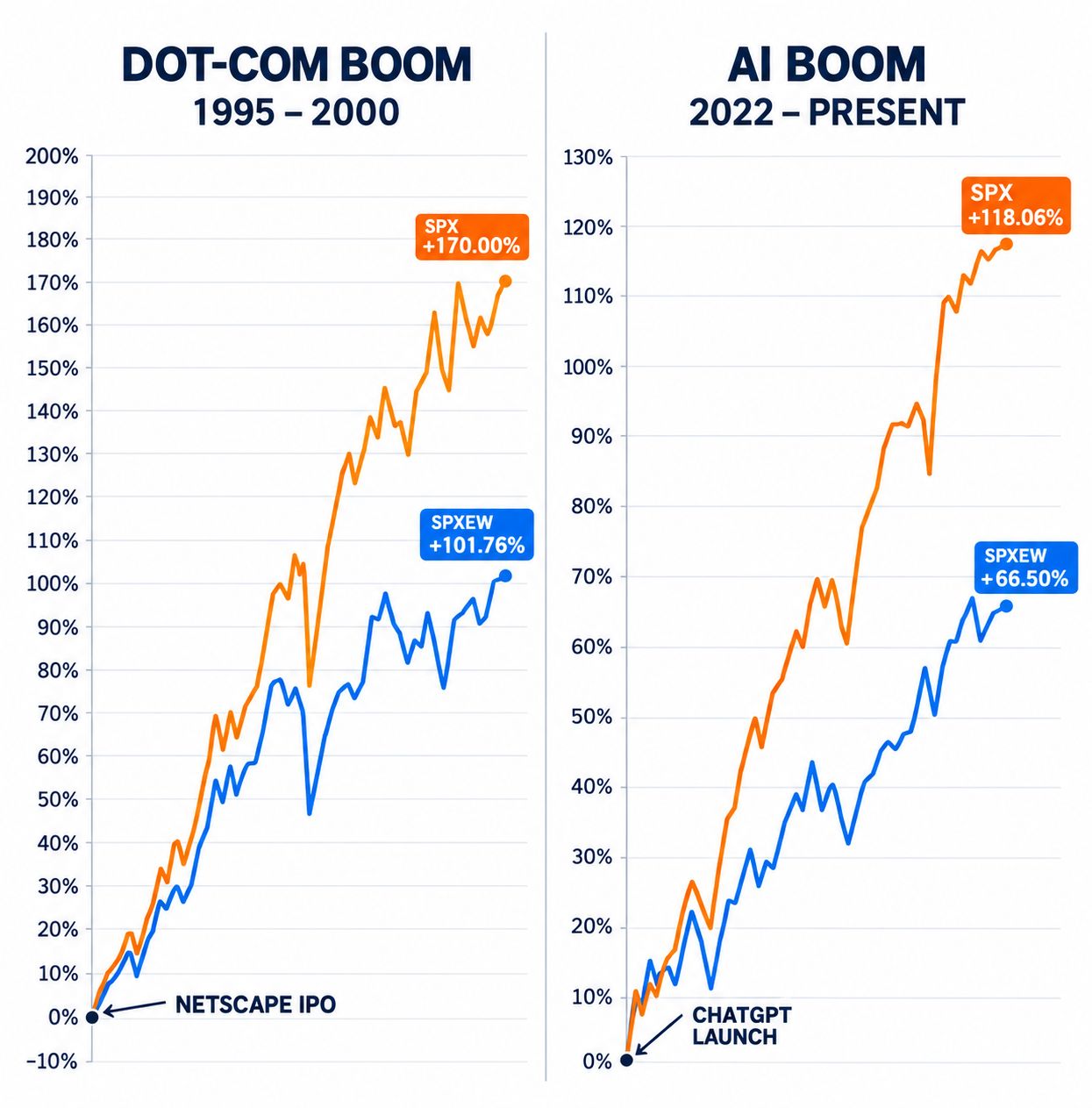
The equal weight S&P 500 (in blue) is underperforming the S&P 500 (in orange) by the largest margin in more than 24 years.
The last time this happened was the dot-com boom, when the S&P 500 outperformed equal weight by about 68%. Now in the AI boom, the S&P 500 is outperforming equal weight by about 52% and the gap is still widening. Source: Bull Theory
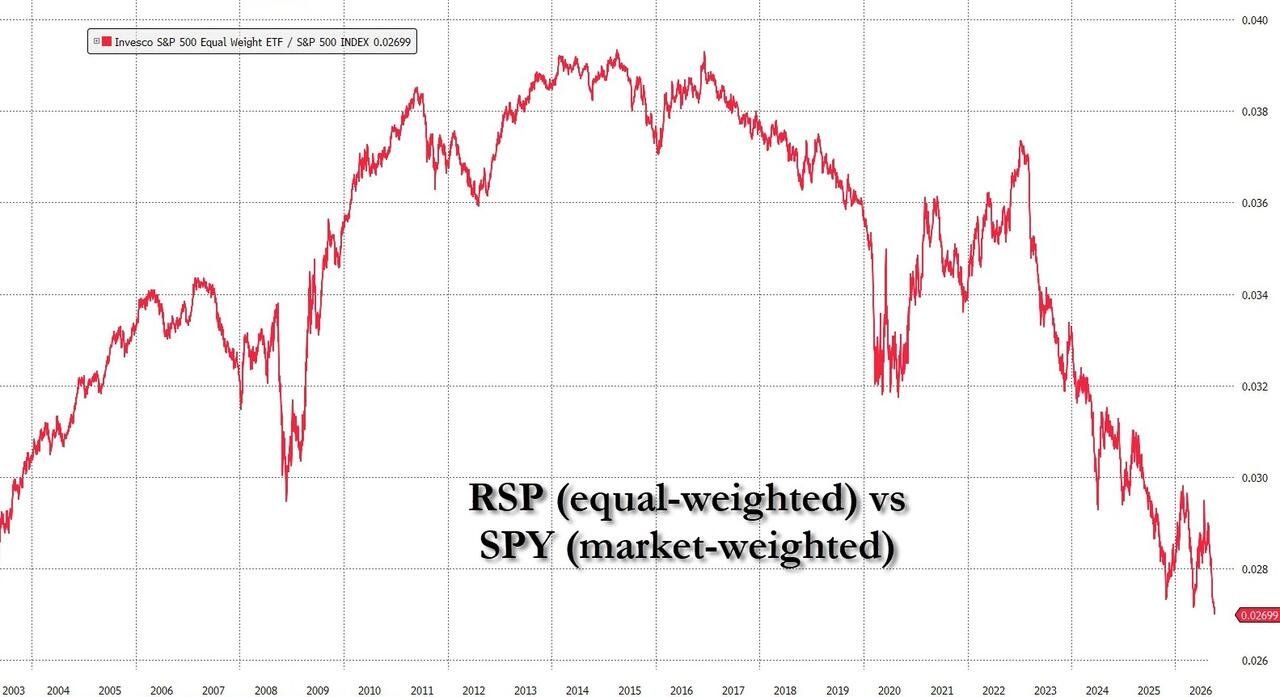
How Warren Buffett Quickly Reads Financial Statements
A simple rule-of-thumb framework Source: Brian Feroldi, Compounding Resourcesshared by Brian Feroldi