
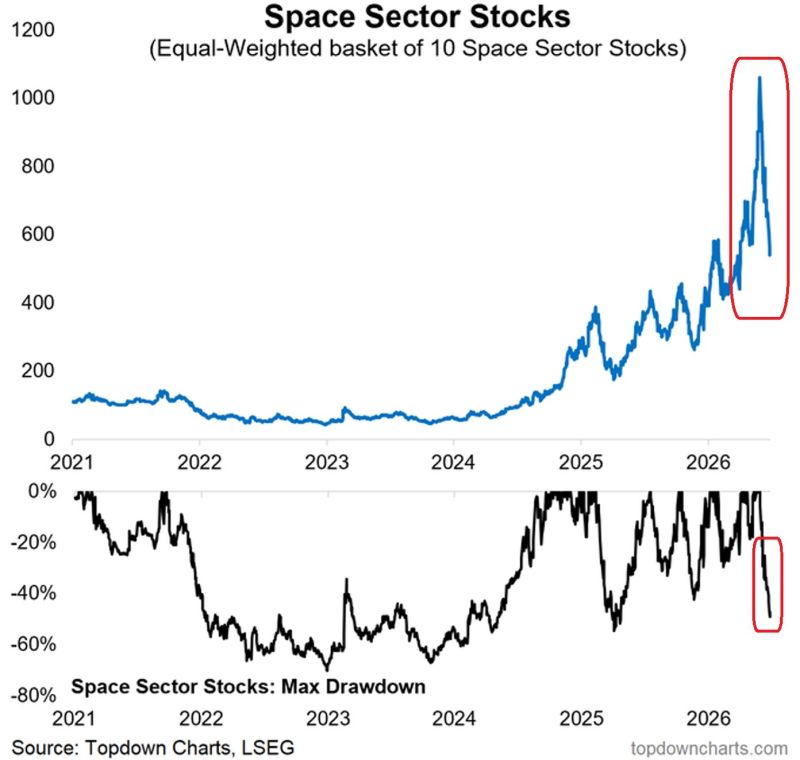
Stairs up, ELEVATOR down in US space stocks:
The equal-weighted basket of 10 space sector stocks has COLLAPSED -50% since its peak, the largest drawdown since April 2025 and the 2nd-largest since the 2022 bear market. SpaceX, $SPCX, alone is down -32% since its mid-June peak. This comes after retail investors purchased $405 million of SpaceX shares during its first 5 trading days after its June 12 IPO, the largest first-week retail purchases of any IPO ever. Mom-and-pop investors also piled into leveraged ETFs linked to SpaceX, purchasing $65.8 million of the 2x Leveraged Long SpaceX ETF, $SPCH, over its first few trading sessions. The fund is down -56% since the June 16 peak, posted on the 2nd trading day after its launch. Source: Thomas Callum, Topdown charts
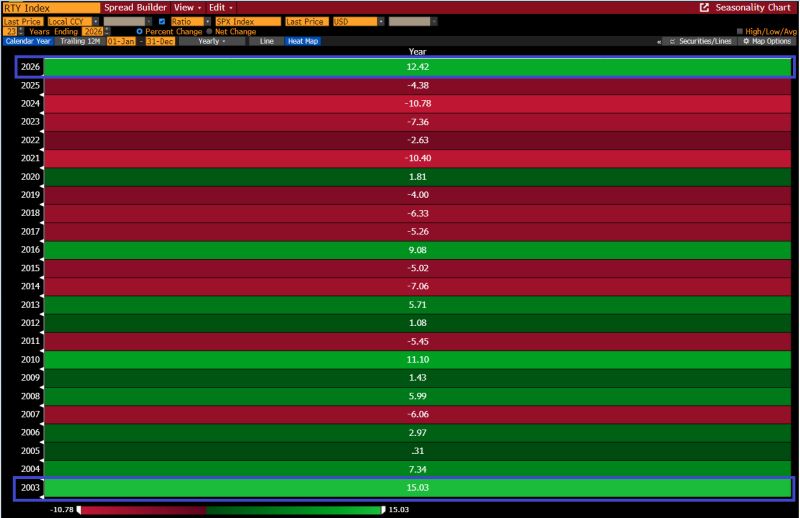
"The Russell 2000 small-caps index is outperforming the S&P500 by ~1,240 bps thus far in 2026: if this holds it would mark the largest year of Small Cap outperformance since 2003" - GS
Source: zerohedge
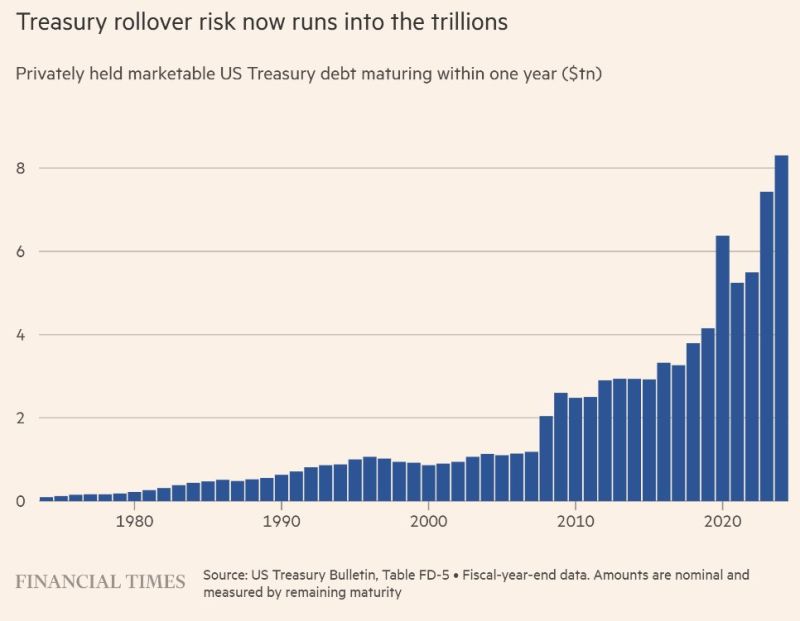
The US can't afford much higher interest rates.
Here's why: Over the next 12 months, the US Treasury must refinance roughly $8 trillion of debt. The average interest rate on that debt is about 3.3%. Today, the 1-year Treasury yields around 4%. Simply refinancing that $8 trillion at current rates would increase annual interest costs by roughly $50 billion. And that's before accounting for interest on an ongoing $2 trillion annual budget deficit. This is why today's fiscal backdrop is fundamentally different from the early 1980s. When Paul Volcker raised rates into the double digits, the US had already benefited from years of high inflation that dramatically reduced the debt burden relative to the economy. Today, debt levels are far higher. Every percentage point increase in borrowing costs has a much larger impact on the federal budget. The Fed isn't just fighting inflation anymore. It's operating with one eye on a balance sheet that has become increasingly sensitive to higher rates. The higher rates stay, the more expensive America's debt becomes. Source: Lukas Ekwueme @ekwufinance FT
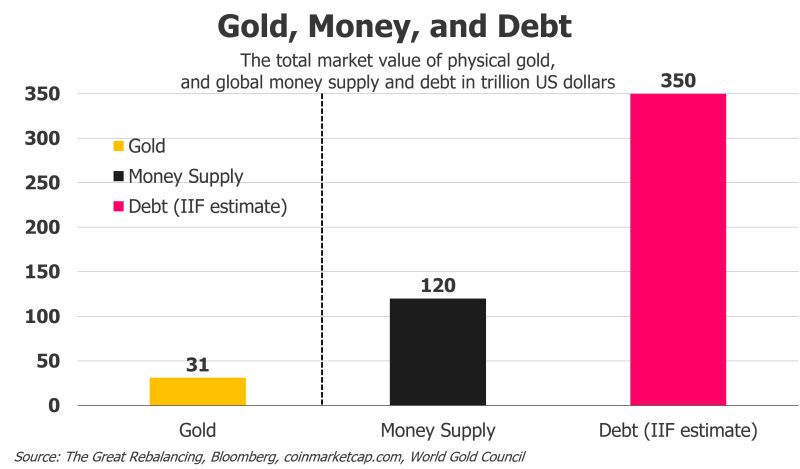
Gold isn't about cash flows or valuations. It's about trust.
For centuries, gold anchored monetary systems and provided confidence when fiat currencies eventually lost it. Today, global debt has exploded to $350 trillion, while only about 25% of all fiat money is backed by the value of all the gold above ground, down from 60–100% throughout most of history. At the same time, governments continue printing money to finance ever-rising debt. China appears to understand this dynamic: it is simultaneously expanding debt and aggressively accumulating gold. If history rhymes, gold may not simply rise in price—it may be revalued as confidence in fiat currencies is tested. Source: jeroen blokland
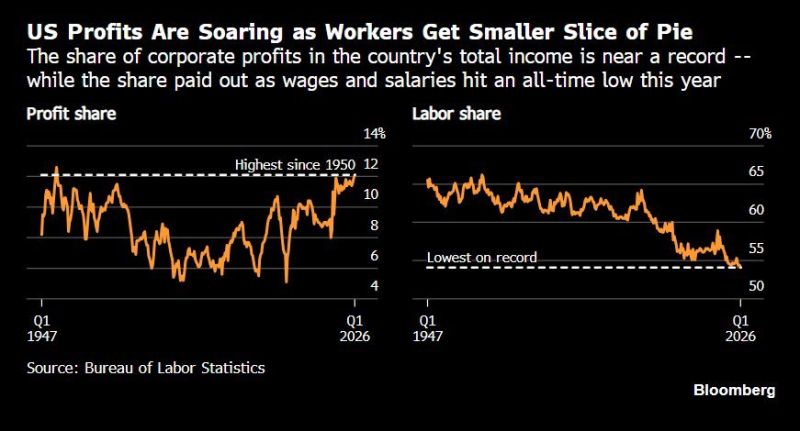
The K-Shaped economy:
Source: Hedgeye, Bloomberg
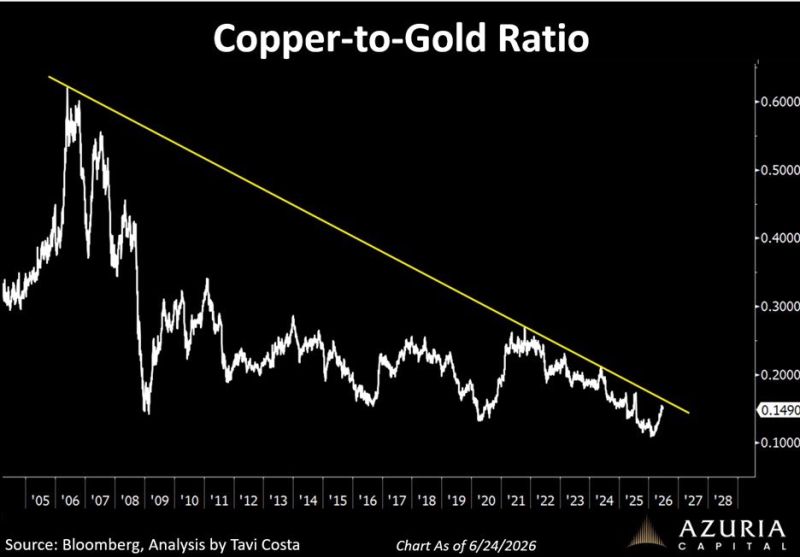
Could it be one of the most important breakouts developing in the entire commodity complex?
Source: Tavi Costa, Bloomberg
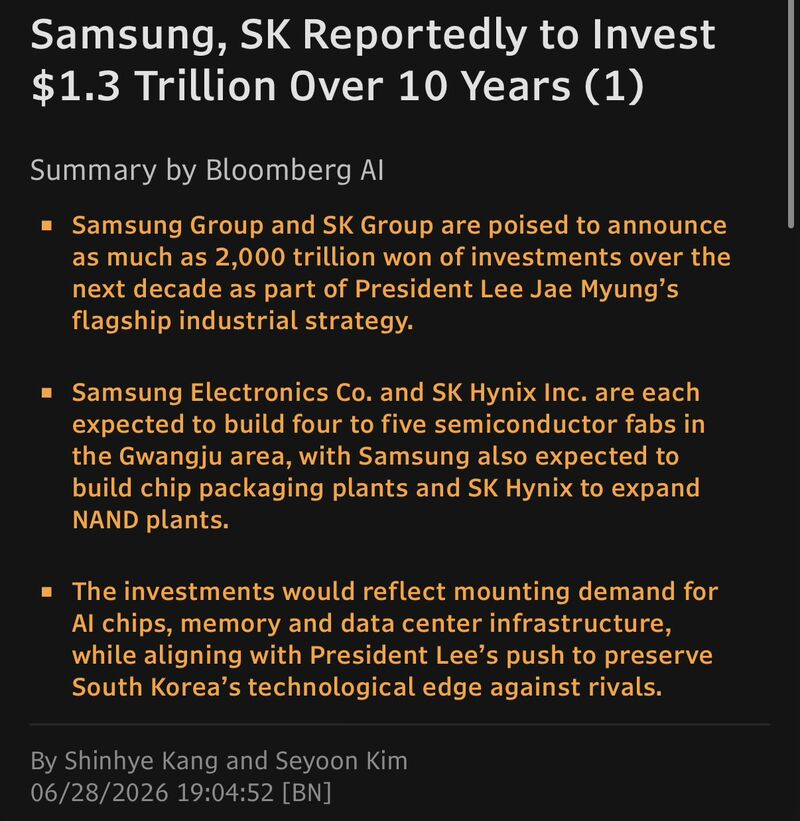
Samsung, SK Hynix shares fall as investors brace for reported $1.3 trillion spending plans
This is double the previous reports last week of 1,000 trillion won ($650B). Source: Negligible Capital @negligible_cap Bloomberg
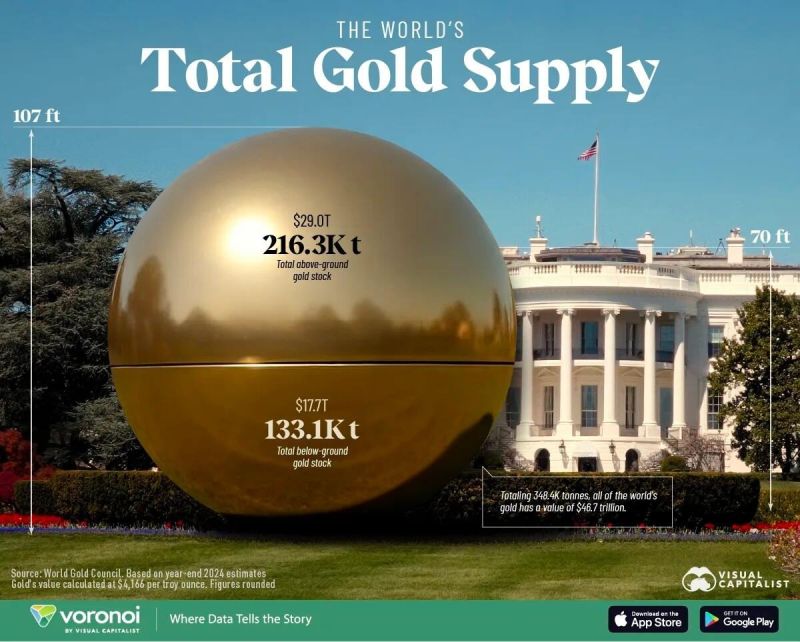
All the gold ever mined fits in a sphere 107 ft wide.
216,300 tonnes above ground. Worth around $29T That's it and that's the whole supply. It grows about 2% a year, and you can't print more. Source: Jack Prandelli on X, Visual Capitalist