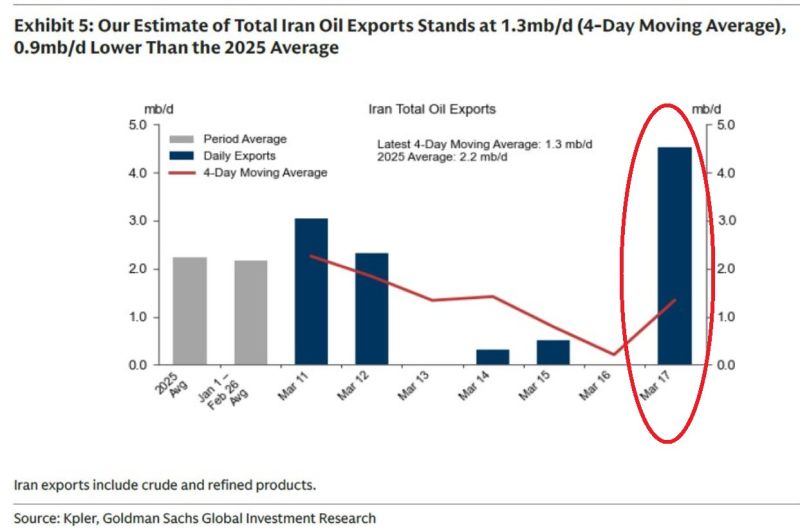

Iran Controls Passage Through the Strait of Hormuz
Iran has announced it will allow “non-hostile vessels” to transit the Strait of Hormuz, but only under Iranian control and coordination. This strait normally carries ~20% of global oil, yet thousands of ships are delayed, attacked, or paying high fees. Iran may block vessels linked to the US or Israel and is drafting laws to formalize control. Beyond shipping, this move signals a financial shift, including potential moves away from the US dollar, turning the Strait into a strategic leverage point in global energy and trade. Source: Financial Times
Trump Proposes 1-Month Ceasefire with Iran
Former President Donald Trump proposed a 15-point deal offering Iran major sanctions relief, civilian nuclear support, and reintegration into the global economy in exchange for dismantling its nuclear program, cutting ties with proxies, and reopening the Strait of Hormuz. The framework mirrors a pre-war offer, but Iran’s new leadership demands reparations. Key obstacles remain: Iran won’t fully halt enrichment, Trump rejects reparations, and ongoing regional military actions complicate the agreement’s implementation. Source: WSJ, Mario Nawfal, Jack Prandelli
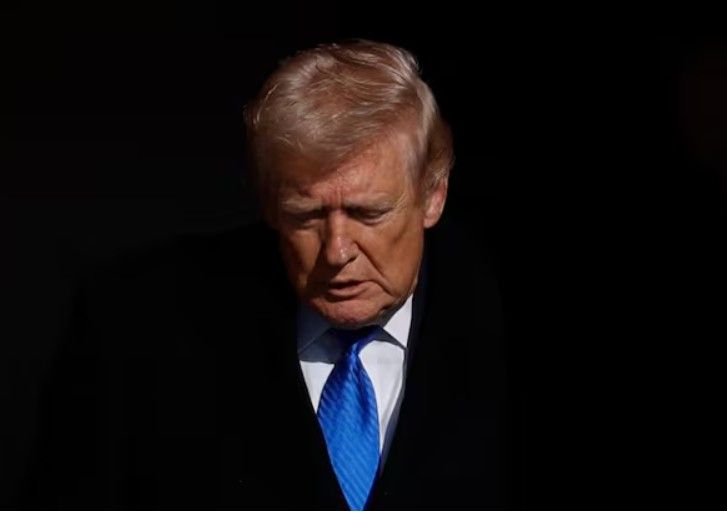
The Philippines has become the first country to declare a national energy emergency amid the Iran conflict
with just 45 days of fuel reserves remaining. President Ferdinand Marcos Jr. signed Executive Order 110, warning of an “imminent danger” to the country’s energy supply. The order, in effect for one year, allows the government to directly procure fuel, enforce rationing, and control distribution of essentials like food and medicine. The vulnerability is stark. The Philippines imports 98% of its oil from the Gulf. Its top suppliers—Saudi Arabia ($1.79B), the UAE ($1.22B), and Iraq ($474M)—are all directly affected by the conflict. With the Strait of Hormuz effectively shut, these supply routes are under severe strain, and Saudi exports to Asia have already been cut for a second straight month. Domestically, the country produces just 14,300 barrels per day but consumes around 474,000—a massive 97% shortfall. This is what a global energy shock looks like in real time. Source: TFTC
Recurring Deal-Making Pattern: Markets, Denials, and Strategic Timing
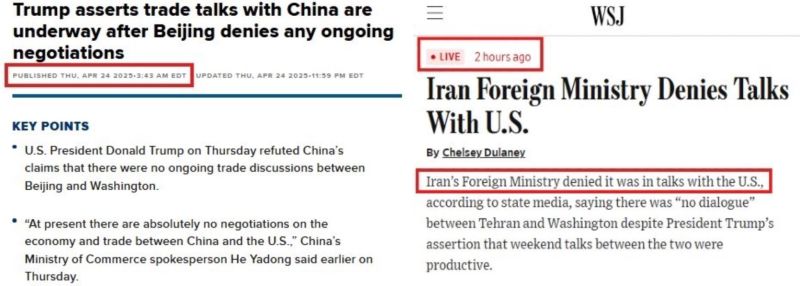
A familiar strategy emerges: in April 2025, yields rose and Donald Trump signaled a China deal, denied by China before confirmation weeks later. Now, similar dynamics appear with Iran—denials, market pressure, and rising yields suggest ongoing hidden negotiations. This “denial phase” implies continued volatility, conflicting headlines, and delayed market stabilization as leverage is maintained until agreements finalize. Source: The Kobeissi Letter, CNBC, WSJ
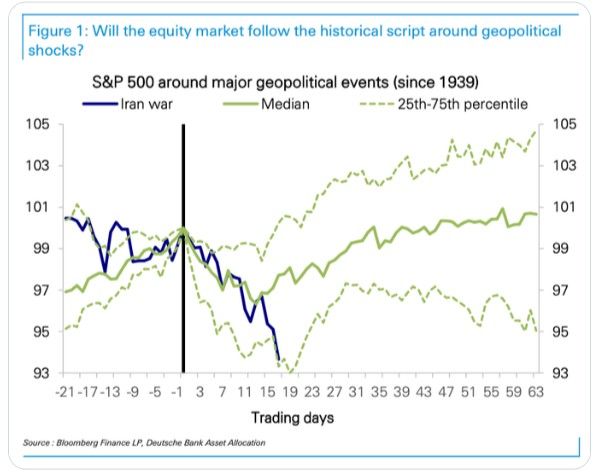
Will the equity market follow the historical script around geopolitical shocks
"The historical playbook is for a sharp selloff of about -6% to -8% but a bottom on average in 3 weeks, and a full recovery in another 3, usually long before the underlying escalation is resolved. The current selloff is in the vicinity of a typical bottom in size and timing." - Deutsche Bank Source: Sam Ro @SamRo DB
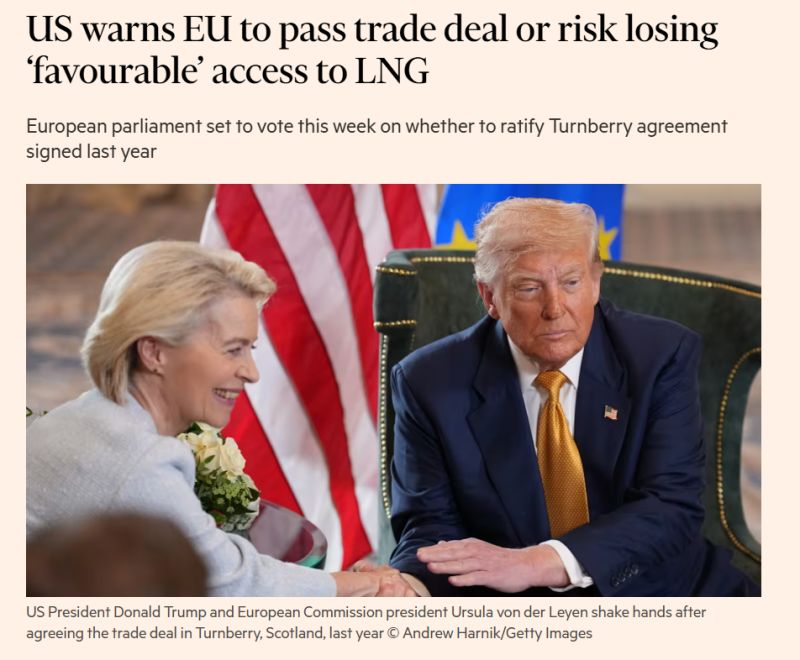
U.S. Energy Ultimatum to Europe: Strategic Pressure for Long-Term Dependence
President Donald Trump demands Europe sign a $750B energy deal or lose U.S. LNG access. With supply constrained (Qatar offline, Russia absent, Norway maxed, prices up 35–50%), the U.S. dominates EU LNG (57%). Tensions with Iran spike oil, then ease to influence markets. The deal locks Europe into LNG, oil, and nuclear dependence by 2028, mirroring Russia’s parallel strategy in Asia.
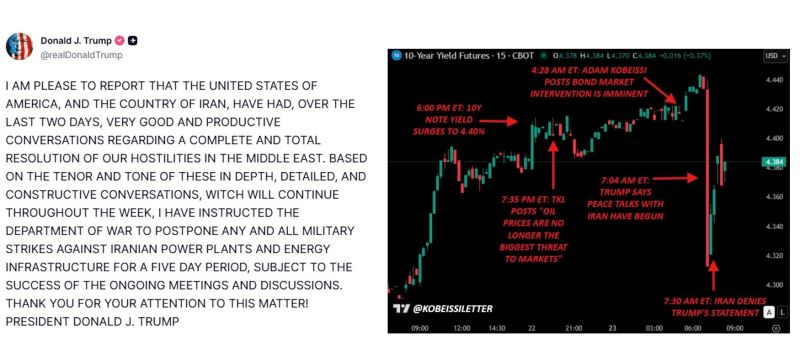
Trump’s “ceasefire” is only a partial pause
Trump announced a five-day pause on strikes against Iranian energy infrastructure, following a 48-hour threat that Iran ignored. Meanwhile, missile attacks continue, Hormuz remains closed, and 4,500 Marines are still deploying. The pause applies only to energy strikes; all other military actions continue. Media frames it as diplomacy, Iran sees a win, and the bond market reacts with volatile yields. The real indicator of impact will be market behavior, not political statements. Source: The Kobeissi Letter, Whale Guru on X
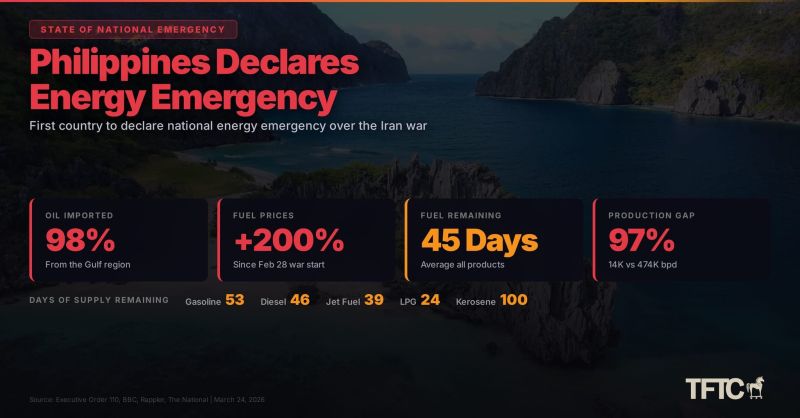
Iran is RAMPING UP oil shipments:
Iran's oil exports spiked to ~4.5 million barrels on March 17, more than DOUBLE the 2025 average of ~2.2 million barrels per day. The surge came after exports nearly collapsed to zero on March 14 and 16, following US and Israeli military strikes near the Kharg Island export terminal. Iran is reportedly rushing to load as many tankers as possible when conditions allow, funnelling the revenue to fund military operations and keep the economy running. Iranian tankers continue to pass through the Strait of Hormuz, unlike many other vessels that remain blocked, particularly those from US-allied nations. Iran is exporting oil in bursts whenever it can. Source: Global Markets, Goldman Sachs