
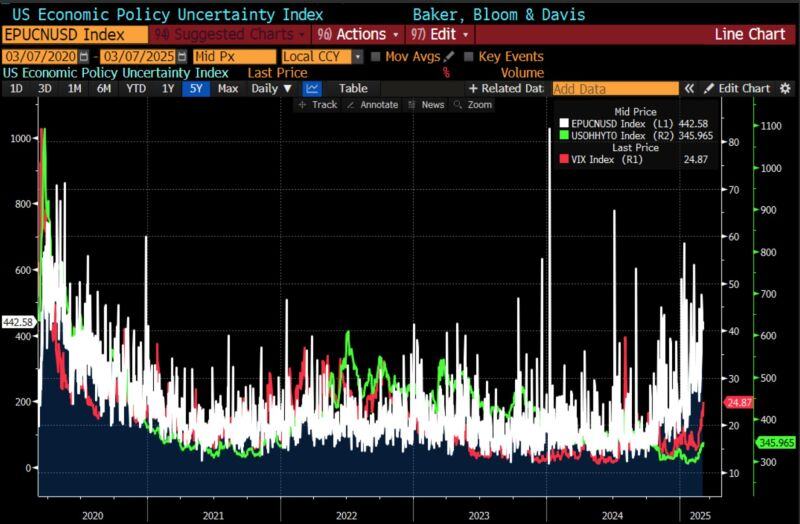
WATCH CREDIT SPREADS‼️
US high yield spreads (in green) are starting to tick up, but not to the extent of the Economic Uncertainty Index nor the Vix (in red). If credit weakens, then we know we are in trouble... Source: Bloomberg, RBC
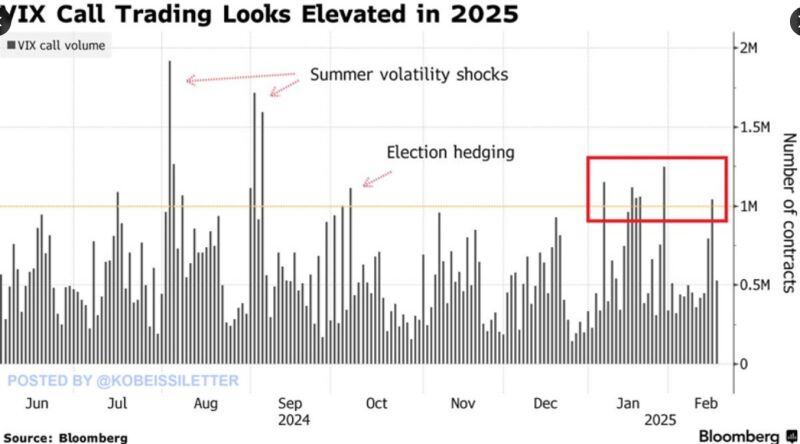
Call options volume on the volatility index, VIX, jumped above 1 million contracts on Tuesday for the 6th time this year.
Source : bloomberg
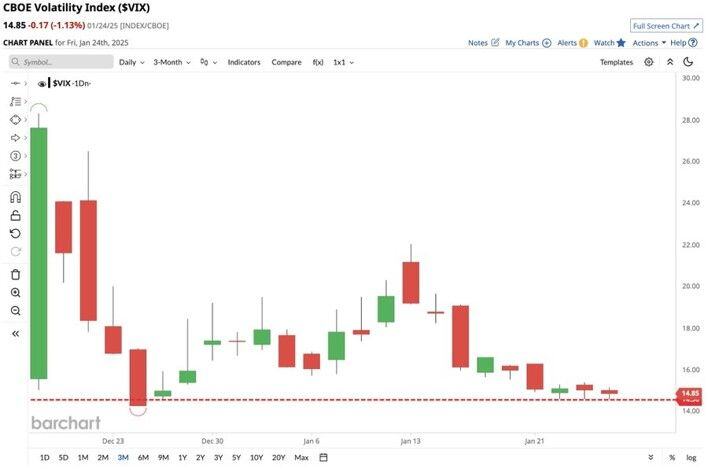
CBOE Volatility Index $VIX dropped to its lowest level this year, even with stocks declining on Friday
No fear left in the market except by Bears. Today might be another story… Source: Barchart
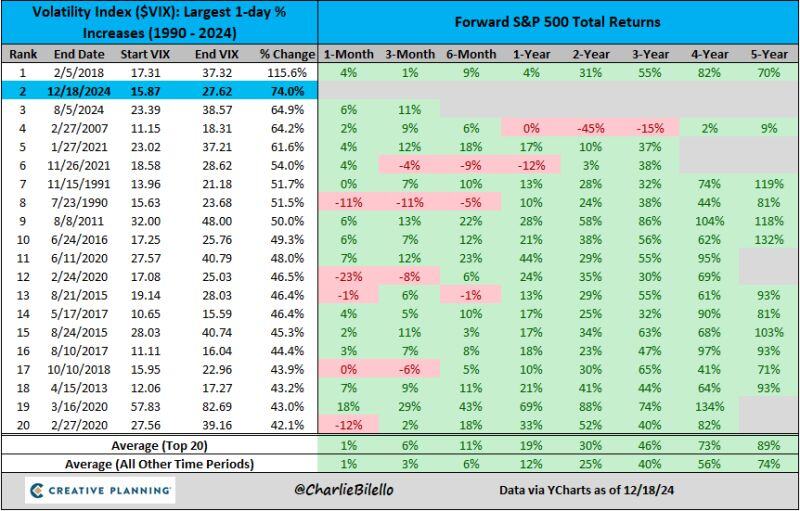
The $VIX spiked 74% higher yesterday, the 2nd biggest 1-day % increase in history
Volatility is back. Source Charlie Bilello
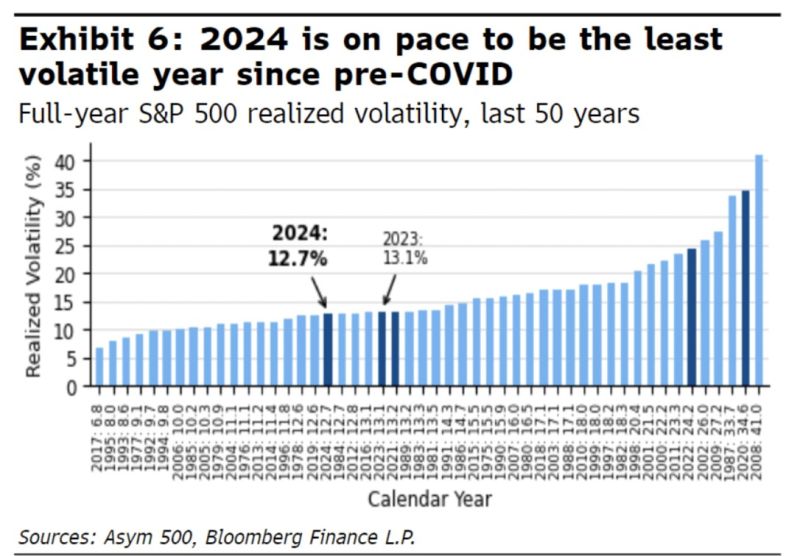
It has been a very quiet year... Can we expect the same in 2025???
Source: Asym 50, RBC
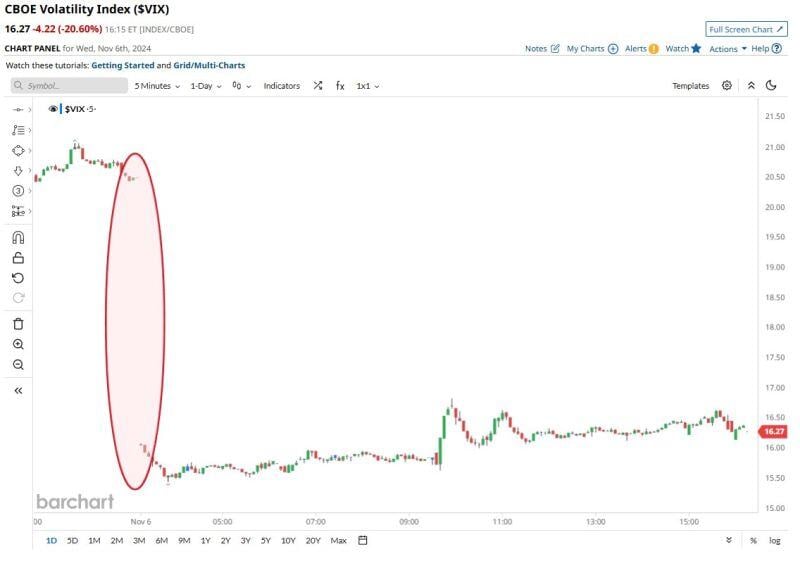
CBOE Volatility Index $VIX drops more than 20%, one of the largest declines in the last 2 decades
Source: Barchart
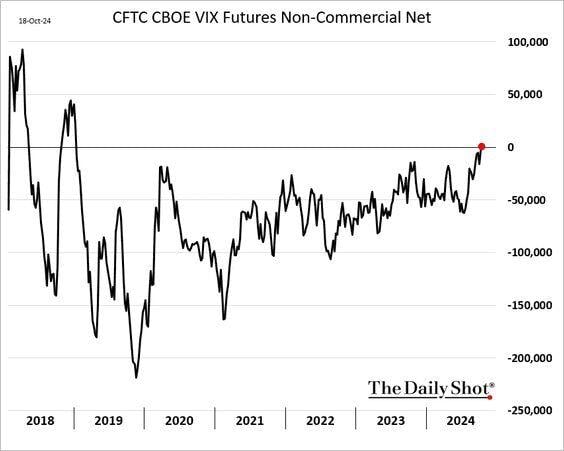
Hedge funds are net long VIX futures for the first time since 2019 ahead of the US elections.
Source: (((The Daily Shot))) @SoberLook
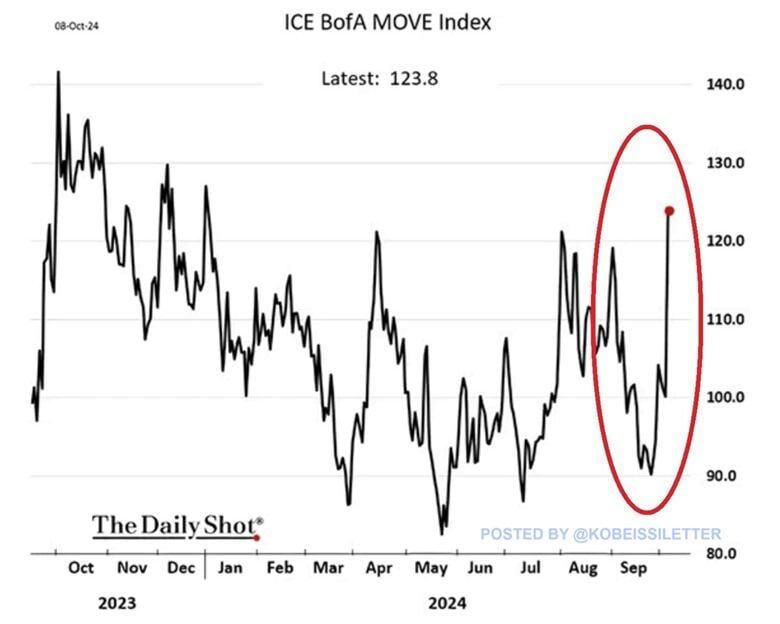
Bond market volatility is spiking:
The ICE BofA MOVE Index hit 123.8 points last week, the highest level since January. The MOVE index, also called the “VIX of bonds” is a metric measuring yield volatility of 2-year, 5-year, 10-year, and 30-year Treasuries. The index has skyrocketed 38% in just 3 weeks as yields started rising following the Fed's decision to cut rates by 50 bps. Over this period, the 10-year Treasury yield jumped from 3.64% to 4.10%. At the same time, the popular bond-tracking ETF, $TLT, fell by 6.8%. What happened to the "Fed pivot?" Source: The Kobeissi Letter, The Daily Shot