

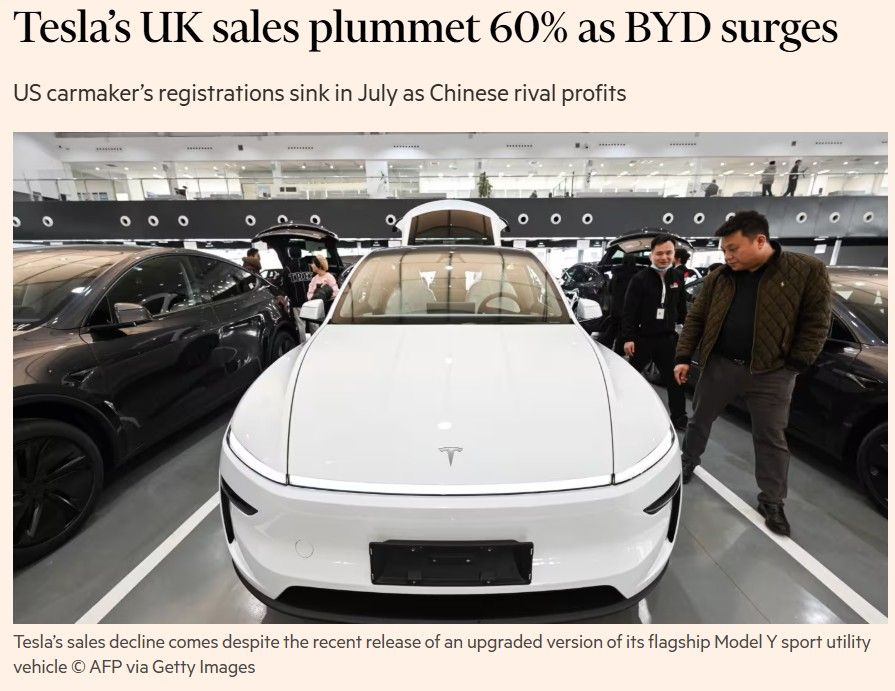
⚠️ Sales of Tesla’s electric vehicles plummeted 60 per cent in the UK last month amid a broader slump in European demand, with Chinese rival BYD surging.
➡️ There were 987 Tesla vehicles registered in July, compared with 2,462 in the same month last year, according to figures from the UK’s Society of Motor Manufacturers and Traders. Meanwhile, BYD registrations in the UK rose more than fourfold year on year to 3,184 in July, according to SMMT. ➡️ In July, Tesla registrations also fell 86 per cent to 163 vehicles in Sweden, 27 per cent to 1,307 cars in France and 58 per cent to 460 vehicles in Belgium, according to official industry data. ➡️The declines came despite the recent release of an upgraded version of its flagship Model Y sport utility vehicle. The slowdown comes amid consumer uncertainty over which models would be eligible for the government’s new EV subsidy scheme. Source: FT
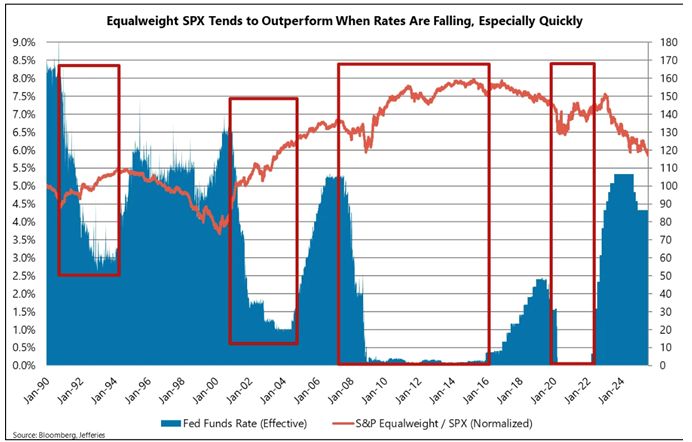
S&P Equal Weight has outperformed S&P Cap Weight during easing cycles
Source: Jefferies thru RBC
President Trump to announce new tariffs on Semis & Pharma - India tariff to rise "substantially" within 24 hours
President Donald Trump told CNBC’s “Squawk Box” that planned tariffs on pharmaceuticals imported into the U.S. could eventually reach up to 250%, the highest rate he has threatened so far. He said he will initially impose a “small tariff” on pharmaceuticals, but then in one year to a year and a half “maximum” he will raise that rate to 150% and then 250%. President Donald Trump said Tuesday he will unveil new tariffs on semiconductors and chips as soon as next week. “We’re going to be announcing on semiconductors and chips, which is a separate category, because we want them made in the United States,” Trump said during a lengthy interview on CNBC’s “Squawk Box.” Trump said that that announcement would come “within the next week or so.” Source: CNBC

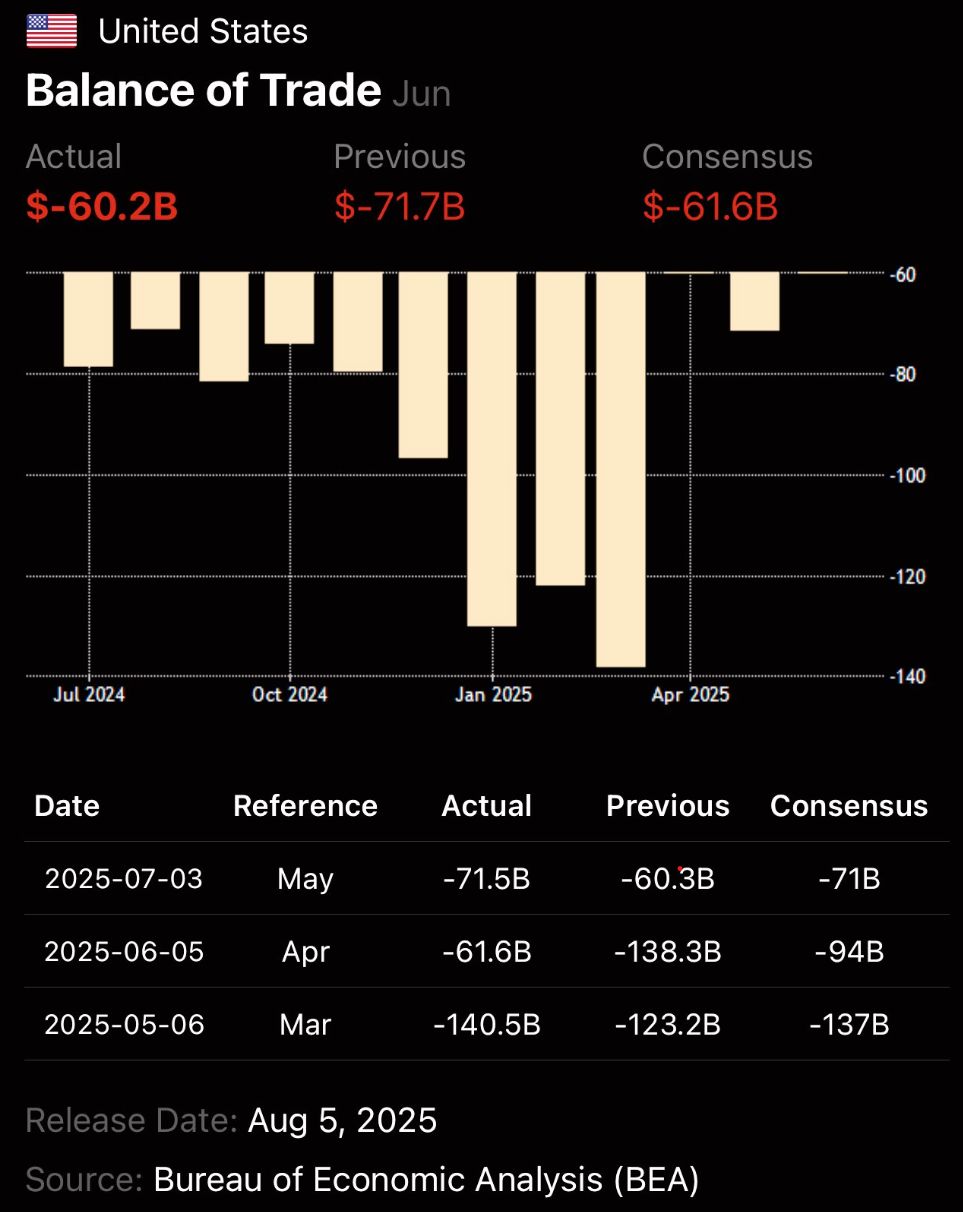
US Trade Deficit Plunges 16% in June to $60.2B – Lowest Since 2023!
Sharp import drop drives the narrowing, beating economist forecasts of ~$61-62B. Positive boost for GDP as net exports rise! Source: Andrea Lisi, CFA @Andrea_Texas_82, BEA
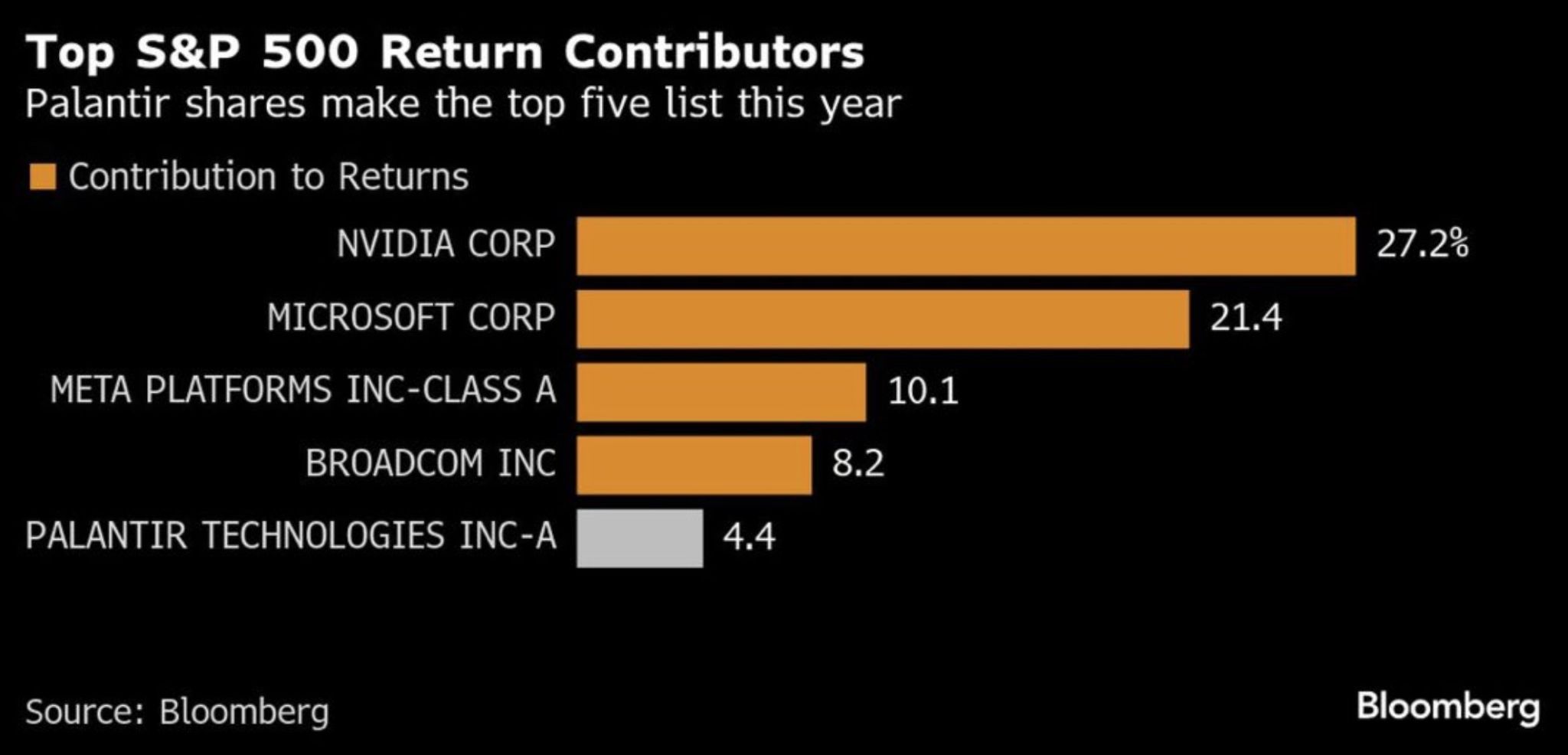
Nvidia & Microsoft alone account for almost half of sp500 $SPX returns this year
Source: Tatiana Darie, MLIV, Bloomberg thru Joumanna Bercetche
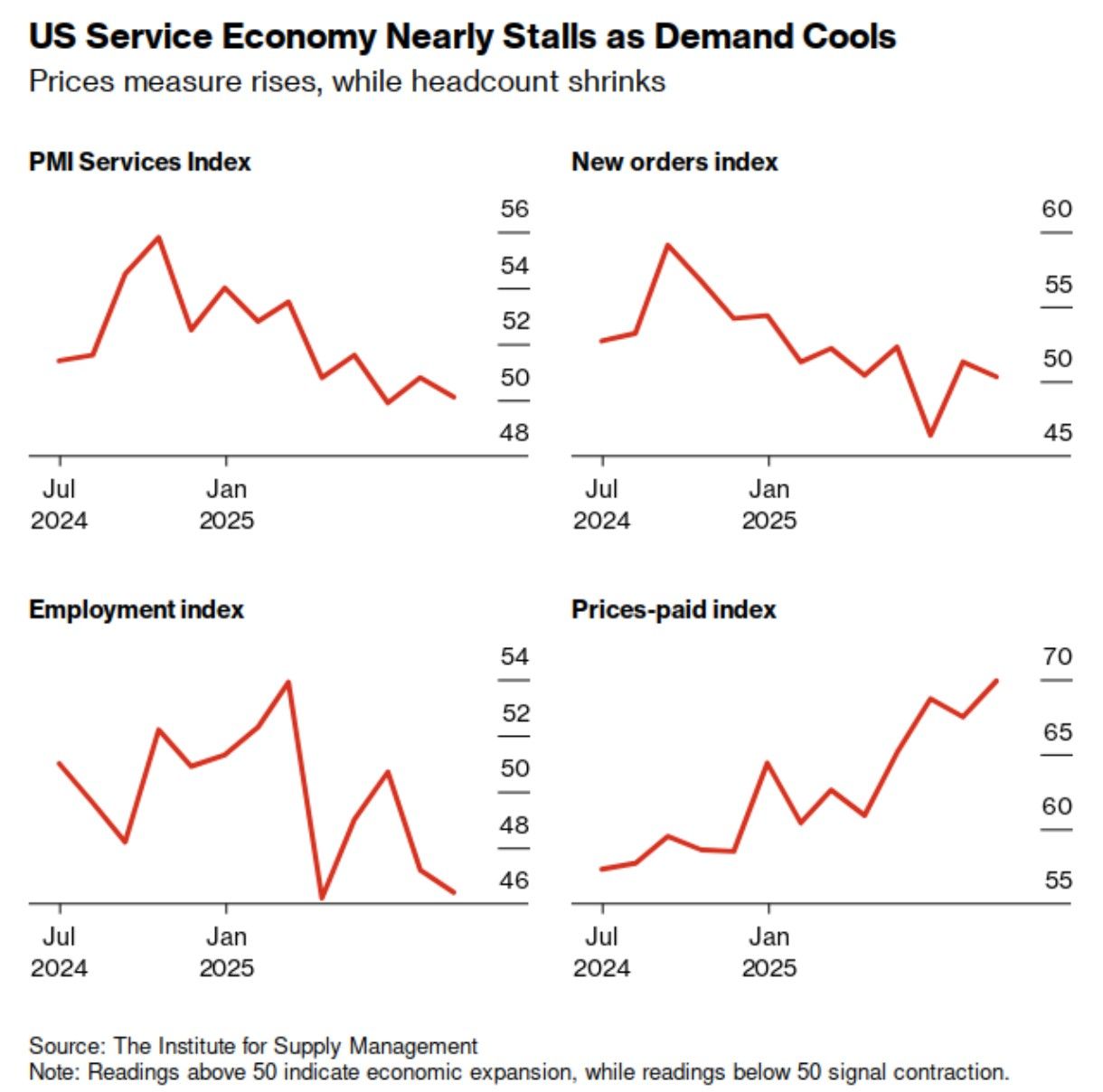
Nasty print on the US ISM services... sounds "stagflationary"
US ISM Services PMI Actual 50.1 (Forecast 51.5, Previous 50.8) US ISM Services Prices Paid Actual 69.9 (Forecast 66.5, Previous 67.5) US ISM Services Employment Actual 46.4 (Forecast -, Previous 47.2) US ISM Services New Orders Actual 50.3 (Forecast -, Previous 51.3) Source: ISM
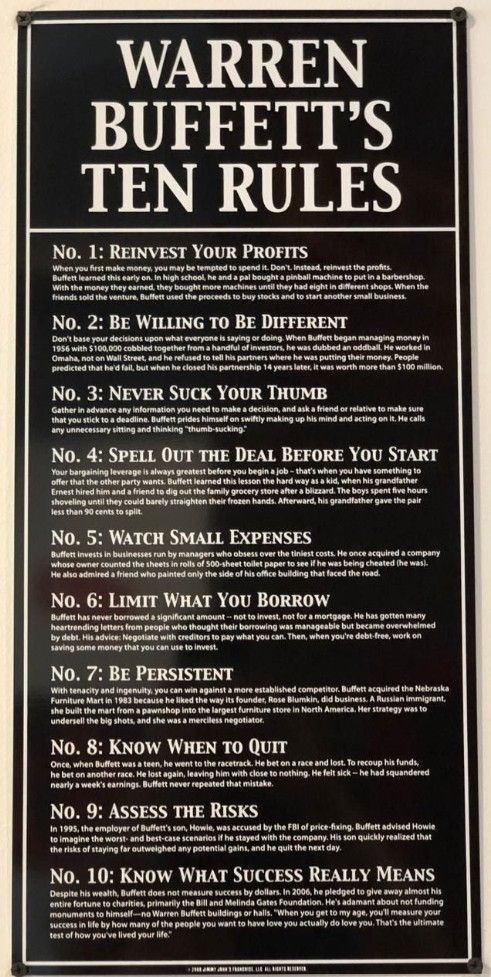
Buffett's 10 investing rules
Source: Invest In Assets @InvestInAssets
The Worst Investing Mistake
Source: Brian Feroldi