
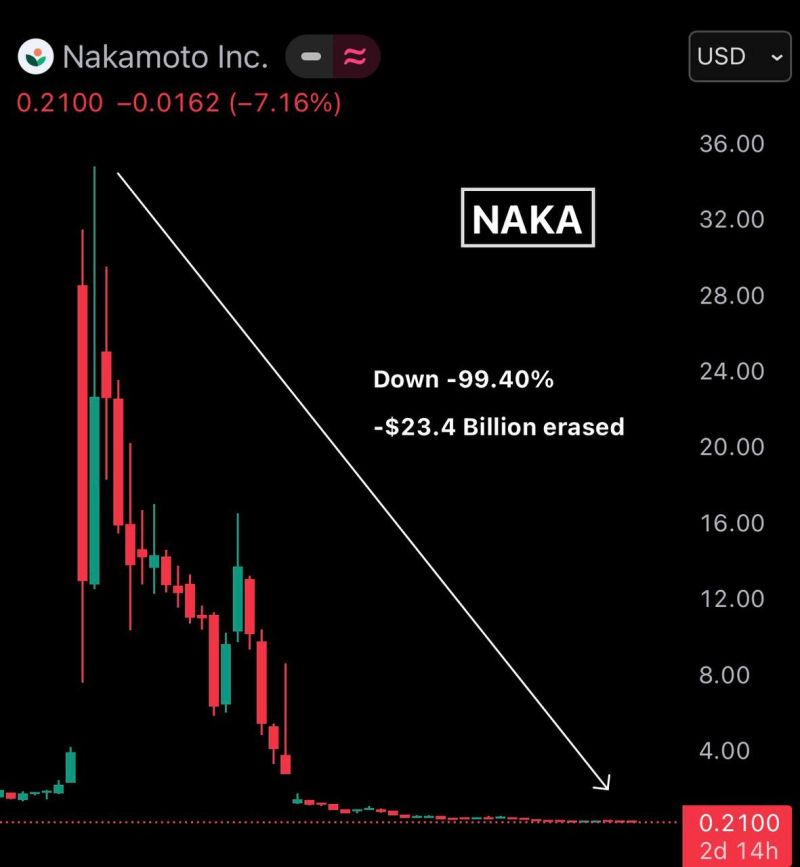
If you invested $1,000,000 in this company a year ago, Today you would have nearly $6,000.
A Bitcoin treasury company Nakamoto $NAKA crashed -99.30% in less than a year from its peak market cap of $24 billion to just $180 million erasing $23.3B in value. They company came under fire after the filing revealed that they just sold $20M worth of BTC at $70K which they bought at an average buying price of $118K, booking a -40% loss. The core issue is simple. Bitcoin is trading far below their cost basis, so the value of their treasury is shrinking while liabilities remain fixed. At the same time, the stock has collapsed below $1 for 30+ consecutive days, which directly triggers Nasdaq non compliance. If this is not fixed, the stock is expected to be delisted by 8 June 2026. Once delisted: liquidity drops → institutional access reduces → raising capital becomes extremely difficult. Source: Bull Theory
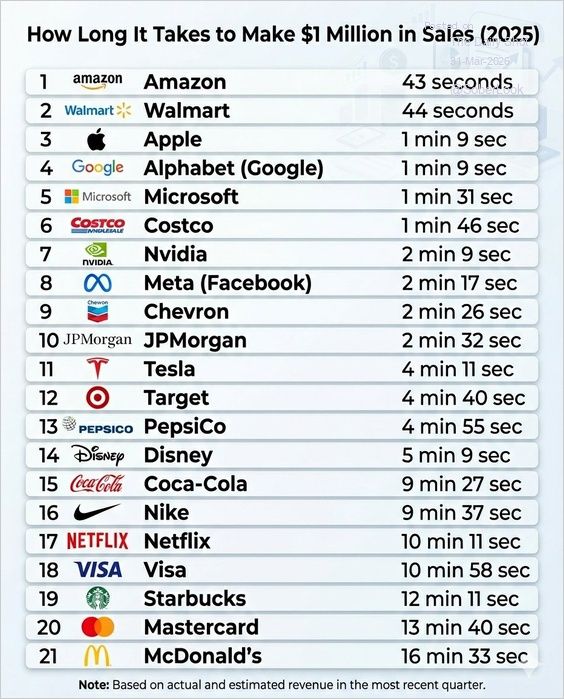
Kind of mind-boggling.
Source: Lance Roberts @LanceRoberts
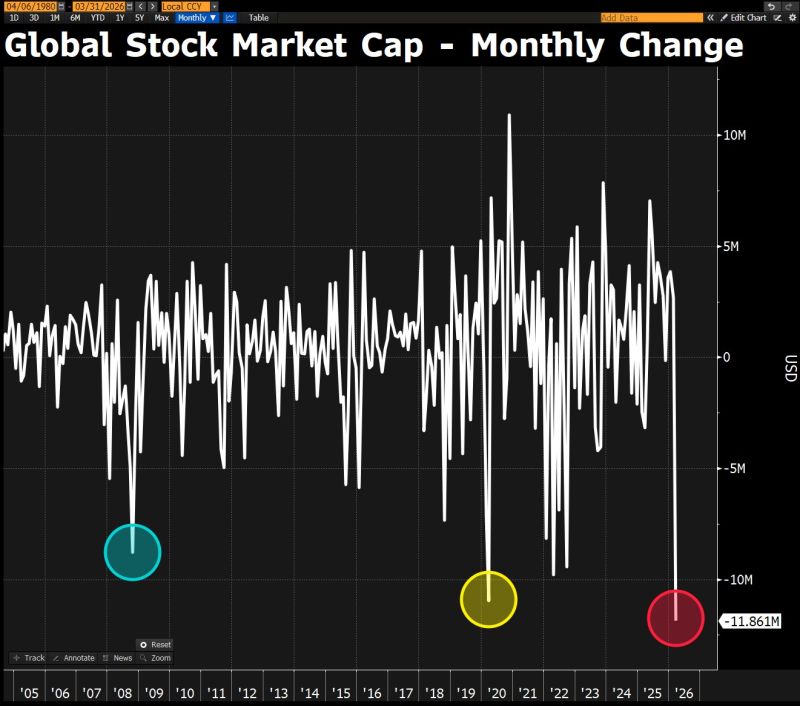
Global stocks lost $12 trillion in March, the single-largest value wipeout on record in a single month
(≠ to worst month on record; that's still Oct 2008, just that now the market is much much bigger) Source: Bloomberg, David Ingles @DavidInglesTV
Markets are rallying on the news that Trump said expects the U.S. military forces will leave Iran in “two or three weeks.”
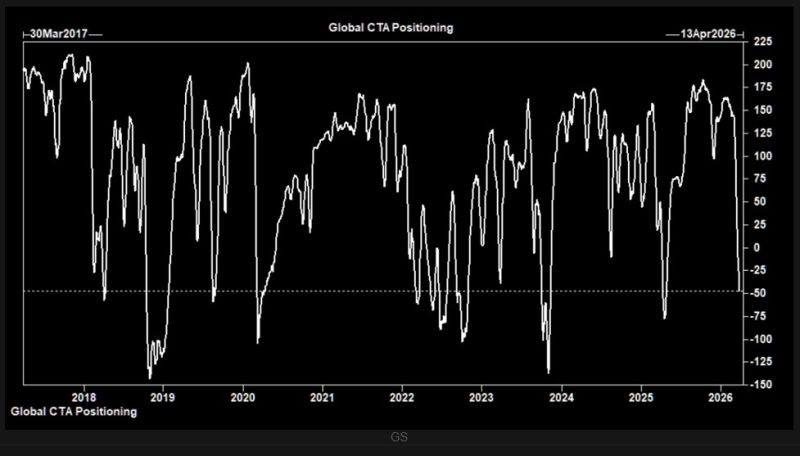
Still, it is difficult to say if this is the start of the true TACO trade. Indeed, it looks more like a brutal short squeeze. Over the last 2 weeks positioning has flipped rapidly. What began as a measured de-risking has accelerated into a full systematic unwind, with flows, gamma, and liquidity all reinforcing each other in the same direction. When positioning resets this aggressively, it rarely resolves cleanly. The next move is often dictated more by market mechanics than by fundamentals. And this is what took place yesterday. CTAs have swung from heavily long to decisively short in a very short time. Goldman Sachs estimates roughly $184bn of global equities have been sold over the past month, pushing positioning to a net short of around $47bn—approaching levels last seen during peak “Liberation Day” stress. Their projections suggest that upside now represents the largest convexity risk. We’ve seen this pattern before: sharp CTA reversals tend to be followed by meaningful market rebounds. From a geopolitical, macro and fundamentals perspectives, there are still many unknows: 1/ if the US leaves the region in 2 weeks, who will tale care of the Strait of Hormuz ? 2/ What will be the impacts on GDP and inflation? 3/ Will companies come with weaker guidance during Q1 reporting season? Source: GS, TME
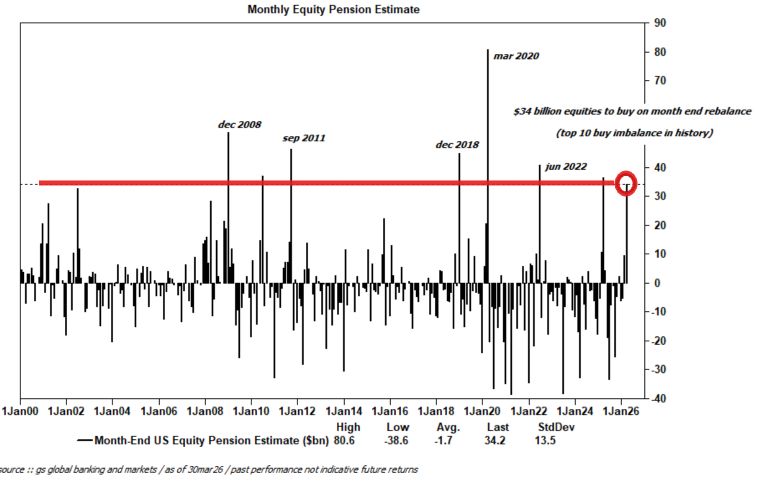
In considering Tuesday's rally, don't forget that the quarter-end pension rebalance was estimated by Goldman at $34bn, the 8th largest since 2000 and a top 10 buy imbalance in history.
$34bn to buy in equities ranks in the 94th percentile amongst all buy and sell estimates in absolute dollar value over the past three years and in the 96th percentile going back to Jan 2000. Source: Neil Sethi on X, Goldman Sachs
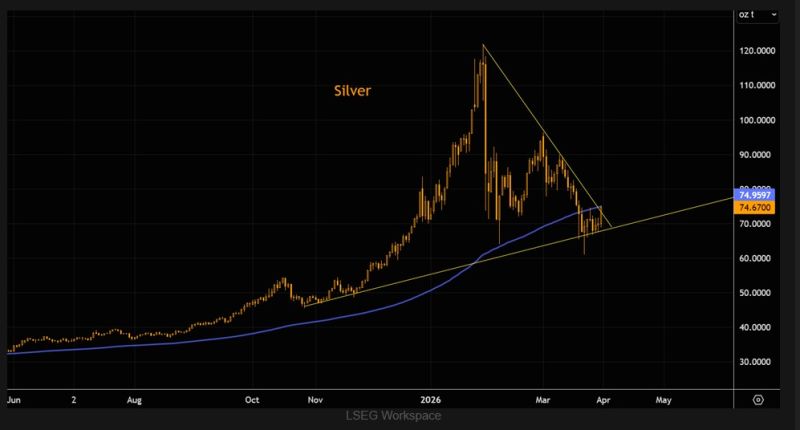
Silver printed a large hammer candle not long ago, marking a short-term flush. Since then, price has consolidated, and yesterday we saw the first “serious” upside candle in a while.
We’re now close to breaking above the downtrend line in place since the top, as well as the 100-day. Is silver about to turn sexy again? Source: TME
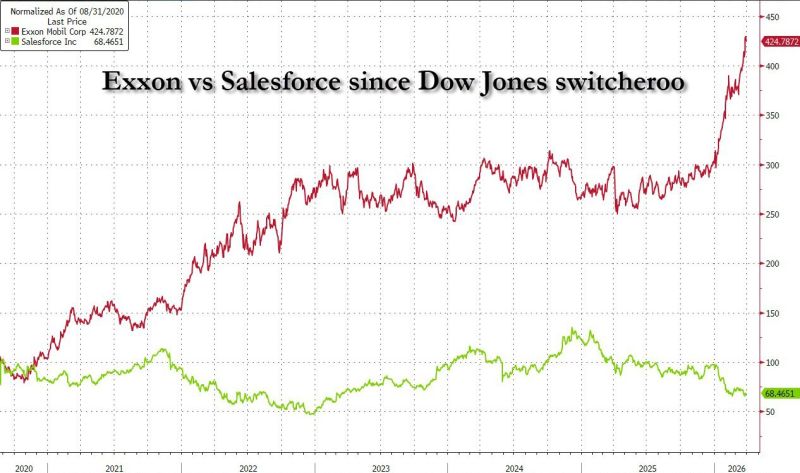
Since Exxon was kicked out of the Dow Jones "Industrial" Average and replaced by Salesforce in August 2020, Exxon is up 325%. Salesforce is down 32%
Source: zerohedge
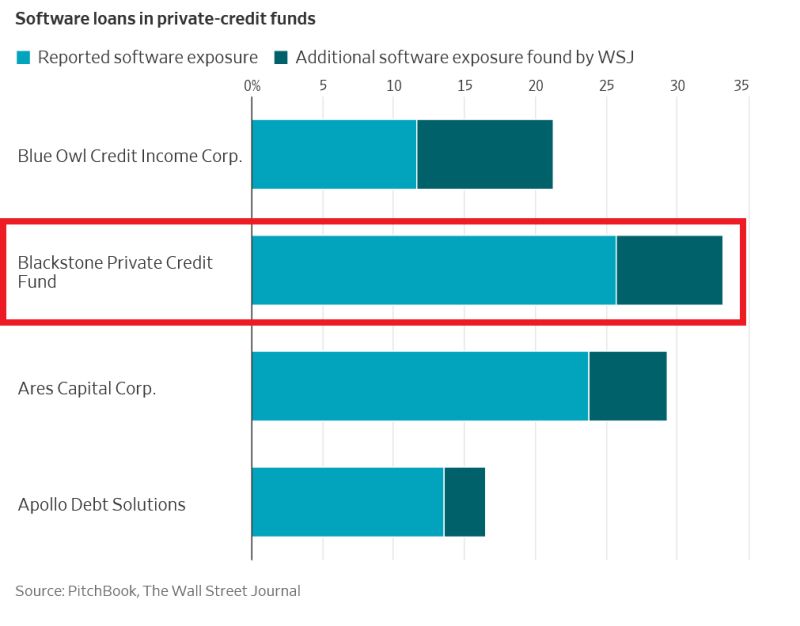
Private Credit’s Hidden Software Risk
Top private credit funds Apollo, Ares, Blackstone, and Blue Owl understate software exposure, averaging 25% vs. 19% reported. Blackstone leads at 33%, Blue Owl nearly doubles its reported share. Rising AI fears make this sector a key driver of record fund withdrawals, highlighting larger-than-expected risks. Source: Will Schryver, The Wall Street Journal, Global Markets Investor