
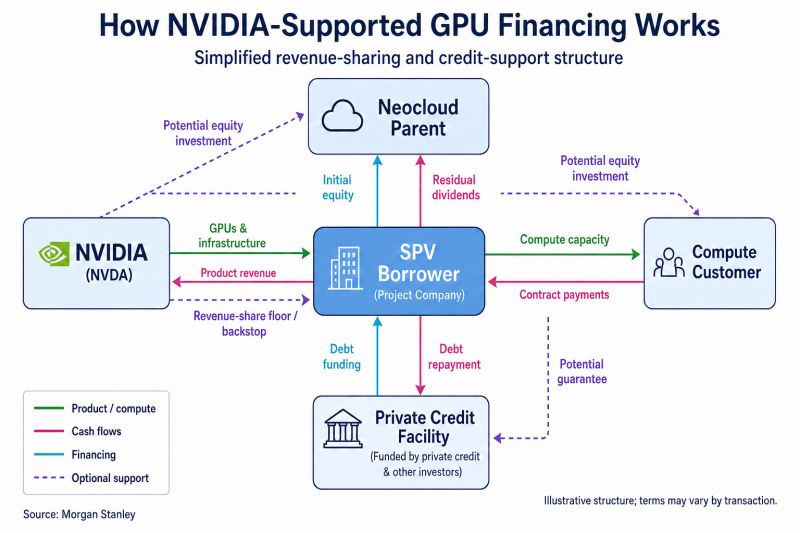
This is a Morgan Stanley schematic of how GPU purchases get financed off the neocloud parent's balance sheet, with NVIDIA supplying the credit enhancement that makes the debt financeable.
Here's how the AI buildout is actually being funded. 👇 A neocloud spins up an SPV. NVIDIA sells GPUs into it. Private credit funds it via a delayed-draw term loan. A compute customer signs a multi-year contract, and those payments fully amortize the debt. Clean. Ring-fenced. Off the parent's balance sheet. But look at the left side of the diagram. That's the part that matters. NVIDIA guarantees a revenue floor over the contract life — and takes revenue-share upside in return. Translation: lenders are no longer underwriting a leveraged neocloud's ability to re-lease depreciating silicon in 2030. They're underwriting NVIDIA's balance sheet. That single feature unlocks billions in private credit. Three things I'd watch: 🔁 Circularity. NVDA sells the chips, may hold equity in the buyer, may hold equity in the end customer, and now floors the revenue. Recognized revenue is increasingly supported by capital and guarantees that NVDA itself provides. That doesn't make the revenue fake, but it does mean revenue quality and the durability of demand are harder to assess from the income statement alone. 📉 Correlation. The floor commitment is an off-balance-sheet-style obligation whose value depends on compute pricing. It's cheap for NVDA in a tight market and expensive in a glut — precisely correlated with when NVDA's core business would also be deteriorating. Worth watching the disclosure in the commitments and contingencies footnote. 🏦 Risk location. The equity tranche is thin and held by neocloud parents; the debt is held by private credit funds and, increasingly, securitized. If utilization or pricing disappoints, first-loss hits neocloud equity, and NVDA's floor is what stands between private credit and impairment. It's the vendor-financing pattern from telecom in 1999-2000, though with a genuinely different feature: the offtake contracts here are largely signed with investment-grade counterparties before the capital is drawn, which was not true of the fiber build. Source: Morgan Stanley Research
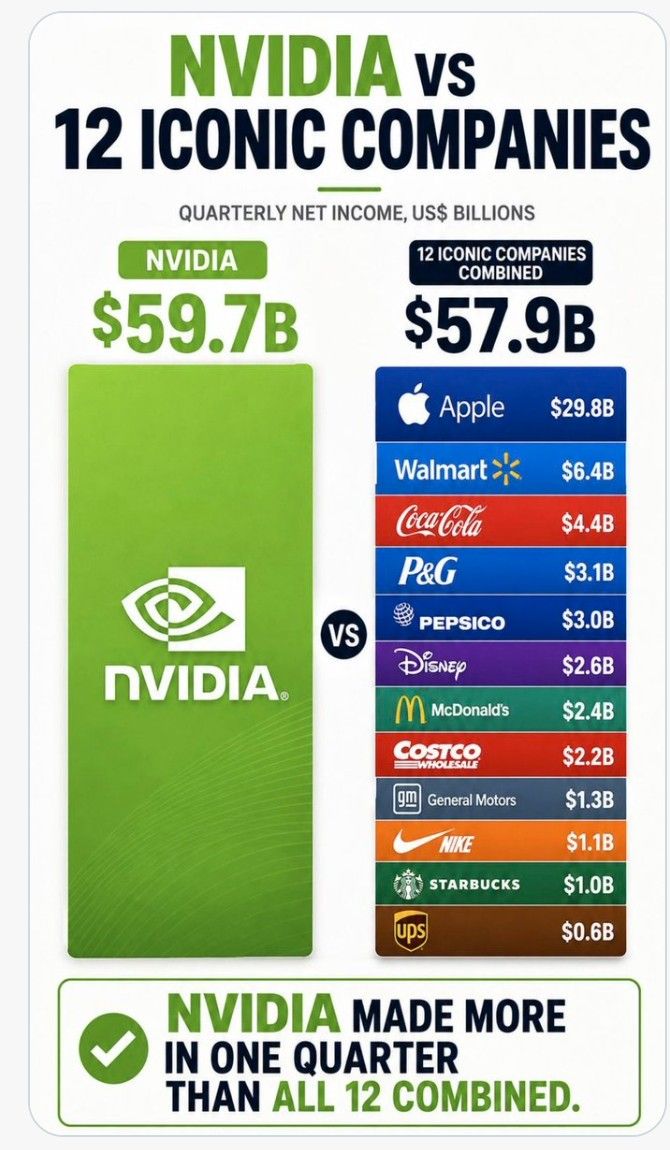
$NVDA now earns more in a single quarter than 12 of America’s most iconic companies combined.
That's what happens when one company becomes the core infrastructure layer behind the fastest capital spending cycle in tech history. Source: @StockSavvyShay
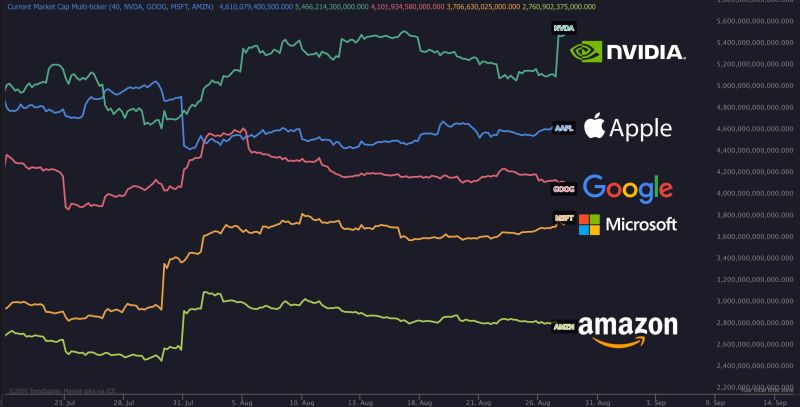
Nvidia $NVDA has now added close to $500 BILLION in market cap in a single session.
This is the largest jump in valuation in 1 day by any company, ever. For comparison, Nvidia $NVDA has added more in valuation in the last 24 hours than the entire value of Costco $COST Source: Trend Spider
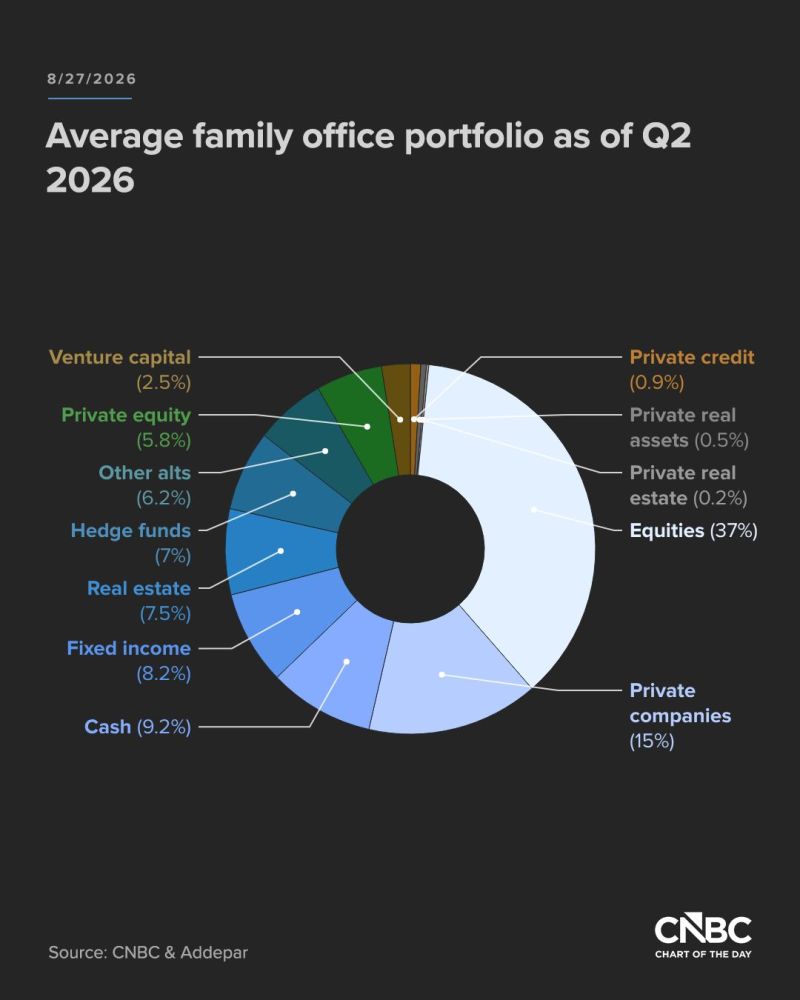
Family offices boosted their stock holdings in the second quarter and trimmed their exposure to real estate and private market investments
According to the latest CNBC Family Office Portfolio Tracker. Single family offices held 37% of their portfolios in stocks in the second quarter, up from 34% in the first quarter, according to the CNBC Portfolio Tracker powered by Addepar, the foundational data and artificial intelligence platform used by financial professionals globally. Source: CNBC
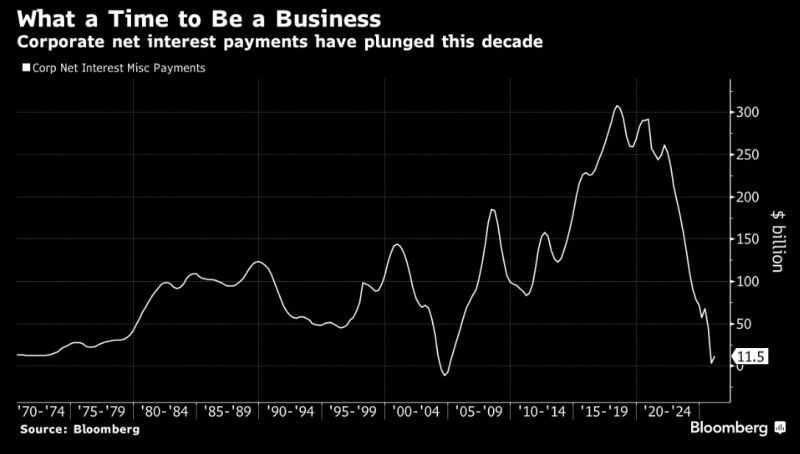
U.S. corporate net interest payments have plunged to the lowest in decades
Source. Bloomberg, Hedgeye
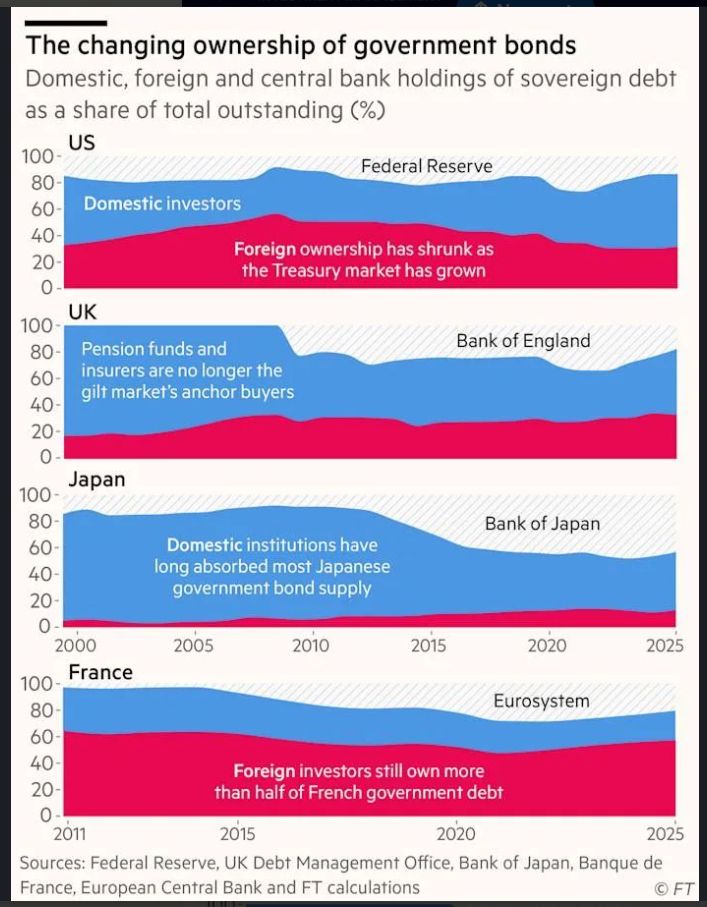
A great chart by FT on the changing ownership of government bonds. France may be the European bond market to watch!
Indeed, in light of 2027 Presidential election. foreign investors could trigger the next phase of France’s sovereign downgrade Despite repeatedly breaching EU debt and deficit limits, non-resident investors still held a striking 57% of French government debt at the end of 2025. France also benefits from the perceived safety net of the European Central Bank, with markets broadly assuming that the ECB would intervene in the event of a severe bond-market crisis. But the 2027 presidential election could put both foreign investor confidence and that ECB backstop to the test. Source: Financial Times, Christophe BESSON
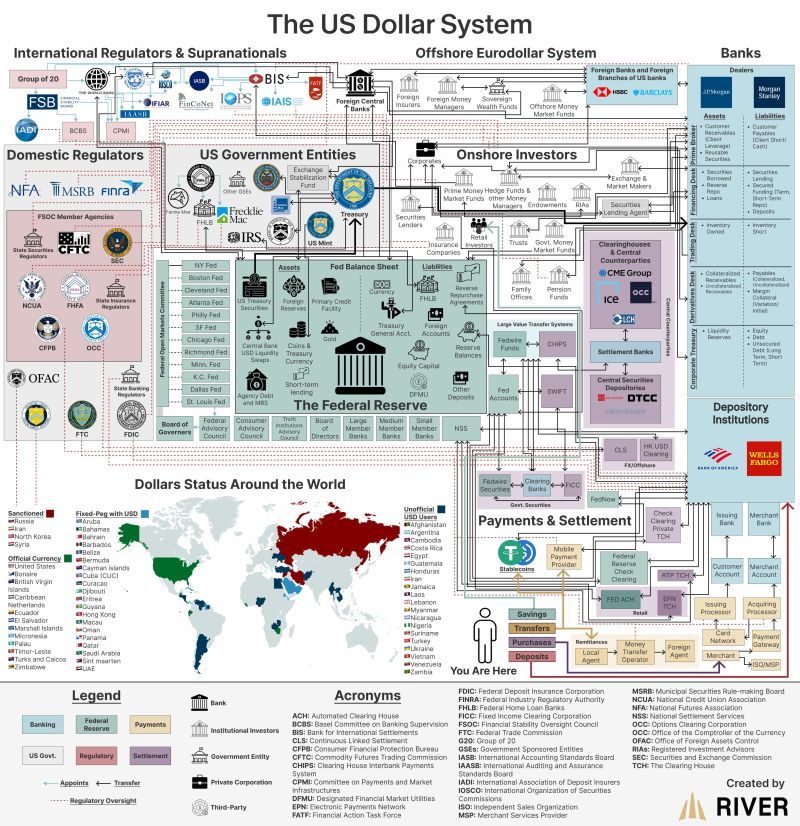
"I only invest in what I fully understand."
Meanwhile, the U.S. Dollar 👇 Source: Bitcoin archive
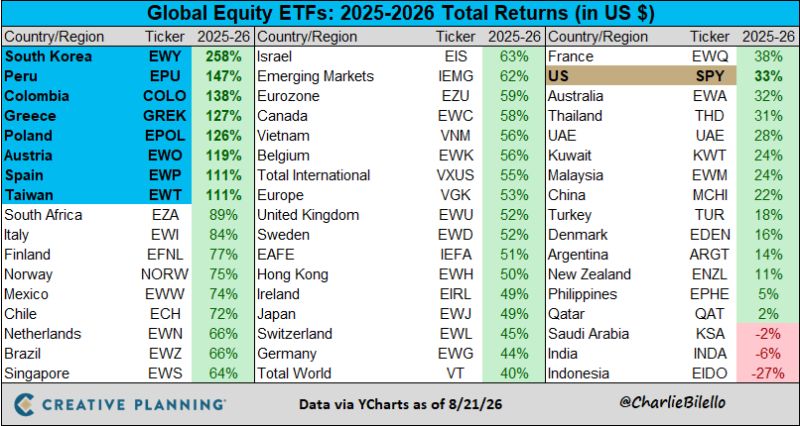
The S&P 500 is up 33% since the start of 2025.
South Korea: +258% Peru: +147% Colombia: +138% Greece: +127% You never know where the next big winner will be. That’s why you diversify. Source: Peter Mallouk Charlie Bilello