

SpaceX has agreed to acquire Cursor, the world's fastest growing software startup, for $60 billion in an all stock deal.
Who is Cursor? It is an AI-powered code editor and software development agent that acts as an "AI copilot" for programmers. Founded in 2022 by Anysphere, it features deep integrations with models like GPT-4, Claude, and xAI, allowing users to write, debug, and auto-complete code using natural language instructions Cursor has over 1 million paying customers, more than $2 billion in annualized revenue, and is projected to hit $6 billion by end of 2026. At $60 billion, this is the largest software acquisition in history, paying 20 to 30 times Cursor's current revenue. The deal is subject to regulatory approval and expected to close in Q3 2026. SpaceX now owns the rockets, the satellites, the AI models, the chips, and is about to own the tool every developer on earth uses to write code. Source: Bull Theory
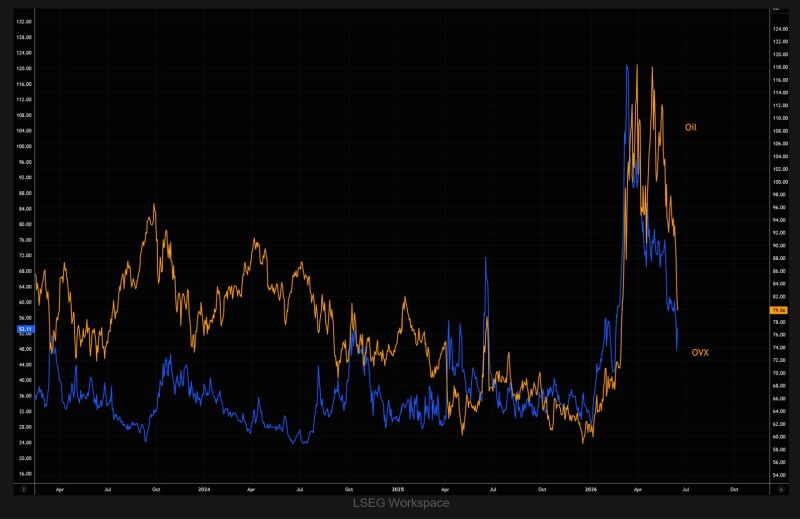
OVX (the VIX equivalent for Oil) has almost completely round-tripped the war spike, trading back near pre-conflict levels.
Markets have aggressively removed geopolitical risk premium, even though the region remains far from calm. Volatility is not screamingly cheap, but it offers a relatively inexpensive way to express a directional oil view or simply own gamma should tensions escalate again Source: TME
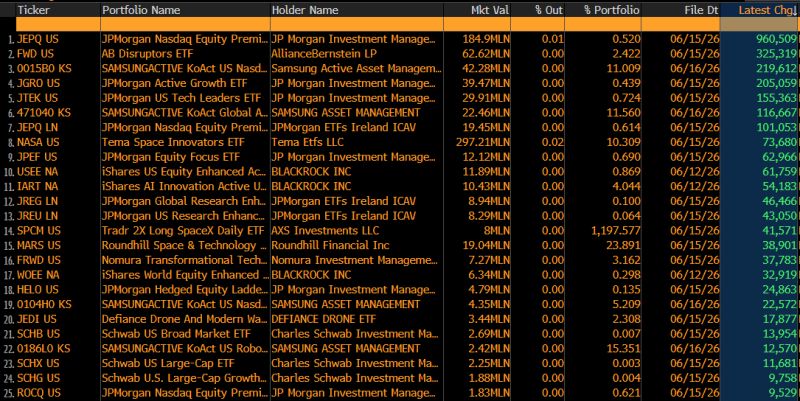
The number of ETFs that held SpaceX went from 4 to 40 to now 120 in a couple days (few billion total).
These are all active ETFs choosing to buy, not indexes (they coming later). Here's a look at the list sorted by new buy, $JEPQ (the 2nd largest active ETF in world) at the top. Looks like a lot of JPM funds bought. Source: Eric Balchunas, Bloomberg
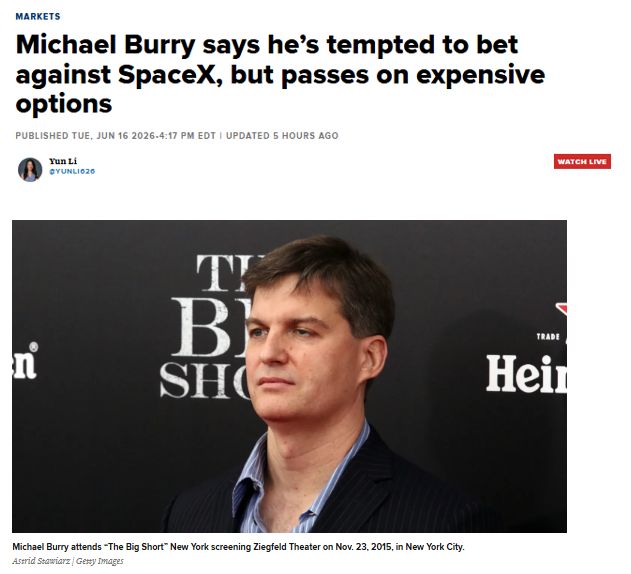
Michael Burry wants to short SpaceX $SPCX, but the options are too expensive
Source: Yun Li
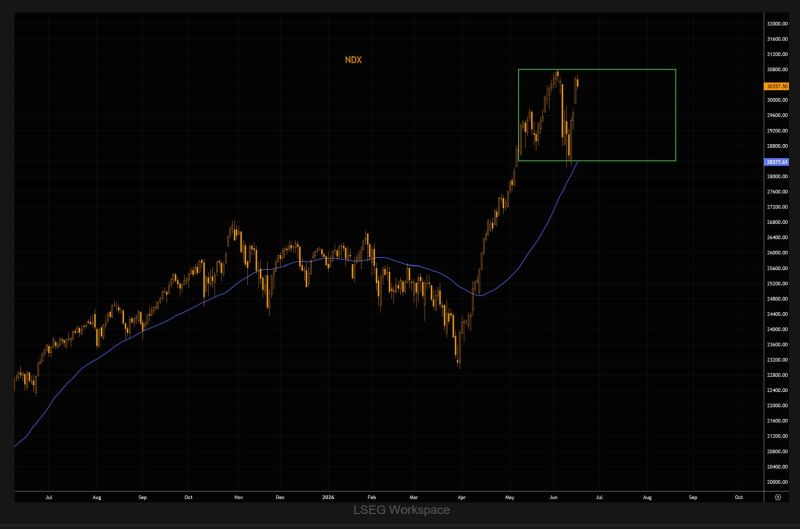
NASDAQ bounced on range lows and the 50-day moving average, only to reverse near range highs.
Massive moves, but no new direction. In a market like this, chasing breakouts has been one of the most expensive trades around. Source: TME
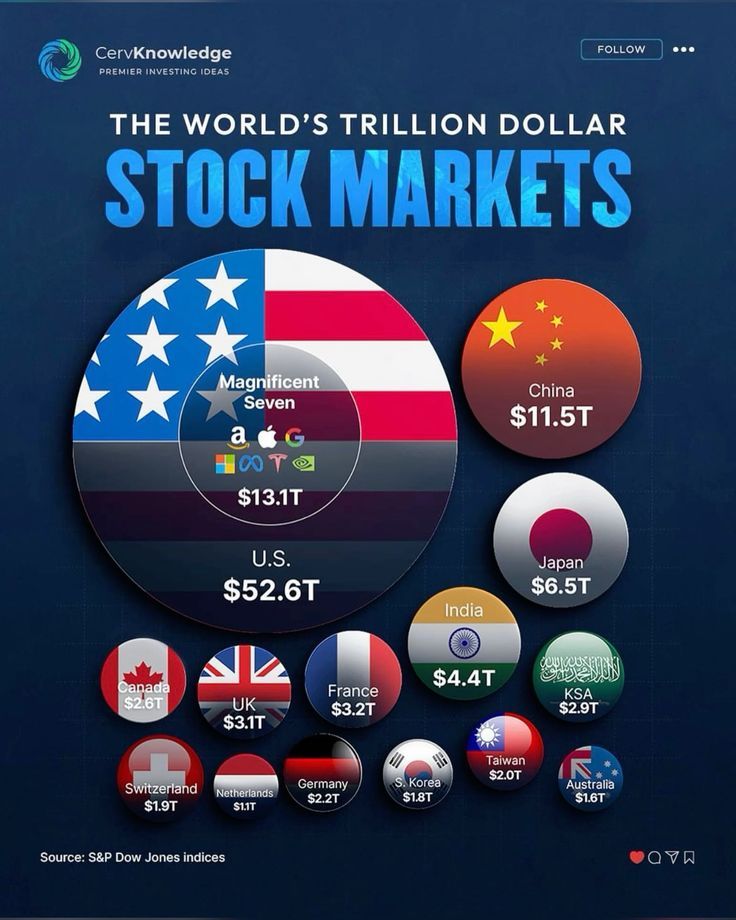
The World's Trillion Dollar Stock Markets
🇺🇸 U.S. — $52.6T 🇨🇳 China — $11.5T 🇯🇵 Japan — $6.5T 🇮🇳 India — $4.4T 🇫🇷 France — $3.2T 🇬🇧 UK — $3.1T 🇸🇦 KSA — $2.9T 🇨🇦 Canada — $2.6T 🇩🇪 Germany — $2.2T 🇹🇼 Taiwan — $2.0T Source: The Market Mind @Market_Mind_
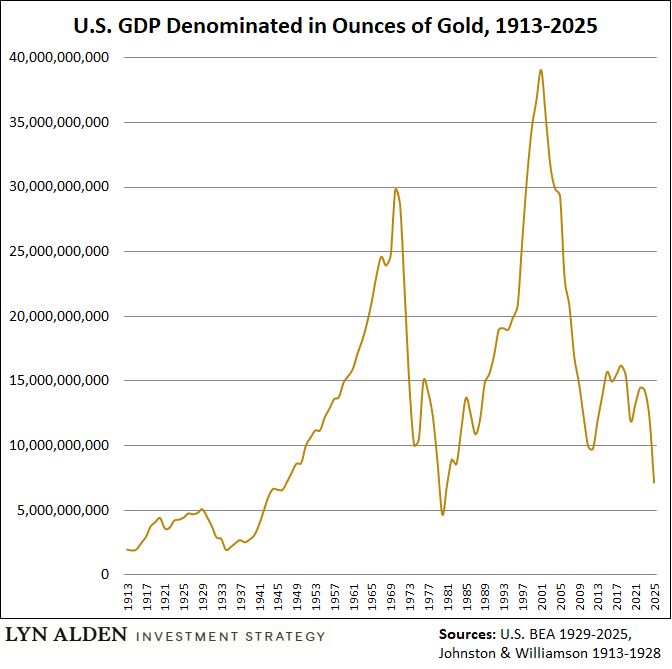
If you denominate US GDP in gold instead of dollars, the chart is wild.
Source: Lyn Alden
The U.S. Department of Justice (DOJ) has intervened in a lawsuit against Elon Musk's AI company, xAI, arguing that its Colossus 2 data center is critical to U.S. national security.
The NAACP sued xAI in April 2026 under the Clean Air Act, alleging the company was operating gas turbines without the necessary permits to power its AI facility. The turbines are located in Southaven, Mississippi, near the data center in Memphis, Tennessee. According to the lawsuit, the number of turbines has increased from 27 to 57 since the case was filed. xAI maintains that the turbines are exempt from Mississippi permitting requirements because they are mounted on trailers and classified as temporary mobile equipment. On Monday, the DOJ filed court documents arguing that shutting down the turbines could harm U.S. national, economic, and energy security. The department stated that the facility supports military AI capabilities. A declaration from the Defense Department's Chief Digital and AI Officer, Cameron Stanley, said Grok is one of only four AI models approved for mission-critical use on classified U.S. government networks and has been utilized in recent military operations involving Iran. The DOJ, xAI, and the State of Mississippi are jointly seeking dismissal of the lawsuit. Source: Bull Theory