
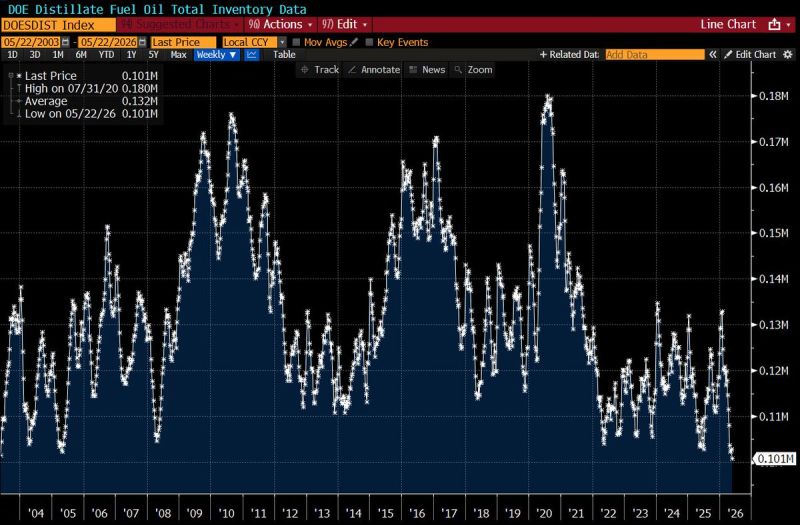
U.S. distillate fuel inventories fall to the lowest level since 2003
Source: Bloomberg, Hedgeye
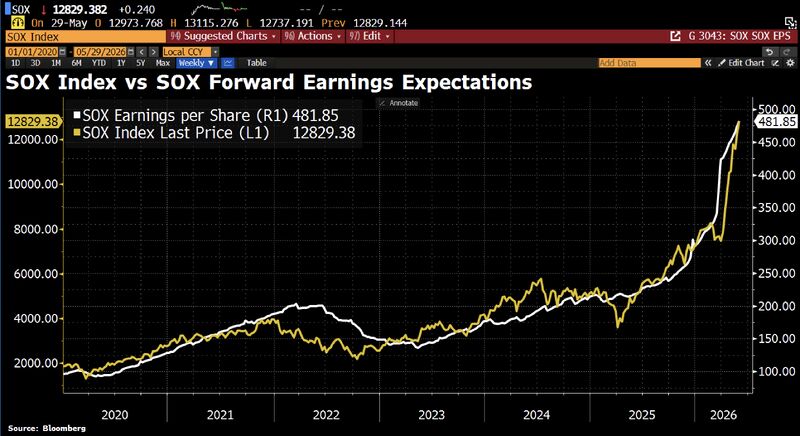
One of the most striking charts out there: the SOX index has risen sixfold since 2020, while SOX earnings per share have climbed fivefold.
In other words, most of the rally has been backed by real earnings growth, not just higher valuations. The key question now is whether these profits will actually come through and whether they can keep rising. (HT Goldman Sachs) Source: HolgerZ, Bloomberg
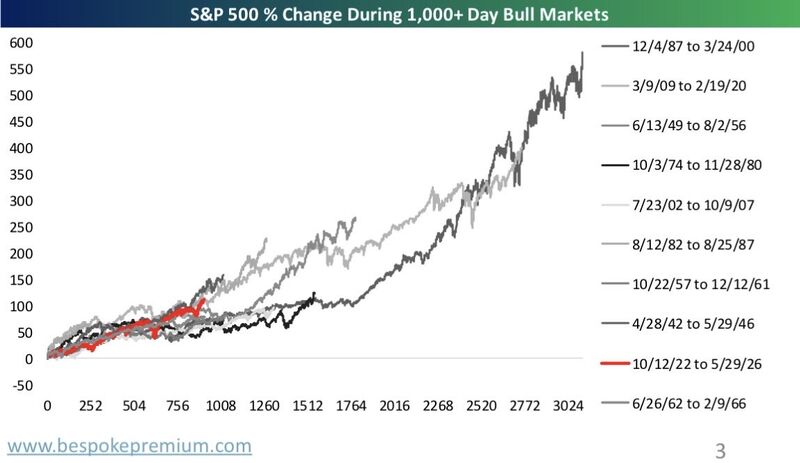
Here’s the current bull market (red line) charted against the nine other bulls since 1928 that lasted 1,000+ days:
Source: Bespoke
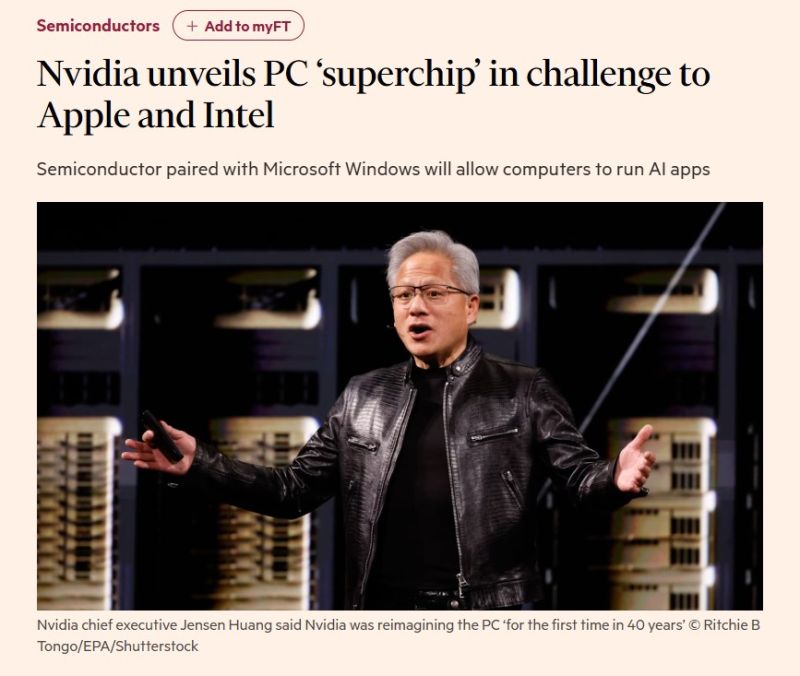
Nvidia will launch a PC “superchip” this year as the semiconductor giant goes head-to-head with Apple, Qualcomm, Intel and AMD for the first time.
Computer makers including Dell, Asus and HP will use what Nvidia claims is “the most efficient PC chip ever built”, paired with Microsoft’s Windows software, Nvidia chief executive Jensen Huang announced on Monday. The launch marks a major competitive shift in the consumer PC industry and a new business line for $5.1tn Nvidia. The company, best known for its dominance of semiconductors for AI infrastructure, is pushing beyond its traditional graphics cards into integrated chips that power the whole PC. Lenovo, Microsoft, Acer and Taiwan’s MSI will also use the product. Source: FT
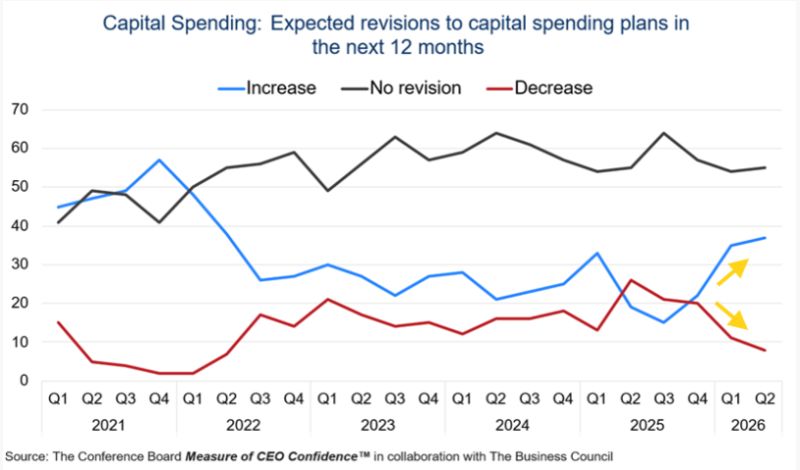
The pullback in CEO confidence hasn't shown up in capex intentions though.
“Planned business investment stayed the course in Q2, as most CEOs cited no revisions to capital investment plans. However, the share anticipating increases to capital spending plans in the next 12 months rose further, while fewer CEOs expect to reduce capex compared to Q1." Source: Neil Sethi
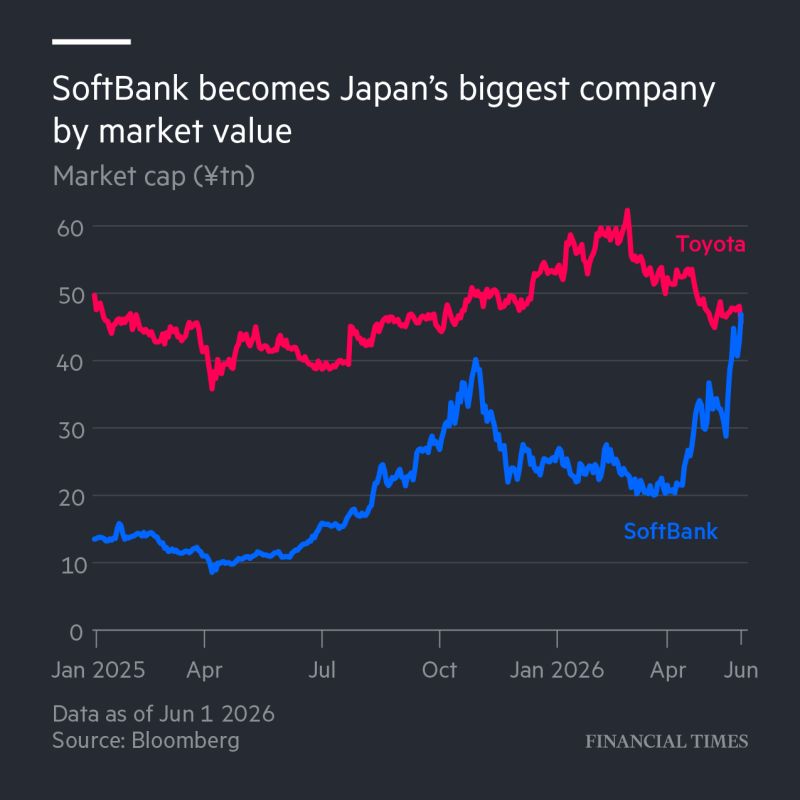
Tech giant SoftBank is up nearly 73% so far this year
AI demand powered the country’s stocks to an all-time high and helped Masayoshi Son’s company dethrone Toyota after more than 20 years at the top. Source: FT
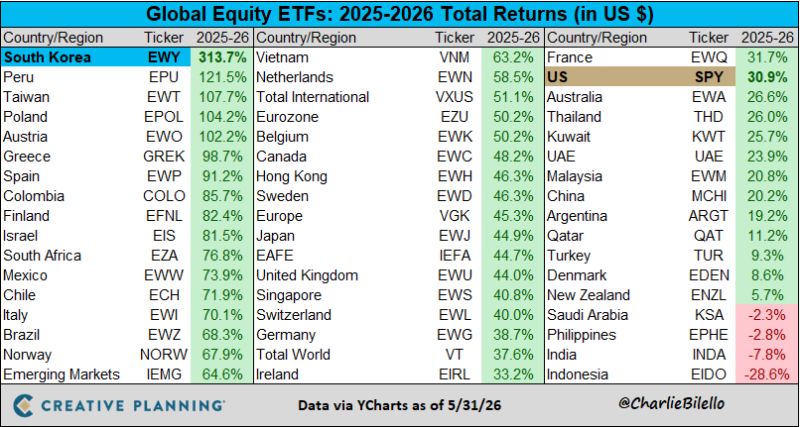
South Korean stocks have more than quadrupled over the last 17 months, trouncing every other country.
The reason? 2 South Korean companies in the AI memory space, both of which now have a market cap above $1 trillion: SK Hynix & Samsung. Source: Charlie Bilello
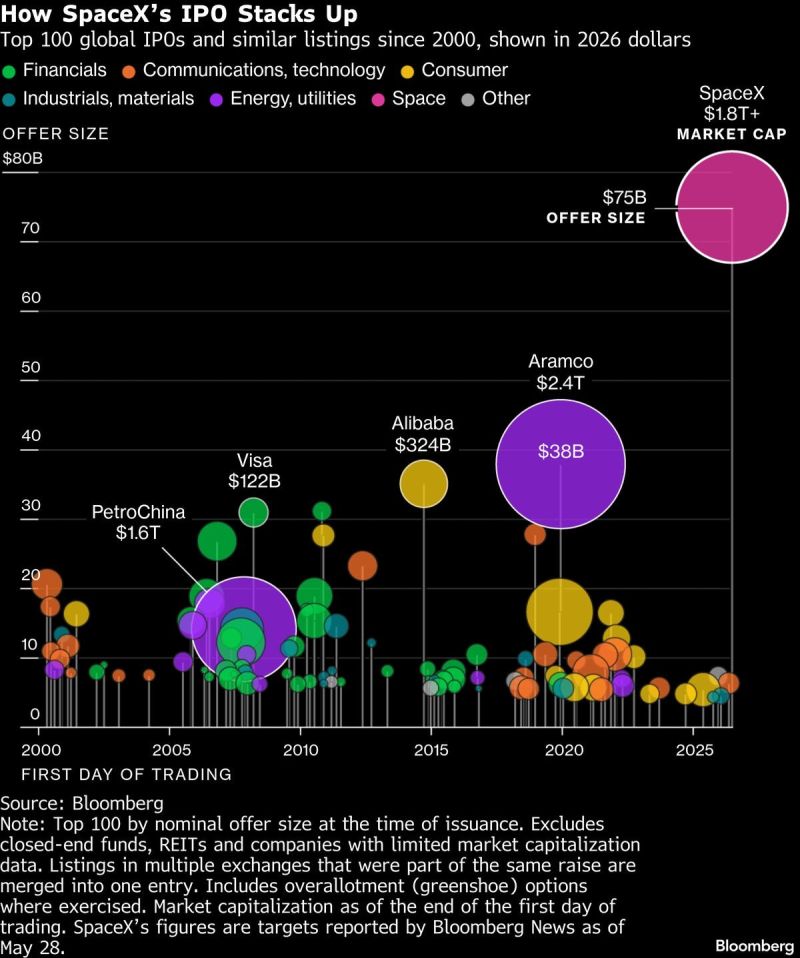
SpaceX sized up against the other biggest IPOs ever. $75B offering at a $1.8T valuation, dwarfing the next largest offerings sizes.
Source: Negligible Capital Bloomberg