

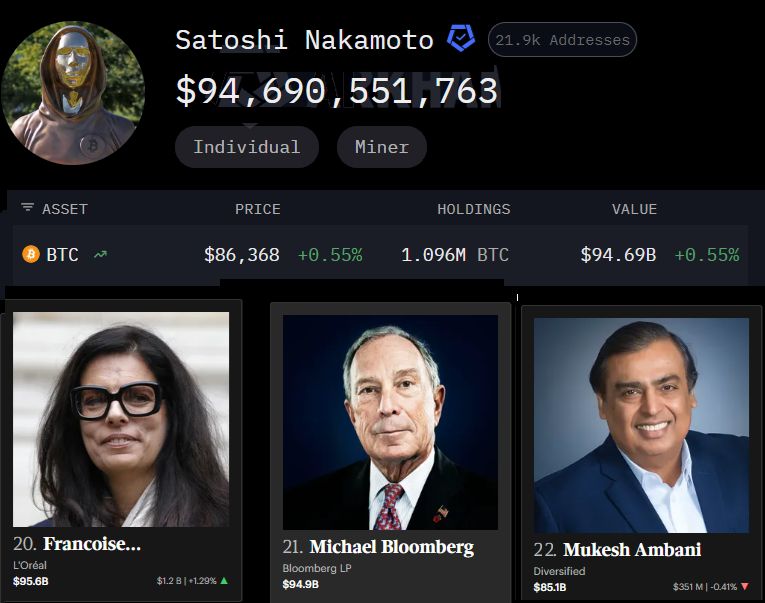
Satoshi Nakamoto enters the top 22 wealthiest people on Earth.
Source: Bitcoin Archive
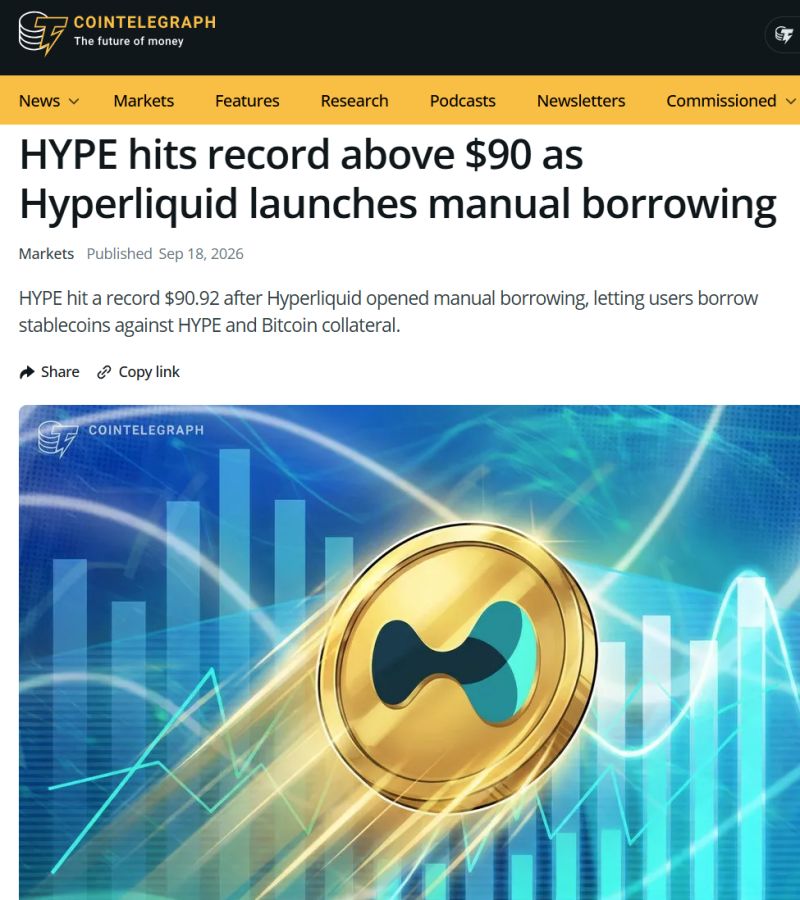
HYPE, the native cryptocurrency of the Hyperliquid layer-1 blockchain and decentralized trading platform, set a fresh all-time high above $90 on Friday as the protocol rolled out manual borrowing.
HYPE surged as high as $90.92 shortly after Hyperliquid announced users can now supply HYPE and Bitcoin as collateral to borrow the stablecoins USDC and Tether’s USDt (USDT). “Manual borrows are live on Hyperliquid,” the protocol said, adding that the feature and its portfolio-margin system use the same underlying HyperCore infrastructure. Hyperliquid co-founder Jeff Yan said the design means every borrowed asset comes from a supplier rather than being created through platform-level margin accounting. Source: cointelegraph
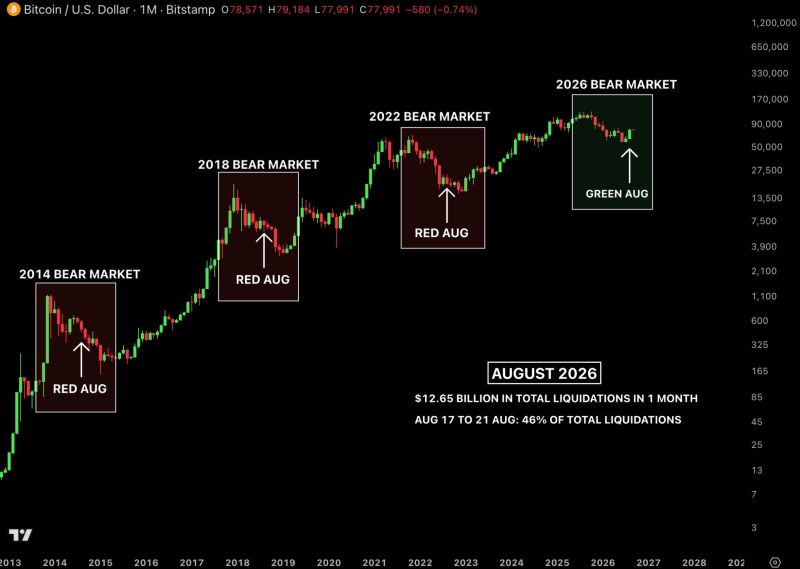
Bitcoin has just delivered its first positive August during a bear market.
BTC gained 25.1% over the month, climbing from $62,794 to $78,545. It was Bitcoin’s third-best August on record, with the price surging as much as 30% from its monthly low to high. The fuel behind the rally? A brutal short squeeze. Between August 17 and 21, traders suffered $5.8 billion in liquidations. August 19 alone accounted for $2.7 billion in short liquidations—the largest single-day short wipeout on record. Total liquidations for the month reached $12.65 billion. But history now offers a warning: whenever Bitcoin has closed both July and August in positive territory, September has finished in the red. Momentum is powerful. Seasonality says caution. September could be the real test. Source: Bull Theory
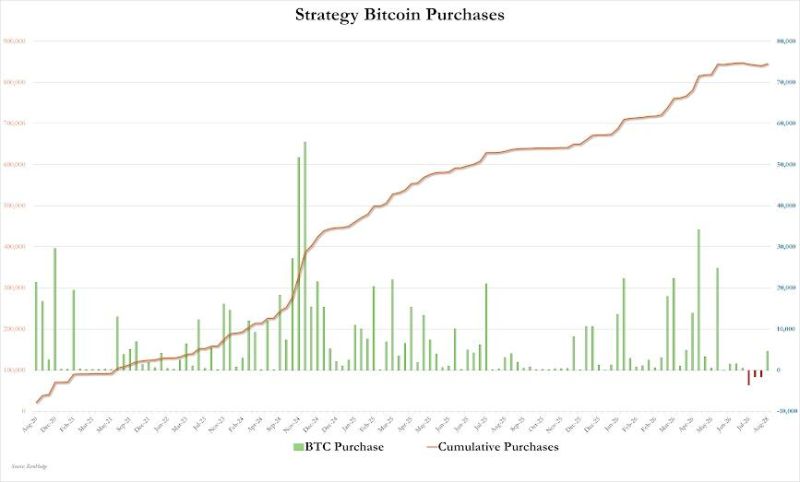
Strategy has started buying bitcoin again after a summer spent selling it.
The Bitcoin treasury company picked up 4,603 BTC for $369.7 million in the week to August 30, at an average of $80,318 apiece, according to a filing with the Securities and Exchange Commission. That takes its stack to 845,050 BTC, bought for $63.73 billion at an average of $75,412. It paid for the purchase by issuing stock. Strategy sold 4,531,421 MSTR shares through its at-the-market programme over the same week, raising $602.8 million net of commissions. Bitcoin took $369.7 million of that, STRC buybacks $151.8 million, dividends on the same preferred stock $50.7 million, and $30 million went into its USD Cash account. This is the biggest purchase since May 18th. Strategy sold 6,948 BTC for roughly $432.5 million between May and August, working out at about $62,250 a coin. It has now bought back at $80,318, roughly 29% higher, leaving it 2,345 BTC lighter than before the selling started, with about $63 million of the difference retained in cash... Source: zerohedge
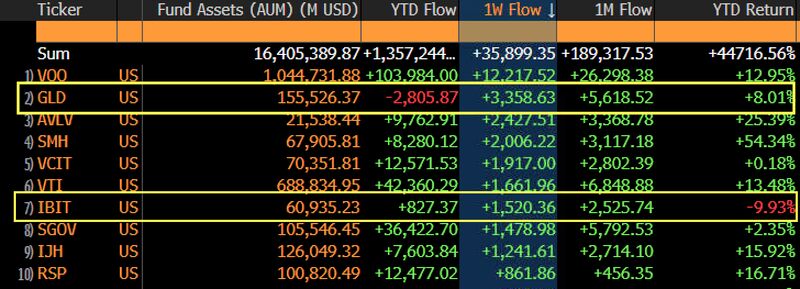
Gold and Bitcoin ETFs have combined for +$7b in flows in past week, by far a record for a 5-day period as debasement trade steals spotlight from AI.
Also notable $IBIT YTD flows are now positive. Source: Eric Balchunas, Bloomberg
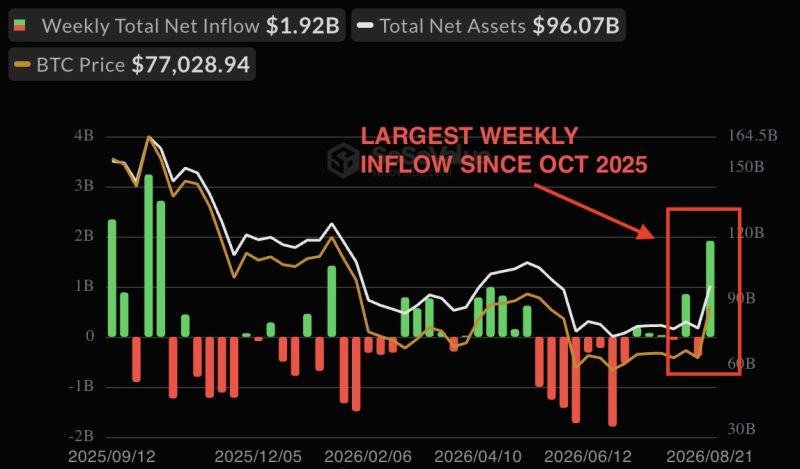
Bitcoin ETFs just had their strongest weekly inflow since October 2025, attracting nearly $2 billion in inflows.
BlackRock’s $IBIT dominated the demand, accounting for nearly 70% of the total. Even Ethereum ETFs attracted almost $700 million during the week. This came after the US Treasury announced larger buybacks of long term bonds. The move initially pushed yields lower and weakened the dollar, increasing demand for assets like Bitcoin and Gold. Source: Bull Theory
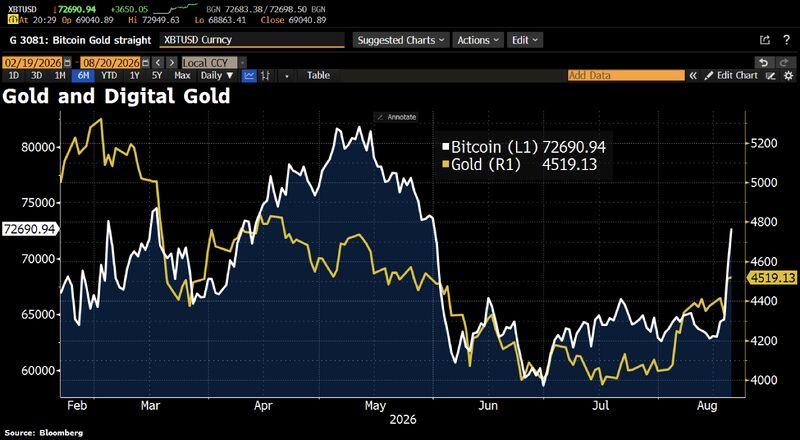
Gold and Bitcoin are rallying in tandem as investors take fright at Treasury Secretary Scott Bessent's politically clumsy interventions in the bond market.
Gold has jumped to $4,519/oz, while Bitcoin is back above $72,000. When confidence in policymaking is shaken, both analog and digital gold benefit. Source: Bloomberg, HolgerZ
Lyn Alden's 'ORANGE JUICE' Raises $40 million to launch a permanent capital holding company backed by a BTC treasury
"It’s a company that acquires, improves, and permanently holds cash-flowing businesses, backed by a bitcoin treasury" - Lyn Alden Source: Bitcoin Magazine