

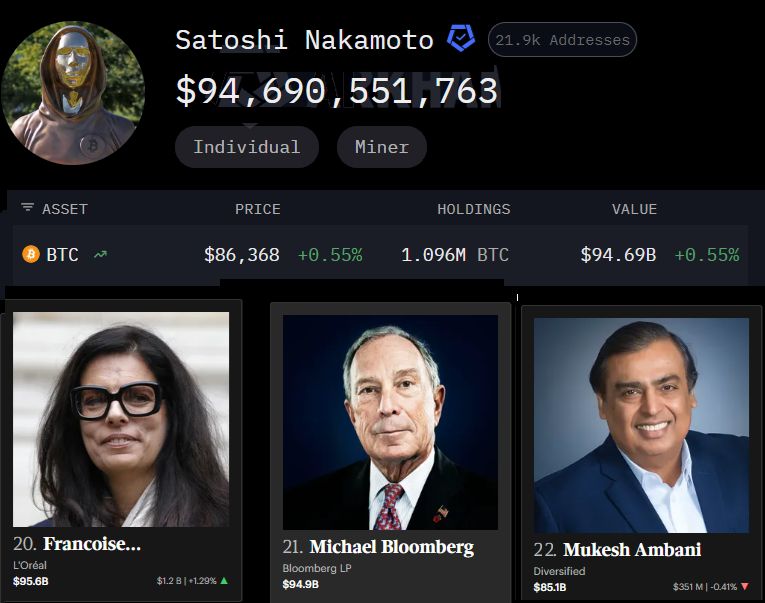
Satoshi Nakamoto enters the top 22 wealthiest people on Earth.
Source: Bitcoin Archive
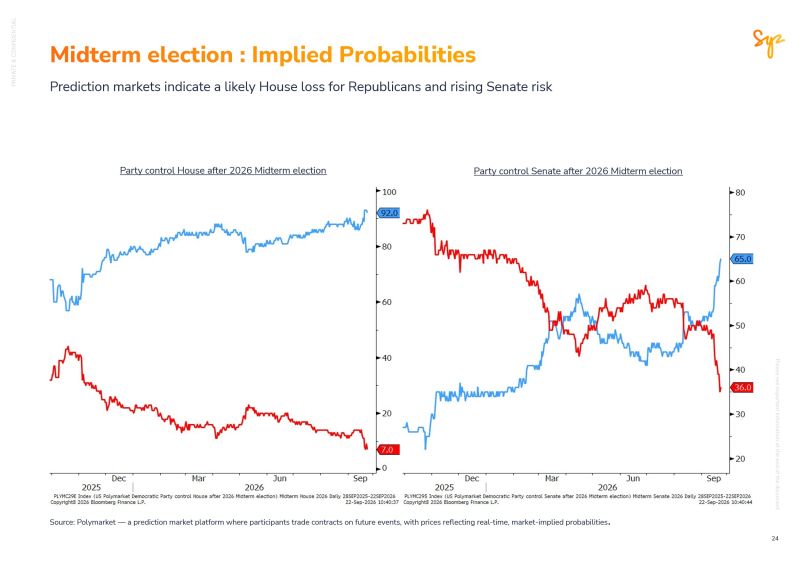
Consensus has been positioning for a split congress (the House with the democrats and republicans keeping the Senate) but it might be wrong as a democrat sweep now looks like a real possibility.
Indeed, over the last few weeks, polymarket odds were showing a rising probability of Trump losing control of the Senate, but that trend accelerated sharply recently (see the chart below)! Source: Polymarket
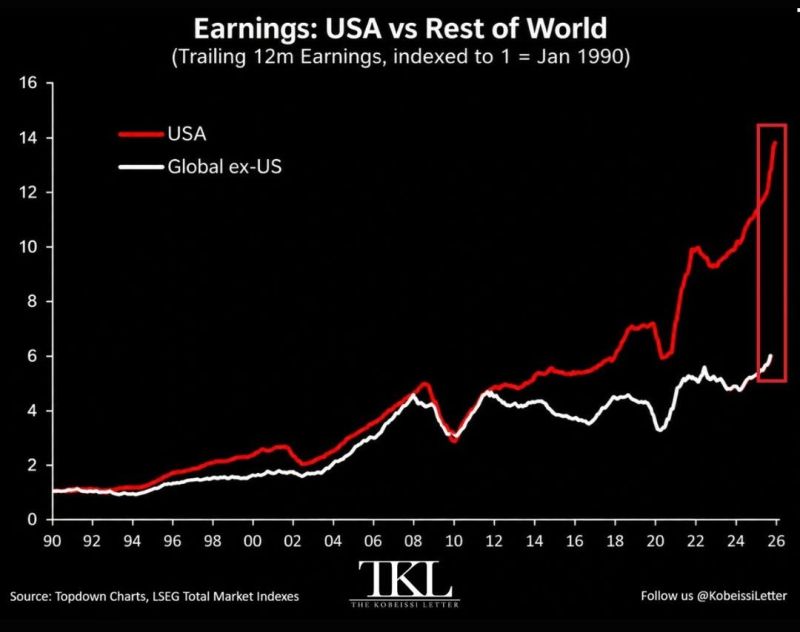
The gap between US earnings growth and the rest of the world has never been wider
Earnings of US companies have grown nearly +1,300% since 1990. By comparison, earnings of global companies excluding the US have risen +500% since 1990. In other words, US earnings growth has been 2.6 times larger than the rest of the world. This comes as global ex-US profit growth has remained roughly unchanged between 2008 and 2025. The US economy is in a league of its own. Source: The Kobeissi Letter
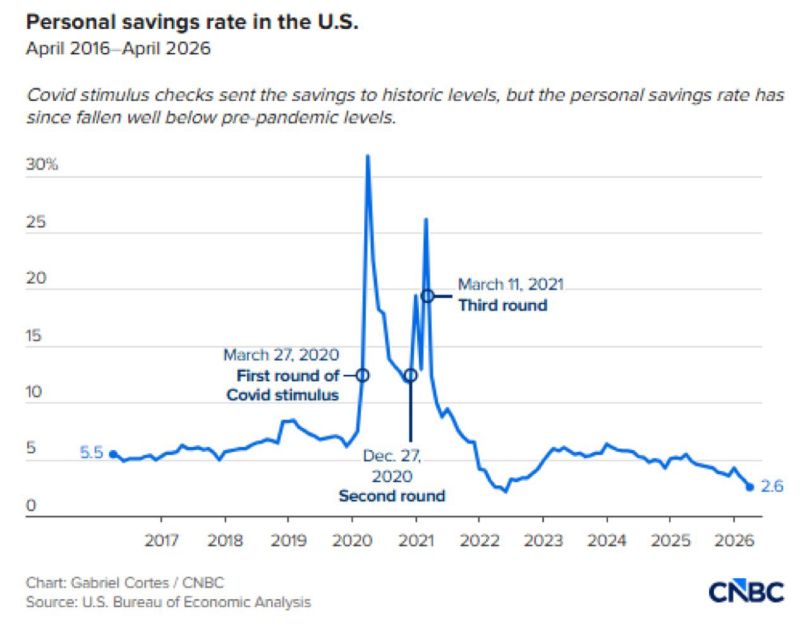
Personal Savings Rate hits 2.6%, the 2nd lowest level in the last 65 years
Source: Barchart, CNBC
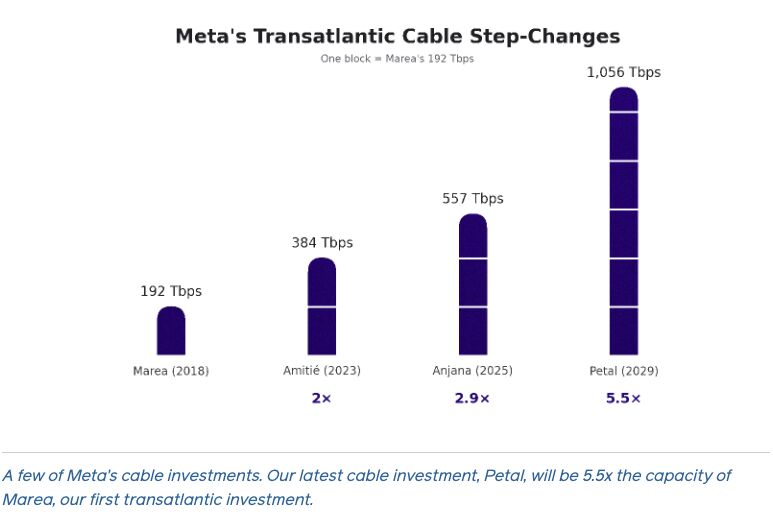
$META UNVEILS FIRST PETABIT-SCALE TRANSATLANTIC CABLE BETWEEN U.S. AND FRANCE
Meta announced Petal, a new roughly 7,000-km subsea cable designed to carry 1 petabit per second between the U.S. and France when it enters service in 2029. Meta says that is roughly 2x the capacity of today’s most advanced transoceanic cables and represents the largest single-generation capacity jump for a transoceanic system. Petal will use multi-core fiber technology across transoceanic distances, allowing more data to move through each fiber without a proportional increase in power or physical infrastructure. The system is being developed with NEC and Sumitomo Electric, while Orange will support the French landing. The project adds to Meta’s growing global network infrastructure as AI workloads drive sharply higher bandwidth requirements between data centers and regions. Source: Wall St Engine
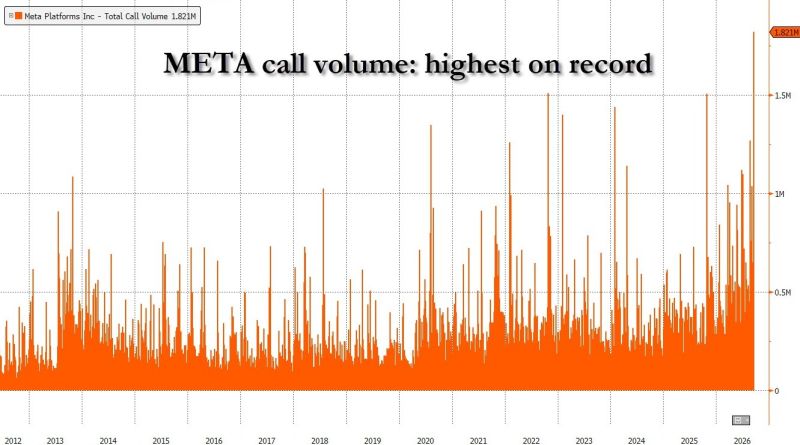
We found the winner: META call volume highest on record
Source: zerohedge
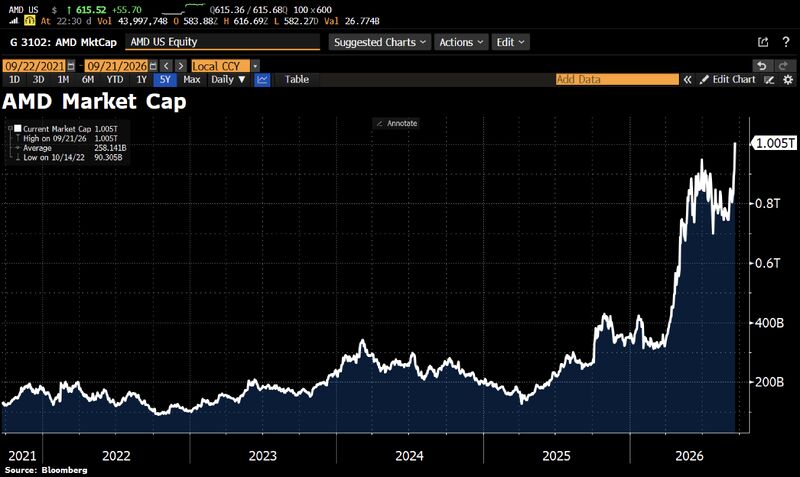
Yesterday, AMD joins the $1 TRILLION club! Shares jump almost 10%, lifting its market cap to $1.005tn.
It’s the 7th chipmaker to cross the threshold, after Nvidia, TSMC, Broadcom, Micron, Samsung & SK Hynix. From just $90bn in October 2022: an elevenfold increase in under 4yrs. Source: HolgerZ, Bloomberg
Why did stocks surge yesterday?
Stocks surged as several negative pressures eased at once: oil fell sharply, the 10-year Treasury yield dropped toward 4.96%, and investors rotated back into technology and AI stocks. Bitcoin and copper also rallied, reinforcing the risk-on move. The +11% jump in Meta and comments from Bessent that no major AI regulatory breakthrough is expected also supported sentiment. However, the bond market remains cautious: the 2-year yield stayed around 4.74%, suggesting investors are pricing lower long-term inflation pressure rather than expecting a Fed pivot. Key question: whether lower oil prices eventually reduce diesel and transport costs. If they do, the rally could broaden; if not, inflation and restrictive Fed policy could remain a constraint. Source: naiive