
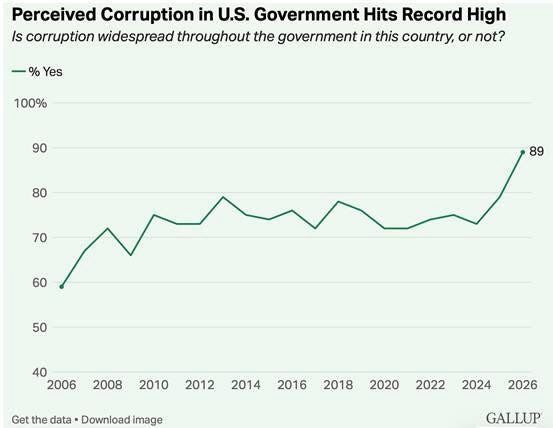
A record 89% of Americans now say the U.S. government is full of corruption
Source: Hedgeye, Gallup
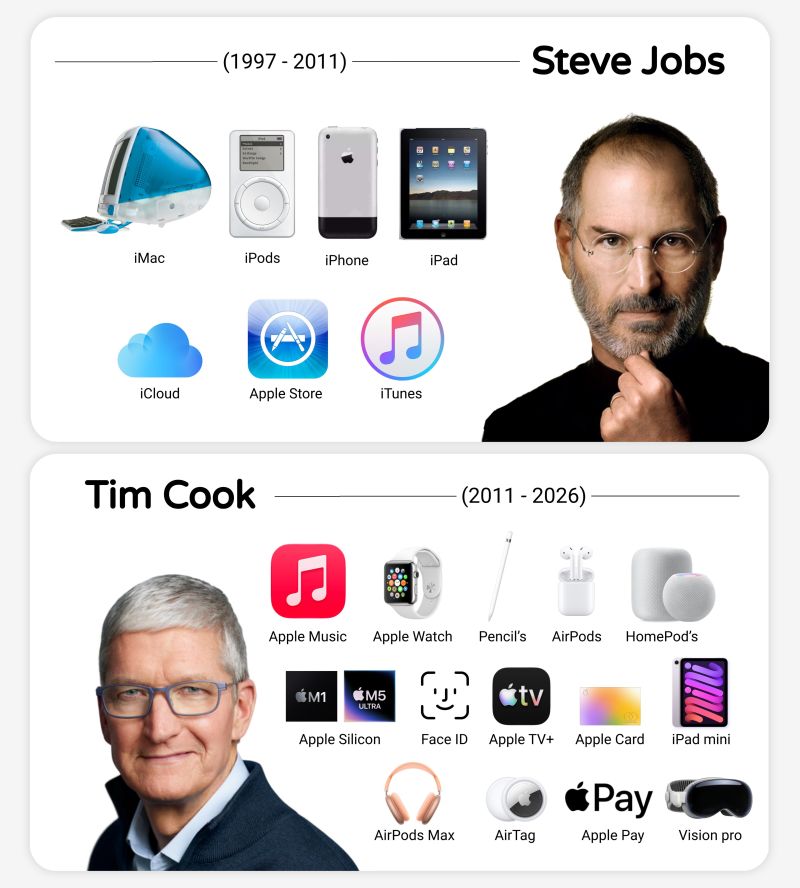
Steve Jobs built the foundation.
Tim Cook expanded it into an ecosystem. Which era had the bigger impact? Source: Apple Club
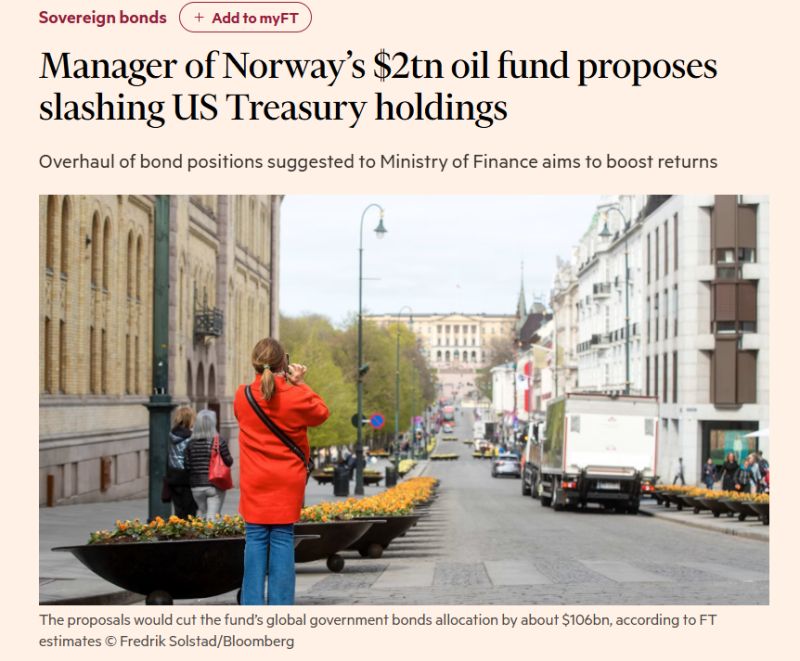
Norway’s $2.3 trillion sovereign wealth fund could be preparing a major shift away from US Treasuries.
Norges Bank Investment Management has proposed cutting government bonds from 70% to 50% of its fixed-income benchmark. The potential impact: • Around $106 billion less in global government debt • An estimated $80 billion reduction in US Treasuries • More capital redirected toward higher-returning areas of the bond market The fund currently invests just under 26% of its assets in fixed income. The timing is significant. Government debt is surging. Inflation risks are returning. And despite repeated US Treasury interventions, long-term yields remain near multiyear highs. This does not mean Norway is abandoning Treasuries. But when one of the world’s largest investors questions the traditional government-bond allocation, markets should pay attention. The message is clear: sovereign debt may no longer offer the risk-return profile it once did. Source: Financial Times
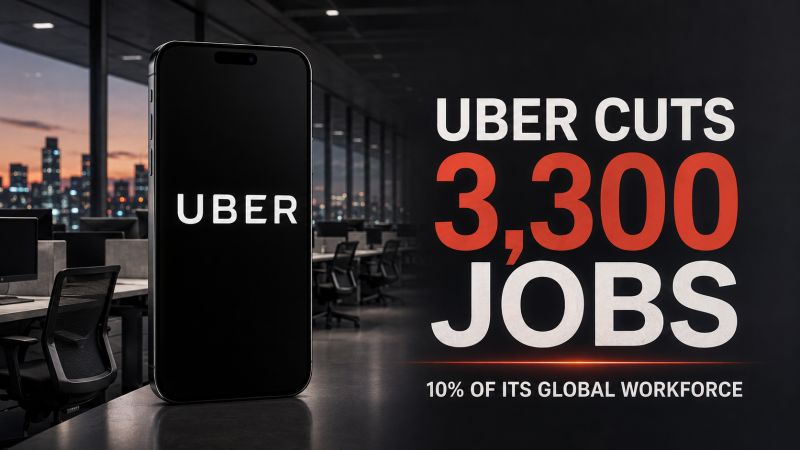
Uber is cutting 3,300 jobs, about 10% of its global workforce, in a massive restructuring.
Management ranks will shrink by 20%, and remote work will be cut down to just 1% of the workforce going forward. CEO Dara Khosrowshahi says years of growth added "more layers, more coordination" that no longer make sense at Uber's current scale. This is Uber's third round of cuts this year, after a 23% reduction in its HR division in June and a 10% cut to customer service roles in July, both tied to AI adoption. Despite the cuts, Uber jumped 2.4% today in premarket as investors welcome the leaner structure. Source: Bull Theory
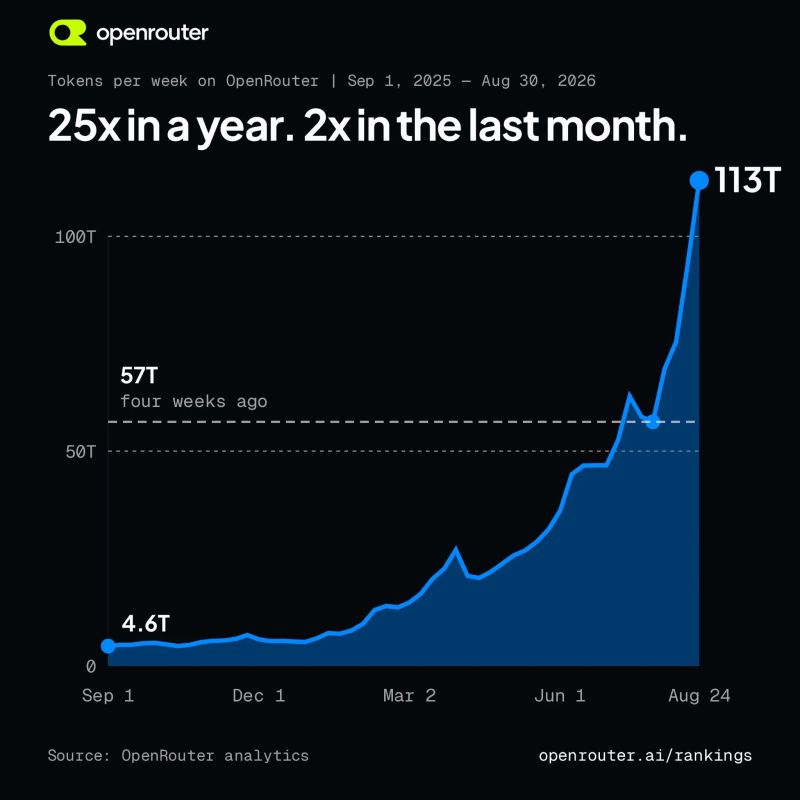
If today’s crash in AI infrastructure stocks has you worried, zoom out.
Token demand just doubled in a single month. And every additional token requires more: • GPUs • Memory • Interconnects • Power The internet took roughly a decade to reach mainstream adoption. AI usage is now doubling in just four weeks. Source: Michael Sikand
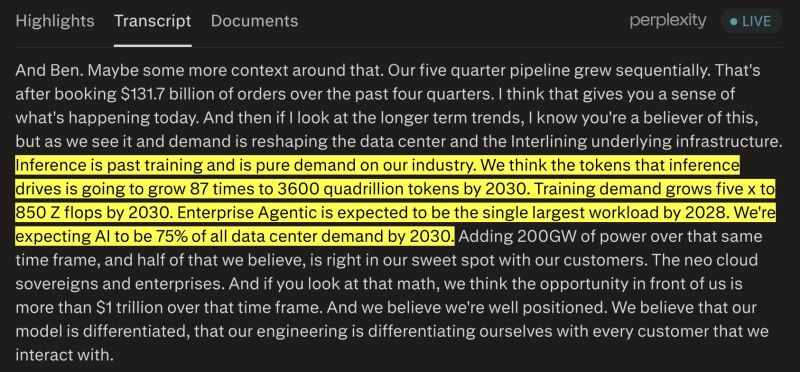
$DELL ON AI INFERENCE DEMAND:
“Inference has passed training and is pure demand on our industry” Dell expects inference token demand to grow 87x to 3,600 quadrillion tokens by 2030, while training demand grows 5x “Enterprise agentic to be the single largest workload by 2028” Source. Wall St Engine
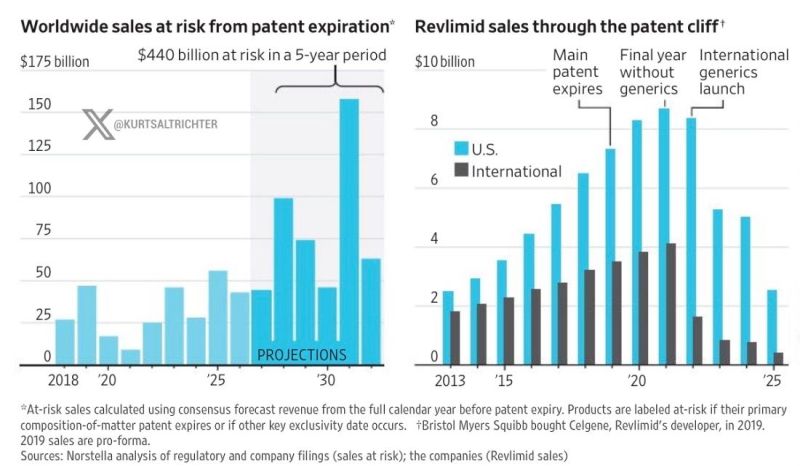
As highlighted by Kurt S. Altrichter, Big Pharma is heading toward a $440 billion patent cliff. And this is bullish
Many of the industry’s biggest cash-generating drugs will lose exclusivity this decade. Novo Nordisk could see 77% of its 2025 sales exposed by 2033, while Keytruda—a $32 billion blockbuster—is set to lose patent protection before 2030. Once generics and biosimilars enter the market, revenues can collapse within just a few years. The industry’s response? Buy growth. Pharmaceutical companies announced $114 billion of deals last quarter—the highest level since 2019. That wave of M&A is driving capital into biotech, helping the sector gain more than 30% this year. With $440 billion of revenue potentially at risk, Big Pharma’s race to replenish its pipeline is creating a powerful bid for takeover targets across the biotech sector. Source: Kurt S. Altrichter, CRPS®
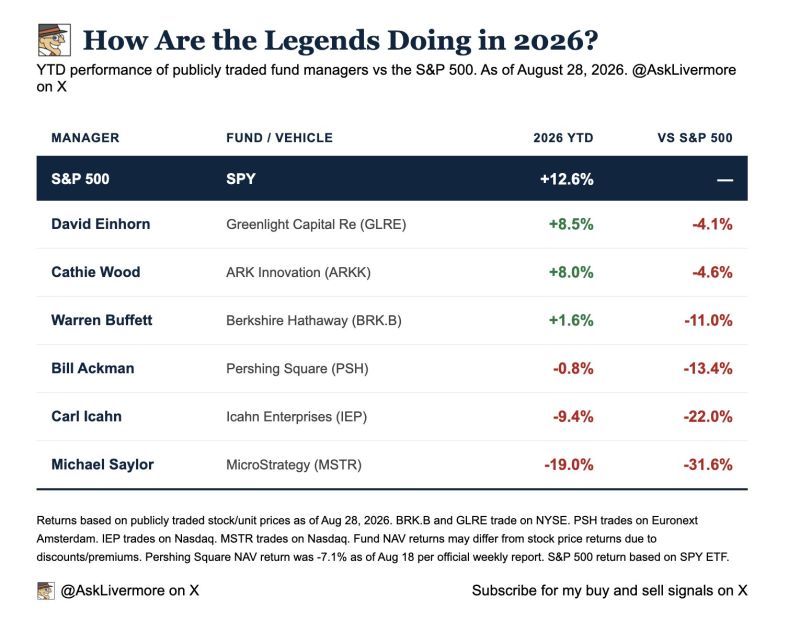
Every single "legend" is losing to the S&P 500 this year.
David Einhorn -4.1% Cathie Wood -4.6% Warren Buffett -11.0% Bill Ackman -13.4% Carl Icahn -22.0% Michael Saylor -31.6% Source: AskLivermore