
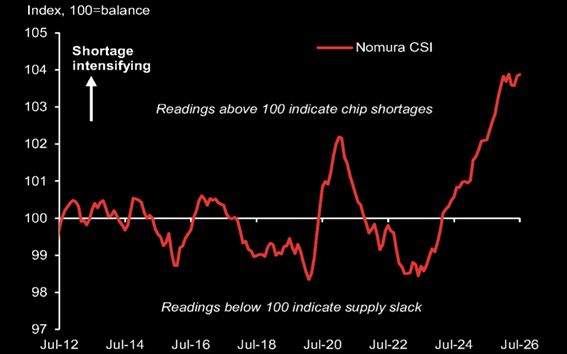
Nomura has a chip shortage index
Source: Nomura
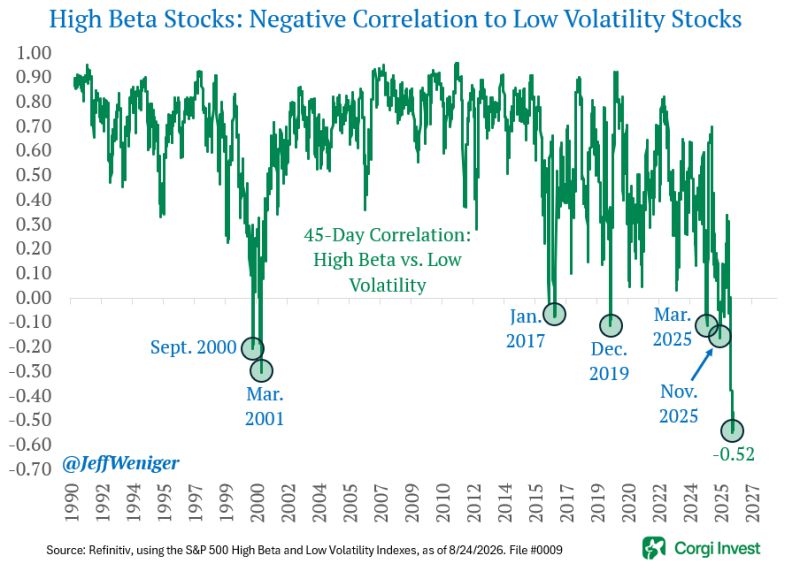
This is something you don't see every day: a severe negative correlation between High Beta stocks and Low Volatility stocks.
At -0.52, the 45-day correlation between these groups is the lowest on record. Source: Jeff Weniger
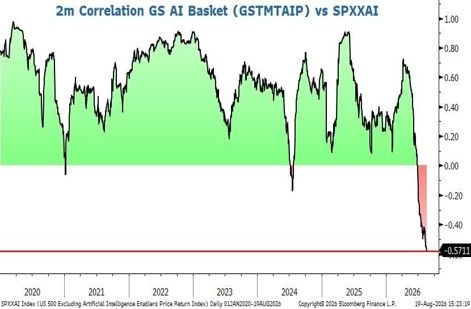
As highlighted by GS, investors are quietly rotating capital towards the “unloved” corners of the market: hard-asset exposure and ex-AI equity trades.
The AI trade is not dead - but its composition, its momentum profile, and its margin of safety are all being rewritten in real time. The good news: there are plenty ways to diversify. As shown on the chart below, the broader market ex AI (SPXXAI) is now very negatively correlated with AI, making a strong case for ‘broadening’ exposure. Source: zerohedge, GS
The $40 trillion US debt problem may be one of the strongest arguments for gold - Advait Arora on X
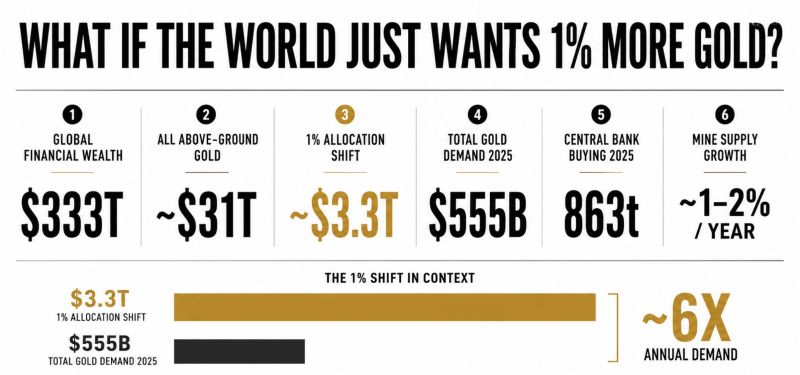
US interest costs are approaching $1.2 trillion this fiscal year, while the deficit has already reached $1.8 trillion in just 10 months. As Ray Dalio warns, when debt grows faster than the economy, the eventual choices become uncomfortable: higher taxes, spending cuts, financial repression… or more money creation. Meanwhile, gold supply remains remarkably constrained. Central banks bought 860+ tonnes in 2025 and another 244 tonnes in Q1 2026, while mine production increased just 1%. Here’s the fascinating part: Global financial wealth: ~$333 trillion Value of all gold ever mined: ~$31 trillion A mere 1 percentage-point increase in global portfolio allocations to gold would represent roughly $3.3 trillion. That’s almost 6x total annual gold demand. Gold doesn’t need everyone to become bullish. It just needs investors to want slightly more of something that remains scarce. Source: Advait Arora
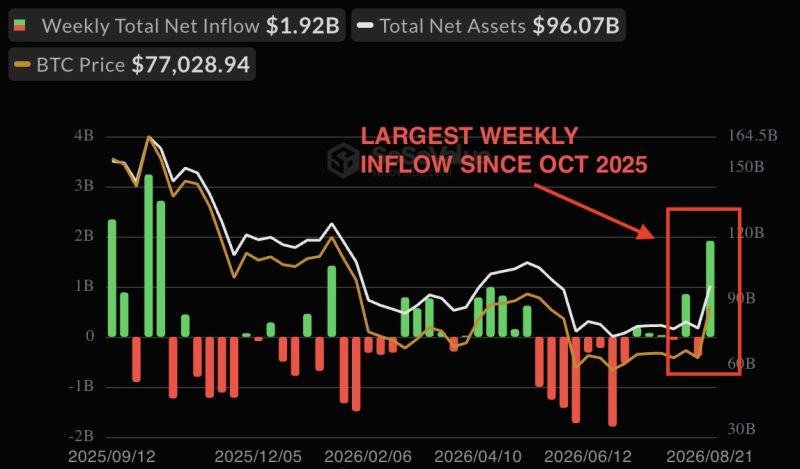
Bitcoin ETFs just had their strongest weekly inflow since October 2025, attracting nearly $2 billion in inflows.
BlackRock’s $IBIT dominated the demand, accounting for nearly 70% of the total. Even Ethereum ETFs attracted almost $700 million during the week. This came after the US Treasury announced larger buybacks of long term bonds. The move initially pushed yields lower and weakened the dollar, increasing demand for assets like Bitcoin and Gold. Source: Bull Theory
The Week Ahead : Several key events next week could impact global markets.
Monday: • Treasury Secretary Bessent announces new Iran economic measures Wednesday: • 🇺🇸 US PCE inflation • 🇺🇸 US Q2 GDP revision • $NVDA earnings report Thursday: • Bank of Korea interest rate decision • Jackson Hole Symposium begins Friday: • Fed Chair Kevin Warsh speaks at Jackson Hole Source: CryptoTweets

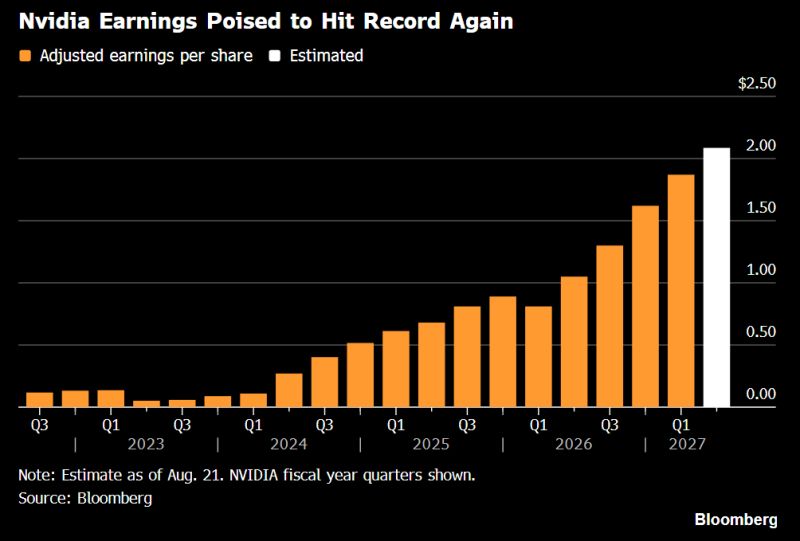
Nvidia, $NVDA, reports Wednesday, with EPS expected to nearly double YoY on relentless AI infrastructure demand
Source: Hedgeye Bloomberg
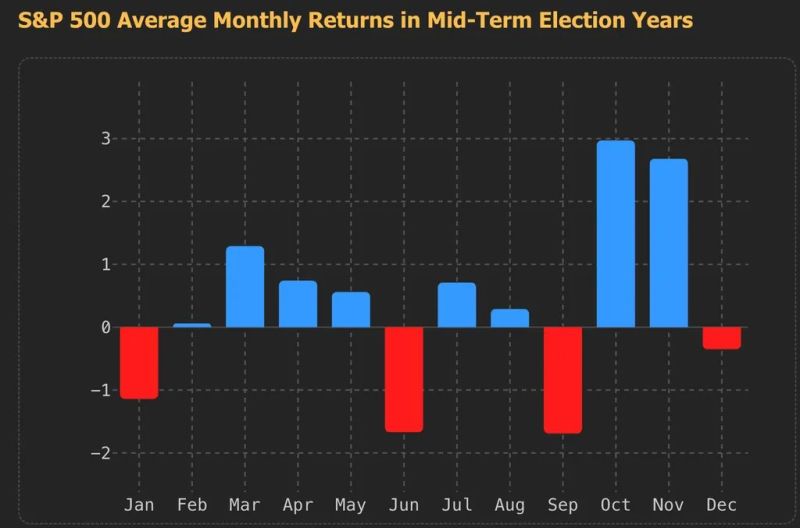
During midterm election years, September has historically been the S&P 500’s worst month.
October and November tell a very different story. Source: TrendSpider