
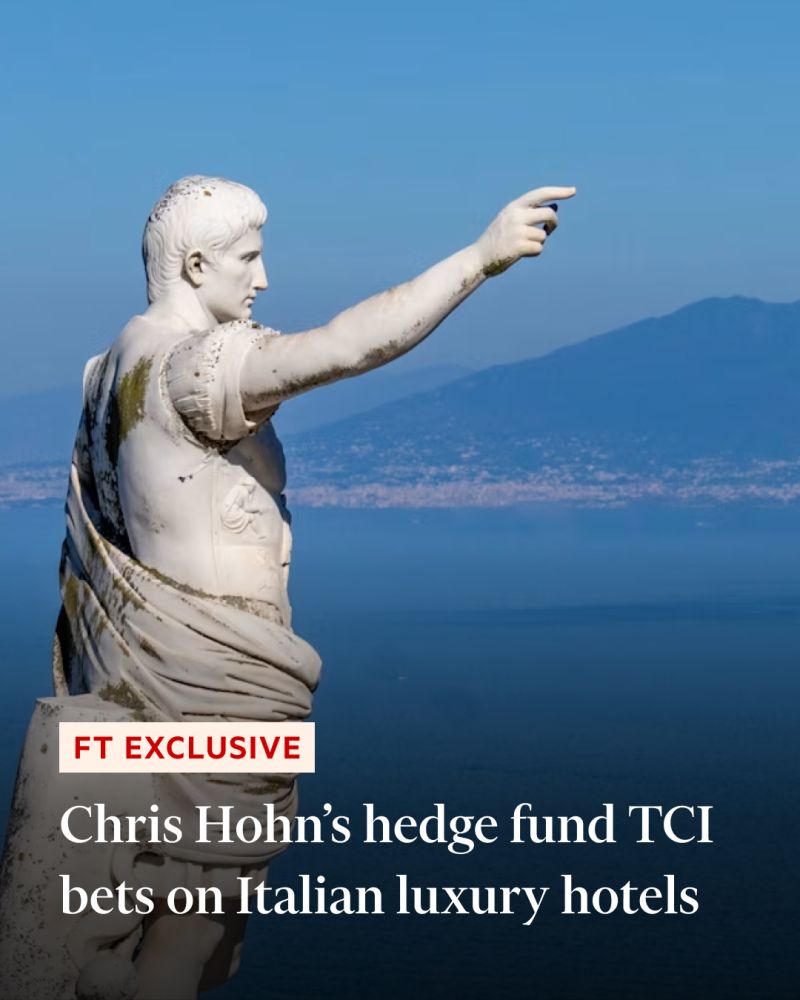
A $636M bet on Italy’s ultra-luxury hotel boom.
Billionaire investor Sir Christopher Hohn’s TCI has quietly built a major exposure to loans backed by some of Italy’s most prestigious hotels. 🏨 $392M — Hotel Danieli, Venice 🌊 $132M — Caesar Augustus, Capri 🏔️ $74M — Six Senses, Lake Como 🏙️ $38M — Mandarin Oriental, Milan The thesis is simple: scarcity + pricing power. Italy’s revenue per available hotel room surged 53% between 2019 and 2025, the strongest increase in Europe, driven largely by luxury properties. Historic palazzi, prime waterfront locations and strict planning rules mean supply cannot easily respond to booming demand from wealthy international travellers. For Hohn—an investor obsessed with businesses able to raise prices faster than inflation—ultra-luxury Italian hotels increasingly look like real-estate monopolies in disguise. And TCI is financing them. Source: FT
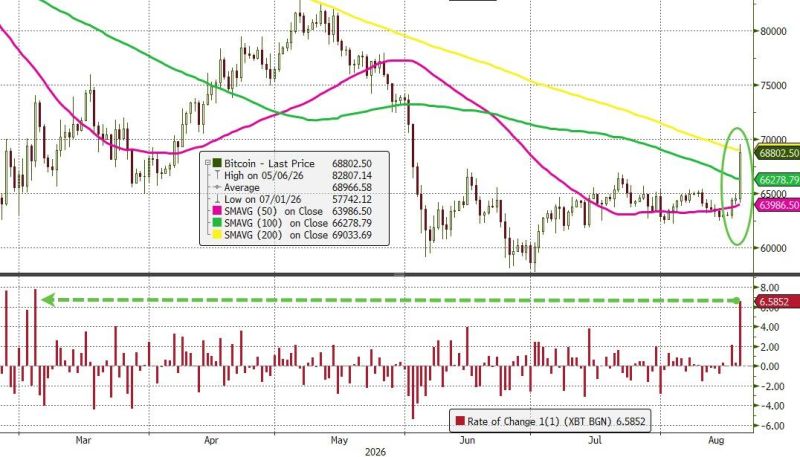
$BTC exploded today after Bessent-Bailout as it broke back above its 200DMA...
Source: zerohedge
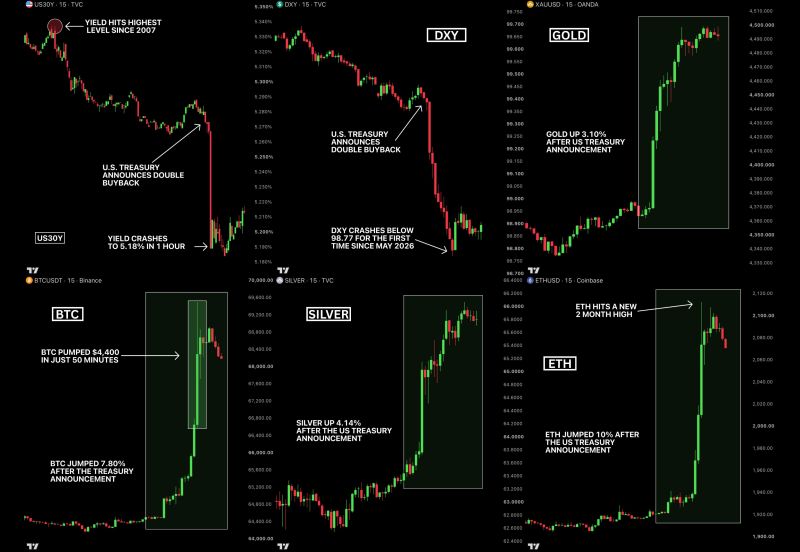
One Treasury announcement. A violent move across bonds, gold, silver and crypto.
The US Treasury announced it will at least double buybacks of long-dated Treasuries, from $2bn to $4bn per operation. Markets reacted immediately: 📉 30Y Treasury yield: 5.34% → 5.18% 🥇 Gold: +3.1% 🥈 Silver: +4.1% ₿ Bitcoin: +7.8% Ξ Ethereum: +10% 💵 Dollar: -0.7% Why does it matter? The US already spends roughly $1.4 trillion annually on interest, while trillions of low-cost debt must be refinanced at much higher rates. And this isn't just an American problem: long-term government yields are surging globally. The biggest wildcard may be Japan. As Japanese yields rise, domestic investors have less incentive to finance US and European governments. 👉 The bond market is increasingly becoming the key macro risk—and falling yields remain rocket fuel for gold and crypto. Source: Bull Theory
An experimental personalized cancer vaccine from Merck and Moderna showed positive initial results in its first-ever late-stage trial.
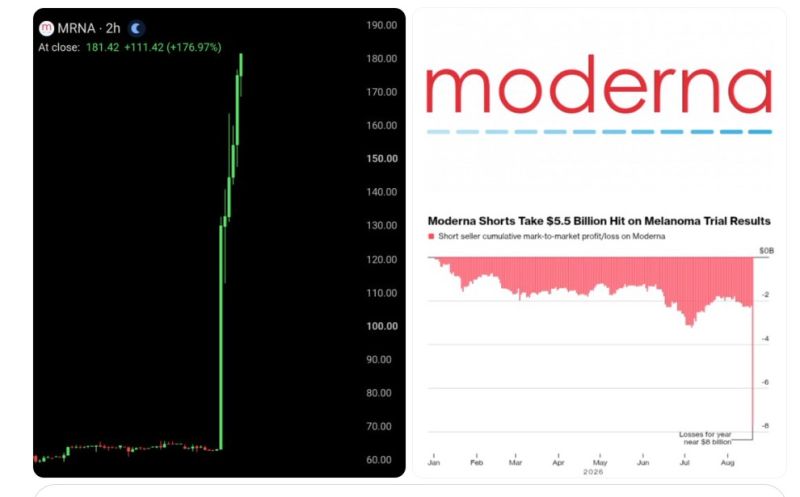
The companies announced it Wednesday, bringing them one step closer to filing for approval of the treatment option. Merck shares climbed more than 12% on Wednesday, while Moderna’s stock soared about 177%. The size of those moves reflect the companies’ relative size entering Wednesday: Merck’s market cap was around $333 billion, while Moderna’s sat near $25 billion. Meanwhile, short sellers betting against Moderna $MRNA are sitting on $5.5 billion paper loss in a single day after the stock jumped 177%. Their total losses on the trade this year now stand at $7.7 billion. Source: Bull Theory CNBC
Is the US quietly moving toward QE and Yield Curve Control—without calling it either?
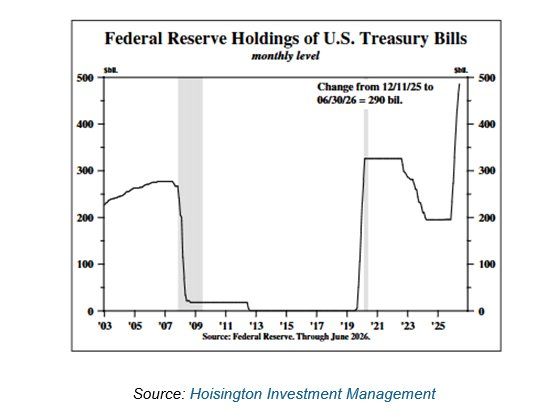
Here’s the mechanism: 1️⃣ The Treasury issues more short-term T-bills. 2️⃣ The Fed buys bills, injecting liquidity into the system. 3️⃣ The Treasury uses its cash and buyback program to retire longer-dated Treasuries. The result? 👉 More demand at the long end. 👉 Less duration risk in the market. 👉 Potential downward pressure on long-term yields. Technically, this isn't traditional QE because the Fed isn't directly buying 10Y or 30Y Treasuries. But economically, the distinction could become increasingly blurred. With US interest costs exploding and long-term yields above 5%, policymakers have a powerful incentive to prevent the long end from spiraling higher. Call it buybacks. Call it liquidity management. Call it maturity transformation. But if the objective increasingly becomes controlling long-term borrowing costs… We may eventually get Yield Curve Control—just with a different name tag Source: Lukas Ekwueme @ekwufinance Hoisington Investment Management
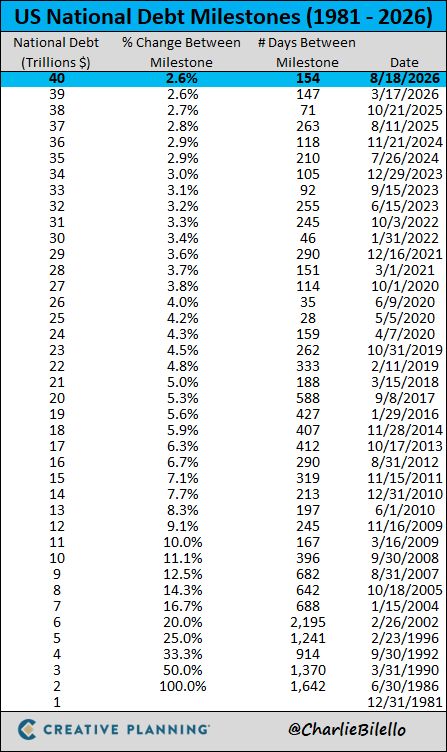
The total U.S. government debt reached $40.05 trillion as of Monday, according to the Treasury Department.
Treasury reported a $432.3 billion deficit in July, reaching its highest monthly level in more than five years. A decade ago, the national debt level was $19.4 trillion. Washington’s solution to every problem remains the same: Borrow more. Spend more. There is no fiscal discipline in sight. Source: Charlie Bilello CNBC
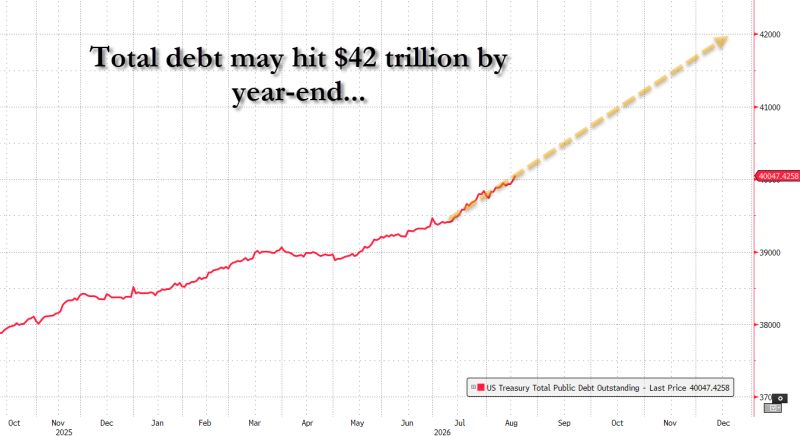
At least we know the direction...
Source. zerohedge
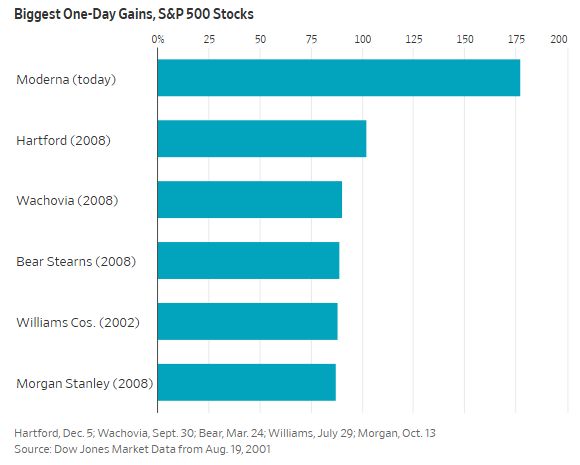
Moderna's $MRNA 177% gain yesterday was the largest by any S&P 500 stock this century
Source: Barchart