
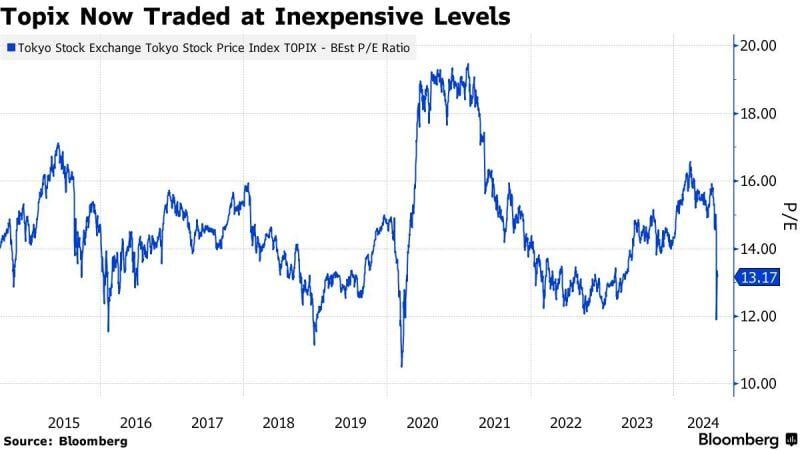
Japanese stocks are trading at a reasonably low PE of 13.17 after the recent drawdown
Source: Bloomberg, Markets & Mayhem
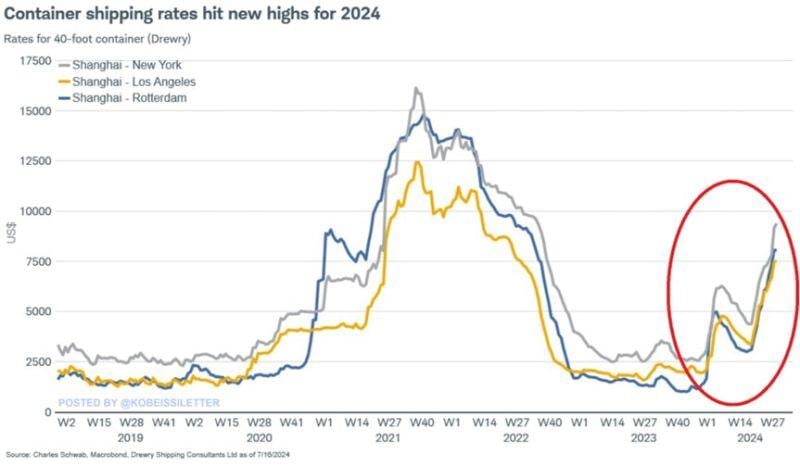
BREAKING: Container shipping costs from China have spiked to their highest levels since 2022
Since the beginning of 2024, shipping rates have more than TRIPLED. It now costs ~$9,000 to ship a 40-foot container from Shanghai to New York and ~$8,000 to Los Angeles. This has been driven by a sharp drop in Suez Canal transit volume, disruptions at some ports in Asia, and demand increase due to inventory restocking. Rising shipping costs should be considered as an upside risk to inflation. Source: The Kobeissi Letter
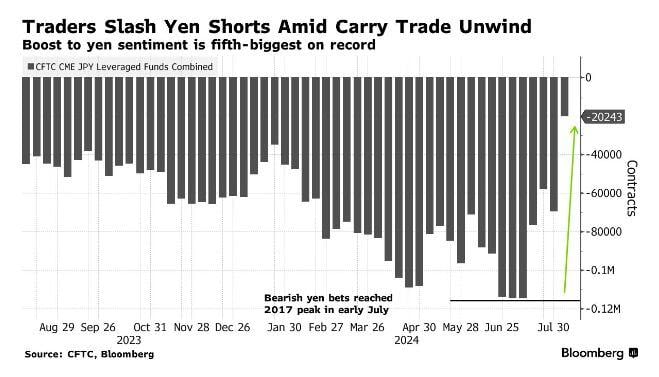
Hedge Funds reduced their bearish Japanese Yen bets by the 5th largest amount in history (week ended August 6)
Source: Bloomberg
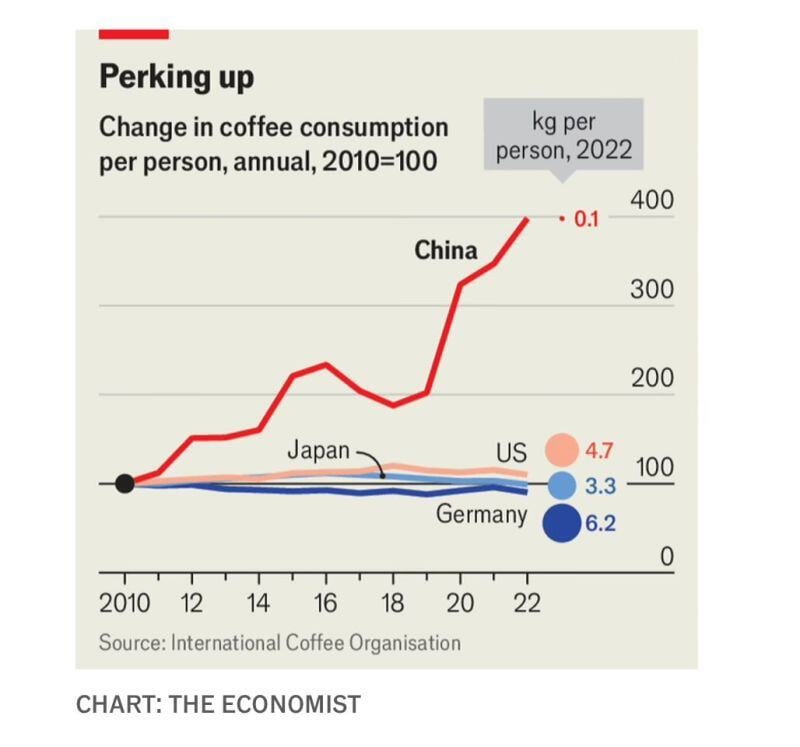
China’s rise in coffee consumption
Bullish cocoa ? Source: Eugene Ng, The Economist
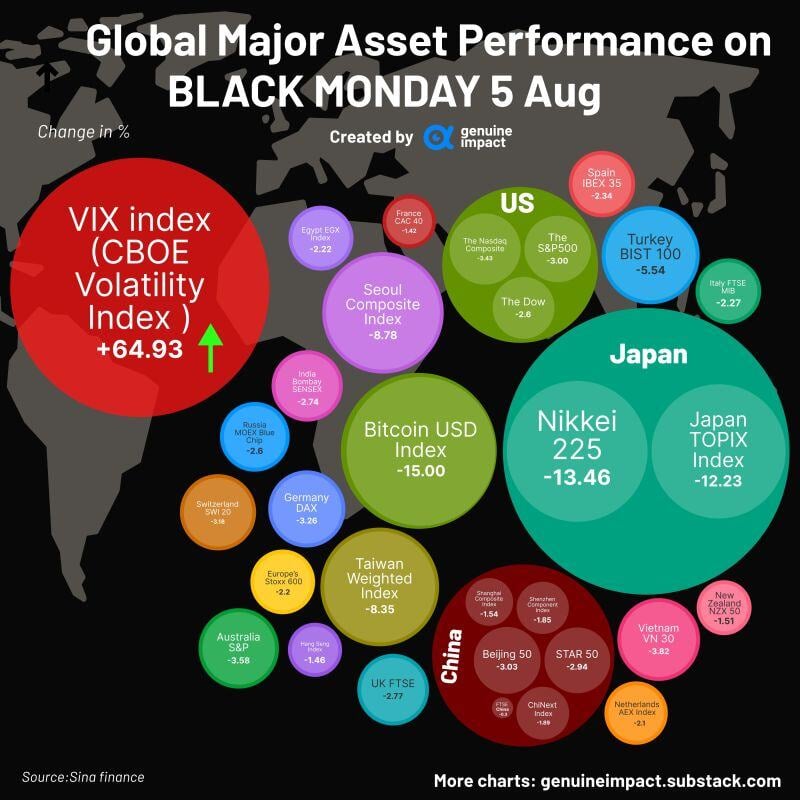
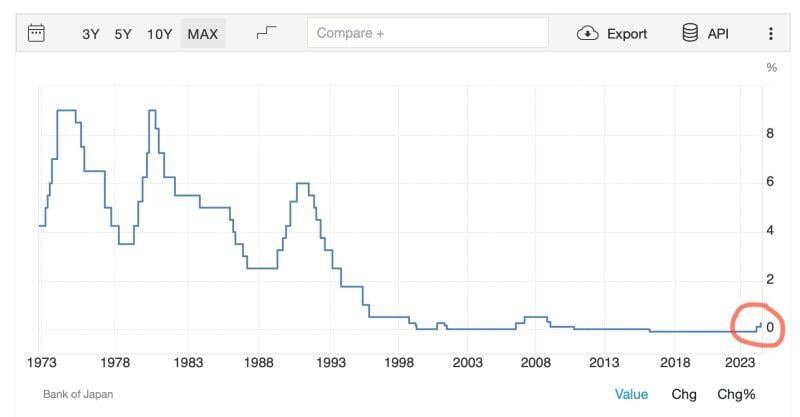
This is what triggered a global-scale sell-off of every major asset class...
A harsh remainder how shaky the global financial system is... Source: Bank of Japan, Sina 21st Capital on X
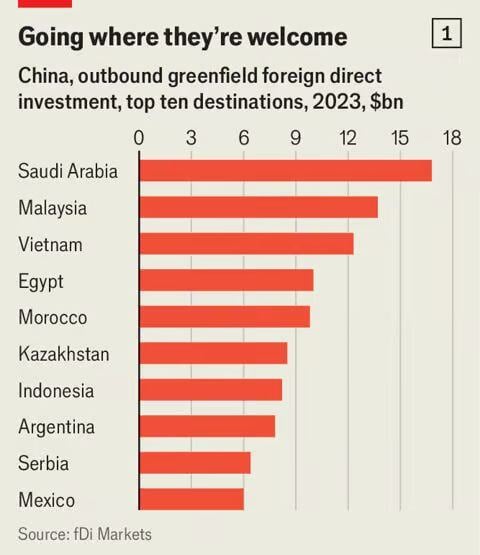
Chinese firms are fast turning away from US and Europe for greenfield FDI
• China is de-risking, too, by reducing reliance on western markets for trade and investment • In countries 👇 imports from China of intermediate goods used in manufacturing have tripled since 2013 Source: Agathe Demarais, The Economist
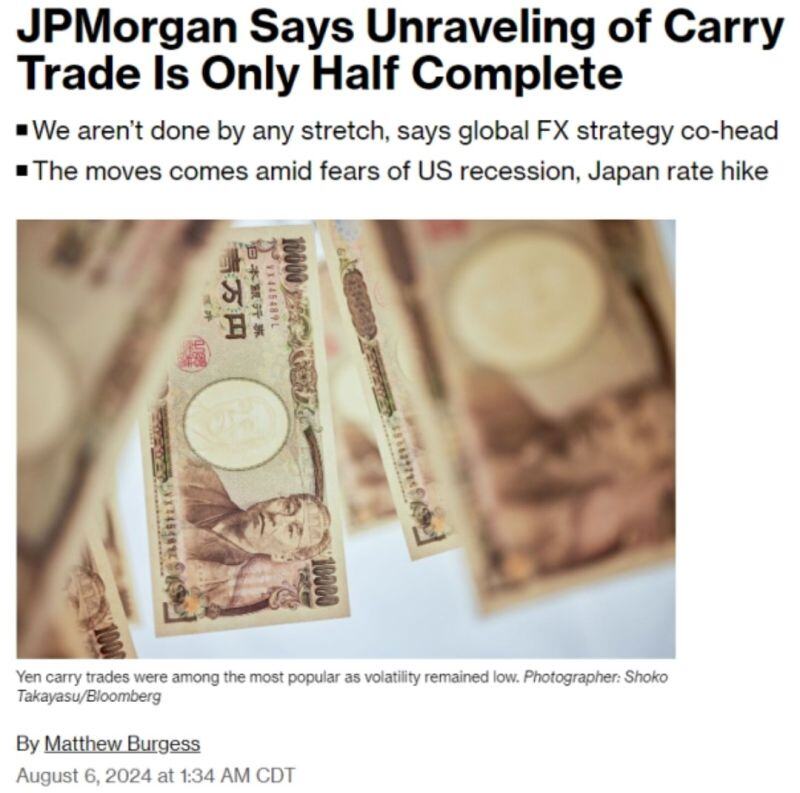
The Japanese Yen Carry Trade unwinding is only 50% complete warns JP Morgan
Source: Win Smart
A historical market session summarized in one chart
Japan’s stock market posted its worst drop since Wall Street’s Black Monday in 1987, contributing to fears of global turmoil in the markets. Concerns about a slowing U.S. economy and the unwinding of the global yen "carrytrade" are battering stocks. Source: Genuine Impact