Straight from the Desk
Syz the moment
Live feeds, charts, breaking stories, all day long.
- All
- equities
- United States
- Macroeconomics
- Food for Thoughts
- markets
- bitcoin
- Central banks
- geopolitics
- Fixed Income
- AI
- gold
- Asia
- europe
- Commodities
- investing
- Technology
- Crypto
- technical analysis
- nvidia
- china
- ETF
- oil
- earnings
- Forex
- energy
- banking
- magnificent-7
- Volatility
- Real Estate
- Alternatives
- apple
- emerging-markets
- switzerland
- tesla
- Middle East
- United Kingdom
- amazon
- assetmanagement
- microsoft
- ethereum
- russia
- meta
- Industrial-production
- ESG
- Healthcare
- Global Markets Outlook
- bankruptcy
- Turkey
- brics
- Market Outlook
- africa
- performance
🚨 Federal Reserve Chair Jerome Powell said Monday that the central bank will not wait until inflation hits 2% to cut interest rates.
Speaking at the Economic Club of Washington D.C., Powell referenced the idea that central bank policy works with “long and variable lags” to explain why the Fed wouldn’t wait for its target to be hit. “The implication of that is that if you wait until inflation gets all the way down to 2%, you’ve probably waited too long, because the tightening that you’re doing, or the level of tightness that you have, is still having effects which will probably drive inflation below 2%,” Powell said. Instead, the Fed is looking for “greater confidence” that inflation will return to the 2% level, Powell said. “What increases that confidence in that is more good inflation data, and lately here we have been getting some of that,” he said. Powell also said he thinks a “hard landing” for the U.S. economy was not “a likely scenario.” Source: CNBC, Radar
Monetary policy monetization => 27 of 34 global central banks, or 80% are expected to ease their monetary policy by the end of 2024, the highest since 2021.
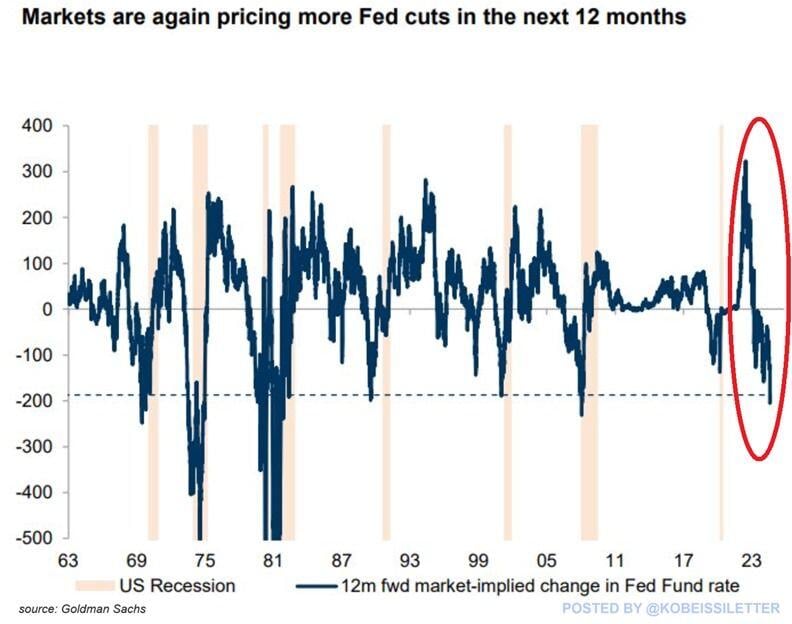
By comparison, in July 2023 just 10% of central banks were expected to cut rates. Currently, 42% of central banks have been easing monetary policy. Canada and the European Central Bank were the latest to cut interest rates in June. Meanwhile, the market is pricing the first Fed rate cut in September and a total of 2 cuts this year. Source: The Kobeissi Letter, BofA
Gold >2400 as markets believe lower than expected CPI report is opening the door to rate cuts by the FED starting in September.
Source: www.zerohedge.com
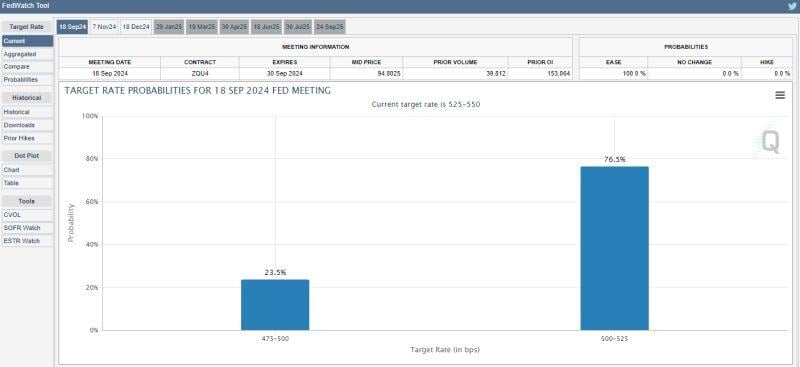
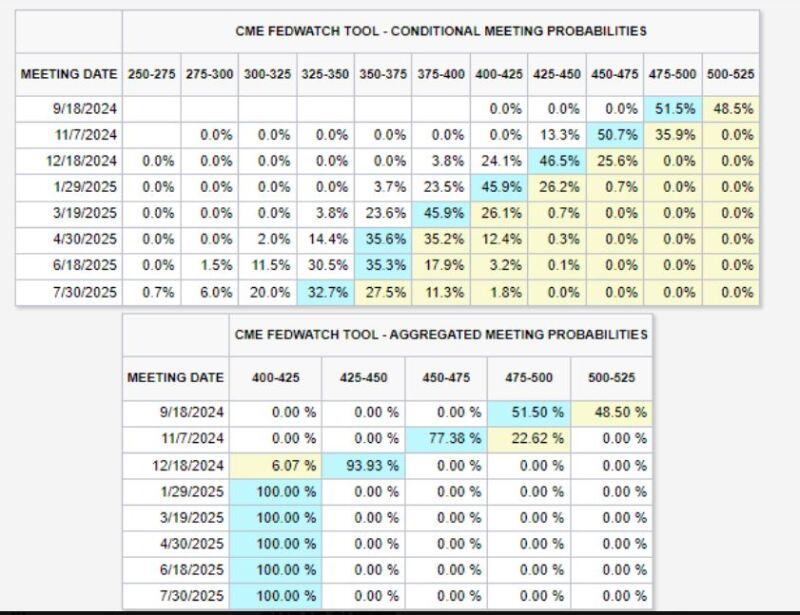
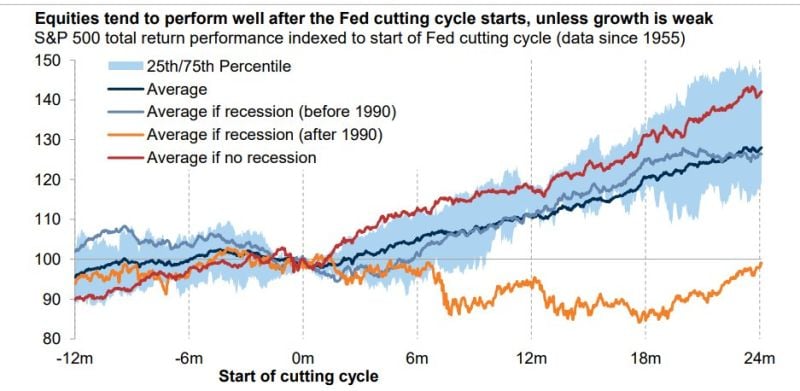
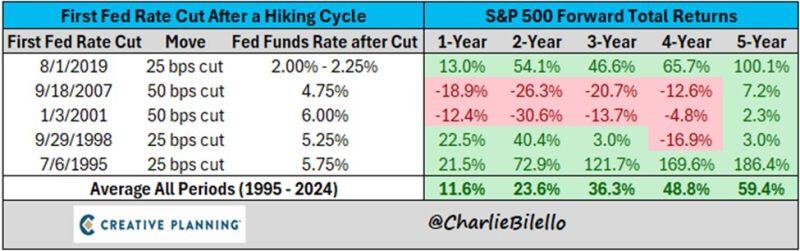
BREAKING: Odds of a Fed rate cut by September 2024 skyrocket to 83% after June CPI inflation, according to Kalshi.
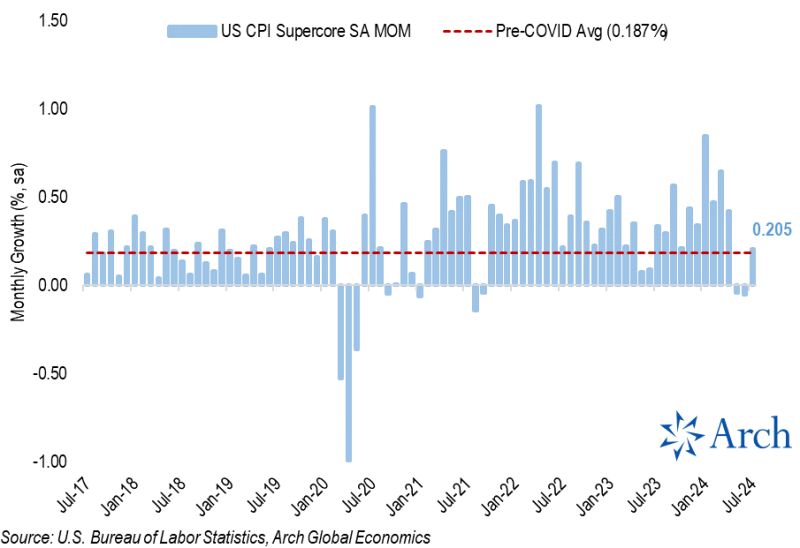
June 2024 marked the first NEGATIVE month-over-month inflation print since May 2020. Headline inflation is now at a 12-month low and 100 basis points away from the Fed's 2% target. Prior to the CPI inflation report today, prediction markets saw a 67% chance of rate cuts by September. Exactly 1 year ago, the Fed stopped raising interest rates. Does the Fed have the green light to cut rates? Source: The Kobeissi Letter
📉 Is a Fed Rate Cut on the Horizon Before the Elections?
Recent economic data, especially in the job market, has underperformed, and Fed Chairman Jerome Powell's dovish remarks at the Sintra Forum have shifted market expectations. Reinforcing this sentiment, the just-released US Core CPI came in below expectations at 3.3%. Investors are now buzzing about a potential rate cut as early as the Fed’s September meeting, right before the US Presidential Elections. This is clearly reflected in the yield curve, with the spread between the 3-month and 2-year US Treasury yields dropping sharply from -60 bps to -85 bps over the past three days. This significant drop indicates an 85% probability that the market is pricing in a rate cut by September. The critical question remains: Will the US macroeconomic landscape deteriorate enough to prompt the Fed to start normalizing its monetary policy before the elections? #Fed #MonetaryPolicy #InterestRates #EconomicOutlook #Investing #FinancialMarkets #SyzGroup
What do Serbia, Czech Republic and India have in common?
central banks are ALL accumulating gold... Source: Bloomberg, Krishan Gopaul
Federal Reserve Chair Jerome Powell on Tuesday expressed concern that holding interest rates too high for too long could jeopardize economic growth.
Setting the stage for a two-day appearance on Capitol Hill this week, the central bank leader said the economy remains strong as does the labor market, despite some recent cooling. Powell cited some easing in inflation, which he said policymakers stay resolute in bringing down to their 2% goal. “At the same time, in light of the progress made both in lowering inflation and in cooling the labor market over the past two years, elevated inflation is not the only risk we face,” he said in prepared remarks. “Reducing policy restraint too late or too little could unduly weaken economic activity and employment.” Source: CNBC, Yusuf on X
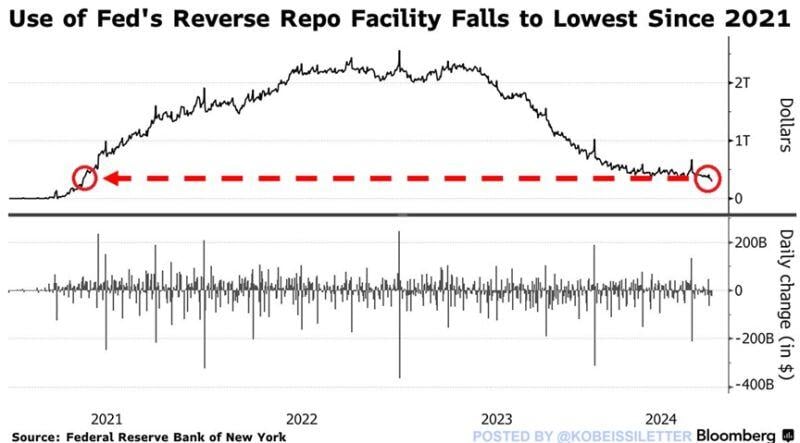
The Secured Overnight Financing Rate, a benchmark connected to overnight repo transactions, is back to the all-time-high of 5.40% , according to New York Fed data published yesterday.
Clogged bank balance sheets are behind the spike of this key repo funding rate. This move is similar to funding market pressures seen in late-2023. The Secured Overnight Financing Rate spiked seven basis points to 5.40% on July 1, according to Federal Reserve Bank of New York data published Tuesday. The return of such swings in SOFR is largely thanks to the Federal Reserve, which is still removing liquidity from the system via quantitative tightening, or QT, albeit at a slower pace with the intention to reduce potential strains on the market. Still, that’s reawakened volatility around key quarter-end funding periods as seen last week, when banks tend to pare repo activity to shore up balance sheets for regulatory purposes and borrowers either find alternatives or pay up. At the same time, the glut of government debt sales means more collateral needs financing from the repo market.
Investing with intelligence
Our latest research, commentary and market outlooks